
DOJ and CFTC Sue Arkansas Over Kalshi Gambling Case: What It Means for Prediction Markets
The DOJ and CFTC sued Arkansas on Nov. 12 to stop its gambling case against Kalshi. Here is the preemption fight, the geofencing deadline, and what to watch next.
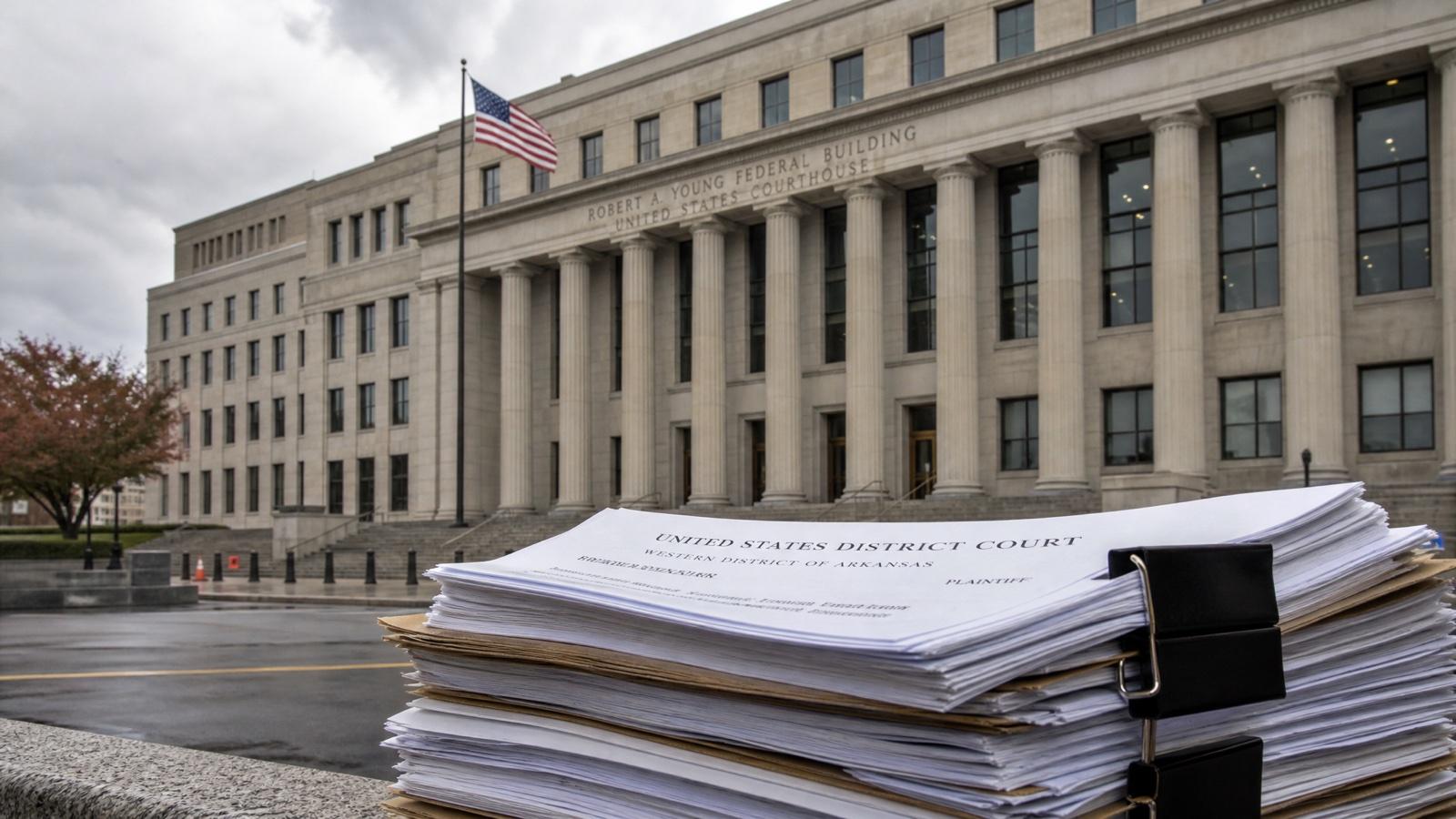
On November 12, 2026, the U.S. Department of Justice and the Commodity Futures Trading Commission (CFTC) did something they have now done several times this year: they sued a state. This time the target is Arkansas and its Attorney General, Tim Griffin, who filed his own gambling-law case against Kalshi eight days earlier. The federal complaint asks a court to stop that case and to shield other CFTC-regulated exchanges from similar state action.
If you trade or follow prediction markets, this is the clearest view yet of the central fight in the industry: do federally regulated event contracts live under federal law alone, or can states treat them as gambling? Here is what was filed, what each side is arguing, and what to watch next.
The Timeline: Eight Days in November
The sequence matters, because the federal suit is a direct response to the state case.
- November 4: Arkansas Attorney General Tim Griffin sued KalshiEX LLC and Kalshi Inc. The complaint alleges violations of the Arkansas Deceptive Trade Practices Act and seeks restitution, penalties, taxes and injunctive relief.
- November 5: The CFTC issued an interpretation of its "impartial access" requirement for designated contract markets (DCMs), telling exchanges to end domestic geographic restrictions within 30 days or explain why they cannot.
- November 12: The DOJ and CFTC filed suit against Arkansas and Griffin in the U.S. District Court for the Eastern District of Arkansas. The same day, Louisiana's attorney general sued several prediction market operators, according to MLQ.ai's reporting.
What Arkansas Alleges
Griffin's public statement frames the case around substance over labels. "Arkansas law is concerned with substance, not semantics," he said, arguing that wagering money on whether the Razorbacks win or lose is gambling, and that gambling on an unregulated platform is prohibited under state law.
The state's case leans on several points drawn from its own release:
- Kalshi did not obtain the licenses, submit to the oversight, or pay the taxes that lawful Arkansas gambling operators must.
- Kalshi opened its platform to Arkansas consumers, including people as young as 18.
- Kalshi offers tools such as self-exclusion, deposit limits and trading breaks, and promotes gambling-addiction resources, which Griffin characterized as tools commonly associated with gambling operators.
Notice what the state is not doing. The legal vehicle is a consumer-protection statute, the Deceptive Trade Practices Act, rather than a straightforward criminal gambling prosecution. That framing is part of why the federal response targets the state's enforcement authority as a whole.
What the Federal Government Argues
According to reporting on the complaint, the DOJ and CFTC make a preemption argument:
- The Commodity Exchange Act (CEA) gives the CFTC exclusive jurisdiction over futures, options and swaps traded on DCMs.
- The event contracts Arkansas is targeting are swaps under the CEA.
- Therefore, Arkansas's gambling and consumer-protection theories "intrude on the exclusive federal scheme," as MLQ.ai summarized the filing.
The relief sought is broad. The government asks for preliminary and permanent injunctions, and that relief reportedly covers investigations and enforcement against registered markets, their affiliates and their business partners, not just Kalshi. Kalshi is not a defendant in the federal case; the defendants are the state and its attorney general.
That "affiliates and business partners" language is the detail to watch. Brokerages, sportsbooks and apps that distribute event contracts through a DCM are the entities most exposed when a state decides to go after the whole chain rather than the exchange alone.
This Is a Pattern, Not a One-Off
Arkansas is the latest in a string of federal suits against states:
- In April, the CFTC and DOJ sued Illinois, Arizona and Connecticut after those states sent cease-and-desist orders to prediction market operators, per Fortune's report.
- In late October, the CFTC filed a complaint against Utah after Utah's own enforcement action against Kalshi. We covered both sides of that dispute in our Utah AG lawsuit explainer and our CFTC v. Utah breakdown.
- Earlier, we looked at the CFTC's suit against New York and the multistate attorney general response.
The playbook is consistent: when a state moves against a federally registered exchange, Washington files in federal court on the theory that Congress put derivatives regulation in one place.
The Courts Have Not Settled This
It would be a mistake to read the federal filings as proof that the preemption argument is winning. MLQ.ai notes that federal courts have not settled the question, and that Kalshi has lost injunction bids in New York and Connecticut. Meanwhile, as Sports Betting Dime reported, Kalshi has received court orders to block certain sports contracts in Nevada, Michigan and Washington.
That last point is what makes the November 5 CFTC interpretation so awkward. The agency told DCMs that geographic restrictions are inconsistent with the Act's impartial-access requirements, stating that derivatives markets must operate on a uniform basis at a national scale. But some platforms are geofencing because a court ordered them to. The CFTC release says the Commission will consider the facts and circumstances of any particular case, and exchanges that cannot comply may submit an explanation instead. Senator Adam Schiff has criticized the guidance as encouraging platforms to defy court orders, according to AlienWP.
Why Traders and Users Should Care
Access could change by state. Whether you can trade a given contract depends on where you are, which platform you use, and which court orders apply. The 30-day window from the CFTC's November 5 interpretation lands in early December, so expect platform announcements around then.
The legal label matters. If event contracts are swaps under the CEA, state gambling laws are likely preempted. If courts treat them as wagers, states can regulate them. Courts have reached different results so far, which is why this fight keeps escalating.
State actions are multiplying. Louisiana's same-day suit against multiple operators, reported by crypto.news, which also notes a temporary restraining order and a November 30 hearing, shows the pressure is not limited to one state or one company.
It is a jurisdiction fight. The outcome decides who regulates event contracts, not necessarily how strictly they are regulated.
What to Watch Next
- A ruling on a preliminary injunction in the Eastern District of Arkansas. The government has asked for one; whether the court grants it will be the first signal of how this venue sees the preemption argument.
- Arkansas's response, including whether Griffin moves to dismiss the federal case or presses ahead with the state suit.
- Platform responses to the CFTC's 30-day window, including any written explanations submitted to the Division of Market Oversight.
- The November 30 Louisiana hearing, which will test the state-court side of this dispute.
- Any appellate movement. Competing rulings across circuits are the typical path to the Supreme Court.
For the regulator's other recent activity, see our explainer on the CFTC's review of self-certified contracts.
FAQ
Who sued Arkansas? The U.S. Department of Justice and the Commodity Futures Trading Commission filed the complaint on November 12, 2026, in the U.S. District Court for the Eastern District of Arkansas. The named defendants are the state and Attorney General Tim Griffin.
Is Kalshi a party to the federal lawsuit? No. Kalshi is the target of Arkansas's separate state case, but the federal suit is against the state and its attorney general, seeking to stop that enforcement.
What is Arkansas accusing Kalshi of? Arkansas alleges that Kalshi operates an unlicensed gambling platform and violated the Arkansas Deceptive Trade Practices Act. The state is seeking restitution, penalties, taxes and injunctive relief.
What does "preemption" mean here? Preemption is the principle that federal law overrides conflicting state law when Congress has given a federal agency exclusive authority. The DOJ and CFTC argue the Commodity Exchange Act does that for event contracts traded on CFTC-regulated exchanges.
Does this mean prediction markets are legal everywhere? No. Courts have not resolved the question, and some platforms are operating under orders that restrict access in specific states. This article is general information, not legal or financial advice.
Bottom Line
The Arkansas suit is the newest and clearest example of a federal-versus-state standoff that is moving from rhetoric to filings in courtrooms across the country. Until a court of appeals or the Supreme Court gives a definitive answer, expect more state suits, more federal countersuits, and more uncertainty about where each contract is available. Track live prediction market prices and regulatory developments on PredictionMarkets.us.
Sources & Verification
- Arkansas AG lawsuit against Kalshi, November 4, 2026: Arkansas Attorney General press release and state complaint (PDF) — verified November 13, 2026
- CFTC impartial-access interpretation, November 5, 2026: CFTC Release 9323-26 — verified November 13, 2026
- DOJ/CFTC suit against Arkansas, November 12, 2026: crypto.news and MLQ.ai — verified November 13, 2026
- CFTC complaint against Utah: CFTC complaint (PDF) — verified November 13, 2026
- April 2026 federal suits against Illinois, Arizona and Connecticut: Fortune — verified November 13, 2026
- Geofencing orders and CFTC interpretation coverage: Sports Betting Dime and AlienWP — verified November 13, 2026