
Minnesota Becomes First State to Sign a Prediction Market Ban Into Law
Governor Tim Walz signed SF 4760 on May 18, 2026, making Minnesota the first state to formally ban prediction markets via legislation. The law creates felony penalties for operators taking effect August 1 — and a near-certain federal legal fight before then.
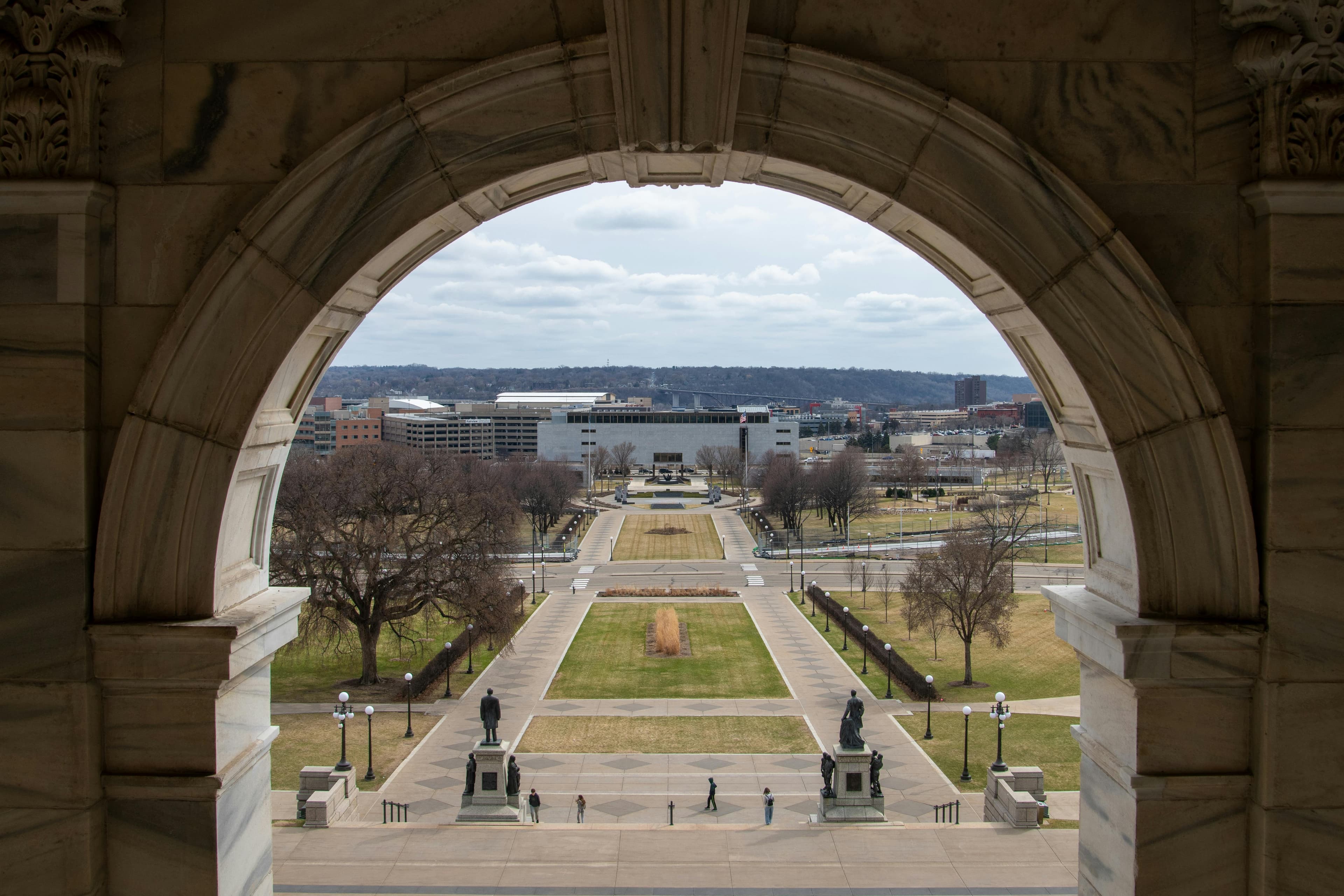
Governor Tim Walz signed SF 4760 on May 18, 2026 — making Minnesota the first state in the United States to formally enact legislation banning prediction markets. The law takes effect August 1. What happens between now and then will likely define whether any state can enforce a prediction market prohibition without federal pushback.
What the Law Actually Does
Minnesota's ban isn't a regulatory nudge or a cease-and-desist threat. It creates Minn. Stat. § 609.7615, a new felony provision embedded in the state's omnibus public safety bill.
Under the law, it is a felony to:
- Host or operate a prediction market platform for Minnesota users
- Facilitate prediction market activity (this extends liability to geolocation services, payment processors, data verification providers, and infrastructure suppliers)
- Advertise or promote prediction markets within the state
Violations carry penalties of up to five years in prison, a fine of up to $10,000, or both. The law also grants Minnesota regulators authority to issue cease-and-desist orders. Operators who receive a cease-and-desist can request a hearing, but must stop operations immediately while that process runs — or face the felony charges.
The law's definition of "prediction market" is deliberately broad: any "system that allows consumers to place a wager on the future outcome of a specified event that is not determined or affected by the performance of the parties to the contract."
Prohibited event categories include:
- Athletic events, individual performance stats, and games of skill
- Elections, government actions, and conduct of public officials
- Wars, national emergencies, natural disasters, mass shootings, and public health crises
- Civil and criminal proceedings, lawsuits, convictions, and settlements
- Short-term weather events
- Deaths and injuries to specific individuals
- Pop culture awards and entertainment outcomes
- "Mention markets" — contracts based on whether a person will make a specific statement
What the law does not ban: The legislation preserves carve-outs for insurance contracts, commodity and securities futures (with the § 609.7615 exception), horse racing pari-mutuel wagering, state lottery products, bingo, and private social bets. The exemption for federally regulated commodity contracts is qualified, not absolute — Minnesota is explicitly asserting that prediction market contracts on the prohibited categories above fall outside that exemption.
How the Bill Became Law
The path to enactment was winding. Sen. John Marty (DFL-Roseville) had been the bill's most vocal champion, arguing prediction markets are "nothing more than gambling, but they have found loopholes to circumvent our laws and allow sports betting on their platforms."
A standalone version, SF 4511, cleared the Senate 56-10 on April 30, 2026. But it stalled in the House, where committee hearing time ran short as the legislative session neared its May 18 constitutional adjournment deadline.
The breakthrough came when Rep. Emma Greenman (DFL-Minneapolis) added the prediction market ban as an amendment to SF 4760, a broader omnibus public safety package already moving through both chambers. The combined bill passed the House 100-32 and the Senate 57-9, clearing both chambers on May 12-13. Because the House's amendments triggered disagreement, the bill went through a four-member conference committee (Senate conferees: Latz, Oumou Verbeten, Limmer; House conferees: Novotny, Witte, Moller, Feist) before final approval.
The conference committee retained the prediction market ban language intact. Both chambers repassed the amended bill on May 12-13. Governor Walz signed it on May 18, 2026, assigning it Chapter 97 of the 2026 session laws.
Rep. Greenman framed the vote in terms of state sovereignty over gambling regulation: "This bill is asserting Minnesotans' authority to do what we've always done, which is to say how best and what regulations we think we should attach to gambling to protect public safety and our kids and the gambling itself."
Not everyone agreed. Rep. Nolan West (R-Blaine) argued the legislation would simply push activity underground: "Unfortunately, prohibition doesn't work. If prohibition worked, we'd live in a utopia where we'd prohibit all bad things. But when you prohibit things, you just move them into the shadows." West also warned the bill would generate significant legal costs without clear benefit: "We're going to see no gain for the public. We're going to see massive losses in our litigation costs related to losing a case against the federal government."
Rep. Drew Roach called it "a great overstep" and "a sad day for Minnesotans."
Minnesota's Gambling Landscape
To understand why Minnesota went further than any other state, it helps to know its starting point. Minnesota is one of just 11 states without legal online sportsbooks or online casino gambling. The state's gaming framework centers on tribal casinos operating under the Indian Gaming Regulatory Act, two horse racing tracks, a state lottery, and charitable gaming organizations like pull tabs.
That framework is relevant because Minnesota's 11 gaming tribes — who operate casino gambling under exclusive state-tribal compacts — have been active opponents of prediction markets moving into sports and gaming categories. The Minnesota Indian Gaming Association supported the ban. The Indian Gaming Regulatory Act gives tribes exclusive rights to offer certain gaming on tribal land, and platforms like Kalshi operating outside that framework — and without the revenue sharing, licensing fees, and consumer protection requirements the tribal system imposes — have been a direct irritant.
Supporters of the ban also pointed to consumer protection grounds. The Wall Street Journal's May 2026 investigation of 1.6 million Polymarket accounts found that the top 0.1% of traders account for 67% of money made on the exchange, and that there are approximately 2.9 losing users for every profitable trader.
The Federal Preemption Battle
The real legal fight hasn't started yet — it starts before August 1.
Kalshi and every other federally regulated prediction market operator are almost certain to challenge the Minnesota law in federal court. The core argument will be the same one that has succeeded in multiple other states: the Commodity Exchange Act (CEA) grants the CFTC exclusive jurisdiction over event contracts, and state laws that attempt to ban or restrict CFTC-licensed markets are preempted by federal law.
CFTC Chair Michael Selig has been explicit about the agency's position. In a Wall Street Journal op-ed this month, Selig wrote: "These platforms operate as federally regulated exchanges with clearinghouses and comprehensive investor protections, identical to those found in other derivatives markets." The CFTC has intervened in litigation across multiple states — filing counter-suits against Wisconsin and New York and an amicus brief in support of Kalshi in Ohio — asserting that federal authority is not subject to state override.
Kalshi spokesperson Elisabeth Diana posted publicly in response to the bill's passage: "Peak hypocrisy: MN banning prediction markets while its gov't collects millions a year from slot machines, poker games, roulette tables, and casino games. Does anyone believe that casinos are safe and well-regulated, but CFTC-registered exchanges and clearinghouses are not?"
There is also a growing body of federal court precedent supporting the platforms. On April 6, 2026, the Third Circuit Court of Appeals ruled in KalshiEX LLC v. Flaherty that New Jersey's attempt to enforce state gaming law against Kalshi's sports event contracts was preempted by the CEA. On May 5, 2026, a federal judge in Arizona granted Kalshi a preliminary injunction blocking that state from enforcing its gambling statutes against prediction market operators while the case continues — finding that Kalshi had a substantial likelihood of success on its preemption argument.
Minnesota's statutory ban, however, is more aggressive than most state actions taken so far. While other states have issued regulatory cease-and-desist orders or filed enforcement actions, Minnesota is the first to create a criminal felony classification backed by legislative enactment. That distinction may not matter to federal courts applying CEA preemption analysis — if federal law controls, it controls whether the state's prohibition is administrative or criminal — but it raises the stakes considerably for platform executives operating in Minnesota between now and whenever a court acts.
Rep. West made this precise point during floor debate: "This is a very bad idea, chiefly because we do not have the authority as a state to do so. Every state that does so is starting to lose that litigation."
The CFTC currently operates with Chair Selig as its sole commissioner — all four remaining seats remain vacant. Rules and enforcement actions taken by a single-commissioner CFTC are somewhat more politically exposed than those passed by a full five-member commission, which remains a structural long-term risk for platforms relying on CFTC preemption arguments as their primary defense.
What This Means If You Trade in Minnesota
Practically, nothing changes until August 1, 2026. Platforms like Kalshi (CFTC-licensed DCM) and Polymarket US (QCX LLC, sports-only) remain accessible to Minnesota users through the effective date.
After August 1: Minnesota's law targets operators, not individual users. The felony provisions apply to entities that host, facilitate, or advertise prediction markets — not to individual traders placing bets. However, the law grants regulators authority to issue cease-and-desist orders that would require platforms to block Minnesota users, and continuing to offer the service after receiving such an order would expose the company to felony charges.
Whether any platform actually exits Minnesota before a federal court acts is the key open question. Given Kalshi's track record of seeking immediate federal injunctive relief in every other state that has moved against it, a federal lawsuit against Minnesota is likely before the August 1 date. If a court grants a temporary restraining order or preliminary injunction — as it did in Arizona — the ban could be blocked before it ever takes effect.
A note on platform access for Minnesota users:
- Kalshi (CFTC DCM): Currently fully operational. Sports, macro, entertainment, and political markets all available.
- Polymarket US (QCX LLC d/b/a Polymarket US): Sports event contracts only; political and entertainment markets not available to US users through the US platform.
- Global Polymarket (polymarket.com): Not accessible to US users. Minnesota's ban has no practical additional effect on global Polymarket access for US-based users.
What Comes Next
Immediate (May-July 2026): Federal legal challenge expected before August 1. Watch for a Kalshi or CFTC filing in the District of Minnesota seeking a temporary restraining order or preliminary injunction. The Third Circuit and Arizona injunction precedents make an early TRO likely.
Medium-term: If the Minnesota challenge joins the growing circuit split (Third Circuit ruled FOR platforms in April; Sixth Circuit split with Ohio ruling against Kalshi in March and Tennessee ruling for Kalshi in February), the Supreme Court path becomes more direct. The circuit split is the primary mechanism by which this issue reaches SCOTUS, which lawyers involved in these cases have publicly suggested won't happen before 2027 at the earliest.
Legislative: Minnesota could trigger copycat legislation in other states without legal sports betting (Ohio, Massachusetts, and others already have active litigation). The "first mover" precedent cuts both ways — states that have been watching Minnesota may either accelerate their own legislative bans or wait to see whether the federal courts strike it down quickly.
FAQ
Does Minnesota's law apply retroactively? No. The felony provisions apply to conduct occurring on or after August 1, 2026. Past trading on prediction markets is not covered.
Will Kalshi or Polymarket shut down in Minnesota before August 1? Almost certainly not before a federal court has an opportunity to issue an injunction. Platforms have challenged every state action to date in federal court, and Minnesota's ban is unlikely to be the exception.
Are individual traders liable under the new law? The law primarily targets operators, facilitators, payment processors, and advertisers — not individual users placing trades. However, individual exposure depends on how broadly "facilitation" is interpreted, and platforms exiting the state would remove access for users regardless.
Why didn't Minnesota just regulate prediction markets instead of banning them? Minnesota's legislature has not passed online sports betting, which has failed several times due to tribal gaming opposition. Prediction markets were framed as a circumvention of the state's deliberate choice not to permit online wagering, making regulation a harder political sell than prohibition.
What would it take for the ban to actually take effect? Either no platform challenges the law before August 1, or a federal court denies an injunction. Given the trajectory of every other state action to date, both scenarios are unlikely — but not impossible.
Sources & Verification
- Minnesota SF 4760 bill status — Governor's action Approval 05/18/26, Chapter 97 — Minnesota Legislature Revisor of Statutes, verified May 19, 2026
- Minnesota SF 4760 bill text — Article 8: Prediction Markets, § 609.7615 — Minnesota Legislature Revisor of Statutes, verified May 19, 2026
- Minnesota lawmakers move to ban prediction markets — Minnesota Star Tribune, Zoë Jackson, May 13-14, 2026
- Passage of Minnesota prediction market ban sets stage for likely lawsuits — MPR News, May 13, 2026 (Rep. Greenman and Rep. West quotes)
- CFTC Chair Michael Selig WSJ op-ed on prediction markets as federally regulated financial instruments — Wall Street Journal, May 2026
- KalshiEX LLC v. Flaherty — Third Circuit rules for Kalshi, preempts New Jersey state enforcement — CFTC press release, April 6, 2026
- CFTC counter-suits against Wisconsin and New York — CFTC PR 9220-26, April 28, 2026
- Arizona federal preliminary injunction blocking state enforcement against Kalshi — CourtListener Doc 96, May 5, 2026