
House Oversight Opens Prediction Market Investigation: What Platform Subpoenas Could Mean for Traders
House Oversight Chairman James Comer has confirmed an investigation into suspicious Iran-war trades on prediction markets, with subpoenas targeting platform records. Here's what traders need to know.
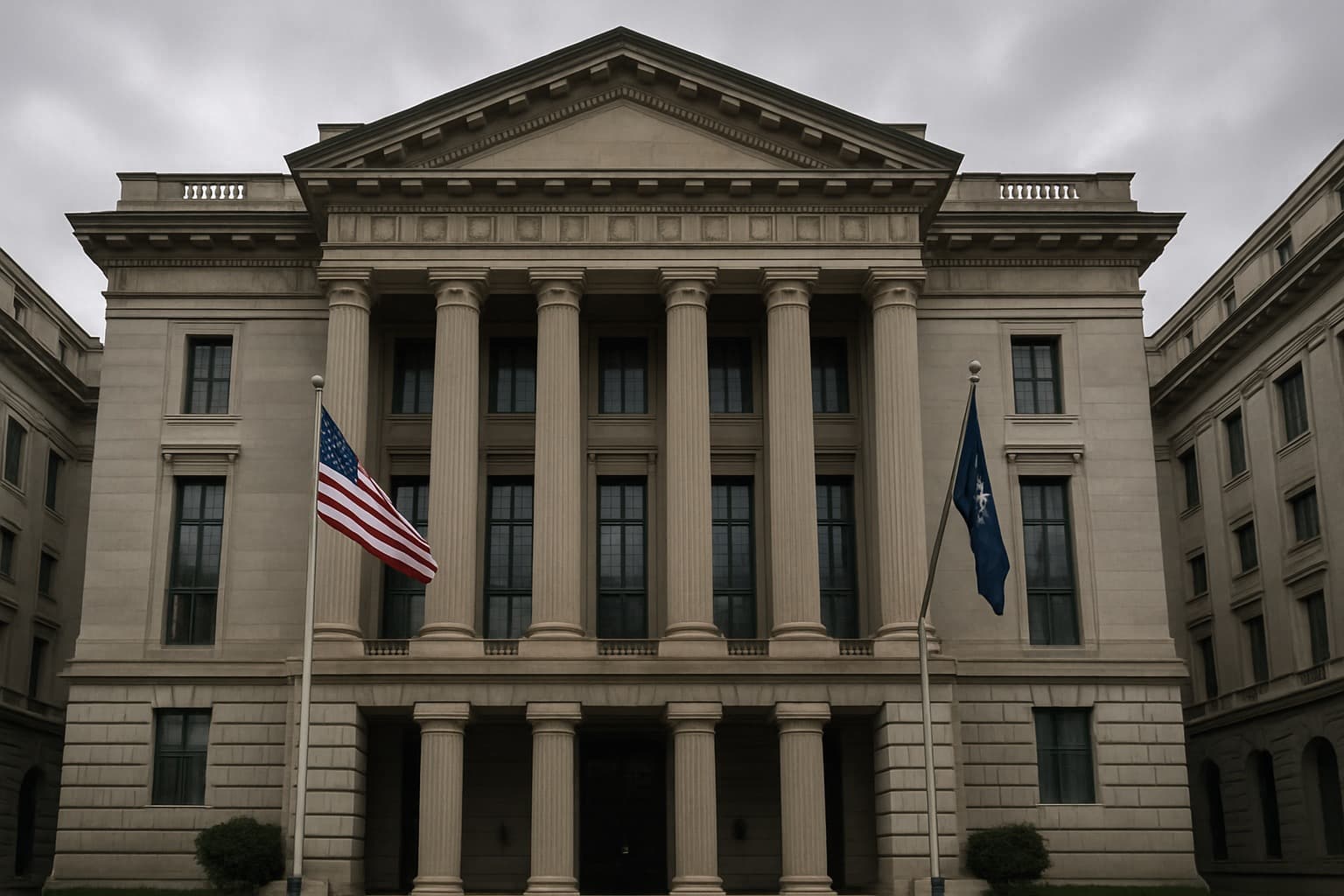
The congressional scrutiny that has shadowed prediction markets for months crossed a significant threshold this week. House Oversight Committee Chairman James Comer (R-KY) confirmed on May 13 that his committee has opened an investigation into suspicious trades on prediction markets linked to U.S. military operations in Iran — and that subpoenas are on the table.
"This is a problem," Comer told Fox Business. "We'll request information, and if we have trouble getting it, then a subpoena will follow. My subpoenas hold up in court."
The investigation follows a formal letter sent May 12 by seven House Democrats to Comer asking him to compel prediction market platforms to produce internal records. For an industry that has spent two years fighting for regulatory legitimacy in Washington, the shift from scrutiny to enforcement investigation is a significant development.
What the Letter Says
Rep. Chris Pappas (D-NH) led the request, joined by Reps. Maggie Goodlander (D-NH), Sara Jacobs (D-CA), Seth Magaziner (D-RI), Seth Moulton (D-MA), Dina Titus (D-NV), and Rashida Tlaib (D-MI). The letter asks Comer to open a formal investigation and issue subpoenas for internal records from prediction market operators.
The lawmakers pointed to three specific trading patterns that raised their concerns:
The $1 Million Iran Trader. A CNN investigation published March 24 identified a single anonymous trader on Polymarket's offshore platform who had amassed nearly $1 million through dozens of wagers on U.S. and Israeli military operations against Iran since 2024. The trader's overall win rate was 83%, rising to 93% on bets over $10,000. The trades consistently preceded unannounced military strikes — in October 2024, June 2025, and February 2026 — by hours.
The February 28 Network. A group of 38 accounts collectively earned more than $2 million on wagers tied to the February 28 strikes on Iran. Those accounts had been preloaded with funds during the preceding week, according to the Associated Press.
The Ceasefire Minutes. At least 50 newly created accounts placed coordinated bets on a U.S.-Iran ceasefire on April 7 — some of those accounts opened just minutes before President Trump announced the ceasefire on social media, AP reported. The accounts had never traded on the platform before.
The lawmakers also referenced the Israeli government's separate indictment of two individuals — including a military reservist — for allegedly using classified information to place Iran-related bets on Polymarket.
"The American public has a legitimate interest in knowing whether individuals entrusted with classified national security information have used that access for personal financial gain," the lawmakers wrote. "Congress has both the authority and the responsibility to determine whether existing ethics, classification, and financial disclosure laws have been violated."
The letter set a May 22 deadline for Comer to respond with the committee's planned approach.
Why Bipartisan Support Matters
Comer is a Republican — not a natural ally of the seven Democratic signatories — and his confirmation that the investigation is underway is the most consequential development in the story so far. His statement that "someone's been identified in the military as being part of the trade with respect to Venezuela" suggests the committee already has more information than it has disclosed publicly.
For prediction markets, bipartisan alignment on oversight is a different kind of threat than the regulatory battles they've been winning. The CFTC and federal courts have largely backed the platforms against state gaming regulators. Congressional subpoena power operates on different legal footing.
"These prediction markets are new," Comer told Fox Business. "No one would have thought about this two years ago, someone having knowledge about an upcoming invasion of a country and making an enormous bet on a prediction market."
The Van Dyke Precedent
The investigation follows the first known prosecution for prediction market insider trading in U.S. history. In April 2026, Army Master Sergeant Gannon Ken Van Dyke was charged with using classified information about the U.S. capture of Venezuelan President Nicolás Maduro to place bets on Polymarket, according to a joint CFTC and DOJ announcement. Van Dyke allegedly earned more than $400,000 in profits from the wagers.
The case established two critical precedents: that insider trading laws can apply to prediction market wagers, and that federal agencies can and will prosecute violators. Congressional investigators are now asking whether the Van Dyke case was an isolated incident or a symptom of a broader pattern.
A Harvard Law School Forum on Corporate Governance study cited by AP estimated that $143 million in profits on Polymarket may have been generated by individuals with potential insider access — across events ranging from geopolitical conflicts to celebrity news.
The Jurisdiction Problem
The core challenge for regulators is geography. Nearly all of the suspicious Iran trades identified by lawmakers occurred on Polymarket's global platform — the offshore site at polymarket.com — which operates outside direct U.S. regulatory jurisdiction. This is a critical distinction for traders to understand:
Polymarket Global (polymarket.com): Offshore platform, not regulated by the CFTC, not accessible to U.S. users through the company's compliant U.S. channels. This is where the suspicious Iran trades occurred.
Polymarket U.S. (QCX LLC d/b/a Polymarket US): The CFTC-licensed U.S. platform, operated by QCX LLC, which currently offers sports event contracts to U.S. users only. Political and geopolitical markets are not available to U.S. users through this venue.
Kalshi: A U.S.-based designated contract market (DCM) licensed by the CFTC. Kalshi explicitly bans insider trading and cooperated with the Justice Department in the Van Dyke investigation. The CFTC's enforcement authority applies directly to Kalshi's markets.
The lawmakers noted in their letter that Polymarket Global's "failure to implement meaningful identity verification or enforce restrictions on U.S. persons raises serious questions about its broader compliance with federal law."
This is the structural gap that makes Congressional subpoena power potentially more effective than CFTC enforcement alone. While CFTC jurisdiction is murkier for offshore platforms, Congressional investigators can compel testimony and document production from companies with any U.S. business nexus — including their U.S.-licensed subsidiaries.
What the Platforms Have Done — And What Congress Says Isn't Enough
Polymarket announced new insider trading rules in March 2026 after the initial scrutiny, prohibiting trades based on information users were legally required to keep confidential and restricting trading by people "in a position of authority or influence" to affect an event's outcome. Kalshi also introduced new guardrails in March, including extra screenings for athletes and politicians.
The lawmakers' letter argued these steps were insufficient, pointing to the ceasefire trading on April 7 — weeks after the platforms announced their rule enhancements — as evidence that the suspicious patterns continued.
The broader concern is not just platform rules, but record-keeping. Congressional investigators want to know who is behind the anonymous accounts making these trades. Platform records — including KYC (know your customer) data, IP logs, funding sources, and account linkage information — are currently not public. Subpoenas would compel production of that data.
The Wider Regulatory Stack
The Oversight probe is one of several concurrent pressure points on prediction markets:
Senate ban: In April, the Senate unanimously passed a resolution barring its members and staff from trading on prediction markets. That ban only covers the Senate — not the House or executive branch employees.
Young-Slotkin bill: Sens. Todd Young (R-IN) and Elissa Slotkin (D-MI) have introduced legislation to bar federal employees from using nonpublic information to bet on prediction markets.
CFTC ANPRM: The CFTC closed its comment period on April 30 for a proposed rulemaking that would address market integrity, insider trading controls, and contract prohibitions for prediction markets.
State challenges: Multiple states have filed litigation challenging prediction markets as unlicensed gambling, though the federal government and courts have largely backed CFTC's exclusive jurisdiction.
The Reuters investigation published May 7 expanded the scope further — reporting that $7 billion in well-timed oil price bets across multiple exchanges may have preceded major Iranian policy announcements by the Trump administration, suggesting the insider trading problem extends beyond prediction markets into traditional commodity futures.
What This Means for U.S. Traders
For traders on Kalshi — the primary regulated U.S. platform — the near-term regulatory picture is actually not particularly threatening. Kalshi has cooperated with federal enforcement, maintains KYC records, and operates under CFTC oversight. If anything, a stronger enforcement posture toward offshore platforms could benefit compliant U.S. exchanges by making the regulatory bargain clearer.
The risk is different for traders who have been accessing Polymarket's offshore platform via VPN. That platform falls outside the CFTC's direct enforcement umbrella, but Congressional investigators are now explicitly asking whether U.S. persons have been accessing it in violation of platform restrictions — and requesting the records that would answer that question.
For traders who made legitimate, non-insider wagers on Iran events through Polymarket's global platform, the investigation creates uncertainty without clear legal exposure. For anyone with access to nonpublic government information who placed bets tied to that information, the Van Dyke case suggests the legal risk is no longer theoretical.
FAQ
Can Congress actually subpoena prediction market platforms? Yes. Congressional committees have broad subpoena authority to compel document production and testimony from any entity with a U.S. business presence. This applies to both U.S.-licensed platforms like Kalshi and to companies like Polymarket that operate U.S.-licensed subsidiaries (QCX LLC). The scope and legal limits of those subpoenas would likely be contested.
Are the suspicious Iran trades illegal under U.S. law? Potentially, yes — but it's complicated. The Commodity Exchange Act prohibits insider trading in CFTC-regulated markets. Van Dyke's prosecution established that this applies to prediction market wagers. However, the Iran trades at issue occurred on Polymarket's offshore platform, where direct CFTC enforcement jurisdiction is less clear. Congressional investigators are asking whether existing laws cover this conduct and, if not, whether new legislation is needed.
How does this affect regular prediction market users? For U.S. traders using regulated platforms like Kalshi, there is no direct enforcement risk from this investigation unless they have been trading on nonpublic information. The investigation is focused on anonymous offshore accounts with suspicious trading patterns, not ordinary retail activity.
What happens if Comer actually issues subpoenas? Platforms would have the option to comply, negotiate, or challenge the subpoenas in court. Given the political and PR stakes, most would likely negotiate scope rather than refuse outright. The records produced could include account identification data, funding histories, IP logs, and trade records — potentially unmasking the traders behind the suspicious accounts.
Conclusion
The Pappas letter and Comer's confirmation represent the prediction market industry's most serious congressional test yet — not because the law is clearly against them, but because the investigation could produce facts that force legislative action regardless of the existing legal framework.
The industry's strongest argument — that prediction markets aggregate information and improve public forecasting — becomes harder to make when the headlines are about anonymous traders placing million-dollar bets minutes before classified military operations. The Van Dyke prosecution showed that federal agencies will move when the evidence is clear enough. Congressional investigators are now trying to determine how much more of that evidence exists.
For traders on U.S.-regulated platforms, the clearest takeaway is straightforward: Kalshi's cooperation with federal investigators is a structural feature of its licensing model, not a bug. The regulatory legitimacy the industry has spent years building in Washington is being tested — and the outcome will determine what prediction markets in the United States look like for the next decade.
Sources & Verification
- Seven House Democrats urge Comer to subpoena prediction market platforms: Rep. Chris Pappas press release, May 11, 2026
- Comer confirms investigation underway, subpoenas may follow: Rep. Chris Pappas press release, May 13, 2026
- $1 million Iran trader, 93% win rate: CNN Exclusive, March 24, 2026
- 50 new accounts bet on Iran ceasefire minutes before announcement: Associated Press, April 9, 2026
- Congressional calls for investigation after ceasefire trades: Associated Press, April 9, 2026
- Bipartisan congressional scrutiny and legislation: Associated Press, April 17, 2026
- Khamenei prediction market bets, ethics scrutiny: Reuters, March 2, 2026
- $7 billion in oil bets before Iran policy pivots: Reuters, May 7, 2026
- Van Dyke case: first prediction market insider trading prosecution: CFTC Press Release 9217-26