
Prediction Markets Face a Reckoning: 400 Suspicious Trades, NFL Demands, and $178 Billion in Volume
Kalshi flagged 400+ suspicious trades in 2026—double last year—as volumes hit $178 billion annualized. The NFL is demanding the CFTC ban injury markets and restrict sports trading to users 21+. Here is what traders need to know.
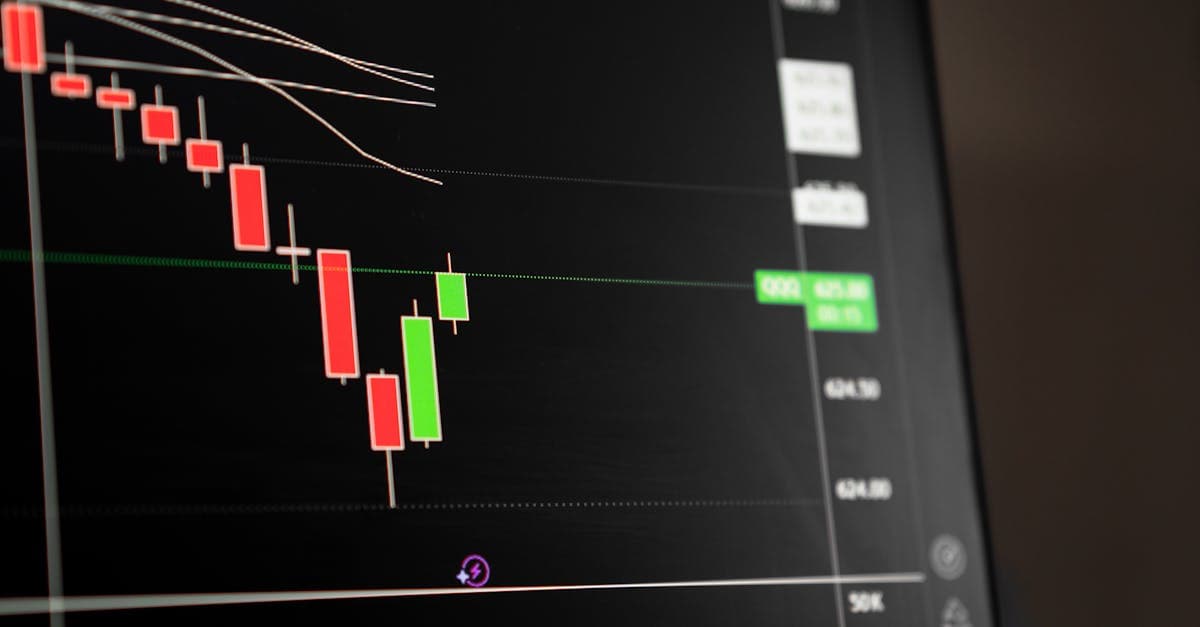
Prediction markets have spent years arguing they're the most accurate forecasting tools on the planet. In 2026, they're also becoming the most scrutinized. Kalshi has flagged more than 400 suspicious trades since January — more than twice the number it investigated in all of last year — while trading volumes have tripled to $178 billion annualized. Polymarket's monthly volume hit $10.3 billion in April, nearly three times the prior year.
The growth is undeniable. So is the integrity pressure that comes with it.
On the same day Reuters broke the suspicious-trades story, the NFL sent a letter to the Commodity Futures Trading Commission demanding the agency ban injury contracts, broadcaster "mention" markets, and other easily manipulable event contracts from prediction platforms — and restrict sports trading to users 21 and older. A week later, a Senate subcommittee is scheduled to hold the first major Congressional hearing placing prediction markets and sportsbooks in the same room.
This is not a niche regulatory dispute anymore. It is the biggest integrity challenge the prediction market industry has ever faced.
The Volume Numbers Behind the Scrutiny
To understand why the integrity pressure is accelerating, start with the scale.
Kalshi's annualized trading volume has more than tripled over the past six months, reaching $178 billion, according to figures the company shared in early May 2026. Polymarket's monthly notional trading volume across its offshore exchange and U.S. platform hit roughly $10.3 billion in April — up from $3.8 billion in April 2025, a 171% increase, according to Dune Analytics data cited by Reuters.
Both platforms were founded less than a decade ago. Kalshi launched publicly in July 2021; Polymarket began in 2020 as a pandemic-era forecasting experiment. Their transformation from niche curiosity to mainstream financial product has been the fastest-moving story in fintech this year.
That speed has consequences. More volume means more opportunities for bad actors. More users means a wider pool of people who might possess — or seek out — material nonpublic information. And more public attention means more regulatory scrutiny from lawmakers, sports leagues, and the Commodity Futures Trading Commission, the federal regulator that oversees these platforms.
Kalshi's $22 billion valuation — following a $1 billion TCV-led fundraising round in March 2026 — and Polymarket's reported fundraising talks at a $15 billion valuation tell you everything about how seriously investors view the industry's trajectory. They also tell you why regulators and sports leagues are paying close attention.
400 Suspicious Trades: The Insider Trading Challenge
Reuters reported on May 15, 2026 that Kalshi has probed and flagged more than 400 suspicious trades since January — more than twice the number the platform investigated in all of 2025. Some of those trades have been referred to the CFTC, according to two sources familiar with the matter.
Polymarket has also witnessed a significant uptick in flagged suspicious trades since the start of this year, according to a separate Reuters source, though no specific count was provided.
Catching bad actors on prediction market platforms is uniquely difficult, legal experts say. Corporate insider trading cases often involve identifiable executives with documented access to nonpublic information. Prediction market traders, by contrast, are frequently pseudonymous.
"In the world of corporate insider trading it is often relatively easy to identify the parties with access to material nonpublic information who might trade in violation of the law," said Joseph Grundfest, a Stanford Law School professor and former Securities and Exchange Commission commissioner. "But equivalent data is often very difficult or impossible to collect in connection with some prediction markets."
The economic incentives are substantial. Prediction market contracts resolve to $1 or $0 on a binary outcome — meaning advance knowledge of a result, rather than just a better probability estimate, creates an enormous informational edge.
"If someone has insider information, they might be way more inclined to act on it on prediction markets than on equity markets," said Charles Martineau, a professor at the University of Toronto's Rotman School of Management.
Three Cases That Put Prediction Markets Under the Microscope
The 400-trade figure did not emerge in a vacuum. A series of high-profile cases has brought Congressional and regulatory attention squarely onto prediction market integrity.
The Van Dyke Case: The CFTC and Department of Justice charged a U.S. Army soldier with earning more than $400,000 by trading on Polymarket using classified information about the timing of the January 2026 raid to capture former Venezuelan President Nicolás Maduro. The soldier, Gannon Ken Van Dyke, has pleaded not guilty. It was the first insider trading prosecution explicitly tied to prediction market contracts.
Kalshi's Congressional Candidate Bans: In April 2026, Kalshi banned three U.S. congressional candidates for what the platform called "political insider trading," including a Virginia Senate candidate who had placed bets on his own electoral outcomes. The bans were the platform's most public self-regulatory action and signaled that exchanges are increasingly willing to act before regulators do.
Oil Market Timing: Reuters also reported that well-timed bets on falling oil prices preceded a major Iran-policy announcement from the Trump administration, raising concerns about advance access to nonpublic executive branch information. Neither the platform involved nor the specific contracts were publicly identified.
Both Kalshi and Polymarket have since updated their rulebooks to explicitly prohibit trades made using confidential information or illegal tips. Both platforms have also blocked federal employees from trading on political campaigns they are directly working for.
What the NFL Is Demanding
On May 15, 2026 — the same day Reuters published its suspicious-trades story — the NFL sent a formal letter to CFTC Chair Michael Selig detailing the league's demands for prediction market regulation.
The letter, written by Brendon Plack, the NFL's senior vice president for government affairs and public policy, called for restrictions specifically tailored to sports event contracts.
Contracts the NFL wants banned or restricted:
- "Easily manipulable" contracts: Markets where a single player's conscious choice determines the outcome — such as whether a kicker misses a field goal or whether a quarterback's first pass is incomplete
- "Knowable in advance" contracts: First play of game, draft picks, coach firings, and player signings — information that frequently leaks before markets close
- "Inherently objectionable" contracts: Player injuries, fan safety incidents, and officiating actions
- Broadcaster "mention" contracts: Markets tied to whether specific words or phrases are said during a live broadcast
Additional league demands:
- Raise the minimum age for sports prediction market participation from 18 to 21 — a request the NBA has also made separately
- Require platforms to create prohibited participant lists in coordination with sports leagues, covering players, referees, team and league employees
- Replace platform self-certification with a league-input certification process for individual player performance contracts
- Prohibit margin trading on sports event contracts, which the NFL said could amplify addictive behavior and loss risk
"These suggestions are aimed at (i) protecting the integrity of the sporting events to which the prediction contracts relate, and (ii) protecting participants in these prediction markets from fraudulent or manipulative behavior," Plack wrote.
NFL executive vice president Jeff Miller has been consistent on the league's position: "Sports prediction markets are not effectively regulated currently. We will continue to engage with the CFTC in pursuit of the necessary guardrails to protect both the integrity of the game and consumers participating in these rapidly evolving markets."
The NFL is not alone. Player unions for the NFL, NBA, MLB, MLS, and NHL filed a joint letter to the CFTC on April 30, 2026 — the final day of the agency's formal comment period — asking the CFTC to ban "negative outcome" contracts that pay if a player is injured or penalized, and "mention" contracts based on live broadcast language. The filing cited a November 2025 survey in which 78% of professional baseball players said legalized sports betting had already changed how fans treat them.
CFTC Chair Selig has acknowledged the concerns directly: "The CFTC takes seriously its responsibility to reject prediction market contracts that are readily susceptible to manipulation and we're working with the professional sports leagues to ensure we get this right."
The CFTC's Dual Role
The regulatory picture is complicated by the CFTC's contradictory-looking posture: it is simultaneously defending prediction market platforms in court against states trying to shut them down, while also tightening oversight of which contracts platforms can offer.
The CFTC has filed lawsuits against at least five states — including Arizona, New York, and Wisconsin — to block those states from enforcing gambling laws against federally regulated event contract platforms. The agency secured a preliminary injunction in Arizona in May 2026. These are not the actions of a regulator that wants prediction markets gone.
But CFTC protection comes with conditions. Speaking at the FINRA Annual Conference on May 12, 2026, Chair Selig confirmed the agency is in active talks with every major professional sports league to pursue data-sharing agreements — similar to the memorandum of understanding signed with Major League Baseball in March 2026 — designed to monitor for market manipulation tied to nonpublic on-field information.
The CFTC's message to platforms: federal preemption protection is real, but so is federal enforcement of insider trading rules, surveillance requirements, and contract standards. The two are part of the same package.
What Comes Next: The May 20 Hearing
The Senate Commerce Subcommittee on Consumer Protection, Technology, and Data Privacy has scheduled a hearing on May 20, 2026 — titled "No Sure Bets: Protecting Sports Integrity in America" — that will mark the first formal Congressional session placing prediction markets and licensed sportsbooks in the same room simultaneously.
Several competing legislative approaches are currently active:
- The Gillibrand-McCormick Prediction Market Act of 2026 (introduced April 30) would create a federal regulatory framework specifically governing event contracts
- A bipartisan Schiff-Curtis bill would prohibit CFTC-registered platforms from offering sports-related and casino-style event contracts, returning regulatory authority to states
- The Prediction Markets Security and Integrity Act would require all prediction platforms operating in the U.S. to register and comply with anti-money laundering and consumer protection standards
For traders and platform users, the practical implications are real. If the CFTC tightens contract standards in response to league demands, some currently available sports markets may be removed. Age verification requirements, if enacted, would affect users between 18 and 20. Margin trading restrictions would affect platforms pursuing perpetual-contract models like Kalshi Timeless. None of this is finalized yet — but none of it is theoretical either.
What traders should know now:
- Both Kalshi and Polymarket have already updated their rulebooks to prohibit confidential-information trading
- Both platforms have blocked federal employees from trading directly on campaigns they work for
- The CFTC has committed to aggressive insider trading prosecution
- Platform availability in specific states remains subject to ongoing litigation
Explore Kalshi markets and Polymarket markets on PredictionMarkets.US, where we track live prices, fees, and regulatory status across all major platforms.
Frequently Asked Questions
Is insider trading illegal on prediction markets?
Yes. Kalshi and Polymarket are regulated under the Commodity Exchange Act as designated contract markets. Using material nonpublic information to trade event contracts is prohibited under CEA rules, just as it is in traditional financial markets. CFTC Chair Selig has explicitly committed to aggressive prosecution. The Van Dyke case — in which a U.S. Army soldier was charged with earning $400,000 using classified information on Polymarket — was the first CFTC insider trading prosecution tied to a prediction market contract.
How does Kalshi detect suspicious trades?
Kalshi, like all CFTC-registered exchanges, is required to maintain surveillance systems to monitor for market manipulation and insider trading. The platform reviews trade patterns, account activity, and timing relative to public announcements. Suspicious trades can be referred to the CFTC's Division of Enforcement. The specific threshold for triggering a review is not public. Since January 2026, that process has flagged more than 400 trades — more than double the 2025 annual total.
Will injury markets and broadcaster "mention" contracts be banned?
The NFL is formally requesting it, and CFTC Chair Selig has indicated the agency is treating the concern seriously. However, no binding CFTC rule has banned these contract types as of May 2026. The CFTC's formal rulemaking comment period closed April 30, 2026. Whether the agency issues binding rules restricting specific contract types — and on what timeline — will depend on the rulemaking process. Until then, platforms continue to self-certify which contracts they offer.
Can U.S. users access Polymarket's global prediction markets?
No. Polymarket's global exchange (polymarket.com) is not accessible to U.S. users. The U.S.-accessible venue is operated by QCX LLC d/b/a Polymarket US, which holds a CFTC Designated Contract Market license and currently offers only sports-related markets to U.S. users. Geopolitical, political, and entertainment markets are not available on the U.S. platform.
Conclusion
Prediction markets have become too big, and too visible, to avoid the scrutiny they are now receiving. The same growth that made Kalshi worth $22 billion and pushed Polymarket's monthly volumes past $10 billion has also created a surveillance and enforcement challenge that platforms, regulators, and sports leagues are openly contesting.
The question is not whether tighter oversight is coming — it is. The question is whether oversight comes from the CFTC (the platforms' preferred outcome) or from a patchwork of state gaming laws and Congressional bans. What emerges from the May 20 hearing, and from the CFTC's rulemaking process in the months ahead, will tell you more about this industry's future than any market contract currently on offer.
Sources & Verification
- Kalshi 400+ suspicious trades, 2x 2025 total; $178B annualized volume; Polymarket $10.3B April volume (Dune Analytics): Reuters, May 15, 2026
- Joseph Grundfest and Charles Martineau expert quotes: Reuters, May 15, 2026
- NFL letter from Brendon Plack, contract restriction demands, Jeff Miller quote, 21+ age request: CNBC, May 15, 2026
- Jeff Miller "not effectively regulated" quote: ESPN, March 30, 2026
- CFTC Chair Selig quote on manipulation rejection: CNBC, May 15, 2026
- Van Dyke $400,000 Polymarket Maduro insider trading case: CFTC Press Release 9217-26
- Kalshi candidate bans: CFTC Press Release 9185-26
- CFTC-MLB data-sharing MOU (March 2026): CFTC Press Release 9199-26
- Player unions joint CFTC letter, 78% baseball player survey: The Athletic, May 1, 2026
- CFTC active talks with all major leagues (FINRA, May 12, 2026): CNBC, May 15, 2026
- Arizona preliminary injunction: CFTC Press Release 9211-26
- Polymarket $15B valuation talks: Reuters, May 15, 2026
- Kalshi $22B valuation (March 2026 funding round): Reuters, March 19, 2026
- QCX LLC CFTC DCM designation: CFTC DCM Registry