
Brazil's Runoff Upset: What Prediction Markets Got Wrong About Lula vs. Bolsonaro
Lula beat Bolsonaro 51.8%-48.2% after Kalshi and Polymarket priced Bolsonaro above 80%. What a 20% price really means and how to read election markets.
Brazil's Runoff Upset: What Prediction Markets Got Wrong, and What a 20% Price Really Means
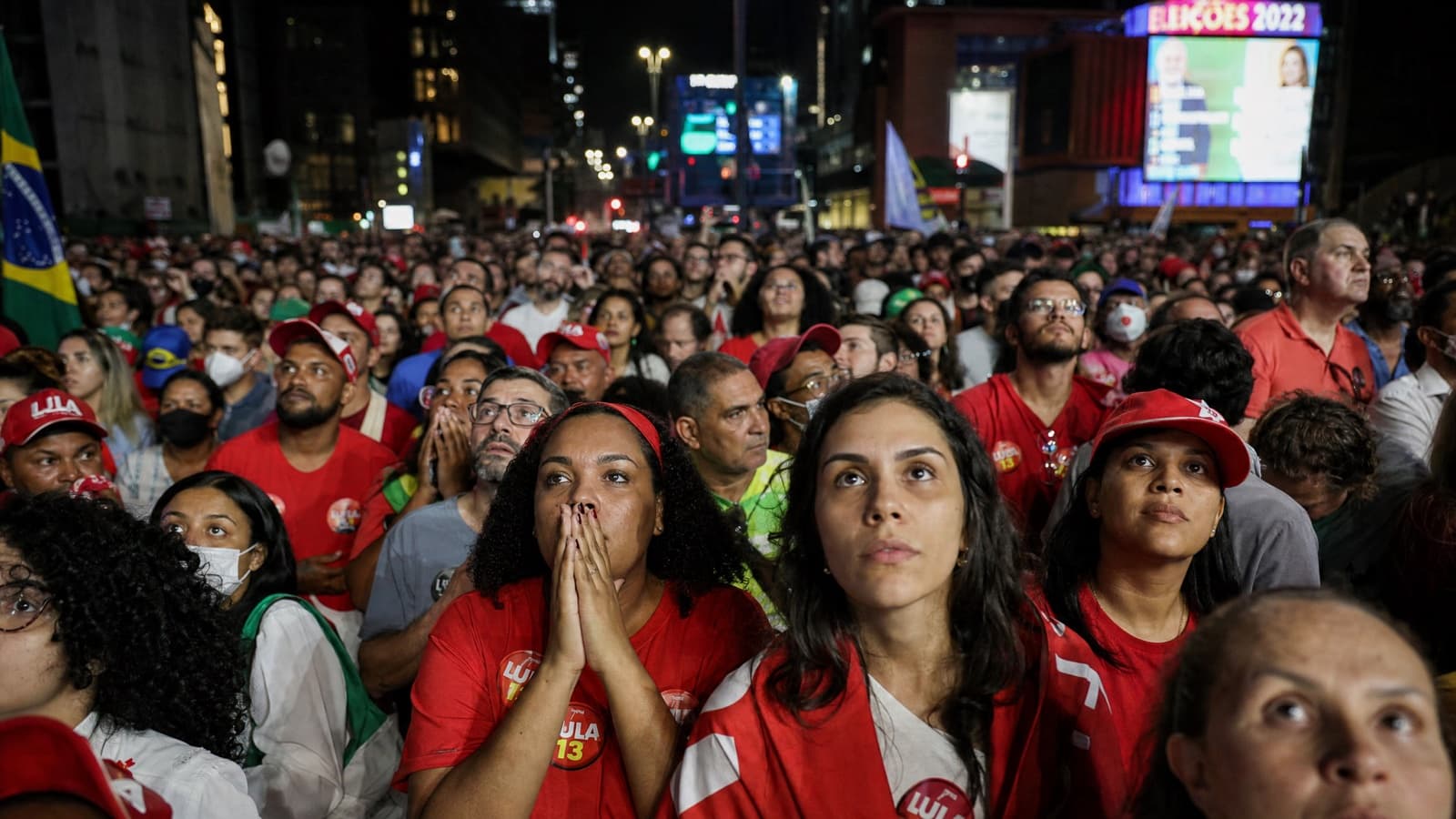
On Sunday, October 25, Luiz Inácio Lula da Silva won Brazil's presidential runoff with 51.8% of the vote to Flávio Bolsonaro's 48.2%, according to Brazil's Superior Electoral Court as reported by CNBC. Prediction markets had told a very different story. After the first round on October 4, both Kalshi and Polymarket gave Bolsonaro more than an 80% chance of unseating Lula. As late as Sunday afternoon, Lula was still a significant underdog, and just after 8:30 p.m. ET Kalshi still had him at only 21%.
The "prediction markets got it wrong" headlines followed within hours. This article walks through what happened, why one upset does not prove or disprove a forecasting tool, and what the Brazil result means for how you should read prices on election markets, including the U.S. midterms now days away.
What Happened in the Runoff
The facts, according to CNBC's reporting:
- Lula took 51.8% of valid votes to Bolsonaro's 48.2%, according to the Superior Electoral Court.
- It is the first time since Brazil returned to direct elections in 1989 that a candidate has won the runoff after losing the first round.
- Brazil's Supreme Court extended voting by two hours late Sunday, which Bolsonaro argued hurt his chances.
- Bolsonaro refused to concede overnight and said he would seek to have the result annulled, Reuters reported.
The first round on October 4 had gone the other way, and markets repriced hard toward Bolsonaro. For roughly three weeks the consensus held. We covered that setup in our pre-election pieces, including the runoff odds breakdown and the runoff market overview.
Live market view — track these prices yourself:
You can also follow the Brazil presidential election winner market on PredictionMarkets.US.
Markets vs. Polls: Different Questions, Different Outputs
CNBC noted that, unlike prediction market odds, which pointed to a clear Bolsonaro victory, political polls showed a tight race in the days before the vote. That gap is worth sitting with, because it is the most useful lesson of the episode.
A poll estimates how a population says it will vote, with a stated margin of error. A market price is something else: what traders collectively pay today for a contract that pays $1 if a specific outcome occurs. The Kalshi contract in question asked "Brazil Presidential election winner?" and was verified by reporting from the Associated Press, per CNBC. A price of 20 cents implies roughly a one-in-five chance. It does not say how the vote will split, and it does not say which of the five cases this will turn out to be.
CNBC also included a caution that applies to every election market: odds and prediction market platforms do not use the methodologies of traditional political polling, and are not substitutes for political polls.
What a 20% Price Really Means
Kalshi co-founder and CEO Tarek Mansour had a ready-made answer for this moment. After a Wisconsin Democratic gubernatorial primary in August, where Kalshi reflected a 95% likelihood for Francesca Hong and she lost by less than one percentage point, he wrote on X (as quoted by CNBC): "a 5% probability doesn't mean it won't happen. It means it should happen 1 in 20 times. If 5% candidates never won, the markets would be broken."
He is right on the math, and it applies to Brazil too. Lula's roughly 20% price meant that if you could rerun an election like this five times, you would expect him to win about once. But there is an important counterpoint:
- One result is a weak test. A single 80/20 outcome going the "wrong" way is entirely consistent with a well-calibrated market. It is also consistent with a miscalibrated one. You cannot tell from one data point.
- Calibration needs many events. The honest way to judge any forecaster, markets included, is to look at hundreds of predictions: of all the events priced near 20%, did about 20% happen? Two high-profile misses in a few months (Brazil and the Wisconsin primary) are worth noting, but they are not a statistical verdict.
- A price is not a certainty. An 80% favorite is not "predicted to win" in the way a headline implies. It is a favorite that loses about one time in five.
At the same time, skeptics have a fair point. Markets that sit well away from the polls need an explanation. Either the traders know something polls miss, or they are reacting to the same narrative (here, the first-round result) and amplifying it. After Brazil, the burden of proof on that question rests with the markets.
Who Was Actually Trading This Market?
One structural factor deserves attention. Brazil moved against prediction platforms earlier this year. On April 24, 2026, Brazil blocked prediction market platforms and tightened rules on "bet-like" products, according to Reuters, and Bloomberg reported the block covered Polymarket and Kalshi. We covered the details in our earlier article on Brazil's block.
We have not verified the nationality of the traders in the Brazil election market, and nobody outside the platforms can say for certain. But when local participants are restricted, it is reasonable to ask whether a market is missing the people with the best read on local sentiment. That is a hypothesis, not a finding, and it is worth watching in other markets where access is limited.
The Rest of the Story: Financial Markets Were Caught Off Guard Too
Prediction markets were not the only ones surprised. CNBC reported that Brazilian assets sold off sharply after the result:
- The iShares MSCI Brazil ETF fell more than 20% on Monday, and trading on Brazil's stock exchange was halted by an automatic circuit breaker.
- The Brazilian real dropped 10.5% against the U.S. dollar to its lowest level since December 2025, according to LSEG data.
- Petrobras fell about 16% and Itaú Unibanco about 20% in U.S. trading.
- Brazil's Treasury canceled bond auctions scheduled for October 27 and 29.
The size of that move is itself a data point about positioning. Investors had priced in a friendlier outcome, the same one the prediction markets were pricing. Analysts quoted by CNBC pointed to Brazil's fiscal position, with Citi citing concerns about fiscal policy and the reform agenda. In other words, the "wrong" call was widely shared, not unique to election-odds platforms.
How to Read Election Markets After Brazil
Here is a practical checklist for reading any political prediction market, including the November midterm markets:
- Convert prices to frequencies. An 80% favorite loses one in five times. If a 20% outcome happening would break your thesis, you are too confident.
- Compare against polls, and ask why they differ. A big gap between a market and polling is a signal to dig, not to trust either side blindly.
- Check who can trade. Access restrictions, geography, and market volume all shape whether a price reflects local knowledge.
- Beware momentum after a first round. Markets can overreact to the most recent vote, as the Brazil first round may have shown.
- Read the contract rules. Know exactly what the market asks and how it settles before you read anything into the price.
- Do not mistake a market for a verdict. A single miss tells you very little; a track record over many events tells you a lot.
Frequently Asked Questions
Did prediction markets get the Brazil election wrong?
The favorite lost. Kalshi and Polymarket priced Bolsonaro above 80% after the first round, and Lula won the runoff 51.8% to 48.2%, per CNBC. Whether that means the markets were "wrong" depends on calibration: a 20% outcome should happen about one time in five. A single result cannot settle that question.
How were the polls different from the markets?
CNBC reported that polls showed a tight race in the days before the vote, while the markets pointed to a clear Bolsonaro win. Polls estimate vote share with a margin of error; markets price the chance of a winner.
Can Americans trade on the Brazilian election?
This article does not give trading guidance. Availability of election contracts varies by platform and jurisdiction, and Brazil itself blocked prediction platforms in April 2026. Check each platform's official terms before trading anything.
What did Kalshi's CEO say about upsets?
Tarek Mansour wrote in August that a 5% outcome should happen one in 20 times and that "If 5% candidates never won, the markets would be broken." That statement was made after the Wisconsin primary, not Brazil, but it reflects how the platform frames its odds.
What does this mean for the U.S. midterms?
It is a reminder to read market prices as probabilities, not predictions. Compare them to polling, understand the contract rules, and remember that favorites lose regularly.
Bottom Line
The Brazil runoff is a clear reminder of what a prediction market price is and is not. A 20% outcome happened. That is not scandalous, but it is not nothing either: two big misses in a short span invite fair scrutiny of how markets form views after dramatic first-round results, and of who is trading. Treat prices as one input alongside polls, fundamentals, and the rules of the contract. Explore live election markets and compare prices across platforms on PredictionMarkets.US. Nothing here is financial advice.
Sources & Verification
- Runoff result (Lula 51.8%, Bolsonaro 48.2%), first runoff win after a first-round loss since 1989, market selloff, circuit breaker, real at lowest since December 2025, Treasury auction cancellations, Bolsonaro refusing to concede: CNBC, Oct 26, 2026 — verified Oct 28, 2026
- Kalshi and Polymarket Bolsonaro odds above 80% after the first round; Kalshi Lula at 21% Sunday night; contract wording and AP verification; polls showing a tight race; Mansour quote; Wisconsin primary: CNBC, Oct 26, 2026 — verified Oct 28, 2026
- Runoff result and Bolsonaro's rejection: Associated Press, Oct 26, 2026 — headline verified Oct 28, 2026
- Brazil blocks prediction platforms, April 24, 2026: Reuters and Bloomberg — headlines verified Oct 28, 2026
- Runoff coverage: The New York Times — headline verified Oct 28, 2026