
Brazil Blocks 27 Prediction Market Platforms: What Kalshi and Polymarket Users Need to Know
Brazil's National Monetary Council issued Resolution 5,298 on April 24, 2026, blocking 27 prediction market platforms including Kalshi and Polymarket — and why it matters for global expansion.
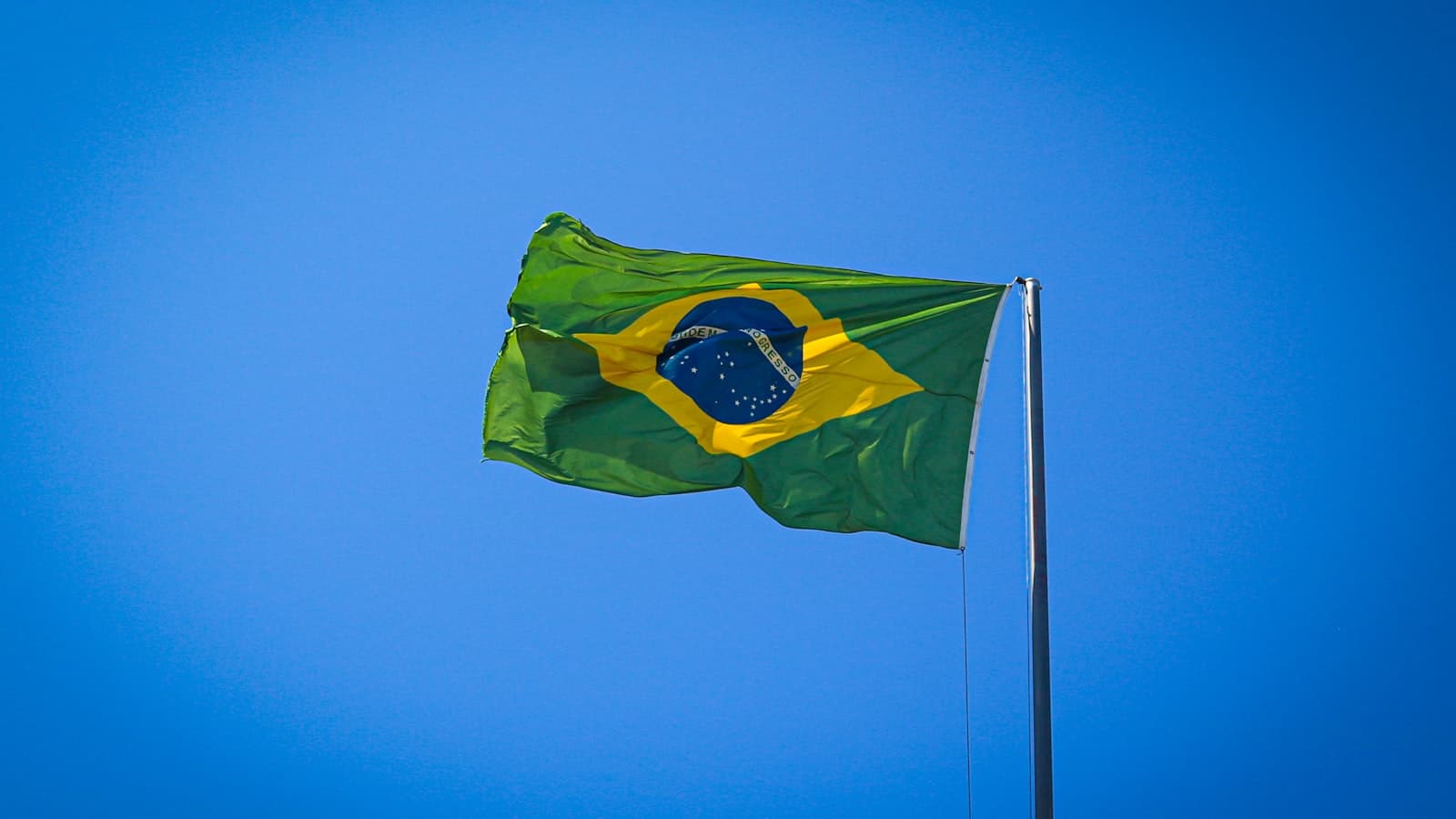
On April 24, 2026, Brazil became the most significant country in the world to ban prediction markets — not through court battles or state-by-state litigation, but in a single afternoon.
Finance Minister Dario Durigan announced at a press conference at the Palácio do Planalto that 27 prediction market platforms had been blocked in Latin America's largest economy. Anatel, Brazil's national telecommunications regulator, cut off access before the day was over. Kalshi and Polymarket were among the first sites to go dark for Brazilian users.
The same week Kalshi launched its first crypto perpetual futures product in New York, its flagship international expansion market — the country it had bet on to prove the "regulated derivative" playbook works outside the United States — declared the entire category illegal.
What Brazil Actually Did
The action wasn't improvised. It came with new law.
Brazil's National Monetary Council (CMN) issued Resolution No. 5,298 on April 24, 2026, establishing a categorical definition of what can and cannot serve as an underlying asset for a derivatives contract in Brazil. The resolution takes full effect on May 4, 2026.
Under the new framework, the following are prohibited as underlying assets:
- Real sporting events
- Virtual online gaming events
- Political and electoral events
- Social, cultural, and entertainment events (real or virtual)
The following remain permitted:
- Price indices (inflation rates, bond indices)
- Interest rates
- Exchange rates
- Commodity prices
- Financial assets and securities traded on organized exchanges
The distinction is explicit: if the underlying event is financial, you can trade a derivative on it. If it's an election, a soccer match, or a weather event, you cannot — full stop.
At the same press conference, economic reforms secretary Regis Dudena described the core problem: prediction markets had been "presented as a security" but carried "the potentially very destructive features of gambling." Presidential chief of staff Miriam Belchior put it plainly: "Now, we are announcing that prediction markets will not be allowed in Brazil."
The 27 Platforms Blocked
Anatel moved quickly, blocking 27 platforms within hours of Durigan's announcement. (The government initially said 28; the Finance Ministry corrected the figure to 27.)
The blocked platforms span both international operators and Brazil-focused services. Among the most recognized names:
- Kalshi (United States, CFTC-registered)
- Polymarket (global platform)
- PredictIt (United States)
- Robinhood (via its prediction market / forecasting feature)
- Fanatics Markets
- ProphetX
- Hedgehog Markets
- Novig
- Polyswipe
- PRED Exchange
- Stride
Brazil-focused platforms also affected include Palpita, Cravei, Previsao, and MercadoPred.
A spokesperson for Kalshi said the company was "reviewing the resolution." Polymarket did not immediately respond to requests for comment.
Kalshi's $4.7 Million Bet — and What Just Happened to It
The Brazil block landed with particular force for Kalshi because Brazil wasn't just another market — it was the one.
On March 9, 2026, Kalshi announced its first international expansion: a partnership with XP Inc., Brazil's largest independent investment platform, to offer regulated prediction markets to XP's roughly 4.7 million clients through XP's Clear Corretora brokerage brand. Co-founder Tarek Mansour, who is Brazilian, described the partnership as the proof-of-concept for Kalshi's international expansion thesis: that a CFTC-registered, fully regulated derivatives exchange could operate globally using the same "we're a real financial product" framing that had worked domestically.
Seven weeks later, Brazil's government blocked Kalshi at the ISP level.
Publicly available data on Kalshi's Brazil status indicates a potential carve-out: Kalshi's XP partnership was specifically designed around economic-financial indicator contracts — inflation benchmarks, interest rates, macroeconomic data releases. Under Resolution 5,298, those are the exact categories that remain permitted. Whether Kalshi can preserve the XP partnership by restricting its Brazilian offering to economic contracts remains an open question; the consumer-facing Kalshi app on its current form is gone.
Why Brazil Did This
The move is rooted in a domestic political fight that predates prediction markets entirely.
President Luiz Inácio Lula da Silva's administration has spent the past year trying to address a national household debt crisis that officials attribute in part to the rapid expansion of online gambling in Brazil. Brazil legalized and taxed fixed-odds betting platforms in 2023 under Law 14.790 — but that framework was specifically designed for sports betting and online games. Prediction markets arrived afterward and were never explicitly covered.
Daniele Correa Cardoso, Brazil's Secretary of Prizes and Betting, framed the issue as definitional: "We have seen these platforms and identified that the dynamics are those of a bet, but not covered by Law 14.790, which only covers fixed-odds betting and online games." Her conclusion: "Prediction markets entered Brazil to offer bets disguised as derivatives. This is illegal and has not been recognized by the Brazilian government."
The government's technical note from the Secretariat of Prizes and Betting argued that prediction market platforms "simply reproduce the essential elements of fixed quota bets" — a legal term-of-art in Brazil's betting regulatory framework. Once that technical characterization was locked in, the CMN acted to close the regulatory gap.
The result: Durigan made the announcement, Anatel blocked the sites, and the CMN formalized it in writing. It happened in a single day.
What's Still Allowed: The B3 Angle
The resolution didn't kill all prediction-style products in Brazil. It drew a line.
Brazil's main stock exchange, B3 SA, launched six new contracts on April 27 — the same day the full Anatel block took effect — tied to the Ibovespa equity index, the Brazilian real, and Bitcoin. These are economic-financial benchmarks, exactly the category the CMN resolution explicitly preserved.
B3 had also been studying event-based contracts, including products potentially linked to Brazil's October 2026 presidential election — a race expected to be closely contested between President Lula and Senator Flávio Bolsonaro. The CMN resolution appears to close that door: electoral events are now categorically prohibited as underlying assets.
The securities regulator CVM retains discretion to approve additional contracts as valid economic or financial benchmarks. Whether that gives any prediction market platform a path back into Brazil will depend on how CVM interprets its own mandate — but the current signal is unambiguous.
Brazil in Global Context: The Third LATAM Nation
Brazil is the third country in Latin America to restrict prediction markets following similar moves by Argentina and Colombia. Globally, it joins France, Hungary, Portugal, Belgium, and the Netherlands among jurisdictions that have blocked or penalized Polymarket specifically for operating without appropriate gambling licenses.
Polymarket has previously said it is blocked in more than 30 countries, primarily through OFAC-related restrictions and national gambling bans. Brazil adds another major market to that list — and, crucially, it's the first to block Kalshi as well.
That distinction matters. Kalshi is a CFTC-designated contract market — the same regulatory status that the U.S. federal government argues gives it "exclusive jurisdiction" over event contracts nationwide. Outside the United States, that designation carries no legal weight. Brazil's CMN isn't a party to the Commodity Exchange Act. To Brazil's regulators, Kalshi is an unlicensed offshore betting platform.
The US-vs-World Regulatory Divergence
The Brazil block arrives at a moment when the U.S. and the rest of the world appear to be moving in precisely opposite directions on prediction markets.
In the United States, the CFTC under Chairman Michael Selig has spent 2026 aggressively defending prediction markets from state-level enforcement. The agency has sued Arizona, Connecticut, Illinois, and New York — all four claiming the right to restrict prediction markets under state gambling law. In February, the CFTC withdrew a prior proposal that would have banned election and sports event contracts. In March, it issued an Advance Notice of Proposed Rulemaking (ANPRM) designed to create a formal regulatory framework rather than a ban.
The CFTC's argument is essentially the same one Kalshi made in Brazil: these are financial derivatives, not gambling, and the agency that regulates financial derivatives has exclusive authority over them.
Brazil looked at the same product and reached the opposite conclusion.
This isn't just a legal technicality. It's a fundamental question of what prediction markets are — and the answer a country gives determines everything: whether they're regulated, taxed, licensed, or banned.
Countries like France, Belgium, and the Netherlands have consistently classified Polymarket as an unlicensed gambling operator because it allows users to bet real money on outcomes. The U.S. CFTC has consistently classified the same activity as commodity derivatives trading. Brazil, as of April 24, has landed firmly in the former camp.
The practical consequence: a platform like Kalshi can be simultaneously CFTC-compliant in New York and illegal gambling in São Paulo. Those two facts can both be true.
What This Means for US-Based Users
If you're a user in the United States, the Brazil block has no direct effect on your access to Kalshi or Polymarket. Both platforms remain fully operational for U.S. users — Kalshi as a CFTC-registered DCM, Polymarket through its U.S. entity QCX LLC d/b/a Polymarket US (sports markets) and its global platform (all categories, not accessible to U.S. users).
What the Brazil block does signal, for U.S. users, is the limits of the regulatory arbitrage thesis. The "regulated derivative" framing that has worked in U.S. courts and with the CFTC doesn't translate automatically to other jurisdictions. International expansion for both platforms will require country-by-country regulatory engagement — a slower, more expensive path than a simple DCM license implies.
Frequently Asked Questions
Can Brazilian users still access Polymarket or Kalshi? Standard web access is blocked by Anatel at the ISP level. VPN access is technically possible but legally gray — Brazilian authorities have signaled they may treat VPN-based workarounds as a continued violation of the ban. The mainstream market is closed.
Does this affect Kalshi's U.S. operations? No. Kalshi remains fully operational in the United States as a CFTC-designated contract market. The Brazil block affects international access only.
What is CMN Resolution 5,298? It's a rule issued by Brazil's National Monetary Council that defines which types of events can serve as underlying assets for derivatives contracts in Brazil. Sporting, political, electoral, cultural, and entertainment events are prohibited. Economic and financial benchmarks — inflation, interest rates, exchange rates, commodity prices — remain permitted.
What happens after May 4? The resolution formally takes effect May 4, 2026. Brazil's securities regulator CVM has authority to issue additional regulations and oversee enforcement. The Finance Ministry has indicated it will coordinate with financial institutions to disrupt operations of banned platforms.
What does the XP International partnership mean now? Kalshi's March 2026 partnership with XP Inc. focused on economic-financial indicator contracts — the exact category still permitted under the CMN resolution. Whether the partnership can continue in a restricted form (economic benchmarks only, no sports/politics) will depend on negotiations between Kalshi, XP, and Brazilian regulators.
Is any prediction market legal in Brazil? Derivatives contracts tied to approved economic-financial benchmarks — price indices, interest rates, exchange rates, commodities — remain legal and will be regulated by CVM. B3, Brazil's main stock exchange, launched new contracts in this category on April 27. Sports, political, and entertainment event contracts are prohibited.
Sources & Verification
- Finance Minister Durigan announcement, 27 platforms blocked: Reuters, April 24, 2026 — first wire report; Durigan quote; Dudena quote; Belchior quote; figure corrected to 27
- CMN Resolution No. 5,298 and B3 contracts: Bloomberg via Yahoo Finance, April 24, 2026 — resolution text, B3 angle, Polymarket/Kalshi non-response, CFTC context
- Kalshi × XP International partnership (March 9, 2026): PYMNTS, March 2026 — partnership details, XP client count
- Cardoso, Morishita, Belchior quotes from press conference: iGaming Business, April 24, 2026 — Secretary of Prizes and Betting Cardoso quote; Law 14.790 framing; Dudena regulatory approach
- Resolution effective date (May 4), third LATAM nation, blocked platform list: Crowdfund Insider, April 25, 2026 — platform list including ProphetX/Hedgehog/Novig; May 4 effective date