
Utah Files Criminal Charges Against Kalshi and Its Founders: What the 14 Counts Say
Utah charged Kalshi, CEO Tarek Mansour and COO Luana Lopes Lara with 13 felonies and a misdemeanor. Here is what the charges allege and what happens next.
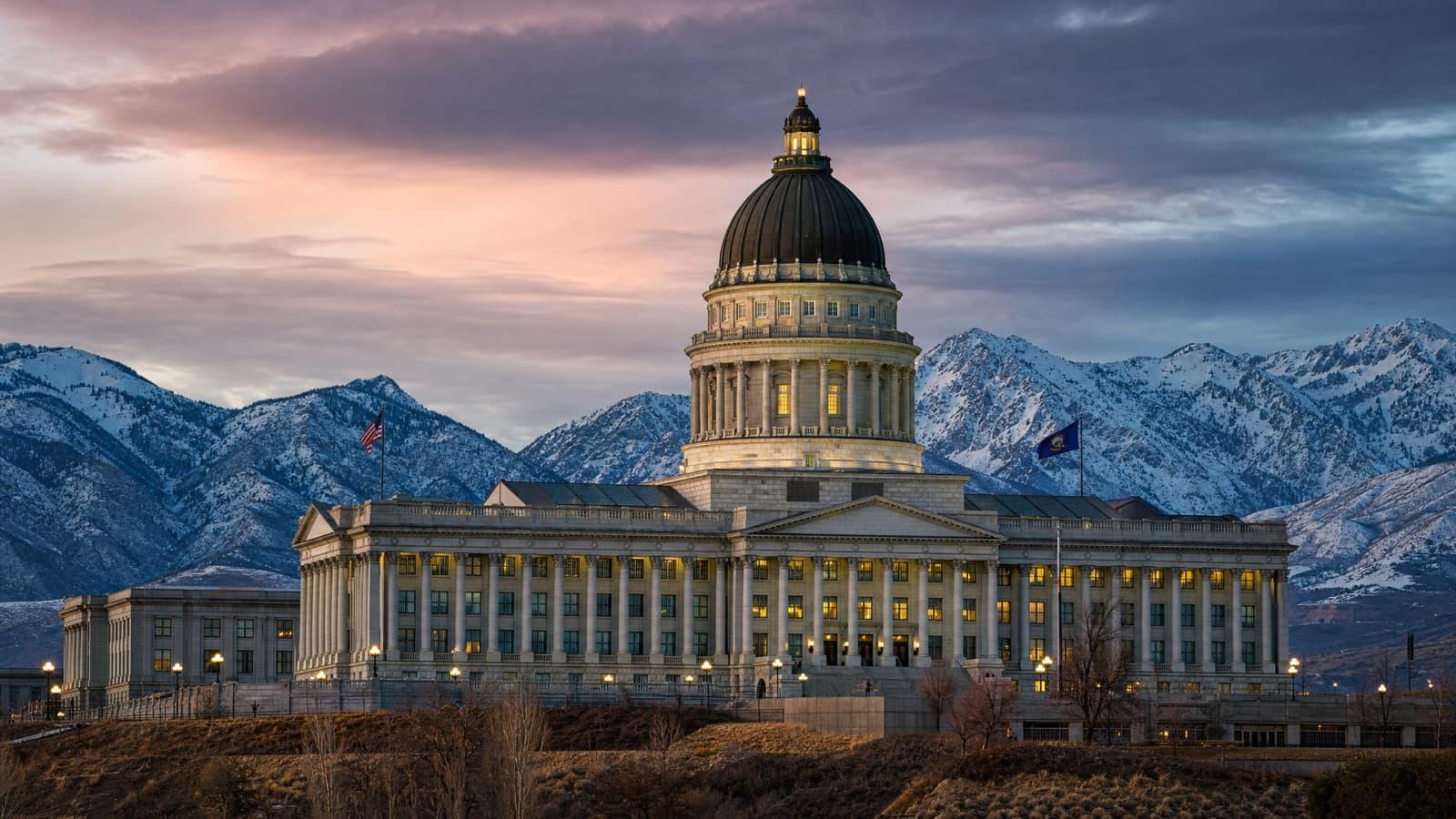
On October 28, 2026, Utah stopped suing Kalshi and started prosecuting it. Attorney General Derek Brown filed criminal charges in state court in Salt Lake City against Kalshi and its two co-founders, CEO Tarek Mansour and COO Luana Lopes Lara. The charges allege illegal gambling promotion. They are allegations only. No court has found anyone guilty of anything.
It is the second time a state has filed criminal charges against a CFTC-registered prediction market operator. Arizona was first, in March. And it arrived one day after the federal government sued Utah to shut down the state's civil case. Here is what the charges say, how the investigation worked, and why the fight is now closer to a Supreme Court showdown than a regulatory dispute.
What Utah Charged
According to KSL, the attorney general's office filed a criminal information charging KalshiEx, LLC with:
- one count of a pattern of unlawful activity, a second-degree felony
- twelve counts of online gambling promotion, each a third-degree felony
- one count of general gambling promotion, a class A misdemeanor
That adds up to 13 felonies and one misdemeanor, matching the tally in KUER's report. The charging documents also name Mansour and Lopes Lara as defendants, per KSL and The Guardian. KUER reports both executives could face prison time if convicted. The attorney general's office did not immediately say what penalties it would seek.
Coverage of the filing describes charges against the operator and its two executives. It does not describe any charges against customers.
Brown's statement framed the case around the August federal ruling: "Gambling is illegal in Utah, whether you place the bet, run the game, or promote it. Calling it a 'prediction market' doesn't change what it is, and being federally registered doesn't put a company above the law. A federal court has already ruled that Utah's gambling laws apply to Kalshi. Kalshi kept taking bets from Utahns anyway."
Kalshi called the case "a crazy overreach," said "Utah is clearly playing politics," and added: "We look forward to putting a stop to this in court, just like we did in Arizona."
How the Investigation Worked
The charges rest on an undercover operation. Per the Deseret News, a state investigator, Scott Eggerman, opened a Kalshi account on September 13, 2026, using an undercover name, a Utah phone number, a Utah bank account and an undercover Visa debit card. KSL reports he confirmed his Utah location repeatedly while placing wagers.
Over 11 days he made a dozen bets, on NFL and MLB games, the Utah vs. Utah State football game and a Real Salt Lake match. The charges give one example: a $5 "spread wager" that Utah would beat Utah State by more than 27.5 points. The platform showed a 53% chance of a payout. Utah won by 36, and the investigator collected $4.13.
The filing says Kalshi took a fee of between 3 cents and 78 cents on each transaction. It also points to incentive programs that pay market makers out of Kalshi's operating revenue, which the state uses to argue Kalshi profits from the activity rather than acting as a neutral venue.
Kalshi's position, stated after Utah's civil filing, is that its customers "trade with each other and set the prices," and that as a federally regulated national exchange it "answers to federal law."
Why Criminal Charges Change the Stakes
Until this month, the Utah dispute was about injunctions and money. We covered the October 20 civil lawsuit, in which the state seeks to stop Kalshi's Utah operations and recover what Deseret reports as roughly $30.5 million to $61.1 million in proceeds from Utah accounts between February and October 19, 2026.
A criminal case is different in three ways:
- Individuals are exposed. Civil suits target companies. These charges name two executives personally.
- The state can pursue it independently. A criminal prosecution runs on its own track in state court, separate from the civil case the federal government is trying to stop.
- It signals a template. The Guardian notes the felony charges "could represent a new tactic in how states try to assert regulatory authority" over prediction markets.
The Federal Counterpunch
The charges landed the day after the CFTC and Department of Justice's lawsuit against Utah became public. In Release 9315-26, dated October 27, the CFTC said it filed suit "to block the state's efforts to shut down CFTC-registered contract markets using state laws," and that Utah's effort "obstructs Congress's decision to federally preempt state law." Chairman Michael S. Selig said Congress "entrusted the CFTC to be the federal regulator with sole responsibility to oversee these markets."
The release says the Commission has also started legal proceedings against nine other states and has filed briefs in four federal courts of appeal and one state supreme court. We broke down that complaint in our CFTC v. Utah explainer.
Per The Salt Lake Tribune, the federal suit also asks for an injunction that would bar Utah from investigating "CFTC-regulated entities and their affiliates and partners." That is the part most directly in tension with a criminal prosecution already under way. KUER reports the attorney general's office says the timing of the criminal filing relative to the federal suit is coincidental, after a months-long investigation.
Why the August Ruling Matters
Utah is not bringing this case from a standing start. Kalshi sued Utah in February. On August 4, a federal court ruled against Kalshi, and Kalshi's request for an injunction while it appeals was denied, according to KUER. Utah's argument is that a federal court has already held its gambling laws apply to Kalshi, so continued operation in the state is a knowing violation.
Kalshi's appeal is still pending. The criminal case does not resolve it, but it raises the cost of losing.
The Arizona Precedent
Kalshi's response points to Arizona, and the comparison is real but incomplete. Deseret reports Arizona filed criminal charges against Kalshi in March, the first criminal prosecution of a CFTC-registered prediction market operator. A federal judge issued an injunction blocking that prosecution, and the state is appealing. KUER adds that after a Ninth Circuit ruling favorable to Nevada, Arizona is looking to revive its case. We covered the earlier Arizona injunction ruling.
So the Arizona playbook, a federal court blocking a state prosecution, is Kalshi's best-case outcome. But Utah is in a different federal circuit, and the federal judge there has already ruled the other way on the underlying preemption question. Whether a Utah court or a federal court gets to the criminal case first is now a live question.
Where This Is Heading
The Guardian reports litigation has spread across roughly 20 states and that analysts expect the fragmented legal landscape to be settled by the U.S. Supreme Court. The Salt Lake Tribune also says the Supreme Court is expected to have the final say.
Watch four things:
- Whether a federal court blocks the prosecution. Arizona's path suggests Kalshi and the CFTC will ask.
- The Tenth Circuit appeal. A ruling there would be the first appellate word on Utah's preemption fight.
- Whether other states copy the tactic. Criminal charges cost a state little and raise the stakes for any operator or executive.
- How the CFTC responds in court. It has now sued ten states.
What This Means for Traders
Nothing in the reporting says Kalshi has stopped operating in Utah or that individual customers face charges. But the situation is unsettled: state and federal courts are pulling in opposite directions, and the outcome may differ by circuit. If you trade event contracts, keep an eye on your state's posture and on each platform's own announcements. This is general information, not legal or financial advice.
FAQ
What is Kalshi charged with in Utah? Thirteen felony counts and one misdemeanor: one count of pattern of unlawful activity (second-degree felony), twelve counts of online gambling promotion (third-degree felony), and one count of general gambling promotion (class A misdemeanor), according to KSL and KUER.
Who else is charged? Co-founders Tarek Mansour (CEO) and Luana Lopes Lara (COO) are named as defendants in the charging documents, per KSL and The Guardian.
Are the charges proven? No. A criminal charge is an allegation. Kalshi has called the case "a crazy overreach" and says it will contest it in court.
Is this the first criminal case against a prediction market? Utah is the second. Deseret reports Arizona filed criminal charges against Kalshi in March, the first criminal prosecution of a CFTC-registered prediction market operator. A federal judge blocked that case, and Arizona is appealing.
Does the CFTC lawsuit stop Utah's prosecution? Not automatically. The CFTC sued to block Utah's enforcement, but as of this writing the reporting does not say any court has halted the criminal case.
Can I still use Kalshi in Utah? The charges allege Kalshi continued to offer contracts to Utah residents after the August ruling. Coverage reviewed for this article does not report a court order stopping it. Check Kalshi's official announcements for current availability.
Sources & Verification
- Charge counts and statutory classes: KSL, October 28, 2026 and KUER, October 28, 2026 — accessed October 29, 2026
- Undercover investigation details, Arizona precedent, civil-suit figures: Deseret News, October 28, 2026 — accessed October 29, 2026
- Defendants, Kalshi statement, litigation across roughly 20 states: The Guardian, October 28, 2026 — accessed October 29, 2026
- Charges filed and federal-state conflict: Associated Press, October 28, 2026 — accessed October 29, 2026
- CFTC lawsuit against Utah: CFTC Release 9315-26, October 27, 2026 — accessed October 29, 2026
- Scope of the federal suit and expected Supreme Court review: The Salt Lake Tribune, October 28, 2026 — accessed October 29, 2026