
UFC Prediction Markets: The Complete Guide to Betting on MMA (2026)
Learn how to trade UFC fight outcomes on Kalshi and Polymarket. Real examples from UFC 326 Holloway vs. Oliveira, current market data, and a step-by-step setup guide.
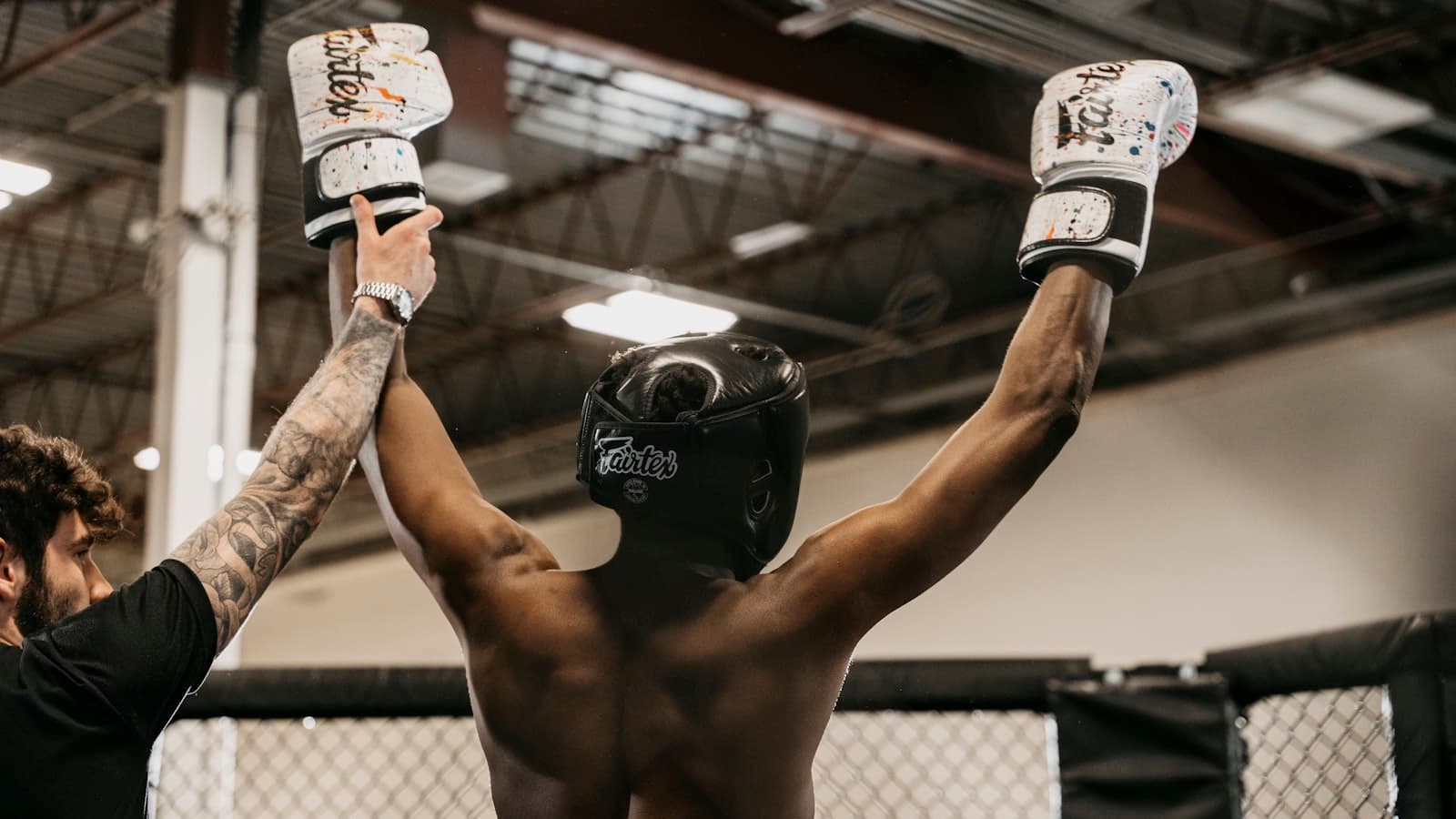
Mixed martial arts has always been about who's willing to put something real on the line. Now, thanks to CFTC-regulated prediction markets, MMA fans can do the same — trading on fight outcomes with actual dollars and watching the odds shift in real time as new information rolls in.
This guide covers everything you need to know about UFC prediction markets in 2026: where to trade, how the markets work, what types of contracts are available, and what UFC 326's Holloway vs. Oliveira rematch revealed about how these markets price fights.
What Are UFC Prediction Markets?
A prediction market contract is a financial instrument that pays $1.00 if a specific event happens and $0 if it doesn't. When you "buy" a contract at 64 cents, you're implying you believe there's a 64% chance that outcome occurs. If you're right, you collect $1.00 — a profit of 36 cents. If you're wrong, you lose your 64-cent investment.
This is fundamentally different from sports betting in a few key ways:
- Prices are crowd-sourced. You're not trading against a house edge — you're trading against other informed participants in an open market.
- You can sell before resolution. If the market moves in your favor before fight night, you can lock in a profit early.
- Prices are probabilities. A 64-cent contract = the market believes 64% likelihood.
The two primary platforms for UFC prediction markets in the United States are Kalshi and Polymarket, both of which are regulated by the CFTC.
The Two Main Platforms for UFC Markets
Kalshi
Kalshi is a CFTC-regulated Designated Contract Market (DCM) and Derivatives Clearing Organization (DCO) — meaning it's a full exchange, not just a prediction market platform. It's been trading event contracts since 2021 and offers UFC fight markets for most main card and some preliminary bouts.
How fees work: Kalshi charges a formula-based taker fee of 0.07 × P × (1 − P), with a maximum of 1.75¢ per contract. Entry fees only — selling/exiting is free. (Source: Kalshi fee schedule)
UFC on Kalshi: Markets typically open for individual fights 1-2 weeks before fight night and cover win/loss outcomes. Kalshi also occasionally offers method-of-victory and round-specific markets for marquee events.
Polymarket
Polymarket operates as a CFTC-regulated DCM through QCX LLC (d/b/a Polymarket US), which Polymarket acquired for $112M in July 2025. The platform uses USDC crypto for deposits and is accessible to most US users.
How fees work: Polymarket US charges 0.30% taker fees and provides 0.20% maker rebates on most markets. (Source: Polymarket fee structure)
UFC on Polymarket: Polymarket currently hosts 139 active UFC markets as of March 2026, covering individual fight moneylines, method-of-victory props, and longer-horizon markets like "Who will be UFC Lightweight champion at the end of 2026?" (Source: Polymarket UFC predictions page)
Types of UFC Prediction Markets
Fight Winner (Moneyline)
The most common market — who wins the fight? Prices range from near $0.01 for heavy favorites to $0.50 for even matchups. Polymarket's Sola vs. Jones fight night market, for example, opened at 55¢ Jones / 45¢ Sola. (Source: Polymarket UFC games)
Champion Year-End Markets
These are long-horizon markets asking who will hold a championship at year-end. On Kalshi's UFC tag as of this writing, the UFC Middleweight champion market has Khamzat Chimaev at 72% and the Bantamweight market has Petr Yan at 48%. (Source: Kalshi UFC markets)
On Polymarket, the same Middleweight market shows Khamzat Chimaev at 69% with $341K in total volume — one of the most actively traded MMA markets on the platform. (Source: Polymarket MMA predictions)
Method and Round Props
For bigger UFC events, markets can include:
- Will the fight go to decision?
- Will the fight end in rounds 1-2 vs. rounds 3-5?
- KO/TKO vs. submission vs. decision
These provide more granular ways to trade, especially when you disagree with the market's moneyline but agree with the general winner.
UFC 326: A Case Study in How These Markets Work
UFC 326 (Holloway vs. Oliveira 2, March 7, 2026 at T-Mobile Arena in Las Vegas) is worth examining as a real-world example of prediction market performance.
The pre-fight market: The Kalshi main event market had Max Holloway at roughly -200 implied odds (approximately 66¢) and Charles Oliveira as the underdog. Polymarket showed similar pricing — Holloway was the favorite to defend his BMF title.
What actually happened: Oliveira delivered one of the most dominant performances in recent UFC history. He scored five takedowns, accumulated 20:49 of ground control across five rounds, and won by unanimous decision (50-45, 50-45, 50-45). Every judge gave him every round. (Source: MMA Junkie/USA Today) (Source: UFC.com official scorecards)
The market read: Oliveira entering as an underdog — priced at roughly 34¢ — meant the market saw him as having about a one-in-three chance of winning. When he won, everyone who bought Oliveira contracts at 34¢ saw those resolve to $1.00, a nearly 3x return. The market's pricing was reasonable given the information available: Holloway held the belt and had beaten Oliveira (via injury stoppage) in their 2015 meeting. But the market still underestimated Oliveira's wrestling evolution.
What the 24h volume tells you: On the Kalshi side, Holloway vs. Oliveira drove $8.12M in 24-hour trading volume leading into fight night — the #7 highest-volume Kalshi market of the day, sitting alongside Fed Chair nominations and Arnold Palmer golf markets. (Source: predictionmarkets.us market data snapshot, March 21, 2026) That figure underscores just how seriously traders treat major UFC events now.
How UFC Markets Are Priced: What Actually Moves the Odds
UFC prediction markets are more efficient than you might expect — but they have known inefficiencies:
1. Injury news is the biggest mover. When a fighter reveals a nagging injury or arrives at fight week significantly heavier than expected, markets move fast. Watch Kalshi and Polymarket UFC markets the Tuesday-Friday before fight night.
2. Vegas sportsbook lines bleed over. Many prediction market traders anchor off traditional sportsbook lines from DraftKings, FanDuel, and MGM. When those lines move, prediction market prices tend to follow within hours.
3. Method-of-victory markets can be mispriced. The main event moneyline attracts the most volume and is typically efficient. Prop markets (round, method) are thinner and can hold value longer if you have specialized knowledge.
4. Late-breaking fight week intel matters most. Open workout performance, fighter interviews, and media day footage regularly shift prediction market odds for fights where the stylistic matchup is unclear.
How to Get Started on UFC Prediction Markets
On Kalshi
- Sign up at kalshi.com
- Fund via ACH or wire (free), or debit card (2% fee)
- Navigate to the Sports > UFC category
- Buy YES or NO contracts on fight outcomes
Kalshi is available in most US states, with ongoing litigation in 13+ states (check current status at predictionmarkets.us for the latest). (Source: predictionmarkets.us)
On Polymarket
- Sign up at polymarket.com
- Fund with USDC (crypto), credit/debit card, or bank transfer
- Navigate to Sports > UFC
- Trade on fight moneylines, method props, and championship markets
Polymarket hosts 139+ active UFC markets and is available to US users via its CFTC-regulated QCX LLC structure. (Source: Polymarket UFC predictions)
The Broader MMA Landscape on Prediction Markets
UFC isn't the only MMA organization appearing on prediction markets, but it's by far the most liquid. Major events consistently generate millions in volume on both Kalshi and Polymarket.
For championship fights and fights involving fighters with major followings (Holloway, Oliveira, Khamzat Chimaev, Islam Makhachev), expect:
- Markets to open 2+ weeks before fight night
- Tight spreads and efficient pricing by fight week
- Rapid line movement on any significant news
For preliminary bouts and Fight Night events, expect:
- Markets to open closer to fight week
- Wider spreads (fewer traders, less information)
- More opportunity for those with genuine insight
Frequently Asked Questions
Are UFC prediction markets legal in the US? Yes. Kalshi (CFTC DCM + DCO) and Polymarket (CFTC DCM via QCX LLC) are federally regulated. State availability varies — check predictionmarkets.us for current state status, as ongoing state AG litigation is actively being litigated in 2026.
How are UFC prediction markets different from sports betting? Sports betting is offered through state-licensed sportsbooks and involves a house edge (the "vig"). Prediction markets are peer-to-peer exchanges regulated by the CFTC — prices are set by market participants, not a bookmaker, and you can trade shares rather than being locked into a single bet. You can sell your position before the fight ends.
Do UFC prediction markets pay out quickly? Yes. Both Kalshi and Polymarket typically resolve UFC fight markets within hours of an official result. For fights that go to decision, resolution may take slightly longer if there are unofficial score discrepancies, but official UFC results trigger resolution.
Can I trade on undercard fights, not just the main event? Yes, though liquidity varies. Main event and co-main event markets are the most liquid. Preliminary bouts are available on Polymarket's sports section and sometimes on Kalshi, but expect wider spreads.
What happened to the prediction market odds for UFC 326? Heading into UFC 326, Kalshi priced Max Holloway as the favorite to defend the BMF title against Charles Oliveira. Oliveira entered as the underdog. Oliveira won by a dominant 50-45 unanimous decision across all three judges — rewarding traders who correctly identified the value on the underdog. The fight generated $8.12M in Kalshi 24-hour volume, making it one of the platform's top-traded markets on fight day. (Source: predictionmarkets.us market snapshot March 21, 2026) (Source: MMA Junkie)
Conclusion
UFC prediction markets are where MMA knowledge translates directly into real financial upside — without a sportsbook taking its cut off the top. The Holloway vs. Oliveira market at UFC 326 is a perfect example: an underdog priced at roughly one-in-three odds delivered a shutout win, paying out nearly 3x for traders who had conviction on Oliveira's wrestling game.
If you follow UFC closely — tracking fight camps, reading injury reports, watching open workouts — you have an edge that most casual prediction market participants don't. Put that edge to work.
Explore current UFC prediction markets at predictionmarkets.us.
Sources & Verification
- UFC 326 result (Oliveira def. Holloway UD 50-45): UFC.com official scorecards — verified March 2026
- UFC 326 fight details (date, venue, card): MMAMania.com — verified March 2026
- UFC 326 round-by-round coverage: MMA Junkie/USA Today — verified March 2026
- Oliveira fight stats (5 TDs, 20:49 control, 101 strikes): Vavel.com — verified March 2026
- UFC 326 Holloway vs Oliveira Kalshi 24h volume ($8.12M): predictionmarkets.us market data snapshot — verified March 21, 2026
- Polymarket 139 active UFC markets: Polymarket UFC predictions — verified March 21, 2026
- Polymarket UFC middleweight market ($341K volume, Chimaev 69%): Polymarket MMA — verified March 21, 2026
- Kalshi UFC champion markets (Chimaev 72% MW, Yan 48% BW): Kalshi UFC tag — verified March 21, 2026