
Best Prediction Market Tools for Serious Traders: The 2026 Guide
The definitive 2026 guide to prediction market analytics tools, terminals, and software for Kalshi and Polymarket traders. Ranked by what actually gives you edge.
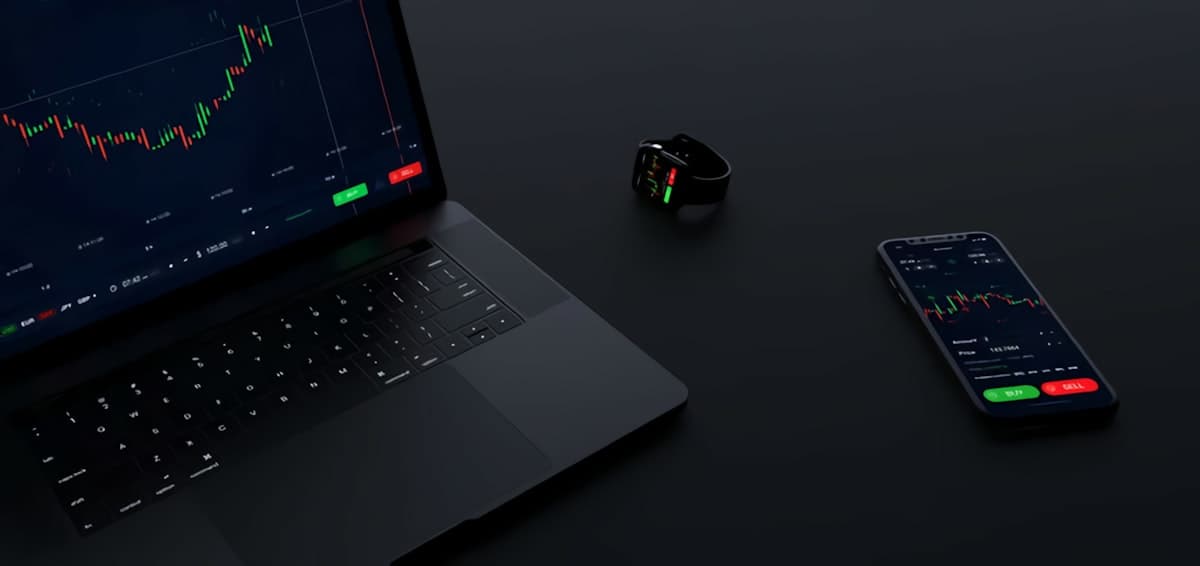
Your edge in prediction markets doesn't come from a hot take. It comes from seeing things the market hasn't priced yet — and getting there faster than everyone else.
The prediction market ecosystem has matured fast. Polymarket hit over $3 billion in monthly trading volume in October 2025 (per platform-reported data). Kalshi processed an estimated $50 billion in annualized volume in 2025, up from $300 million the prior year. And alongside these platforms, a full ecosystem of data tools, analytics terminals, and execution bots has quietly emerged.
The problem: most traders are still working with spreadsheets, ChatGPT, and vibes.
This guide is a category-by-category breakdown of the prediction market tools that actually exist in 2026 — what each does, who it's for, and whether it's worth your time.
Why You Need Third-Party Tools at All
Kalshi and Polymarket both provide native interfaces. Why go further?
The native platforms are built for trade execution, not for analysis. They show you current odds, an order book, and recent volume. They don't show you:
- How current odds compare to historical pricing on the same contract type
- Whether a similar market resolved differently on another platform
- Which traders have been consistently profitable — and what they're buying now
- Which breaking news headline is likely to move which contract
Serious traders need a layer above the native platform. That layer is what this guide covers.
Category 1: Data Terminals
These are the Bloomberg-terminal equivalents for prediction markets — comprehensive data platforms where you run queries, build dashboards, and do real analytical work.
TREMOR
TREMOR is the most technically capable data terminal currently operating in this space. It covers 140,000+ active markets across Polymarket (62K+ events) and Kalshi (75K+ events), with data typically less than 10 minutes old, per the official product page on Polymark.et.
What makes it different: TREMOR runs on ClickHouse, a column-store database optimized for analytical queries. Complex multi-market analyses that would time out in a traditional SQL database complete in under a second. It also includes a Claude-powered AI assistant that converts natural language questions into SQL — so you don't need to write queries to do deep analysis.
The built-in dashboards (EventsPulse for Polymarket, KalshiPulse for Kalshi) surface volatility spikes, arbitrage gaps, liquidity surges, and settlement anomalies automatically. For developers, there's a REST API that supports custom integrations, trading pipelines, and BI tool connections.
Best for: Quant researchers, serious traders doing backtesting or arbitrage analysis, developers building custom systems.
Verso
Verso is Y Combinator-backed (confirmed at verso.trading) and explicitly pitching itself as the "Bloomberg Terminal for prediction markets." The platform covers over 15,000 active contracts in a unified institutional interface, with live odds, market depth, volume tracking, and smart alerts.
The standout feature is the AI-powered news engine: Verso maps over 30,000 news articles to relevant Kalshi contracts using LLM embeddings and GPT-5 impact scoring, achieving 73% accuracy in identifying market-moving catalysts (per Polymark.et product listing). That's genuinely useful — news interpretation is one of the hardest parts of prediction market trading, and having a system pre-filter which headlines matter to which contracts saves real time.
Currently in V0 Beta, with custom dashboards, sub-5-minute data updates, and smart order routing in progress.
Best for: Traders who want institutional-quality infrastructure with a focus on news-driven markets, particularly Kalshi politics and economics.
Category 2: Analytics Platforms
Analytics tools sit below full terminals — they give you data views, dashboards, and tracking without the query engine depth.
Polymarket Analytics (polymarketanalytics.com)
The de facto reference layer for Polymarket data. Updates every 5 minutes, covers trader leaderboards, PnL tracking, market search across Polymarket and Kalshi, and wallet activity monitoring (useful for detecting unusual positioning before news breaks). Referenced by WSJ and CoinDesk as a research source.
Limitation: It's a viewing window, not a thinking tool. Useful for knowing what's happening; doesn't tell you what it means.
Best for: Active traders who want a fast reference dashboard alongside their main analysis process.
Hashdive
Hashdive focuses on smart money tracking — liquidity flows, trader scoring, and screening tools across Polymarket and Kalshi. The interface is cleaner than most analytics platforms in this category, and the filtering is strong.
Limitation: Still fundamentally shows you data patterns; the signal interpretation is left to you.
Best for: Traders focused on whale-following and smart money flow analysis.
Polysights
Built on Vertex AI and Gemini. Offers 30+ custom metrics including AI-generated market summaries, liquidity analysis, and trend detection. The alert system is functional and the technical architecture is impressive.
Limitation: Primarily Polymarket-focused. The 30+ metrics are real but overlapping — useful information, not synthesized into a verdict.
Best for: Polymarket-focused traders who want a sophisticated free/low-cost tool and are comfortable doing their own synthesis.
Category 3: AI Analysis Platforms
This is where the real differentiation is starting to happen — tools that try to give you an actual edge, not just data.
PillarLab AI
The most purpose-built analytical platform in the space. Rather than surfacing one AI opinion, PillarLab runs 10-12 independent analytical frameworks simultaneously — professional flow detection, regulatory phase tracking, historical pattern analysis, cross-platform arbitrage scanning, whale/insider detection — then synthesizes them into a verdict with confidence scoring.
For sports markets specifically, it integrates live ESPN data: pre-game analysis pulls real player stats, injury reports, and matchup history automatically. When games go live, it switches to real-time game context, full player tracking, and simultaneous live Kalshi odds updates.
Limitation: Credit-based pricing (free tier is 25 credits/month; paid tiers start at $29/month). The depth is overkill for casual $50 trades — this is built for traders with meaningful position sizes.
Best for: Serious traders managing real positions, especially in sports and political markets.
Polyfactual
Paste a Polymarket URL, get AI-generated analysis covering sentiment, risk, confidence levels, and data signals. Lower barrier to entry than PillarLab; the real-time news aggregation feeding the model is a genuine advantage.
Limitation: The analysis layer is thinner — you're getting one model's perspective rather than a multi-framework synthesis. Kalshi coverage is limited.
Best for: Traders who want quick AI-powered analysis on specific Polymarket positions without a steep learning curve.
Category 4: Aggregators
Aggregators help you find the best-priced version of a contract across multiple platforms simultaneously.
Matchr
Searches 1,500+ markets across Polymarket and Kalshi to surface the best prices and route trades efficiently. The smart routing and automated yield strategies are useful for arbitrageurs.
Best for: Traders running cross-platform arbitrage strategies.
Monitor the Situation
Institutional-grade dashboard for live orderbooks and cross-market price comparison across Polymarket, Kalshi, and Limitless. Useful for identifying structural mispricing between venues before they correct.
Best for: Advanced traders who work across multiple platforms and need to track relative pricing in real time.
Category 5: Alerts and Execution Tools
PolyAlertHub
Does one thing well: speed. Instant Telegram or email notifications for price changes, whale moves, trader position changes, and market resolutions. In fast-moving markets — political breaking news, sports in-play — speed is a real edge.
Limitation: Alerts without context are only half the picture. You still need to interpret what the whale move means.
Best for: Active traders who need to know the moment something moves.
Bankr (Telegram Bot)
Trade directly inside Telegram. For breaking-news situations where you're already watching a market and news hits, shaving 60 seconds off your entry matters. Supports watchlists and wallet tracking.
Warning: Speed without analysis is a trap. The Telegram format encourages reaction before assessment.
Best for: Experienced traders who have already done their research and want fast execution on a pre-formed thesis.
Category 6: Developer and Quant Tools
Kalshi API and Polymarket API
Both platforms offer direct API access. Kalshi's documentation is clean; Polymarket's requires more technical familiarity (Polygon-compatible wallet, EIP-712 signing for order placement). If you have the engineering capacity, direct API access gives you data faster and more completely than any third-party tool.
Official API documentation: Kalshi API Docs | Polymarket documentation
pmxt (Open Source SDK)
An open-source Python/TypeScript SDK launched January 2026 that normalizes market data and execution across Polymarket, Kalshi, and Limitless — described as "CCXT for prediction markets" by Interexy. Supports real-time order book data via WebSocket (sub-50ms) and actual trade execution.
Limitation: Still a young library; upstream API changes can introduce breaking changes that require an SDK update before your integration recovers. The sidecar architecture (local Node.js process on port 3847) adds operational overhead.
Best for: Engineers building custom prediction market systems or integrations.
GitHub: aarora4/Awesome-Prediction-Market-Tools
The most comprehensive curated directory of prediction market tools available, covering data platforms, analytics, bots, aggregators, and developer tools. Updated actively. Useful as a discovery layer for finding tools outside the major categories. (GitHub repo)
How to Build Your Stack
No single tool does everything. The traders who have consistent edge tend to layer:
For most active traders:
- A data terminal (TREMOR for depth, Verso for news-driven markets)
- An alert tool (PolyAlertHub or Bankr) for time-sensitive positioning
- Native platform access (Kalshi direct, Polymarket direct) for execution
For quant-oriented traders:
- Direct API access (Kalshi API or pmxt)
- Custom analysis pipeline
- TREMOR for historical backtesting data
For casual-to-serious crossover traders:
- Polymarket Analytics as a reference layer
- PillarLab AI for analysis on significant positions
- One alert tool for monitoring
What Still Doesn't Exist
A few obvious gaps in the current tool ecosystem:
- A unified portfolio tracker across Kalshi AND Polymarket. Most tools handle one platform well and the other poorly. PredictFolio is Polymarket-only.
- Probability calibration scoring. You can track win rate. You can't easily track whether your 70% confidence bets actually hit 70% of the time — which is the actual measure of prediction skill.
- Mobile-first execution with analytical depth. Bankr's Telegram approach is functional but clunky. Nobody has built the Robinhood equivalent for prediction markets yet.
These gaps are worth watching. The platforms that solve them next will have real distribution advantages.
FAQ
What's the best free tool for Polymarket analytics?
Polymarket Analytics (polymarketanalytics.com) is the strongest free reference layer. It updates every 5 minutes and covers trader leaderboards, wallet activity, and market search. Polysights adds an AI summary layer at low cost. For deep analysis, both have real limitations — you'll need a paid tool if you're managing meaningful positions.
Is there a Bloomberg Terminal for prediction markets?
Verso is explicitly building toward that positioning and is backed by Y Combinator. It's the closest analog — live multi-venue data, institutional interface, AI-powered news mapping. TREMOR is the strongest pure data infrastructure play. Neither is fully there yet, but the category is real and growing fast.
Can I run bots on Kalshi and Polymarket?
Yes, via their respective APIs. Kalshi uses standard RSA API keys (relatively straightforward). Polymarket requires Polygon-compatible wallet credentials with EIP-712 signing (more complex). The pmxt open-source SDK normalizes both, but it's still early-stage. PolyCop handles automated trade execution based on predefined rules if you want a no-code approach.
How do I know if a tool is giving me real edge or just data?
The test is simple: does the tool give you a conclusion or just information? A price chart is information. "This market is pricing a 68% chance of a Fed pause based on historical patterns where the base rate in similar environments was 52%" is a conclusion with edge embedded. Most tools give you information. A few — PillarLab AI, Verso's news engine — are starting to give you conclusions. That's the category to watch.
Are these tools safe to use? Do they have access to my funds?
Most analytics tools (TREMOR, Verso, Polymarket Analytics, Hashdive) are read-only — they pull market data but have no access to your account or positions. Execution tools (Bankr, PolyCop) require API key access, which you should treat like any sensitive credential. Never grant withdrawal permissions to third-party tools. Keep API keys scoped to trade execution only.
Conclusion
The prediction market tool ecosystem is real, growing fast, and still early. The category leaders — TREMOR for data depth, Verso for news-driven intelligence, PillarLab for analytical synthesis — are legitimate products solving real trader problems. But the space is immature enough that significant gaps remain.
If you're managing meaningful positions on Kalshi or Polymarket, layering at least one of these tools above the native platform is worth doing. The traders who will look back at 2026 as a formative year are the ones building systematic processes now, while everyone else is still trading on vibes.
Explore the full prediction market landscape — platforms, fees, market categories — at predictionmarkets.us.
Sources & Verification
- Polymarket monthly volume ($3B in October 2025): Polymarket platform-reported data — verified April 1, 2026
- TREMOR market coverage (140K+ markets, 62K Polymarket + 75K Kalshi, ClickHouse engine, sub-second queries, Claude-powered AI): Polymark.et/product/tremor — verified April 1, 2026
- Verso: Y Combinator backed, 15,000+ contracts, 30,000+ news articles mapped, 73% catalyst accuracy, GPT-5 impact scoring: verso.trading + Polymark.et/product/verso — verified April 1, 2026
- Kalshi $50B annualized 2025 volume (mid-October 2025 annualized rate): Yahoo Finance / Decrypt + Blockhead citing CryptoRank and TechCrunch — verified April 1, 2026 (attributed as analyst estimate, not platform-official)
- pmxt SDK (open source, January 2026 launch, sidecar architecture, Polymarket EIP-712 note): Interexy.com — verified April 1, 2026
- Awesome-Prediction-Market-Tools curated list: GitHub: aarora4 — verified April 1, 2026
- Polymarket Analytics referenced by WSJ and CoinDesk: community-sourced claim from Reddit thread — included with attribution hedge as primary source unverified