
Kalshi Loses Third Federal Battle as Ninth Circuit Rules Sports Contracts Violate Tribal Gaming Law
Ninth Circuit rules 3-0 that Kalshi sports contracts violate tribal gaming law. What the Blue Lake Rancheria decision means for prediction markets.
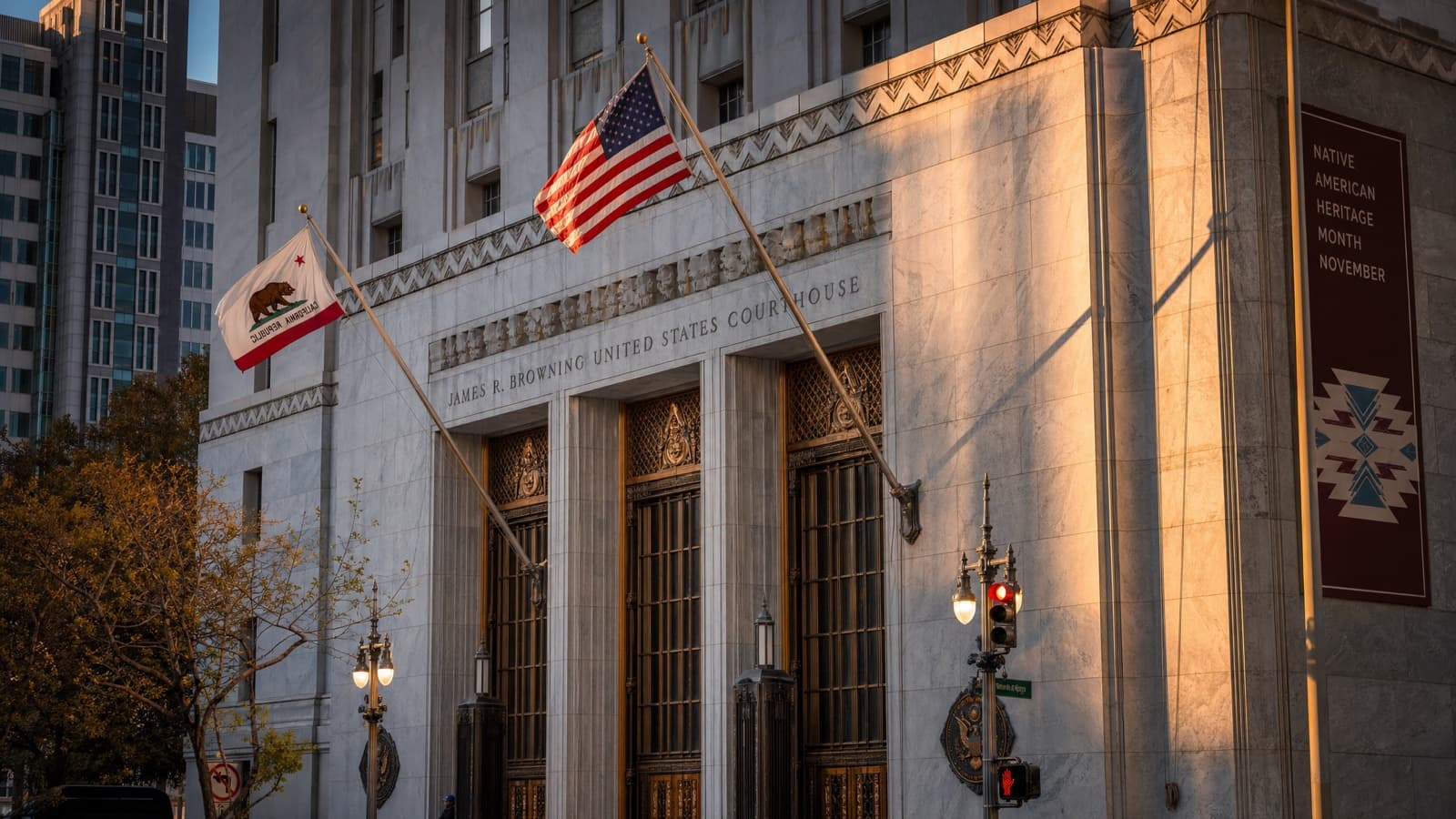
The Ninth Circuit dealt Kalshi its second major federal appellate loss in three weeks on Wednesday, ruling 3-0 that the prediction market's sports event contracts violate tribal gaming law on Native American lands — and that no amount of federal derivatives licensing can change that.
The ruling in Blue Lake Rancheria, et al. v. Kalshi, Inc., issued September 16, creates a new legal front that is, in some ways, harder for Kalshi to fight than the Nevada battle that preceded it. And it is sending the platforms scrambling in three different directions — each placing a different legal bet on how this reaches the Supreme Court.
What the Ninth Circuit Actually Ruled
The case was brought by two federally recognized California tribes: Blue Lake Rancheria in Humboldt County and Chicken Ranch Rancheria of Me-Wuk Indians in Tuolumne County. Both operate gaming operations under tribal compacts with California, and both argued that Kalshi was conducting unlicensed gaming on their lands by allowing tribal members to place sports event contracts on the platform from reservation territory.
A federal district judge had ruled in Kalshi's favor, finding that the transactions did not legally "occur" on tribal land because Kalshi's servers and offices are located off-reservation. The Ninth Circuit rejected that reasoning unanimously.
"Each entry into a sports event contract (with Kalshi) materially resembles a 'roll of the dice and spin of the wheel.' …The ordinary meaning could not be plainer," Circuit Judge M. Margaret McKeown wrote for the three-judge panel, which also included Chief Judge Mary H. Murguia and Judge Richard A. Paez.
The court held that Kalshi's sports contracts are "Class III gaming" under the Indian Gaming Regulatory Act (IGRA) — the highest regulatory tier, which covers casino-style gaming and requires tribal-state compacts or secretarial procedures to be lawful. When a user places a Kalshi sports contract while physically located on tribal land, that transaction constitutes an unauthorized gaming activity, regardless of where Kalshi's back-end infrastructure sits.
"Kalshi may be headquartered in New York, and its back-end infrastructure may sit off Indian lands, but a Kalshi consumer can still enter an event contract on Indian lands if she purchases one while on a reservation," the court wrote.
The ruling does not immediately ban Kalshi from operating on tribal lands — it remands the case to U.S. District Judge Jacqueline Scott Corley in San Francisco to weigh the remaining preliminary injunction factors. But the appeals court has already resolved the most significant element: the tribes are likely to win on the merits.
Why the IGRA Holding Is More Dangerous Than the Nevada Ruling
When the Ninth Circuit ruled against Kalshi in the Nevada case on August 28, the key question was whether sports event contracts qualified as "swaps" under the Commodity Exchange Act — and therefore fell under the CFTC's exclusive jurisdiction. The court said no, allowing Nevada to treat them as gambling.
The IGRA ruling goes further. The panel held that even if Kalshi's contracts were found to be swaps, the Indian Gaming Regulatory Act would still apply on tribal land. IGRA and the CEA, the court said, are not "irreconcilable" — they can coexist. Congress's directive that IGRA governs gaming on Indian lands was not erased by the CEA's broad preemption language.
"IGRA thus confers upon the tribes a cause of action to enjoin Kalshi's sports event contracts on their lands," McKeown wrote.
This is a materially harder argument for Kalshi to counter. In the Nevada litigation, Kalshi could argue — and does argue — that the incoming CFTC rulemaking on sports event contracts will moot the Ninth Circuit's swap analysis. That argument does not apply to tribal sovereignty under IGRA. A new CFTC rule confirming that sports event contracts are swaps would not automatically preempt IGRA's framework for gaming on Native American lands.
The court's ruling offers a roadmap, as gaming attorney Daniel Wallach noted Wednesday, for tribes across the United States and California to mount similar legal challenges. There are hundreds of federally recognized tribes operating gaming facilities in the U.S.; the legal theory the Ninth Circuit endorsed could, if applied broadly, expose prediction market platforms to a patchwork of tribal gaming restrictions that no federal rule can fully preempt.
Three Platforms, Three Legal Bets
In the weeks since the Nevada ruling, Kalshi, Robinhood, and Crypto.com have each taken a distinctly different procedural path — and the IGRA decision adds new urgency to each.
Kalshi: En banc, stall, and hope for rulemaking
Kalshi's strategy after the Nevada loss was not to rush to the Supreme Court, but to ask the full Ninth Circuit to rehear the case en banc — meaning a larger panel of all active judges would reconsider the three-judge decision. Kalshi argued the ruling created a circuit split on federal preemption and rested on internally inconsistent reasoning.
"The CFTC rule that the three-judge panel largely based its decision on has been repealed and is being replaced. Once that happens, material parts of the panel's decision will be moot," a Kalshi spokesperson told media at the time of the en banc filing.
The en banc strategy serves a dual purpose: it delays enforcement by 9th Circuit states while the case is pending, and it gives the incoming CFTC sports-contract rulemaking time to reach a final rule that might narrow or moot the legal questions. If the Ninth Circuit grants rehearing en banc, the Nevada decision is vacated during that process. If it denies, Kalshi can then petition the Supreme Court.
For the IGRA case, Kalshi indicated it may separately appeal. Its spokesperson said the ruling is "hard to square with other federal laws, which leave regulation of on-exchange derivatives trades exclusively to the [CFTC]."
Robinhood: SCOTUS cert — then hold
Robinhood was consolidated into the Nevada Ninth Circuit ruling because it routes customers' sports event contracts through Kalshi's exchange as a futures commission merchant. After the Nevada loss, Robinhood filed a petition for a writ of certiorari — asking the Supreme Court to review the Ninth Circuit's decision.
Then, on September 15, Robinhood updated its Supreme Court filing with a new argument: it urged the Court to hold the case pending the CFTC's completion of its rulemaking on sports event contracts rather than acting immediately.
"The Supreme Court now has the opportunity to provide clarity on the regulation of prediction markets, which we believe rightly sits with the U.S. Commodity Futures Trading Commission," a Robinhood spokesperson said. "It's our position that the Court should review these cases collectively."
The hold-pending-rulemaking argument is procedurally significant. If the Supreme Court agrees, it essentially freezes the Ninth Circuit's ruling for as long as the CFTC rulemaking takes — potentially a year or more. It's an administrative patience argument that asks the Court to let the executive branch resolve the conflict before the judiciary intervenes.
Robinhood separately agreed to cease offering new sports contracts in Michigan as part of a state-negotiated agreement that, notably, did not concede any legal position on the underlying preemption question.
Crypto.com: Straight to SCOTUS
Crypto.com, whose Ninth Circuit case was also consolidated with Kalshi's Nevada litigation, filed its own Supreme Court cert petition alongside Robinhood's, asking the justices to take the case and settle the circuit split.
The Third Circuit ruled 2-1 in favor of Kalshi in New Jersey in April, holding that the CFTC has exclusive jurisdiction over sports event contracts. The Ninth Circuit reached the opposite conclusion in Nevada. That conflict between circuits — which covers different regions of the country — is one of the strongest arguments for Supreme Court review.
New Jersey, for its part, filed its own Supreme Court petition on September 2, asking the Court to overturn the Third Circuit decision that blocked New Jersey from enforcing its gambling laws against Kalshi. The state argues that companies cannot convert sports wagers into federally protected derivatives simply by listing contracts on a designated contract market.
The Supreme Court has not yet decided whether to hear any of these requests.
The Broader Legal Landscape
The IGRA ruling is the third significant appellate setback for prediction markets since August:
- August 28: Ninth Circuit (Nevada) ruled 3-0 that Kalshi sports contracts are not swaps under the CEA, allowing Nevada gaming oversight.
- Iowa: A federal district judge denied Kalshi a preliminary injunction in late August, citing the Nevada ruling.
- September 16: Ninth Circuit (California tribes) ruled 3-0 that IGRA applies to sports contracts on tribal land, even if they were swaps.
Meanwhile, the platforms continue operating in most of the country. The Nevada decision does not automatically apply to other states; enforcement requires separate legal action in each jurisdiction. Courts in Michigan, Washington, and Utah have also moved against Kalshi to varying degrees, while the CFTC continues to argue in multiple federal courts that its authority preempts state regulation.
The Indian Gaming Association issued a statement through its Chairman, David Z. Bean, calling the ruling "a victory for tribal sovereignty."
"Companies cannot enter tribal lands through an app and conduct gaming outside the laws and agreements that govern gaming there," Bean said. "Tribal sovereignty does not stop at the edge of a screen."
What This Means for Prediction Market Users
For most users in most of the country, the ruling has no immediate practical effect. Kalshi remains fully operational across the majority of states, and the IGRA ruling applies only to activity conducted from tribal land in California pending further proceedings before Judge Corley.
But the ruling has several important downstream implications:
Tribal land exposure is now a distinct legal risk. Any prediction market user placing sports contracts while physically on a reservation faces the possibility that those transactions are unauthorized gaming under IGRA. How platforms will handle this — whether through geofencing or other means — is an open question. Les Marston, a lawyer for the tribes, said Kalshi "could have easily spent a few million dollars to geofence the tribes' operations."
The IGRA theory applies nationwide. California is not unique. Tribes across the country operate gaming facilities under compacts and secretarial procedures that grant them exclusive gaming rights within their territories. The legal theory the Ninth Circuit endorsed in this case could be applied in any state with significant tribal gaming operations, including Oklahoma, Minnesota, Arizona, Michigan, and Florida.
Supreme Court intervention becomes more likely. The circuit split on CEA preemption was already a strong argument for SCOTUS review. Adding a distinct IGRA theory — one that operates separately from state preemption — creates even greater urgency for a definitive ruling. Analysts have expected the Supreme Court to weigh in; this ruling accelerates that timeline.
Prediction Markets on the Outcome
The Clarity Act, the federal legislation that would have created a comprehensive regulatory framework for prediction markets and resolved many of these questions legislatively, failed a Senate cloture vote on September 15 — the day before the IGRA ruling. The market for Clarity Act passage in 2026 currently sits at approximately 7¢, reflecting near-certainty that the legislative window is closed until a new Congress.
The prediction market debate is thus returning to the courts as the only remaining resolution path for 2026. Traders watching the space should expect continued volatility in state-by-state enforcement patterns while the Supreme Court decides whether to take up the circuit split — a decision that may not come until late 2026 at the earliest.
FAQ
What did the Ninth Circuit rule in the Blue Lake Rancheria case? The court ruled 3-0 that Kalshi's sports event contracts constitute Class III gaming under the Indian Gaming Regulatory Act when placed from tribal land. It reversed a district court ruling that had denied the tribes' request for a preliminary injunction, and sent the case back to a federal judge in San Francisco to weigh the remaining factors required to actually grant an injunction.
Does this ruling immediately ban Kalshi on tribal lands? No. The ruling establishes that the tribes are likely to win on the merits, but the case must return to the district court for Judge Corley to evaluate irreparable harm, the balance of equities, and the public interest. An actual injunction blocking Kalshi on these tribes' lands would require a further order from the district court.
What makes the IGRA ruling different from the Nevada ruling? The Nevada ruling turned on whether Kalshi's contracts are "swaps" under federal commodities law. The IGRA ruling holds that even if they are swaps, the Indian Gaming Regulatory Act still applies on tribal land. The two statutes can coexist. This means a future CFTC rule confirming swap status would not automatically resolve the tribal sovereignty question.
What are Kalshi, Robinhood, and Crypto.com doing in response? Kalshi has filed a petition for en banc rehearing at the Ninth Circuit in the Nevada case and indicated it may separately appeal the IGRA ruling. Robinhood filed a Supreme Court cert petition and then asked the Court to hold the case pending CFTC rulemaking. Crypto.com separately filed its own Supreme Court cert petition. The Supreme Court has not yet acted on any of these requests.
When will the Supreme Court decide whether to hear prediction market cases? The Supreme Court typically acts on cert petitions within two to four months of filing. With multiple petitions from states, platforms, and the CFTC already filed or expected, the Court could conference on the question as early as late 2026. A decision to grant cert would not resolve the underlying legal question — it would simply mean the Court will hear arguments, with a decision likely in 2027.
Sources & Verification
- Ninth Circuit rules sports event contracts violate IGRA on tribal land, Reuters, September 16, 2026
- Kalshi ruled a gambling operation by appeals courts in Indian casino case, San Francisco Chronicle, September 16, 2026
- Ninth Circuit deals blow to Kalshi on tribal land, Courthouse News Service, September 16, 2026
- IGA Chairman Bean: Ninth Circuit Decision a Victory for Tribal Sovereignty, Indian Gaming Association, September 17, 2026
- Robinhood asks Supreme Court to hold prediction markets case pending CFTC rulemaking, Reuters via PredictionNews, September 15, 2026
- Kalshi And Robinhood Take Different Paths To Challenge Ninth Circuit Decision, InGame, September 10, 2026
- Clarity Act Senate cloture vote fails, September 15, 2026, PredictionMarkets.US