
CLARITY Act Cloture Fails: What the Senate's Rejection Means for Prediction Markets
Senate cloture on the CLARITY Act failed September 15. What the 60-vote miss means for Kalshi, Polymarket, and crypto regulation.
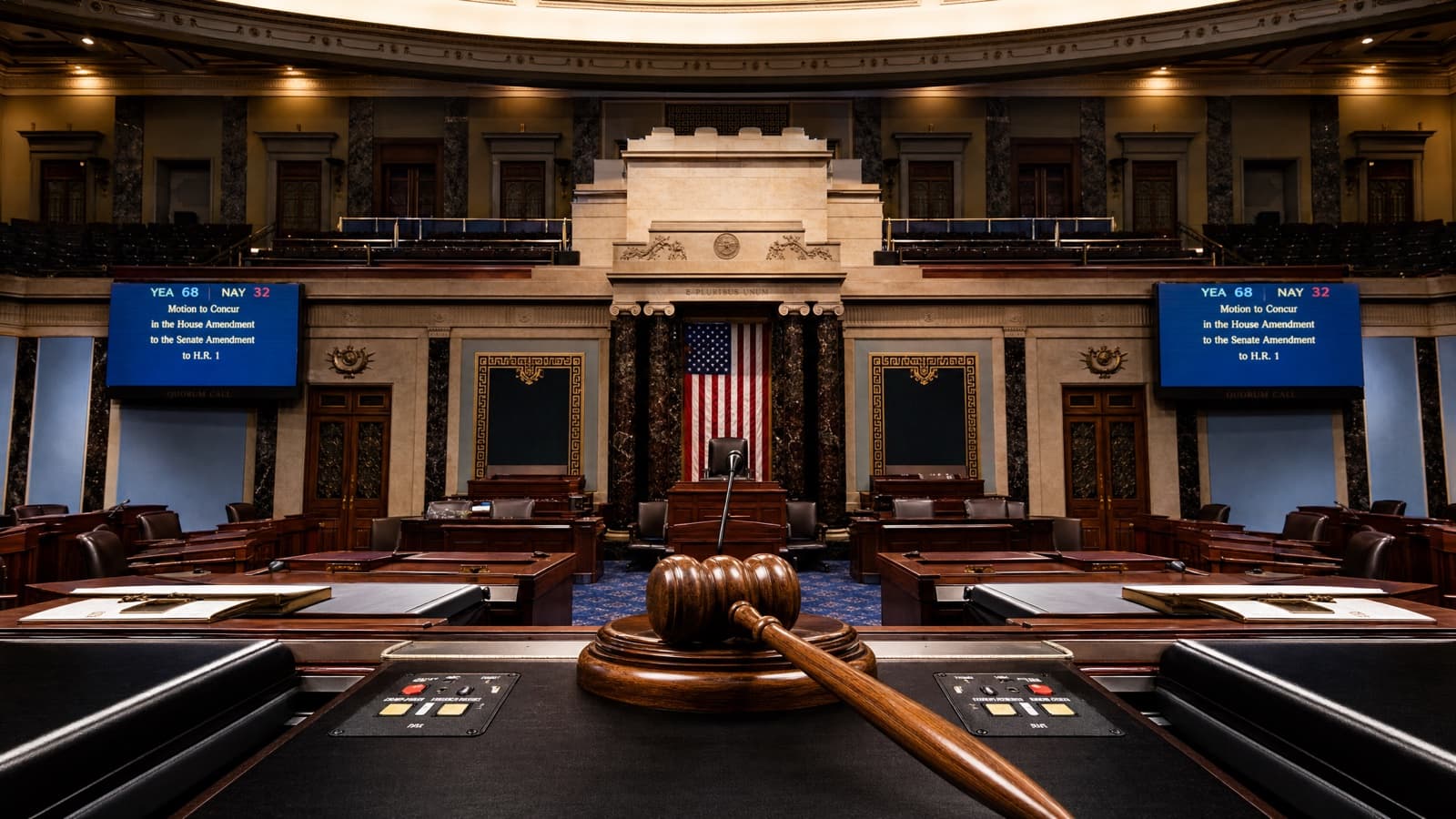
The U.S. Senate blocked the Digital Asset Market Clarity Act from advancing to a floor vote on Tuesday, falling well short of the 60 votes required to end debate on the landmark crypto market-structure legislation. The procedural vote at 2:15 p.m. ET on September 15, 2026 drew more than 40 senators in opposition — a wide margin that led the bill's chief Republican sponsor to declare the effort effectively over for this Congress.
Prediction markets had been tracking this outcome for months. Polymarket's contract on the bill being signed into law in 2026 fell from roughly 82% in February to single-digit territory by mid-August, briefly rebounded toward 30–35% on a revised bill text released over the weekend, then collapsed back to approximately 12% as last-minute negotiations between Democrats and Republicans stalled on vote day. That arc — from near-certainty to near-zero — told the real story of a bill that accumulated over 120 Democratic-requested changes and still couldn't close the gap.
The Vote: What Cloture Means and Why 60 Votes
Tuesday's procedural vote was a cloture motion on the motion to proceed to H.R. 3633, the Digital Asset Market Clarity Act. Cloture is a Senate rule that ends filibuster debate and allows a bill to reach a formal vote — it requires 60 senators to agree, regardless of which party controls the chamber. Republicans hold 53 seats, meaning Majority Leader John Thune needed at minimum seven Democrats to cross over and support the motion. With at least two Republicans expected to vote no — Senators Rand Paul and Josh Hawley, who have stablecoin yield objections — the number of required Democrats rose closer to nine.
That count was never there. The Senate floor webcast's informal tally showed more than 40 votes against cloture by the time the roll closed, according to widely reported accounts of the result. A narrow miss — something in the high 50s — would have signaled a bill that could survive into 2027 with modest fixes. A wide miss signals something more consequential: legislative momentum that has stalled, with few natural reopeners on the calendar.
Senator Cynthia Lummis (R-Wyo.), who has led the Republican effort on digital asset legislation for years, said before the vote that "Democrats got what they wanted; now they need to take yes for an answer," citing the substantial concessions Republicans had already made on ethics provisions, according to CNBC. After the result, she told reporters outside the chamber the talks were over.
Three Fights That Couldn't Be Closed
The bill died at the procedural stage because three interlocking disputes never reached resolution.
Ethics and the Trump family's crypto holdings. The most politically charged fight centered on provisions governing officials' crypto investments. Democratic senators including Elizabeth Warren, Mark Warner, Ruben Gallego, John Hickenlooper, and Raphael Warnock insisted the ethics language in the bill failed to directly and effectively restrict the president and his family from profiting from digital assets. The White House agreed to revised ethics language in the days before the vote, but Senate Democrats rejected the final offer as insufficient. Senator Adam Schiff said the provision "does not effectively apply to the president and first family." Republicans responded that Democrats had received the framework they requested; the counterproposal delivered to Republicans hours before the vote was called "identical" to demands already rejected, per a Lummis spokesperson. With President Trump generating an estimated $1.4 billion in crypto-related revenue in 2025, according to CNBC, the ethics dispute was never going to be easy.
Section 604 and law enforcement objections. Law enforcement groups argued that provisions in Section 604 would impair criminal investigations into digital asset transactions by limiting the information that could be shared across agency boundaries. The objection drew support from senators who might otherwise have backed the bill on its merits. Neither the Republican final text nor the Democratic counterproposal resolved the disagreement before the vote.
Stablecoin yield. The treatment of interest-like payments on payment stablecoins divided both parties internally. A proposed framework for restricting passive yield on stablecoins drew opposition from community banking groups, who worried about deposit outflows to stablecoin products, as well as from industry players who had spent years building around existing stablecoin structures. Seven Republicans raised community-bank concerns, according to reporting ahead of the vote. Treasury Secretary Scott Bessent said the final draft gave his office additional authority to protect community banks if stablecoin deposits grew disruptively — but community banking advocates remained skeptical.
How Prediction Markets Tracked the Failure
The CLARITY Act's legislative arc is among the more dramatic pricing events in prediction markets' short history as a regulated U.S. market category. Polymarket's "CLARITY Act Signed Into Law in 2026" contract opened above 80% following the strong bipartisan House passage in July 2025 (294–134, including 78 Democratic votes). Confidence remained elevated through the Senate Banking Committee markup in May 2026, where the bill advanced 15–9.
The decline came in two distinct phases. The first followed Senate recess extensions and the emergence of the stablecoin yield dispute, which saw Coinbase publicly withdraw its support after a draft version proposed restricting stablecoin yield payments entirely. By early September, Polymarket had the contract priced in the 12–16% range — roughly the same level it returned to after Tuesday's failure.
The brief mid-September rebound to 30–35% came after Senate Republicans released a revised 630-page merged text over the weekend before the vote, incorporating what supporters described as more than 120 Democratic-requested changes. Kalshi's comparable contract moved similarly — to roughly 26–37% depending on the specific contract resolution date — before both platforms repriced sharply downward as Democrats publicly rejected the offer and confirmed they would vote no. Galaxy Research cut its 2026 passage odds to 10% before the vote.
The market repricing validated prediction markets' core function: aggregating dispersed information about legislative probability into a single price. The odds tracked every negotiation breakdown, every statement from undecided senators, and every last-minute counteroffer in real time. By the time the gavel fell, the market had already priced in the likely outcome.
What This Means for Prediction Market Platforms
For licensed prediction market operators — Kalshi, Polymarket's U.S. venue (QCX LLC), and the growing roster of CFTC-regulated platforms — the CLARITY Act's failure has a more limited direct impact than the bill's scope might suggest.
Prediction market platforms in the United States operate under CFTC regulation as designated contract markets (DCMs) or introducing brokers. That framework does not depend on the CLARITY Act, which was primarily designed to clarify when digital assets are commodities versus securities under the SEC. The existing CFTC regime for event contracts remains unchanged.
Where the bill's failure matters more is for platforms like Polymarket, which operates its global prediction market on blockchain infrastructure using USDC stablecoins. The CLARITY Act's stablecoin provisions would have established clearer rules for how USDC and similar instruments are regulated at the federal level. Without those rules, the SEC retains authority to continue its own enforcement posture on stablecoin issuers and crypto platforms that could affect the infrastructure on which some prediction markets run.
The SEC Chairman signaled ahead of Tuesday's vote that the agency "will deliver for investors and innovators with or without the legislation," per widely reported remarks — suggesting the regulatory environment will continue evolving through agency rulemaking regardless of what Congress does. The CFTC's own proposed rulemaking on event contracts, published in June 2026, similarly proceeds on its own track.
For traders on U.S. prediction markets, the near-term practical effect is a continued status quo. Kalshi and Polymarket's domestic venue (QCX LLC) both hold CFTC-issued authorizations and operate within that existing framework. The uncertainty that persists is structural: without statutory clarity, the dual-agency compliance burden on platforms building crypto-integrated products remains intact.
What Happens Next
The September 15 failure effectively closes 2026 as a window for comprehensive digital asset market-structure legislation. The Senate enters a state work period around October 5. The House canceled the weeks of September 21 and 28 from its floor calendar ahead of midterm campaigning. Even if the Senate revisited the CLARITY Act in the narrow window between now and the recess, reconciling a Senate substitute with the 2025 House-passed text before midterm politics consumes the calendar is not realistic.
Senator Lummis has warned that a failed cloture vote could push the next realistic shot at market-structure legislation to 2030, past a midterm election that will reshuffle Senate committee leadership and potentially require rebuilding the bipartisan coalition from scratch. Both parties have invested significant political capital — and the crypto industry has invested hundreds of millions of dollars in lobbying and advocacy — over more than a year of negotiations that fell short at the final procedural hurdle.
The alternative path forward runs through regulatory agencies. The SEC's proposed "Regulation Crypto Assets" framework, published in August 2026, would establish the commission's own rulebook for digital asset offerings under existing securities law. The CFTC continues its own rulemaking on event contracts and commodity derivatives. For prediction market operators, the regulatory direction is set by those agency-level processes — not by legislation that didn't make it to a floor vote.
Frequently Asked Questions
What is the CLARITY Act? The Digital Asset Market Clarity Act (H.R. 3633) is a bill designed to establish a federal framework for regulating digital assets by dividing jurisdiction between the SEC and the CFTC based on whether an asset functions as a commodity or a security. It passed the House 294–134 in July 2025 and cleared the Senate Banking Committee 15–9 in May 2026, but failed to advance to a full Senate floor vote after the September 15 cloture motion fell short.
Does the CLARITY Act's failure affect Kalshi or Polymarket US? Not directly. Both platforms operate under existing CFTC authorization as designated contract markets. The CLARITY Act would have clarified jurisdiction for digital assets broadly, but prediction market platforms' regulatory basis does not depend on the bill. The CFTC's event contract framework remains intact.
What does "cloture" mean? Cloture is a Senate procedure that ends filibuster debate and allows a bill to proceed to a final vote. It requires 60 senators — a supermajority — to agree. Failing cloture does not repeal or amend the House-passed bill; it stops the Senate from formally considering it in the current legislative window.
When could crypto market-structure legislation pass? Senator Lummis, the bill's lead Republican sponsor, has warned that the next realistic opportunity could be 2030 if 2026 fails — past a midterm that may reshuffle committee control. Shorter-term, agency rulemaking from the SEC and CFTC will continue regardless of legislative action.
What were prediction market odds showing before the vote? Polymarket's contract on the bill being signed into law in 2026 peaked above 80% in February 2026, fell to 12–16% by early September, briefly rebounded to approximately 30–35% on the revised Republican text released over the weekend, then collapsed back toward 12% as vote-day negotiations failed. Kalshi's comparable contract showed a similar trajectory.
Sources & Verification
- House passage 294–134, July 17, 2025; Senate Banking Committee approval 15–9, May 14, 2026: H.R. 3633, Congress.gov
- Cloture vote scheduled September 15, 2026 at 2:15 p.m. ET: Senate Democrats calendar
- Ethics dispute, Democratic objections, Lummis quote: CNBC, September 14, 2026
- 18 attorneys general urged Senate rejection; Treasury Secretary Bessent community bank provisions: FXStreet, September 15, 2026
- Prediction market odds, Polymarket and Kalshi prices, September 14 readings: Yahoo Finance/TheStreet, September 14, 2026
- Overview of cloture mechanics, legislative calendar, prediction market context: Investopedia, September 14, 2026
- Polymarket CLARITY Act market: polymarket.com/event/clarity-act-signed-into-law-in-2026