
Missouri Counterattacks: Polymarket US and Robinhood Sue, the State Sues Novig Back
Missouri's AG filed counterclaims against Novig as Polymarket US and Robinhood sued to block state enforcement. What each side argues and what happens next.
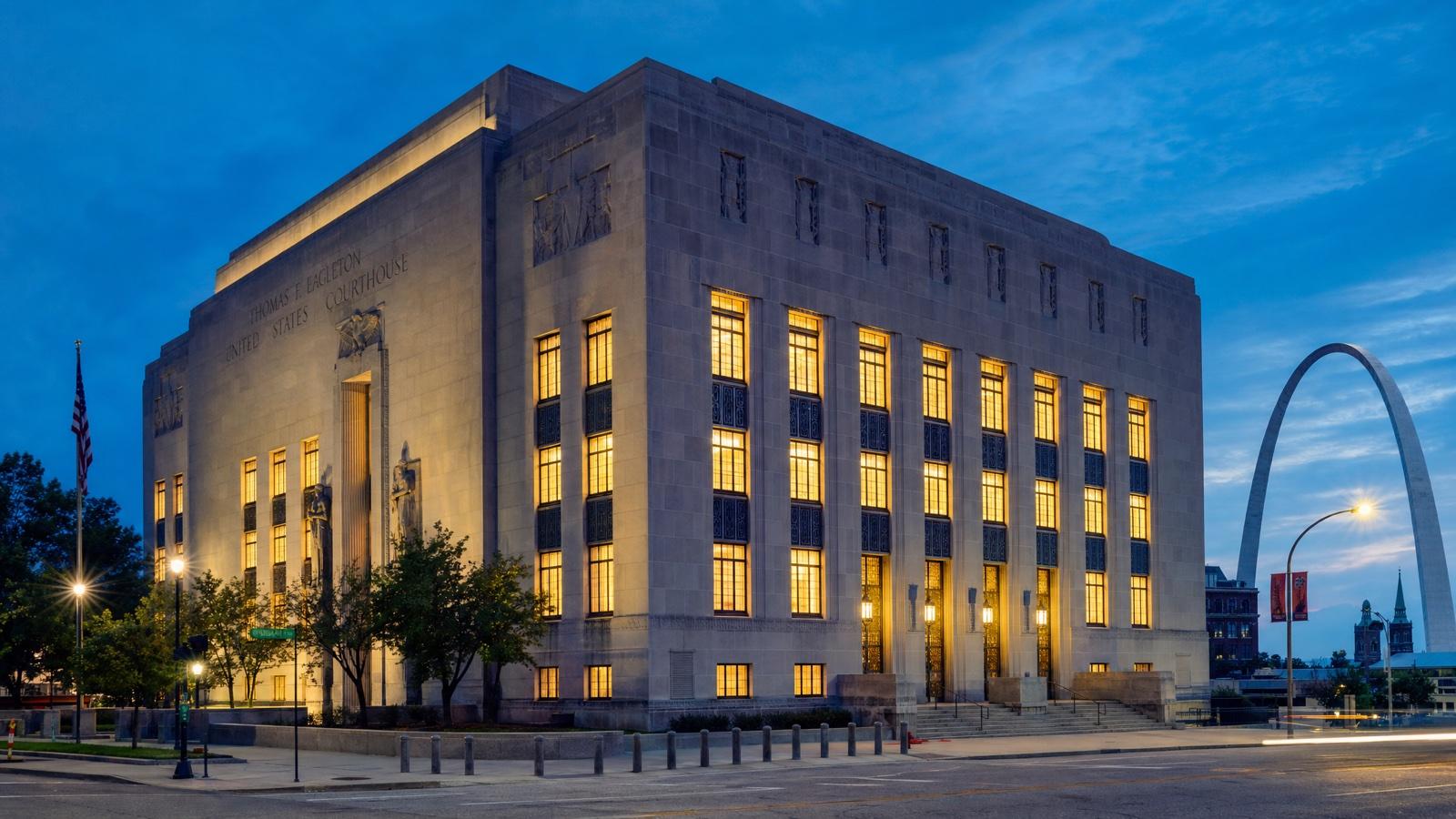
Missouri's attorney general just did something no state has done to the prediction market industry so far: she answered a lawsuit with a counterclaim. On November 9, 2026, Attorney General Catherine Hanaway's office filed an answer and three counterclaims against Novig, while Robinhood Derivatives and Polymarket US each filed new federal complaints asking a court to block Missouri from enforcing its gambling laws against sports event contracts. Per reporting on the filings, all of this is happening in the U.S. District Court for the Eastern District of Missouri.
The fight is now less about whether prediction markets will sue states and more about which legal theory survives first contact with a judge. Here is what was filed, what each side is arguing, and why Missouri has become the test case.
These are allegations and requested remedies, not court findings.
How Missouri Got Here
Missouri voters approved Amendment 2 in 2024 to legalize and regulate sports betting under the Missouri Gaming Commission. The market launched on December 1, 2025, with a 10% tax on sports betting gross receipts and a requirement that no one under 21 can place a wager, according to the Missouri Attorney General's September 18, 2026 announcement.
That same announcement said the AG's office had sent cease-and-desist letters to six companies: Polymarket, Kalshi, Crypto.com, Novig, Underdog and Robinhood. The office's position is that "companies cannot repackage sports bets as 'event contracts' to avoid Missouri law," and that any company wanting to offer sports wagering must be licensed by the Gaming Commission, pay the required taxes and fees, and ensure no one under 21 can bet. The letter to Polymarket demanded compliance or cessation within 30 days, per Gaming.net's reporting.
We covered the first wave of that fight when Novig and Crypto.com sued Missouri. What changed on November 9 is that the state stopped playing defense.
What Robinhood Is Arguing
Robinhood's complaint is built around its role as an intermediary. The company describes itself as a futures commission merchant (FCM) registered with the Commodity Futures Trading Commission (CFTC). Customers place orders through its app, and the trades execute on designated contract markets rather than on Robinhood itself.
According to the reporting on the complaint, Robinhood launched its Prediction Markets Hub on March 17, 2025, and currently intermediates sports-related event-contract trades through Kalshi, Rothera and Nadex. It no longer offers sports-related contracts through ForecastEx.
The legal claim is a single Supremacy Clause count. Robinhood argues that federal preemption covers the whole exchange-traded transaction, including an FCM accepting or facilitating customer orders, not just the exchange that matches the trade. It asks for declaratory relief, a temporary restraining order, and preliminary and permanent injunctions.
The timing detail matters. The complaint quotes a November 6, 2026 warning from Missouri's solicitor general that the attorney general intended to seek a compliance order "in at least three days." That is why Robinhood filed when it did.
What Polymarket US Is Arguing
Polymarket US, the CFTC-regulated venue operated by QCX LLC, took a two-pronged approach: a Commodity Exchange Act preemption count and a separate Commerce Clause count.
The Commerce Clause theory is the more unusual one. The complaint, as described in the reporting, challenges several features of Missouri's licensing regime: license categories tied to in-state excursion gambling boats and professional sports teams, a requirement that wagering servers be physically located in Missouri, and geofencing limited to bettors physically present in the state. The argument is that complying would force a nationwide exchange to operate as a Missouri-only wagering service.
Polymarket US also warns that enforcement could jeopardize partnerships and that removing Missouri users could force existing positions to be unwound, thin nationwide trading and weaken price discovery beyond the state's borders. It seeks a declaratory judgment, preliminary and permanent injunctions, and attorneys' fees and costs.
One carve-out is worth noting: the complaint expressly does not ask the court to stop Missouri from assessing, levying or collecting taxes, while reserving the right to challenge them elsewhere. Prediction News reported that Polymarket US is also separately challenging Arkansas authorities, and that all six companies targeted by Missouri have now sued in federal court.
Missouri's Counterattack on Novig
The most consequential filing may be the state's. Hanaway's office filed an answer and three counterclaims against Novig in the case captioned Ludlow Exchange LLC v. Hanaway.
The answer denies that Novig's sports event contracts qualify as swaps within exclusive CFTC jurisdiction. It argues they are unlicensed sports wagering subject to Missouri licensing and taxation. Missouri's listed defenses include:
- Ripeness: no state-court enforcement action has commenced.
- The Tax Injunction Act: invoked as a jurisdictional bar.
- Adequate legal remedy: preemption can be raised as a defense in an enforcement proceeding.
The three counterclaims allege that Novig's operation violates the Unlawful Internet Gambling Enforcement Act (UIGEA) by accepting financial instruments connected to unlawful internet gambling; amounts to an unfair practice under the Missouri Merchandising Practices Act; and creates a public nuisance under Missouri common law.
Missouri is seeking an order stopping Novig from accepting financial instruments from Missouri residents in connection with the alleged unlawful gambling, restitution, civil penalties of up to $1,000 per violation plus investigation and prosecution costs, and a public-nuisance declaration and abatement. It also asks for Novig's complaint to be dismissed with prejudice. One note on the federal statute: UIGEA addresses restricted transactions connected to gambling that is unlawful under other federal or state law, and does not itself outlaw gambling.
Why the Counterclaim Strategy Matters
Most state-versus-prediction-market fights so far have followed a pattern: the company sues for a preliminary injunction, the state argues the federal court should stay out, and the case turns on preemption. Counterclaims change the shape. They put civil penalties and restitution on the table inside the company's own lawsuit, and they ask the court to affirmatively rule the products are gambling rather than merely deny an injunction.
It also tests a distinction the market has relied on: whether an exchange, a broker and a distribution partner each carry different exposure. Robinhood is arguing its FCM role is covered by exchange-level preemption. Missouri's cease-and-desist letters named it anyway.
The Bigger Legal Picture: A Split That Points to the Supreme Court
Missouri is filing into a legal landscape that is far from settled. Ars Technica's reporting lays out the divide:
- In August, U.S. District Judge Robert Shelby granted Utah summary judgment and denied Kalshi's preliminary injunction motion, writing that "the federal law relied upon by Kalshi does not preempt Utah's ability to enforce its anti-gambling laws." The Tenth Circuit denied Kalshi's emergency motion for an injunction pending appeal on September 8.
- The Third Circuit ruled that New Jersey cannot regulate sports bets on prediction markets.
- Kalshi lost similar cases in the Sixth and Ninth Circuits, in rulings that favored Ohio, Tennessee and Nevada.
- New Jersey petitioned the Supreme Court to resolve the split, and 39 other states plus the District of Columbia filed a brief supporting the petition.
- Ars reported that Utah became the 10th state sued by the CFTC, and that Kalshi and its co-founders also face felony charges under Utah gambling laws. See our earlier coverage of the Utah criminal charges.
Because the circuits are divided, Ars notes it is likely the Supreme Court will take up the question of whether states can apply their gambling laws to prediction markets. Until it does, every district court in a new state is a fresh coin flip.
The Other Front: Individual Gamblers Suing for Their Losses
Missouri is not the only place where the exposure is widening. Ars Technica reported on November 9 that a Bellevue, Washington man is suing Kalshi under the state's gambling-loss recovery statute. According to his complaint, he transferred $315,353.94 to Kalshi between June 17 and August 14, 2026, and ended with a net loss of $308,781.62. He seeks more than $580,000.
Kalshi filed a motion to dismiss on October 30, arguing the contracts are event contracts subject to the Commodity Exchange Act and CFTC oversight, not gambling. If statutes like Washington's survive preemption challenges, they give individual traders a route to recover losses, not just state attorneys general.
What to Watch Next
- A ruling on Robinhood's requested TRO. Missouri's solicitor general signaled a compliance order was coming within days. How the court handles the first emergency request will set the tone.
- Whether the court keeps Missouri's counterclaims in the case. The state's ripeness and Tax Injunction Act defenses are the first test of whether it can keep these cases from becoming pure preemption rulings.
- Whether other states copy the counterclaim playbook. If Missouri's UIGEA and consumer-protection theories get traction, expect them elsewhere.
- The Supreme Court's decision on the New Jersey petition. That is the event that could make the Missouri outcome moot.
FAQ
What did Missouri file against Novig on November 9, 2026? The attorney general's office filed an answer and three counterclaims alleging violations of the Unlawful Internet Gambling Enforcement Act, the Missouri Merchandising Practices Act and public nuisance law, and asked the court to dismiss Novig's challenge with prejudice. These are allegations, not findings.
Which companies has Missouri targeted? Polymarket, Kalshi, Crypto.com, Novig, Underdog and Robinhood received cease-and-desist letters in September 2026. Prediction News reports that all six have now sued in federal court.
Is sports betting legal in Missouri? Yes, through the licensed market. Missouri voters approved Amendment 2 in 2024 and licensed sports wagering launched on December 1, 2025, with a 10% tax on gross receipts and a 21+ requirement. Missouri's position is that prediction-market sports contracts are unlicensed wagering outside that framework.
Are sports event contracts swaps or gambling? That is the unresolved question. Federal appeals courts are split, with the Third Circuit siding against state regulation and the Sixth and Ninth Circuits siding with states. A Supreme Court petition is pending.
Does this affect me if I trade on a prediction market? It can. Polymarket US argues that removing Missouri users could force existing positions to be unwound. The outcome of these cases will shape which sports contracts are available in which states. This is not legal or financial advice.
The Bottom Line
Missouri has turned a preemption lawsuit into a two-sided enforcement case. The industry's strongest argument is that a CFTC-regulated national exchange cannot be carved up state by state. Missouri's strongest argument is that voters built a licensed, taxed sports betting market and that unlicensed competitors are undercutting it. A federal judge is about to start picking between them, and the Supreme Court may ultimately make the call. Track how the broader prediction market landscape moves at PredictionMarkets.US.
Sources & Verification
- Missouri cease-and-desist announcement and Amendment 2 details (September 18, 2026): Missouri Attorney General's Office - verified November 10, 2026
- November 9 filings by Robinhood Derivatives, Polymarket US and Missouri (answer and counterclaims): Gaming.net - verified November 10, 2026
- Polymarket US Missouri and Arkansas litigation; all six targeted companies have sued: Prediction News - verified November 10, 2026
- Utah ruling, Tenth Circuit order, circuit split, CFTC suit against Utah: Ars Technica - verified November 10, 2026
- States' amicus brief supporting New Jersey's Supreme Court petition: Supreme Court docket 26-299 - verified November 10, 2026
- Washington gambling-loss lawsuit against Kalshi: Ars Technica, November 9, 2026 - verified November 10, 2026
Not financial or legal advice. Prediction markets involve risk of loss.