
Meta Is Testing Takes, a Points-Based Prediction Market App: What We Know
Meta employees are testing Takes, a prediction app that uses cred points, not cash. What the WSJ reported, how it differs from Kalshi and Polymarket, and what to watch.
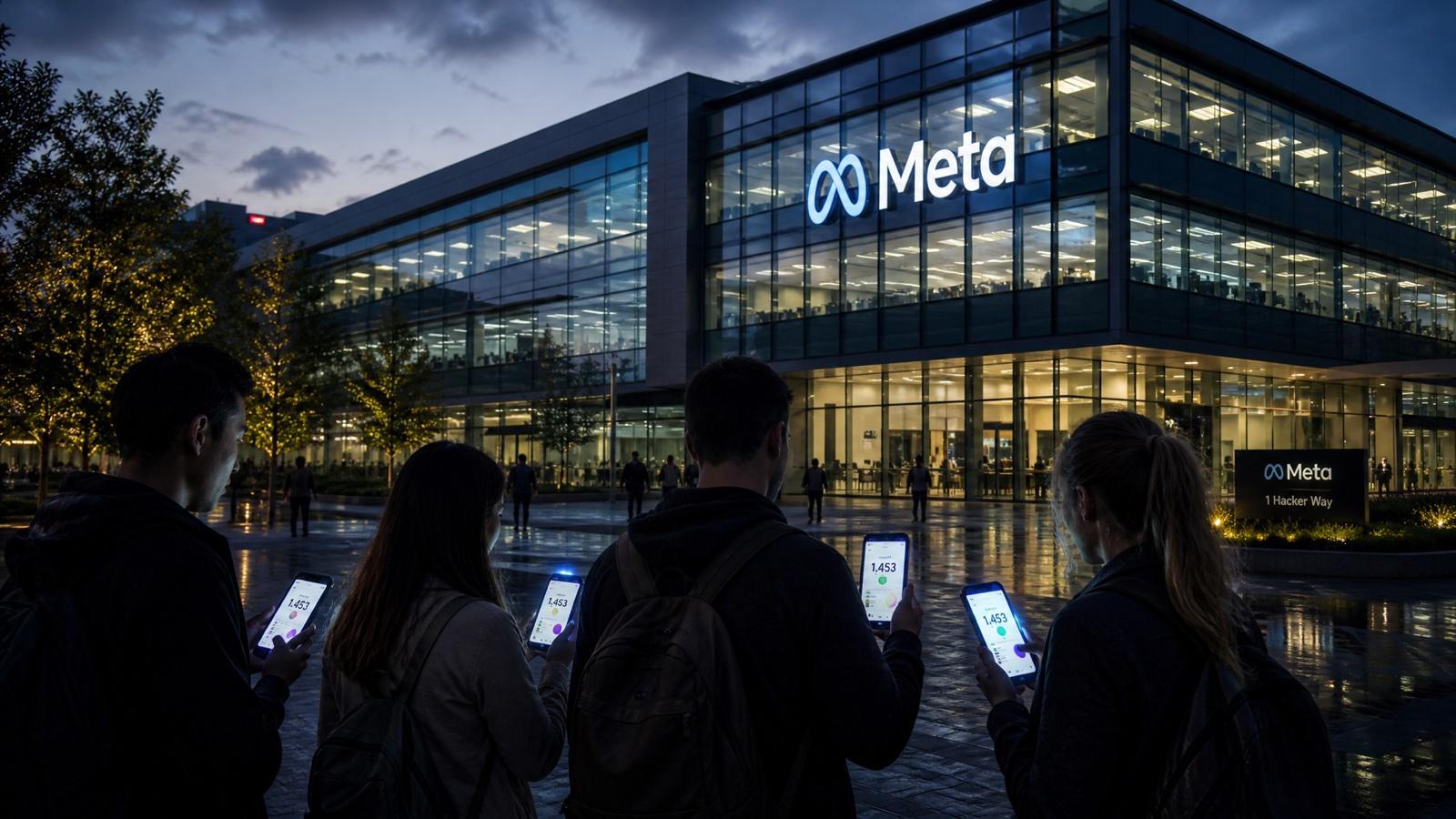
Meta has quietly moved its prediction-market project from a rumor to a working product. The Wall Street Journal reported on Friday, November 13, that Meta employees have begun testing an app called Takes, which lets users make calls on real-world events using a points currency called "cred" instead of cash. There is no public launch date, no real-money version, and no sign Meta is applying to run a regulated exchange.
That makes this a very different story from the Kalshi and Polymarket headlines. It is also a useful one, because it shows exactly where the line sits between a prediction game and a prediction market. Here is what has actually been reported, what has not, and why the "no cash" design matters in a week when the CFTC is suing a twelfth state to protect cash-settled event contracts.
What the Wall Street Journal Reported About Takes
According to the WSJ, as quoted by Social Media Today, "Employees have begun testing a prediction-market app under development, according to people familiar with the matter, a step the company often takes ahead of a public release." The app is called Takes. Users predict outcomes of questions or events, and rather than staking dollars they gain or lose cred, a credibility score that rises with accurate calls.
Investing.com's summary of the WSJ report adds one concrete detail: the questions have included whether Tim Cook will become Nvidia's next chief executive. That is a corporate-gossip question, not a sports line or an election contract, which says something about the tone of an internal test.
Three things are worth stating plainly, because a lot of coverage blurs them:
- It is an employee test. The reporting describes internal testing, not a public release.
- It does not use real money. Cred is a points system. Nothing in the reporting says users can deposit, wager or withdraw cash.
- There is no confirmed launch timetable. The WSJ describes internal testing as a step companies often take before release, which is not the same as announcing a release.
From "Arena" to Takes: What We Know About the Project's History
The Takes test appears to be the next step in an effort first reported in June. The New York Times reported on June 23 that Meta CEO Mark Zuckerberg had dispatched a small team to build a smartphone app similar to Polymarket and Kalshi, internally called "Arena". The Times said users would not wager money and that the app would probably rely on a video-game-like points system, though the company had not ruled out real-money betting eventually. It would function independently of Facebook, Instagram, WhatsApp and Messenger, with Meta aiming to steer its large social audiences toward it. Meta declined to comment on those reports.
NPR followed the next day with internal Meta documents it had obtained. According to NPR, the documents described "a daily virtual allotment" of "play money" for betting on "the outcome of future events," and said the project had been codenamed "Antwerp" and "FBForecast." They also described plans to use Meta's Llama language model to generate questions from trending topics, to make personalized market recommendations, and to resolve markets automatically in "near real-time."
Those are June-era plans from internal documents. Whether the version now being tested by employees uses AI-generated questions or AI resolution has not been reported in anything I could verify, so treat that as an open question rather than a feature.
NPR's documents also describe the project as a "rebuild" of Forecast, a crowdsourced prediction app Meta launched in 2020 and wound down about two years later. The documents cited "the operational cost of manual question curation" as the reason the first attempt ended. That explains why automation features in the June reporting: the hard part of a prediction product is not the interface, it is writing good questions and settling them fairly at scale.
We covered the earlier reports in detail when they broke: see what Arena means for Kalshi and Polymarket and how Zuckerberg's reported outreach to Kalshi and Polymarket changed the picture.
Points vs. Cash: Why the Design Choice Matters
A points-based forecasting game and a cash-settled prediction market can look identical on a phone screen. Legally and operationally, they are very different products.
Cash-settled markets sit under federal derivatives oversight. On Kalshi, Polymarket's US exchange and similar platforms, contracts pay out real money and are overseen by the Commodity Futures Trading Commission. That is exactly what state regulators are fighting over. On November 13, the CFTC announced a lawsuit against Louisiana after the state obtained a court order the previous day shutting down the operations of more than 30 companies connected to trading CFTC-regulated derivatives. The release says Louisiana is the 12th state the agency has sued over its claim of exclusive jurisdiction, and quotes Chairman Michael Selig calling the state's action "naked lawfare." Those are the CFTC's own assertions in a pending case, not a court finding.
A points game sidesteps much of that fight. Gaming lawyer Daniel Wallach told NPR in June that releasing the app without the ability to wager money could give Meta more time to apply for a license from federal regulators and provide breathing room while the legal landscape settles. "We're clearly in legal limbo," Wallach said, citing more than 30 pending lawsuits at that time. That is one lawyer's read of the strategy, and Meta has not said why it chose points.
The trade-off is that points do not carry the same incentives. A cash market pays people to be right and to find information, which is why prices often work as probability estimates. A points market tests whether people enjoy forecasting and whether a ranking system rewards genuine insight, but it cannot tell you what a crowd would pay to be right. To see what prices on real contracts look like, you can browse live markets from Kalshi, Polymarket and PredictIt on PredictionMarkets.US.
Why the Audience Question Is the Real Story
The reason Meta's move draws attention is scale, not novelty. The New York Times noted that more than 3.56 billion people visit at least one Meta app every day. Even a small slice of that audience would be large next to the user bases of dedicated prediction platforms.
Prediction markets already skew young. As Reuters reported, just over 60% of users on Kalshi and Polymarket are under 35, according to an S&P Global Market Intelligence Kagan survey, with sports the most popular category.
NPR also noted that Meta would be the biggest Silicon Valley name yet to enter the space, joining traditional sportsbook operators including DraftKings and FanDuel, which have launched their own prediction services, and Trump Media's Truth Social, which has announced plans of its own. Meta, by contrast, is reportedly starting with a version that carries no cash at all.
Where This Fits in the Regulatory Squeeze
The timing is awkward for anyone trying to enter the real-money market. Politico reported on Monday, November 16, that the CFTC is conducting separate probes into Kalshi and Polymarket even as Chairman Selig has championed the industry, and that Democrats are vowing to scrutinize it once they take control of Congress in January. The reporting describes probes into compliance issues; it does not describe findings or charges.
Against that backdrop, a points-based app is a lower-risk way to learn how a mass audience behaves around forecasting. It also illustrates how much of the real-money industry's cost is legal and compliance overhead rather than technology.
What to Watch Next
- A public beta or launch date. Internal tests often precede wider releases, but that is a pattern, not a promise.
- Whether real money enters the picture. The Times reported in June that the company had not ruled it out. Nothing in the November reporting says it has been added.
- How questions get written and resolved. NPR's documents point to automation. Whether that survived into the employee test is unconfirmed.
- Any regulatory filings. A move toward cash would require a different path entirely, including federal registration or a partnership with an existing licensed venue.
FAQ
What is Meta Takes? Takes is a prediction-market-style app that, according to the Wall Street Journal, Meta employees have begun testing internally. Users make predictions about events and earn or lose a points currency called cred instead of wagering money.
Is Meta launching a real-money prediction market? Not according to anything reported so far. The WSJ describes a points-based internal test, and the New York Times reported in June that real-money betting had not been ruled out for the future. No public launch or cash product has been confirmed.
Is Takes the same as Arena? It appears to be the same effort. The New York Times reported the project internally as "Arena" in June, and the November reporting calls the app Takes. Meta declined to comment on the June reports.
Is a points-based prediction app regulated like Kalshi or Polymarket? Cash-settled event contracts on platforms like Kalshi are overseen by the CFTC. A points-only game works differently, and a lawyer quoted by NPR suggested the no-cash design could buy Meta time on licensing. Whether any particular points product falls outside state or federal rules depends on its design and the law, which Meta has not publicly addressed.
Can I trade on prediction markets in my state? It depends on the platform and your state. Legal status is being actively litigated in multiple states, so check each platform's availability for where you live before you trade.
Bottom Line
Meta testing Takes is a real step, but a small one: an employee-only test of a points game, with no confirmed public date and no cash. The significance is what it signals. A company with billions of daily users is practicing the mechanics of forecasting while the real-money industry fights state regulators and absorbs federal probes. Watch for whether cred stays cred. If real money ever enters the product, it will arrive through the same legal gauntlet Kalshi and Polymarket are navigating now. Follow the live markets on PredictionMarkets.US as the story develops.
Prediction markets involve risk of loss. This article is informational and not financial or betting advice.
Sources & Verification
- Meta employees testing the Takes app, cred points, "step the company often takes ahead of a public release," WSJ report quoted: Social Media Today, November 15, 2026
- WSJ report summary, example question about Tim Cook and Nvidia: Investing.com, November 13, 2026
- Arena project, Zuckerberg directive, points system, independence from Meta's social apps, 3.56 billion daily visitors: The New York Times, June 23, 2026
- Internal documents on play money, Llama question generation, AI resolution, Forecast rebuild, Wallach comments: NPR, June 24, 2026
- CFTC lawsuit against Louisiana, state court order, 12th state, Chairman Selig statement: CFTC Release 9326-26, November 13, 2026
- CFTC probes of Kalshi and Polymarket, Democratic scrutiny in January: Politico, November 16, 2026
- Share of Kalshi and Polymarket users under 35, S&P Global Market Intelligence Kagan survey: Reuters, November 5, 2026