
Meta Is Building a Prediction Markets App Called Arena — What It Means for Kalshi and Polymarket
Mark Zuckerberg has personally directed a small team to build 'Arena,' a standalone prediction markets app. Starting with points instead of real money, the project targets a $130B+ market with 3.56 billion daily users as distribution.
Zuckerberg Enters the Arena
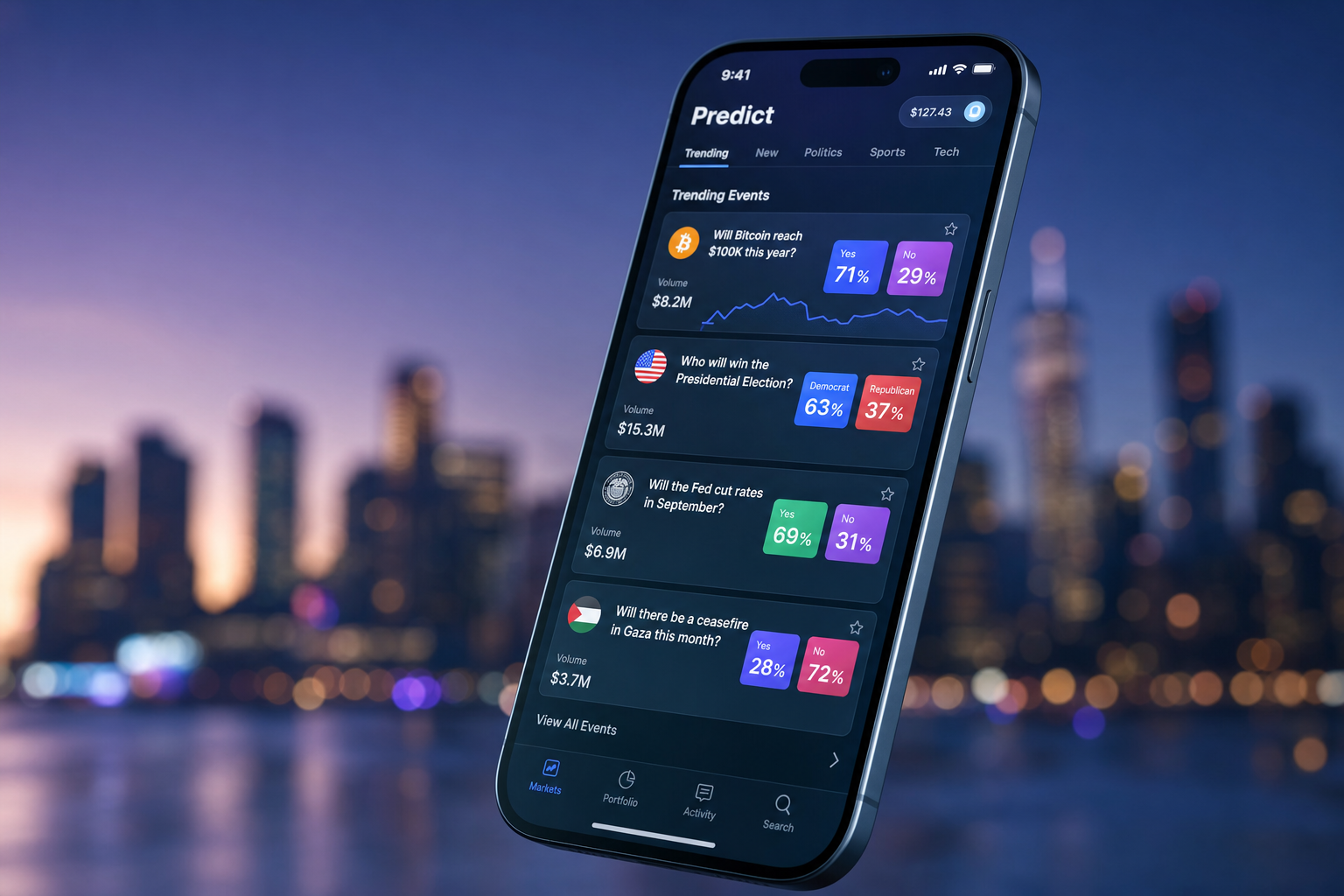
Mark Zuckerberg has personally directed a small team at Meta to build a standalone prediction markets app, the New York Times reported Tuesday, citing two employees with knowledge of the plans. The app is internally known as "Arena."
Meta's head of communications did not respond to the Times or to Reuters ahead of publication. But a source familiar with the company's plans separately confirmed the project to CNBC, adding one key detail: Arena will not use real money at launch. Instead, the platform will operate on a video game-style points system. Real-money wagering has not been ruled out for a future version, that person told CNBC. New York Times, June 23, 2026
Arena would function independently from Facebook, Instagram, WhatsApp, and Messenger. It is one of several standalone apps Meta is currently developing, alongside Meta Photos, a platform designed to use AI to generate new forms of media.
Why Now: A $130 Billion Market That Everyone Wants
The timing is not accidental. Prediction markets have spent two years moving from niche to mainstream.
Kalshi and Polymarket surged into public view during the 2024 U.S. presidential election, when millions of Americans watched live odds on the race as a form of real-time poll. The 2026 FIFA World Cup has continued that trajectory: more than $5 billion has been wagered on the tournament across Polymarket's international exchange and Kalshi's US-regulated platform, according to Bloomberg. Individual bets in the millions of dollars — including one player who reportedly lost $1.3 million on a single match — have turned these platforms into a kind of public ledger for high-stakes prediction.
In total, more than $130 billion has been traded on prediction markets in 2026 alone, the New York Times reported, citing figures from across the industry. Kalshi and Polymarket together recorded roughly $50 billion in combined trades in all of 2025. Reuters, June 23, 2026
Bernstein estimated in April 2026 that prediction markets could reach $1 trillion in annual trading volume by the end of the decade.
Meta recorded 3.56 billion daily active people across its apps as of its most recent quarterly earnings. That figure — larger than any existing or proposed prediction market platform's user base by multiple orders of magnitude — is the strategic asset Arena is designed to exploit.
The Points vs. Real Money Question
Arena's points-only structure is not just a product decision. It is a regulatory one.
In the United States, platforms that allow users to wager real money on event outcomes must register as Commodity Futures Trading Commission (CFTC) Designated Contract Markets (DCMs). Kalshi spent four years and significant legal fees securing its DCM and Derivatives Clearing Organization (DCO) designations. QCX LLC, the Polymarket subsidiary that operates its US exchange, received CFTC approval in July 2025. Novig and ProphetX have also recently cleared the DCM process.
A points-only platform operates in a different regulatory space entirely — closer to fantasy sports or social gaming than to CFTC-regulated event contracts. Meta would face no Commodity Exchange Act compliance obligations, no capital requirements, and no reporting mandates from CFTC as long as Arena avoids real-money wagering.
If Arena eventually adds real money, the regulatory path becomes significantly more complex. Zuckerberg would need to navigate a CFTC application process, ongoing legal battles between the CFTC and more than eight state attorneys general over prediction market jurisdiction, and the scrutiny that has already landed on Kalshi and Polymarket for high-profile controversial bets.
For now, the points model keeps Arena in the clear — and lets Meta test market mechanics at scale before committing to the regulatory investment real money would require.
Meta's Track Record: The Forecast Precedent
Arena is not Meta's first attempt at prediction markets.
In 2020, as COVID-19 cases surged globally, Meta launched a crowdsourced prediction market app called Forecast. Like Arena, Forecast used a points-based system rather than real money. The app was designed to aggregate crowd wisdom on pandemic-related outcomes — when would vaccines be approved, how quickly would cases peak in specific regions.
Forecast found a modest audience among forecasting enthusiasts but never achieved mainstream traction. Meta quietly shut it down in 2022. [New York Times, June 23, 2026]
Meta's record with standalone apps beyond its core social platforms is mixed at best. The company launched Lasso (a TikTok clone), Hobbi (a Pinterest clone), Super (a Cameo-style video platform), and Bulletin (a Substack rival) through its internal New Product Experimentation unit. Most were discontinued within two years of launch. The notable exception is Threads, which launched in July 2023 and reached 275 million users by 2025.
Meta insiders have characterized Arena as experimental, the Times reported. The project has not been publicly announced, and there is no confirmed launch date.
Market Reaction: Incumbents Got Sold
Meta's stock barely moved after the Times story broke Tuesday — META closed up approximately 0.36%, according to Reuters market data. The market is treating Arena as optionality for Meta, not a transformative bet.
The selling pressure landed elsewhere. DraftKings, Robinhood, and Flutter Entertainment — all of which have expanded into prediction markets or event contracts in 2025-2026 — fell as investors processed what a Meta-distribution prediction market could mean for their event contract businesses. CNBC, June 23, 2026
The selloff reflects a well-worn pattern around Meta competition. When Threads launched against Twitter, investor anxiety about Twitter (and later X) spiked before the practical competitive impact became clear. Analysts and insiders have already noted the structural differences between Arena's likely points-only format and Kalshi's real-money platform with CFTC regulatory backing.
What Meta's Distribution Actually Means
The question worth asking is not whether Meta can build a prediction market. It clearly can. The question is whether a points-based prediction market connects to the thing that drives volume on Kalshi and Polymarket: the possibility of winning real money.
Kalshi's $130B+ in 2026 volume and $2 billion in annual revenue are built on real-money event contracts — sports, politics, finance, and everything in between. The platform's fee model (0.07 × P × (1-P) per contract, capped at roughly 1.75 cents) generates significant revenue at scale precisely because users are wagering real dollars, not earning points toward a digital badge.
Polymarket's global exchange runs on USDC stablecoins and Polygon blockchain infrastructure. Its prediction markets on the 2026 World Cup alone have attracted more than $5 billion in wagers. That volume is driven by real economic stakes.
A points platform with 3.56 billion potential users is a different product from a financial instrument used by serious forecasters and sports bettors. It may develop significant scale — Duolingo's streak mechanics and Robinhood's gamification both demonstrated that non-cash engagement systems can drive enormous engagement. But converting points engagement into real-money trading volume requires regulatory infrastructure that Meta does not yet have.
The longer-term scenario, if Arena gains traction: Meta files for a CFTC DCM designation. That process could take 12-24 months, run into the same state-versus-federal jurisdictional battles Kalshi is fighting in seven states, and require Meta to navigate a CFTC that is already overextended managing its existing prediction market caseload.
What Prediction Markets Are Pricing on Meta
Polymarket currently hosts 37 active markets related to Meta Platforms, according to its predictions page as of June 23, 2026. These markets primarily track META stock price movements — weekly closes, monthly price targets — with approximately $21.2 million in combined trading volume.
No specific market on whether Meta will launch Arena, when it will launch, or whether it will add real-money features had been created on either Kalshi or Polymarket as of publication time Tuesday.
The Meta markets that do exist suggest traders are not dramatically repricing the stock on Arena news. The week-of-June-22 Meta stock price market showed close to coin-flip odds (approximately 52%) on whether the stock would hit a specific threshold — consistent with the flat-to-slightly-positive reaction following the Times story.
The Bigger Picture
Arena's announcement arrives at an inflection point for the prediction market industry. The same week Meta's project became public:
- Kalshi formally blocked Indian users, joining a restricted jurisdiction list now exceeding 55 countries, as India's PROGA online gaming law took effect.
- Bloomberg reported the World Cup has generated more than $5 billion in prediction market wagers across Kalshi and Polymarket — turning individual million-dollar losses into public spectacle.
- The CFTC is simultaneously managing eight active state lawsuits challenging its authority to regulate prediction markets, while pursuing its own Proposed Rulemaking to define which event types are permissible under federal law.
In that context, Meta's entry — even as a points-only experiment — signals something about where the cultural and economic gravity is. Zuckerberg's track record of identifying emerging behaviors before they become mass markets (mobile social, short-form video, messaging apps) is the reason investors and incumbents are paying attention.
Whether Arena stays in points-land or eventually becomes a real-money competitor to Kalshi and Polymarket depends on regulatory choices Zuckerberg has not yet made. For now, the largest social media company on earth has directed its resources toward prediction markets.
That is itself a signal worth tracking.
US Access Notes
Kalshi is available in 42 US states. It is regulated by the CFTC as a Designated Contract Market and Derivatives Clearing Organization. Event contracts cover sports, politics, finance, and economic indicators. kalshi.com
Polymarket US (QCX LLC) offers sports event contracts to users in 48 states and the District of Columbia. Its global exchange (polymarket.com) is not available to US users. polymarket.com
Meta Arena has no confirmed launch date and currently uses a points-based system with no real-money wagering. It is not registered with the CFTC.
Sources: New York Times (Mike Isaac, David Yaffe-Bellany), June 23, 2026; Reuters, June 23, 2026; CNBC (Davis Giangiulio, Stephen Desaulniers), June 23, 2026; Bloomberg, June 23, 2026; Bernstein, April 2026.