
Colombia's 2026 Presidential Runoff: What Prediction Markets See That Polls Don't
Colombia votes today in a presidential runoff. Polymarket has Espriella at 88.5 cents on $39.5M in volume. The polls show 4–8 points. Here's the gap.
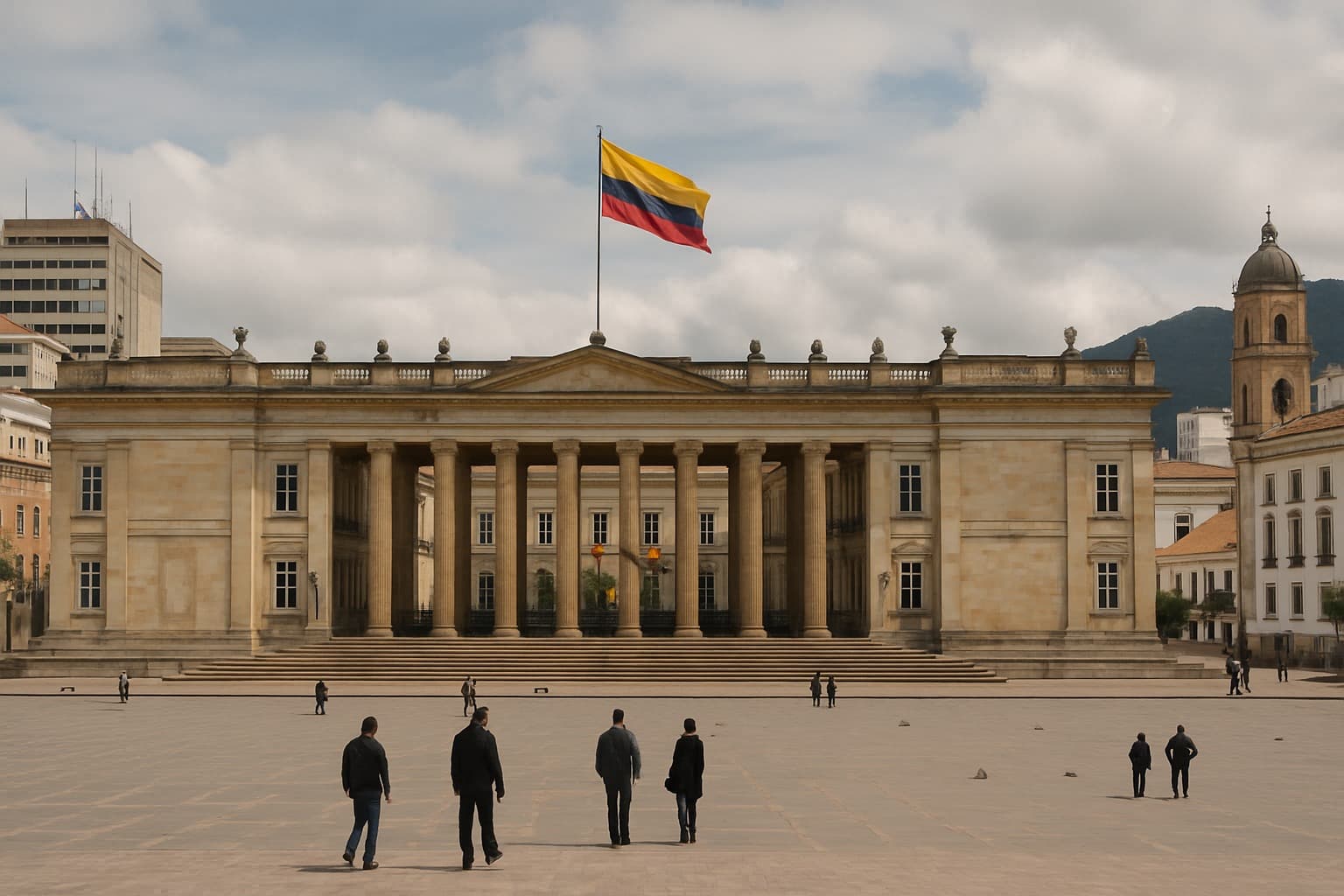
Colombia is voting today. One candidate controls 88.5 cents on the dollar in one of the largest Latin American election markets ever to trade on Polymarket. The polls give him a 4 to 8 point lead. The prediction market is priced for a near-certainty.
Here's what the crowd is seeing — and why the gap matters.
The Market's Verdict: $39.5 Million and 88.5 Cents
As of Sunday morning, the Colombia presidential election market on Polymarket's global platform shows:
- Abelardo de la Espriella (right): 88.5 cents (88.5% implied probability)
- Iván Cepeda (left): 12.5 cents (12.5% implied probability)
- Total volume: $39.5 million
That figure places Colombia's 2026 runoff among the largest Latin American presidential election markets ever traded on Polymarket. For context, 88.5 cents represents a collective judgment from real-money traders that Espriella has roughly an 88.5% chance of winning — a level of conviction that polls alone, which show a 4 to 8 point lead, do not explain.
Prediction markets and public polling often diverge on competitive elections. Colombia is a striking example of that gap.
Live market view — track these prices yourself:
Polls Close Today. Here's What They Show.
Colombian voters head to polling stations on Sunday, June 21. Tables open at 8:00 a.m. and close at 4:00 p.m. local time — approximately 9:00 a.m. to 5:00 p.m. Eastern Time. More than 106,000 voting tables are installed nationwide; the only accepted identification is the official citizenship card (physical or via the Registraduría's app).
Four recent runoff surveys describe a competitive but consistent advantage for Espriella:
| Pollster | Fieldwork | Espriella | Cepeda | Lead |
|---|---|---|---|---|
| AtlasIntel / Semana | June 1–2 | 52.5% | 44.5% | +8.0 |
| AtlasIntel / Semana | June 5–10 | 52.2% | 44.5% | +7.7 |
| Guarumo / Ecoanalítica | June 8–11 | 52.6% | 44.8% | +7.8 |
| CNC / Cambio (latest) | June 6–13 | 48.6% | 44.7% | +3.9 |
Three of four surveys show Espriella ahead by roughly 8 points. The most recent — conducted through June 13 by the Centro Nacional de Consultoría for Cambio — shows just a 3.9-point margin. Pollsters consistently warn that Colombian runoffs can swing hard in the closing days.
The market, at 88.5 cents, is not treating this as a swing-hard situation.
The First Round Set the Tone
Colombia's runoff is the product of a May 31 first-round election in which Espriella outperformed expectations. With all ballots counted, he won 43.74% of the vote against Cepeda's 40.90%. No candidate reached the 50% threshold required for an outright win.
The result surprised observers. Pre-election surveys had pointed to a potential three-way race; Espriella took first and never looked back. International observers certified the process as orderly and transparent — directly contradicting claims of irregularities from outgoing President Gustavo Petro.
Cepeda initially contested the results, alleging discrepancies in the voter registry involving more than 800,000 identity cards. He accepted the outcome on June 7 after finding no supporting evidence. He told Reuters he would recognize the runoff result as well.
Within hours of the May 31 vote, Paloma Valencia — the third-place finisher with 6.92% of the vote, representing the Democratic Center party — announced her support for Espriella. That endorsement brought roughly 1.6 million additional votes into the right-wing coalition.
Who Is Abelardo de la Espriella?
De la Espriella, 47, is a lawyer and businessman from Barranquilla who entered the race as a self-described political outsider. His movement is "Defenders of the Homeland" (MSN). At rallies, he calls himself "The Tiger."
His platform centers on a security crackdown against criminal organizations, closer alignment with the United States and Israel, lower taxes, expanded oil exploration, and a reversal of President Petro's policy agenda — including Petro's ban on new oil projects.
He has spoken favorably of U.S. President Donald Trump and drawn comparisons to leaders like El Salvador's Nayib Bukele for his tough-on-crime approach. His US orientation carries real significance: Colombia is Washington's closest Latin American security partner on counter-narcotics. A de la Espriella presidency would likely ease the tensions that marked the Petro era on bilateral security cooperation.
Who Is Iván Cepeda?
Cepeda, 63, is a senator and longtime human rights advocate who entered the race as the continuity candidate for Petro's governing coalition, the Historic Pact. He is the son of Manuel Cepeda Vargas, a communist politician assassinated in 1994.
His campaign promises to continue Petro's social reforms: agrarian land distribution, expanded healthcare, higher taxes on high earners, and ongoing peace negotiations with armed groups under the "total peace" strategy. He argues for a more independent Colombian foreign policy and greater Latin American integration.
In the campaign's final week, Cepeda filed criminal complaints accusing de la Espriella of historic ties to AUC paramilitary forces. De la Espriella called the charges a smokescreen; authorities found nothing to substantiate them before election day.
Why the Market Sees an 88-Cent Winner
The gap between the polls (4 to 8 points) and the market (88 to 12) deserves explanation.
The Valencia endorsement multiplier. Paloma Valencia's 6.9% from the first round — about 1.6 million votes — flowed almost entirely toward de la Espriella. If even 75% of her voters follow her endorsement, the swing alone could produce a double-digit final margin that exceeds what current polling captures.
Right-wing consolidation. The first round fragmented the right; the runoff unified it. Espriella and Valencia together received roughly 50.7% of all first-round votes. Cepeda received 40.9%. The math does not require much coalition discipline to produce a clear winner.
Petro fatigue. Cepeda is running as the explicit continuation of a president whose approval ratings have been under sustained pressure. Markets often discount the continuation candidate in lame-duck scenarios more aggressively than polls do.
Espriella outperformed polling in the first round. Pre-election surveys had him closer to 35-40%. He came in at 43.74%. Markets that observed that performance updated sharply; static polls haven't fully reset their baseline.
Colombian runoff volatility cuts both ways. Pollsters note that Colombian runoffs can swing. But the market's 88 cents reflects the view that the structural factors — endorsement math, coalition size, Petro legacy drag — are more determinative than the last-minute volatility those same pollsters warn about.
What Comes Next: Security, ELN Ceasefire, and U.S. Stakes
Security for today's vote is extensive. Defense Minister Pedro Sánchez confirmed the deployment of 248,000 military and police officers plus 160,000 in support roles — 408,000 personnel total — guarding polling sites, escorting ballot materials, and securing transit routes.
The ELN guerrilla group declared a three-day unilateral ceasefire from midnight June 20 through midnight June 23, ordering fighters to suspend offensive operations to avoid disrupting the vote. A dry law halts alcohol sales in Bogotá from Saturday midnight through noon Monday.
Authorities placed 99 municipalities under watch for possible post-result unrest.
Polling closes at 4:00 p.m. local time. Results from Colombia's Registraduría Nacional del Estado Civil typically begin emerging within hours of closing, with urban centers reporting earliest.
The winner is inaugurated on August 7, 2026.
For Washington, the outcome has direct implications. Colombia is the United States' closest Latin American security partner on drug interdiction and migration management. The Congressional Research Service noted in its June 2026 analysis that the 119th Congress has reduced foreign assistance to Colombia due to concerns about the Petro government's security approach — policies Cepeda explicitly supports. A de la Espriella victory would likely trigger a rapid reset of bilateral security cooperation.
Frequently Asked Questions
What is Polymarket showing for Colombia's 2026 presidential election? As of Sunday morning, June 21, Polymarket's global platform shows de la Espriella at 88.5 cents (88.5% implied probability) and Cepeda at 12.5 cents, on $39.5 million in total volume. Prices update continuously as new trading occurs.
Can U.S. users trade the Colombia election market on Polymarket? Not through Polymarket's U.S. entity (QCX LLC d/b/a Polymarket US), which restricts its contract offerings to sports markets. The Colombia presidential election market is available on Polymarket's international platform, which is geo-blocked for U.S. users. You can monitor live prices and market data on PredictionMarkets.us.
What time do Colombia's polls close? 4:00 p.m. local time, which is approximately 5:00 p.m. Eastern Time on Sunday, June 21.
What determines how the market resolves? Polymarket's market resolves based on a consensus of credible reporting aligned with Colombia's Registraduría Nacional del Estado Civil (Registraduría.gov.co), the official national civil registry and certifying authority.
When does the winner take office? Colombia's new president is inaugurated on August 7, 2026.
Sources & Verification
- Colombia first-round results — Espriella 43.74%, Cepeda 40.90%; international observers certified results; Cepeda contested then accepted: Reuters, May 31, 2026 and Reuters, June 7–8, 2026
- AtlasIntel poll (June 8–11): Espriella 52.6%, Cepeda 44.8%: Reuters, June 11, 2026
- Cepeda will accept runoff result: Reuters, June 10, 2026
- Paloma Valencia endorsement; candidate profiles; U.S.-Colombia relations; first-round 43.74% vs. 40.90%; Cepeda's father; platform details: CNN, May 31, 2026
- CNC/Cambio poll (June 6–13): Espriella 48.6%, Cepeda 44.7%; AtlasIntel/Semana: 52.2% vs. 44.5%; Guarumo/Ecoanalítica: 52.6% vs. 45%; voting hours; ELN ceasefire; 408,000 deployment; dry law; 99 municipalities on watch: Latin Times, June 18, 2026; corroborated by Reuters, June 11, 2026
- U.S.-Colombia ties; 119th Congress aid conditions; certification timeline; Cepeda supports Petro security policies; winner inaugurated August 7: Congressional Research Service Report IN12689, June 9, 2026
- Polymarket prices (88.5¢ Espriella / 12.5¢ Cepeda, $39.5M volume, verified June 21, 2026 08:15 ET): Polymarket.com event; live tracking at PredictionMarkets.us/events/colombia-presidential-election