
After the WHCD Shooting: What Prediction Markets Actually Say About a Presidential Death
The WHCD shooting surfaced $24M+ in 'Trump out' market activity — but most US traders couldn't access it. Here's what the fine print actually says about death, settlement, and the missing market.
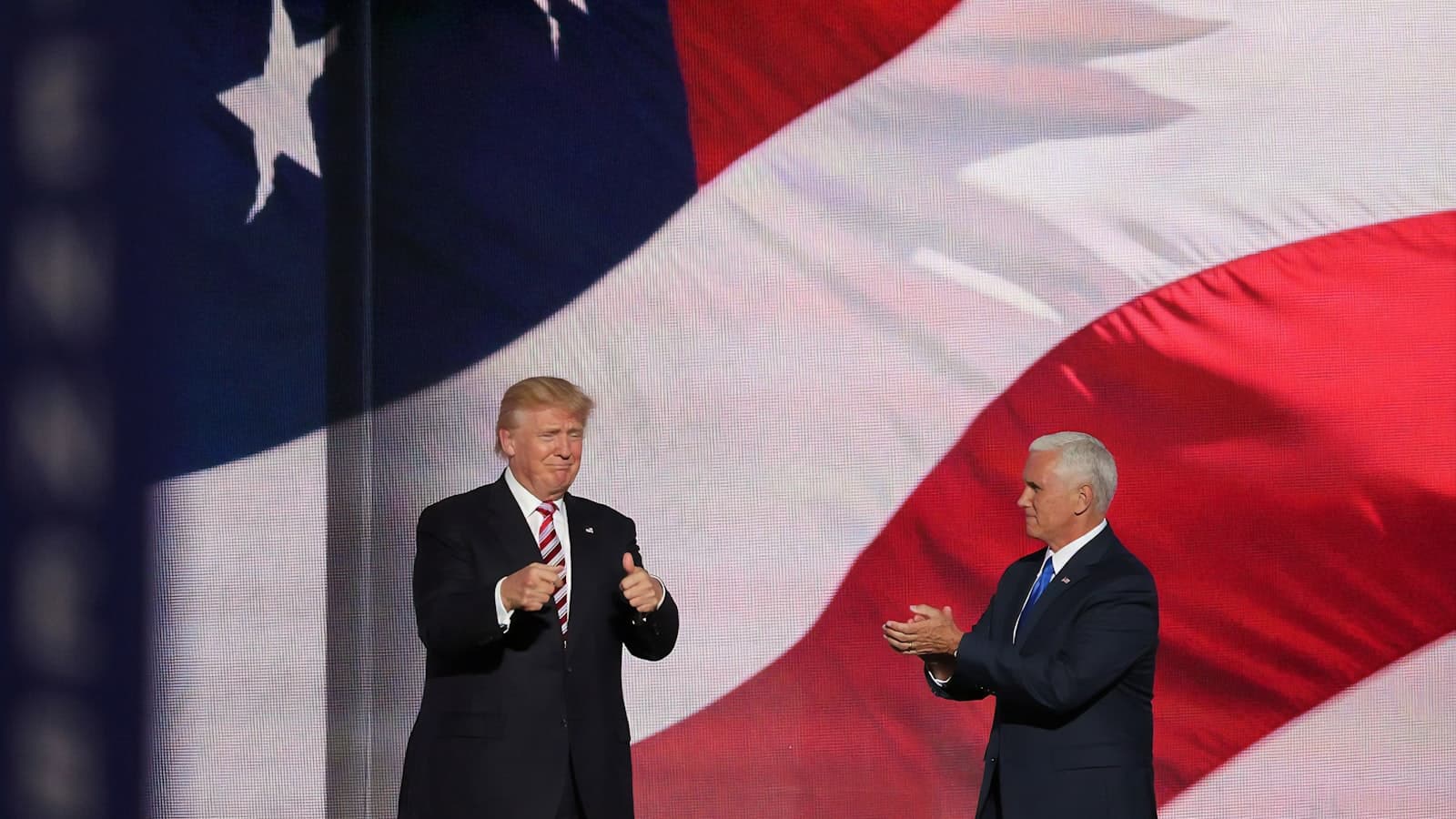
Saturday night at the Washington Hilton, Cole Tomas Allen — a 31-year-old engineer and part-time teacher from Torrance, California — charged through a security checkpoint armed with a shotgun, a handgun, and multiple knives. President Trump, Vice President Vance, Defense Secretary Hegseth, and Secretary of State Rubio were rushed from the stage by the Secret Service. One agent was shot but protected by a bulletproof vest. Allen was subdued and arrested. No senior official was harmed.
Within hours, prediction markets were doing what they do: pricing the new information in real time. More than $24 million in open contracts on the question of Trump's continued presidency sat active through Sunday morning.
But when traders and journalists went to examine those markets — to understand what they said about presidential mortality and continuity — they found a thicket of legal distinctions, regulatory gaps, and settlement fine print that most people had no idea existed.
Here is what that fine print actually says.
The Markets That Were Trading Saturday Night
The most active "Trump out as President" contracts on Saturday night were not on any US-regulated exchange. They were on global Polymarket — the international, crypto-denominated platform not accessible to US users.
Three markets on global Polymarket carried more than $24 million in combined volume as of Sunday:
| Market | Volume | Probability (April 26) |
|---|---|---|
| Trump out by April 30 | $13.32M | 0.1% |
| Trump out before 2027 | $7.46M | 17% |
| Trump out by June 30 | $3.53M | 5% |
These markets are on global Polymarket at polymarket.com. US users cannot access them. Under QCX LLC d/b/a Polymarket US — the CFTC-registered domestic venue — only sports markets are live for US users. Political and world-event markets remain unavailable in the United States as of April 2026.
On Kalshi — the US-regulated CFTC Designated Contract Market — the "Donald Trump out as President?" market had accumulated $8.54 million in volume since it opened in November 2025, with the "before 2027" outcome priced at 14% as of Saturday night.
If you are a US trader, Kalshi is where you can actually trade this. And Kalshi's rules work very differently from what many assume.
What the Resolution Rules Actually Say
This is where it gets interesting. For a deeper primer on how prediction markets resolve generally, see our guide to prediction market settlement rules.
Polymarket's Language
Polymarket's "Trump out as President" resolution rule reads:
"This market will resolve to 'Yes' if Donald Trump resigns or is removed as President or otherwise ceases to be the President of the United States for any period of time by [expiry date], 11:59 PM ET."
The phrase "otherwise ceases to be the President" is the operative clause. Death would cause Trump to cease being the President. Under a plain reading of Polymarket's resolution language, a presidential death would trigger a "Yes" resolution — the same as resignation or a successful 25th Amendment removal.
The rules also specify that the resolution source is "a consensus of credible reporting." Polymarket does not define which outlets constitute this consensus, nor does it specify how an oracle dispute would be resolved in the event of an assassination that happened hours before a close expiry.
Kalshi's Language — and Its Explicit Death Carveout
Kalshi's Trump market takes a different approach. Its resolution rule reads:
"If Donald Trump leaves office before January 20, 2029, then the market resolves to Yes."
Clear enough. But there is an explicit carveout for the death scenario:
"If Donald Trump leaves solely because they have died, the associated market will resolve and the Exchange will determine the payouts to the holders of long and short positions based upon the last traded price (prior to the death)."
This is a radically different payout structure than a standard binary contract. Normally, a winning "Yes" contract on Kalshi pays $1 per share. But if the resolution trigger is death, Kalshi pays not $1 — it pays whatever the market's last traded price was before news of the death emerged.
If the market was trading at 17¢ when news broke, Yes holders get 17¢, not $1. No holders get 83¢.
This means that in the scenario Saturday night could have become, US traders who bought the "before 2027" contract at 14¢ were not buying $1 of protection. They were buying a contract that, in the death scenario, might have paid somewhere between 14¢ and whatever the last clean price was before trading froze.
Why No US Exchange Can Offer a Pure Presidential Mortality Contract
Kalshi's billboard campaign in Washington, DC this spring stated plainly: "We don't do death markets. Not in the U.S. They're illegal."
That is not marketing spin. It is a summary of CFTC Regulation 40.11.
The Commodity Exchange Act was amended in 2010 to give the CFTC authority to review certain categories of event contracts. CFTC Regulation 40.11, which the agency implemented under that authority, explicitly prohibits any Designated Contract Market from listing event contracts that "involve, relate to, or reference terrorism, assassination, war, gaming, or an activity that is unlawful under State or Federal law."
The CFTC's own published guidance explains the rationale: "Allowing trading in contracts involving terrorism, assassination, or war could incentivize certain market participants to take a speculative position on whether these devastating events will occur... Allowing trading in such contracts might even increase the risk of a terrorist attack, assassination, or act of war, by creating financial incentives for a potential perpetrator to take a position in such a contract and then profit by carrying out the heinous act."
In other words: a market titled "Will Trump be assassinated?" would be prohibited outright on any CFTC-registered exchange. Period.
What Kalshi offers instead is a leadership-continuity contract — "Will Trump leave office for any reason?" — with a built-in death carveout that defuses the assassination-incentive concern by refusing to pay $1 on death. The settlement at last traded price means there is no windfall for someone who bet on early departure and then acted to cause it.
It is a legal and regulatory workaround. A clever one. But it leaves traders in a materially different financial position than they might expect.
The Khamenei Precedent: When Death Came for a "Leadership Change" Market
Kalshi navigated exactly this problem earlier in 2026, when Iranian Supreme Leader Ali Khamenei was killed in US-Israeli strikes on February 28.
Kalshi had listed a market on whether Khamenei would leave his position — an outcome-based continuity market, not a death market. The market generated more than $54 million in trading volume. When Khamenei was killed, Kalshi settled the contract at the last traded price prior to his death, applying the same death carveout embedded in the Trump market's rules.
The controversy was substantial. "We don't list markets directly tied to death," Kalshi CEO Tarek Mansour wrote on X. "When there are markets where potential outcomes involve death, we design the rules to prevent people from profiting from death. That is what we did here."
Traders who had bought "Yes" contracts expecting a $1 payout received far less — whatever the market had priced before news of the strikes broke. Kalshi subsequently reimbursed all fees and all net trading losses out of pocket. A class-action lawsuit seeking $54 million was filed in the US District Court for the Central District of California in March 2026, alleging the death carveout had not been adequately disclosed.
On global Polymarket, the comparable Khamenei contract — which carried no equivalent death carveout — resolved to "Yes" at $1, but entered a prolonged dispute cycle among UMA oracle token holders before final settlement.
The two different resolution frameworks for the same underlying event illustrate exactly why settlement-source ambiguity is real, not theoretical. For more on how oracle disputes work, see our explainer on how prediction markets work.
The Missing Market
The WHCD shooting exposed a genuine gap in the US prediction market landscape.
If you are a US-resident trader who wants to express a view on presidential continuity — for speculative or hedging purposes — your options are:
- Kalshi's "Trump out as President": Available, CFTC-regulated, but death resolves at last-traded-price, not $1.
- Polymarket's "Trump out" markets: Higher volume, broader resolution language, but not accessible to US users — QCX LLC covers sports only in the United States.
There is no US-regulated exchange offering a pure, $1-payoff contract on presidential mortality. CFTC Regulation 40.11 makes that illegal — and for defensible reasons that most traders haven't examined.
What would a properly-designed POTUS continuity contract look like on a regulated exchange? It would need to:
- Resolve on death, removal, and resignation without creating assassination incentives
- Have a designated, unambiguous oracle source (federal government announcement, not a consensus of unnamed outlets)
- Either adopt the last-traded-price settlement mechanism with prominent disclosure, or structure around it in a way traders can actually model
That contract does not currently exist on any CFTC-regulated exchange. When Saturday's shooting happened, there was no clean US-regulated hedge available for the scenario that was, briefly, very much on the table.
That is the missing market. And Saturday night was a reminder of why it matters.
Frequently Asked Questions
Can US users trade the Polymarket "Trump out" markets?
No. Those markets are on global Polymarket (polymarket.com), which is not accessible to US users. QCX LLC d/b/a Polymarket US is the CFTC-registered US venue and currently offers sports markets only. Political and world-event markets are listed as "coming soon" as of April 2026.
Does Kalshi's "Trump out" market pay $1 if Trump dies?
No. Kalshi's market rules explicitly state that if the resolution trigger is death, payout is based on the last traded price prior to the death — not the standard $1 binary settlement. The payout depends on where the market was trading when news emerged.
Why can't a US exchange offer a straight presidential mortality contract?
CFTC Regulation 40.11 prohibits any Designated Contract Market from listing event contracts that "involve, relate to, or reference" assassination. The CFTC's published rationale is that such contracts could create financial incentives for the assassination itself. This is not a gray area — it is an explicit regulatory prohibition on the books since 2011.
If Polymarket settles "yes" on death, is there dispute risk?
Yes. Polymarket's resolution source is "a consensus of credible reporting" adjudicated by UMA oracle token holders. The Khamenei market entered a multi-day dispute cycle in early 2026. A US presidential death scenario — particularly one with contested circumstances — could create significant resolution uncertainty on any oracle-based platform.
What is Kalshi's historical precedent for death settlement?
Kalshi applied its death carveout to the Khamenei market in February 2026, settling at last-traded-price rather than $1. The controversy generated a class-action lawsuit and led Kalshi to reimburse all fees and net losses out of pocket. The exchange subsequently codified the death carveout mechanism in a formal rulebook amendment filed with the CFTC.
The Bottom Line
The WHCD shooting surfaced something most prediction market participants hadn't examined: the gap between what these markets appear to offer and what they actually deliver in the most extreme scenarios.
Global Polymarket's "Trump out" contracts hold more than $24 million in volume and do resolve to Yes on death — but US users cannot access them. Kalshi's equivalent contract — which US users can trade — pays not the standard binary $1 on death, but rather whatever the market last priced before trading froze.
No US-regulated exchange can offer a pure presidential mortality contract. That is the law, and there is a rational public policy basis for it.
But understanding that law — and what it means for the contracts that do exist — is exactly the kind of fine print that Saturday night made urgent. For the broader legal battles shaping what prediction markets can and cannot offer in the United States, see our coverage of the CFTC insider trading enforcement landscape.
Sources & Verification
- WHCD incident, Cole Tomas Allen arrest: Reuters — verified April 26, 2026; CNN — verified April 26, 2026; AP via Time — verified April 26, 2026; LA Times — verified April 26, 2026
- Polymarket "Trump out" resolution rules and volumes: Polymarket — "by April 30"; Polymarket — "before 2027"; Polymarket — "by June 30" — all verified April 26, 2026
- Kalshi death carveout settlement rules and volume ($8.54M): Kalshi market rules — verified April 26, 2026
- Kalshi "We don't do death markets" campaign: CNBC — verified April 15, 2026; Politico — verified April 1, 2026
- CFTC Regulation 40.11 assassination prohibition: CFTC.gov — verified
- Khamenei market volume ($54M), class action, Kalshi reimbursement: Reuters — verified March 6, 2026; WIRED — verified March 2, 2026; Bloomberg Law — verified March 6, 2026
- Polymarket US access (QCX LLC sports-only): Polymarket US app — verified April 2026