
States Win 19 of 23: What Washington's Kalshi Ruling Means for Prediction Markets Nationwide
A Seattle judge blocked Kalshi's sports markets in Washington, citing state gambling law. With states winning 19 of 23 injunction battles, the preemption fight is heading to the Supreme Court.
What Washington's Ruling Means for Prediction Market Traders Nationwide
Prediction market platform Kalshi absorbed another court defeat on July 20, 2026, when a Seattle judge granted Washington state a preliminary injunction barring the company from offering sports-related event contracts to state residents. The ruling is the latest in a cascade of state victories that legal experts say is reshaping where CFTC-regulated platforms can operate — and putting the question of federal versus state authority on a path toward the Supreme Court.
States have now prevailed in 19 of 23 judicial decisions on whether a preliminary injunction or temporary restraining order should be issued in prediction-market cases, according to gambling and gaming attorney Daniel Wallach. "The tide is turning sharply in the states' favor," Wallach said, noting that Kalshi is already barred from sports-event contracts in Nevada and Michigan, with Washington poised to become the next.
The Washington Ruling: What the Judge Actually Said
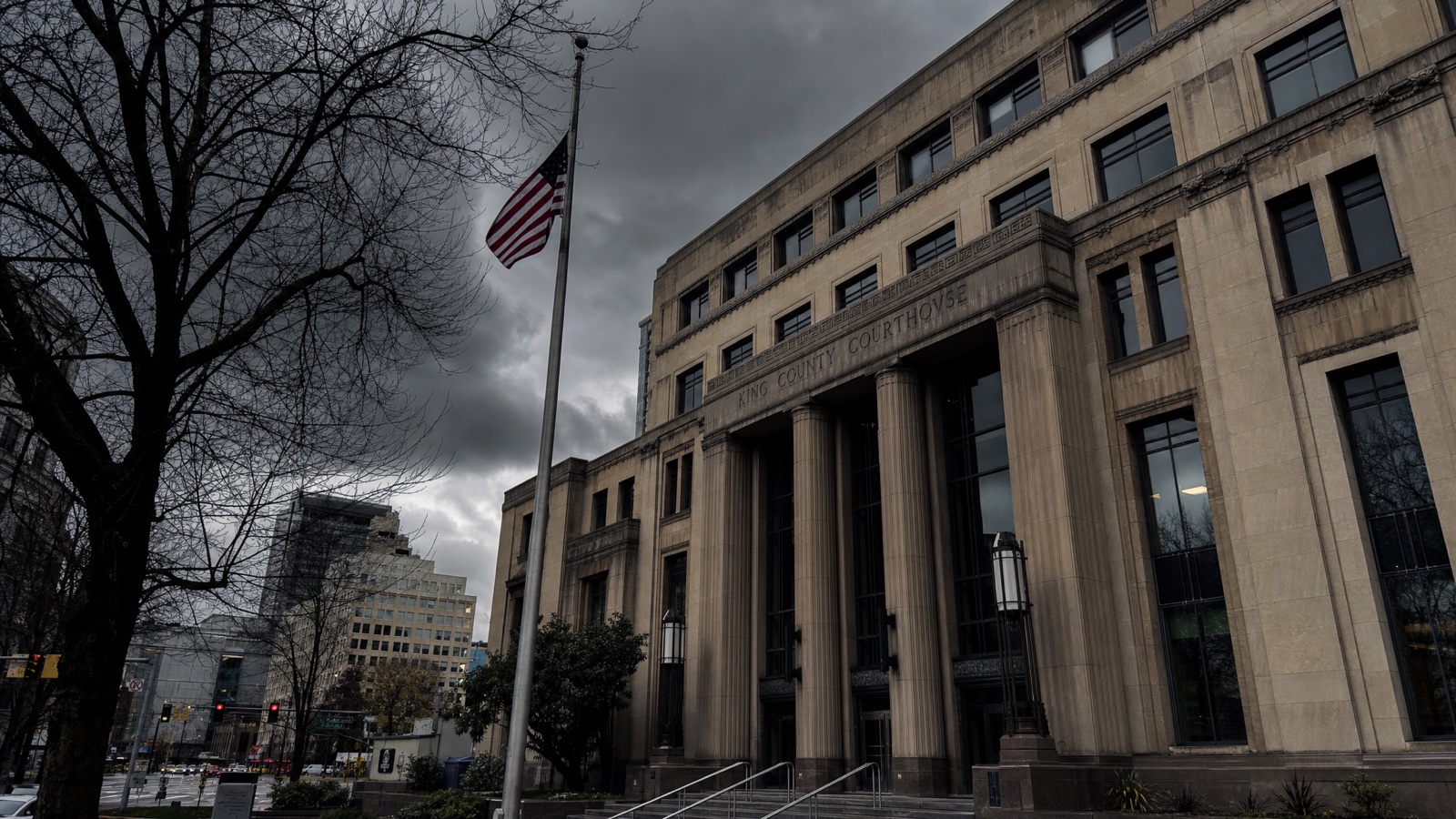
King County Superior Court Judge John McHale granted Washington Attorney General Nick Brown's motion for a preliminary injunction on July 20, finding that the state was likely to succeed in proving Kalshi's sports event contracts violate Washington's Gambling Act and Consumer Protection Act.
The judge's language was direct. "[Kalshi] offers illegal gambling activities to Washington consumers and solicits bets from Washington consumers on its platform," McHale wrote. "The public interests at stake and potential harm to consumers in the continued operation of Kalshi's online gambling activities in the State of Washington outweigh harm to Kalshi."
Critically, McHale rejected Kalshi's central legal defense: that its status as a federally licensed exchange insulates it from state gambling oversight. He wrote plainly that "the Commodity Exchange Act does not preempt Washington State gambling law," finding that Congress intended states to retain authority over what constitutes illegal gambling within their borders — meaning the same Kalshi contract can be lawful under federal rules and prohibited under state law simultaneously.
The case began in March 2026, when Attorney General Brown sued Kalshi, alleging the platform violated state law. Washington presents a particularly hostile legal environment for prediction markets: the Legislature banned internet gambling outright in 2006, and legal sports wagering in the state is limited to in-person bets placed on tribal lands.
AG Brown's post-ruling statement was pointed: "Kalshi padded their pockets as they promoted illegal betting on sports, elections, the total number of measles cases this year, what will witnesses say during a child trafficking hearing, and even natural disasters. This victory is the first step toward holding Kalshi accountable."
The injunction does not take immediate effect. Both parties have until August 3 to submit proposed terms; the restriction takes full effect no earlier than August 5.
Kalshi pushed back: "States don't have jurisdiction to regulate prediction markets," a spokesperson said. "Many courts — including the Third Circuit — have made this clear. We're disappointed to see Washington state continue wasting taxpayer dollars."
The Map Is Shrinking — States With Active Restrictions
Washington joins a growing list of states where Kalshi's sports-event contracts face court-ordered restrictions:
- Nevada — Kalshi already geoblocked from sports contracts
- Michigan — Temporary restraining order; the CFTC separately ordered Kalshi to fulfill open trades despite the court order
- Washington — Preliminary injunction effective August 5
- New York — Federal judge denied Kalshi's bid to block state enforcement of gambling laws (July 8)
- Massachusetts — Court order restricting activities
Beyond injunctions, Minnesota enacted a statutory ban signed into law by Governor Tim Walz in May 2026 and taking effect August 1 — the first state-level statutory prohibition. The CFTC filed suit to block it one day after it was signed. Arizona, Connecticut, and Illinois have CFTC countersuit actions that resulted in a Ninth Circuit injunction protecting platforms there.
The pattern is consistent: when a state requests a preliminary injunction against Kalshi or Polymarket, the court grants it roughly 83% of the time.
The Central Legal Fight: Federal Preemption vs. State Police Powers
Every one of these cases turns on the same question. Does the Commodity Exchange Act grant the CFTC exclusive jurisdiction over event contracts traded on federally registered exchanges — preempting state gambling laws? Or do states retain authority to classify sports-outcome contracts as gambling regardless of how the exchange is federally licensed?
Kalshi's argument, shared by the CFTC, is that the CEA's grant of exclusive jurisdiction means states cannot apply their gambling laws to Kalshi's sports contracts, any more than a state could impose its own commodity rules on corn futures trading in Chicago.
State regulators and courts have consistently rejected this. They point to specific CEA text: a provision stating the statute does not supersede or limit the authority of state regulators, and a section allowing the CFTC itself to review event contracts tied to "gaming" or any activity "unlawful under any Federal or State law." If Congress had intended to preempt state gambling law, the argument goes, it would not have carved out a gaming exception.
Judge McHale applied that reasoning in Washington: the CEA does not forbid a contract being simultaneously lawful at the federal level and prohibited at the state level.
The Circuit Split That Could Send This to the Supreme Court
The conflict is sharpest at the appellate level. In April 2026, the Third U.S. Circuit Court of Appeals reached the opposite conclusion from Washington's state court. In a 2-1 decision involving New Jersey, the Third Circuit ruled that sports event contracts on federally registered exchanges qualify as swaps under the CEA, and are therefore preempted from state gambling enforcement.
Meanwhile, state courts in Nevada, Maryland, Ohio, and now Washington have reached opposite conclusions on the same statutory question. A conflict between federal appellate reasoning and state court rulings is precisely the kind of legal dissonance that prompts Supreme Court review — and legal experts increasingly expect that's where this ends.
Wallach has been direct about the trajectory. "While this question ultimately will be decided by the Supreme Court within a few years, Kalshi's map for sports-related contracts could look markedly different in six months than it did earlier this year when it was not the subject of any injunctions barring it from offering sports contracts."
New Jersey has until August 2026 to petition the Supreme Court for review of the Third Circuit ruling. If granted, that case could provide the vehicle for the Court to resolve the preemption question nationally — and set the legal framework for every state that follows.
Live market view — where prediction markets put the odds on a national sports ban:
Platform-by-Platform: What This Means for Active Traders
For traders, the practical consequence is growing geographic complexity. Kalshi remains the largest prediction market platform in the U.S. by volume. The company raised $1 billion in a Series F round led by Coatue Management in May 2026 at a $22 billion valuation, with participation from Sequoia Capital, Andreessen Horowitz, Morgan Stanley, and ARK Invest. Per its funding announcement, Kalshi held more than 90% of U.S. prediction market activity, annualized trading volume of $178 billion, and annualized revenue exceeding $1.5 billion.
But sports contracts are the core revenue driver — and those are precisely what state courts are targeting. A platform geoblocked from sports markets in Nevada, Michigan, and Washington faces a materially different business than one with national reach.
For Polymarket, the U.S. picture is also constrained. QCX LLC, the CFTC-licensed U.S. entity, offers only sports contracts to U.S. users. Non-U.S. users access the global Polymarket platform, which covers all categories but is not accessible to U.S. traders.
The World Cup provided a window into the scale of what's at stake. Approximately $19.04 billion was wagered through Kalshi and Polymarket on the 2026 FIFA World Cup, according to data tracker Dune Analytics, as cited in Reuters reporting. Events of that magnitude — and the revenue they generate — depend on national access.
What Happens Next: Key Dates
July 27 — CFTC public comment period on its proposed rule for prediction market event contracts closes. The Notice of Proposed Rulemaking, published June 10, has drawn approximately 3,500 public comments. Final rules could trigger additional legal challenges from tribal gaming interests and state lawmakers.
August 1 — Minnesota's statutory ban on prediction markets takes effect.
August 3 — Washington state and Kalshi must submit proposed injunction terms to Judge McHale.
August 5 — Washington preliminary injunction takes full effect.
August — New Jersey's deadline to petition the Supreme Court for review of the Third Circuit ruling.
The coming months will test whether Kalshi's legal theory — that a federal CFTC license functions as a national operating permit — can withstand a judicial environment where state courts are consistently finding otherwise. The platform's lawyers and the CFTC's litigators are playing the long game toward the Supreme Court. The question is what the map looks like when they get there.
Frequently Asked Questions
Is Kalshi still operating in Washington state? Yes, as of July 22, 2026. The preliminary injunction does not take effect until at least August 5. After that date, Kalshi is expected to geoblock sports-related event contracts for Washington residents.
What is the Commodity Exchange Act preemption argument? Kalshi and the CFTC argue that the CEA gives the federal agency exclusive jurisdiction over event contracts on registered exchanges, blocking states from applying their own gambling laws. Most state courts that have considered the question — including Washington's — have rejected this argument.
Which states have restricted Kalshi's sports markets? As of July 2026, court orders restricting Kalshi's sports-event contracts are in place or imminent in Nevada, Michigan, Washington, Massachusetts, and New York. Minnesota enacted a statutory ban effective August 1.
Could the Supreme Court settle this? Legal experts expect the preemption question to reach the Supreme Court. The Third Circuit's ruling — that federal law preempts state oversight — directly conflicts with the reasoning of most state courts. New Jersey has until August to petition for Supreme Court review of the Third Circuit case.
What happens to open trades in restricted states? The situation is complicated. In Michigan, a state court ordered Kalshi to cancel open trades while the CFTC ordered the platform to fulfill them, placing the company in direct conflict between state and federal authority. Kalshi ultimately followed the CFTC's directive.
Sources & Verification
- Washington preliminary injunction ruling, July 20: Reuters, July 21, 2026 — citing King County Superior Court Judge John McHale order
- Judge McHale quotes from court order: KUOW (NPR Seattle), July 21, 2026
- AG Nick Brown statement: Reuters, July 21, 2026
- "19 of 23" statistic, Daniel Wallach quote: Reuters, July 21, 2026 (via US News)
- Kalshi $22B valuation, $1B Series F, $178B annualized volume, $1.5B revenue: Kalshi press release, May 7, 2026; Bloomberg, May 7, 2026
- World Cup $19.04 billion: Reuters, July 21, 2026 citing Dune Analytics
- Third Circuit (NJ) ruling: CBS Sports, July 21, 2026 citing court record
- CFTC NPRM: Federal Register, June 10, 2026
- Minnesota ban: Focus Gaming News special report, July 22, 2026