
Washington's GeoComply Deadline: What Prediction Market Traders Need to Know
Kalshi's Washington GeoComply deadline arrives September 2: seven categories blocked, $120K/day fines, and a reconsideration hearing on the same day.
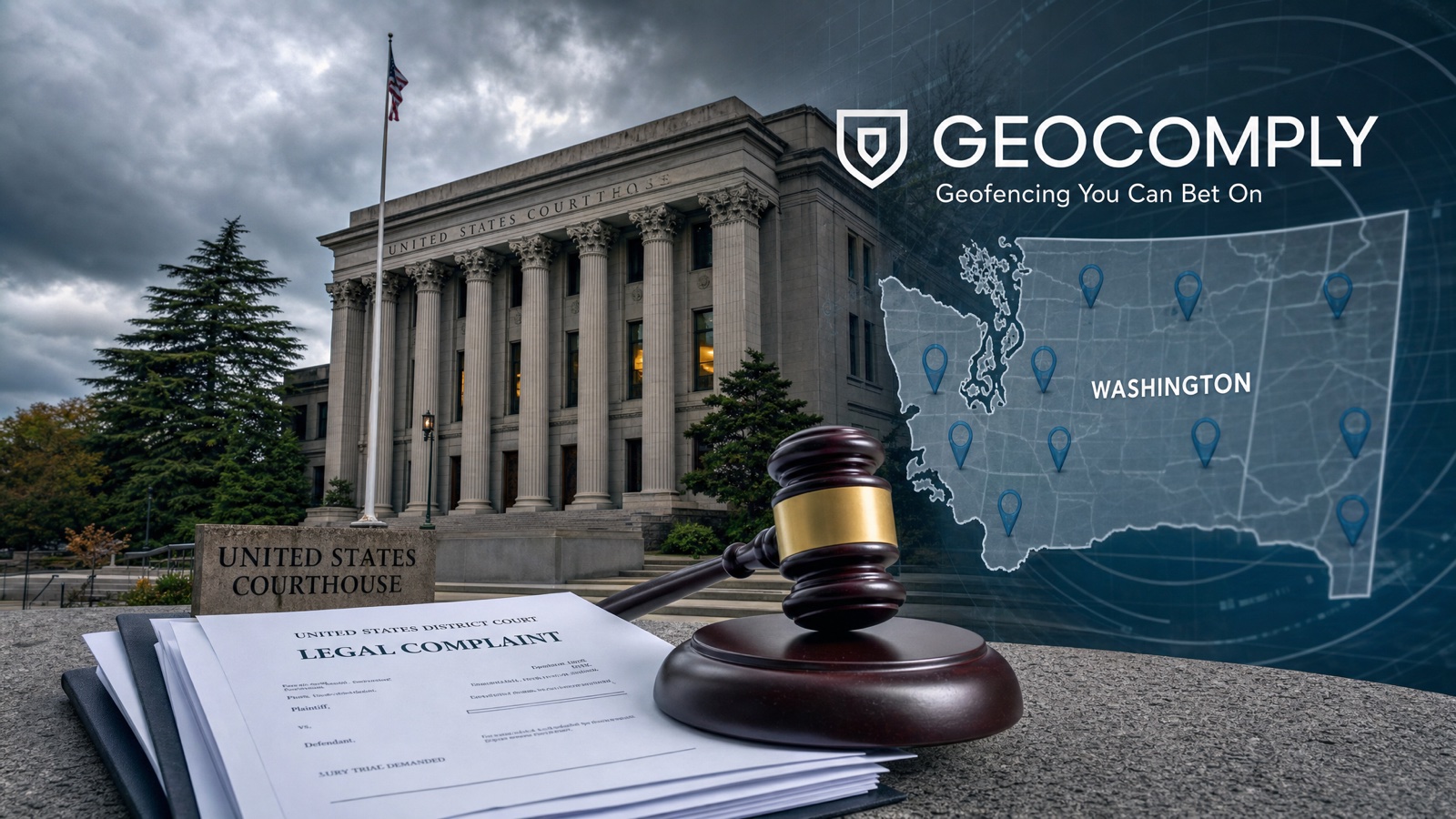
Washington state's King County Superior Court has given Kalshi until September 2, 2026, to fully deploy a multi-source GeoComply geofencing solution — or face fines of $120,000 per day. On the same date, a hearing is scheduled on Kalshi's August 21 motion asking the court to reconsider that order. The stakes: one of the broadest geographic restrictions on a CFTC-licensed prediction market ever issued, covering seven categories of event contracts that Washington state regulators say cross the line into illegal gambling.
For traders and market watchers, here is what September 2 actually means.
What King County Superior Court Ordered
In August 2026, King County Superior Court Judge John F. McHale issued a preliminary injunction prohibiting Kalshi from "marketing, advertising, promoting, conducting, operating, facilitating, distributing, offering, or accepting event contracts" tied to sports, elections, politics, culture, technology, science, or public figures for Washington state residents.
The injunction followed a lawsuit by Washington Attorney General Nick Brown, who argued that Kalshi operates "in direct violation" of state laws prohibiting gambling, except for sports wagers placed on tribal lands. The court found that Kalshi violated both the Washington Gambling Act and the Consumer Protection Act.
Unlike the Nevada restriction — which focused primarily on sports contracts — Washington's order covers seven distinct categories. It does not restrict contracts tied to commodities, climate, economics, or finance. Washington traders can still access Kalshi's macroeconomic, Federal Reserve rate, and financial markets.
What "Phase 2" Means for Traders
Kalshi began restricting Washington users following Phase 1 of the order, effective August 19, which required IP-based location checks. September 2 represents Phase 2: full deployment of the multi-source GeoComply geofencing solution — the same third-party geolocation vendor that Nevada's gaming regulators have required of licensed sportsbooks for years.
GeoComply cross-references device location data, IP address, Wi-Fi triangulation, and cellular network signals. That combination makes it substantially more difficult to circumvent than single-source IP checks alone.
For Washington residents, the practical effect of Phase 2:
Blocked as of September 2:
- Sports contracts (NFL, NBA, MLB, NHL, UFC, tennis, golf, and more)
- Election and political contracts (House control, Senate races, presidential markets)
- Entertainment and culture contracts (awards shows, celebrity markets)
- Technology and science contracts (AI company timelines, drug approval markets tied to named products)
- Public figure contracts
Still accessible:
- Commodity markets
- Climate and weather event contracts
- Economics and finance contracts (Federal Reserve decisions, GDP, inflation, S&P 500 markets)
The distinction matters for Washington-based traders who use Kalshi for macro market research. Those markets remain fully operational.
The Reconsideration Hearing
On August 21, Kalshi filed a motion asking Judge McHale to reconsider his preliminary injunction, or alternatively to reconsider his denial of a stay. A hearing is scheduled for September 2 — the same day as the GeoComply deadline — though without oral argument, meaning the court will issue a ruling based on written filings.
Kalshi's reconsideration argument draws on two threads: first, the evolving federal landscape, including the CFTC's proposed rulemaking that would more explicitly authorize sports event contracts; second, the fact that Kalshi has now deployed GeoComply in both Nevada and Washington, demonstrating operational feasibility.
The challenge is that full GeoComply compliance by September 2 — while removing the immediate daily fine pressure — does not automatically dissolve the underlying injunction. The court's finding that Kalshi violated state gambling law remains intact unless McHale reconsiders the merits. That is a higher bar than demonstrating technical compliance.
Kalshi's "Selective Nonenforcement" Argument
A legal wrinkle emerged over the Labor Day weekend. Kalshi's lawyers sent a letter to the Washington State Gambling Commission alleging "selective nonenforcement" — arguing that other prediction markets operating in Washington have not faced equivalent scrutiny.
The letter specifically pointed to Polymarket's offshore global platform, which continues to serve categories of event contracts in Washington that the McHale order prohibits on Kalshi, yet has not faced enforcement action from the state attorney general's office.
"This is particularly surprising as it relates to the Attorney General's non-enforcement against Polymarket, which, along with its CFTC-licensed DCM, operates an unregistered, offshore platform that accounts for the majority of its business and offers many categories of event contracts that are prohibited by the CFTC," the letter stated.
Washington Attorney General spokesman Mike Faulk rejected the framing directly. "Under the law, the attorney general does not have to simultaneously prosecute all entities potentially engaged in the same activity to obtain a judgment against one of them. Kalshi is the largest entity of its kind," Faulk wrote in an email to The Spokesman-Review.
The selective enforcement argument has not been ruled on by any court as of this writing. It introduces a due-process angle that Kalshi may pursue if the reconsideration motion fails and the case proceeds further.
A National Pattern: Three States, Three $120K/Day Orders
Washington is not operating in isolation. A consistent enforcement architecture has now emerged across three states:
Nevada: The first state to ban prediction market sports contracts, in March 2026. As of late August, Nevada gaming regulators were seeking contempt sanctions after arguing that Kalshi's Phase 1 IP controls failed to meet the court's standard. Kalshi's general counsel responded: "Kalshi has acted in complete good faith and has fully complied with the spirit and letter of the court's order by onboarding the state's own gold standard vendor, GeoComply."
Michigan: A state court order blocked sports contracts with a matching $120,000-per-day fine structure. The CFTC separately ordered Kalshi to honor previously executed contracts made before the Michigan order.
Washington: The most expansive order yet, extending beyond sports into elections, politics, culture, and technology — seven categories in all.
Together, these three states have created what legal analysts have called the "GeoComply protocol" — a replicable enforcement model now backed by federal appellate authority.
The Ninth Circuit Strengthens Washington's Hand
Five days before Washington's GeoComply deadline, the U.S. Court of Appeals for the Ninth Circuit issued a unanimous 3-0 ruling in the Nevada case (No. 25-7516, KalshiEX LLC v. Nevada Gaming Control Board), rejecting Kalshi's federal preemption arguments on three independent grounds.
The panel found: (1) Kalshi's sports event contracts are not "swaps" under the Commodity Exchange Act; (2) geofencing allows simultaneous compliance with both state and federal law, eliminating any impossibility defense; (3) Congress did not preempt state gambling regulation through the CEA.
"The substance of the sports event contracts offered on Kalshi's exchange is sports gambling, regardless of whether Kalshi calls them swaps," the panel wrote.
Critically, this ruling is now binding precedent for all federal district courts within the Ninth Circuit — which includes Alaska, Arizona, California, Hawaii, Idaho, Montana, Nevada, Oregon, and Washington. States within the circuit can now cite published appellate authority rather than trial-level findings when pursuing similar orders.
The court also characterized Kalshi's refusal to implement geofencing voluntarily as a "search for competitive advantage" over licensed operators — language that undercuts future arguments that geofencing causes irreparable harm.
The Path to the Supreme Court
The Ninth Circuit's ruling deepened an already-established circuit split. In April 2026, the Third Circuit Court of Appeals sided with Kalshi in KalshiEX LLC v. Flaherty (New Jersey), holding that the CFTC has exclusive jurisdiction over the company's sports contracts. Two federal circuit courts have now reached opposite conclusions on the same statutory question.
New Jersey has until September 3 to file a cert petition asking the Supreme Court to review the Third Circuit's ruling. A Supreme Court grant of certiorari would set up a national ruling on federal preemption — one that could either permanently resolve the state-by-state enforcement patchwork in Kalshi's favor, or confirm that states have authority to restrict prediction market sports contracts regardless of CFTC licensing.
For context on how the industry sees those odds: Polymarket has hosted a market on whether the Supreme Court will grant cert in the prediction market cases. Legal experts have been divided on timing and vehicle, citing the preliminary-injunction posture of both appellate decisions and the CFTC's active rulemaking as complicating factors.
Kalshi has indicated it will seek "further review" of the Ninth Circuit ruling, which could initially mean an en banc rehearing petition before proceeding to the Supreme Court. Analysts at Truist noted the ruling "could encourage action" across all nine Ninth Circuit states.
What This Means for Traders
If you are in Washington state: The Phase 2 GeoComply controls take effect September 2. The seven blocked categories will be unavailable regardless of VPN or device switching. Commodity, economics, climate, and finance markets remain accessible.
If you are outside Washington: This is the GeoComply model at full scale. Washington's order is more expansive than Nevada's or Michigan's — and the Ninth Circuit's endorsement of the geofencing compliance framework makes it easier for other states in the circuit to issue similar orders without waiting for federal preemption to resolve.
If you are following the SCOTUS track: September 3 is the New Jersey cert petition deadline. If the Supreme Court accepts the case, a final ruling could arrive before the 2026 midterms are fully adjudicated — potentially mooting every state-level restriction or confirming their validity in a single decision.
Frequently Asked Questions
What happens if Kalshi is not fully GeoComply-compliant by September 2? Under the court order, Kalshi faces fines of $120,000 per day for each day it remains out of compliance. Continued non-compliance could also expose the company to contempt proceedings in King County Superior Court.
Can Washington residents still use Kalshi after September 2? Yes — for contracts not covered by the injunction. Economics, finance, commodity, and climate contracts remain available. Sports, elections, politics, culture, technology, science, and public figure contracts are blocked.
Does the Ninth Circuit ruling directly affect Washington's case? The ruling in the Nevada case is binding precedent for all federal district courts within the Ninth Circuit, which includes Washington. This makes it significantly harder for Kalshi to win a federal preemption argument in the Washington case going forward.
What is the September 3 cert petition deadline? New Jersey has until September 3 to ask the Supreme Court to review the Third Circuit ruling that sided with Kalshi. If the Supreme Court grants review, a national decision on CFTC preemption over state gambling laws could follow within the next year.
Will other states follow Washington's model? The Ninth Circuit ruling creates binding authority in nine states. Legal analysts at Truist have noted the ruling "could encourage action" across the full Ninth Circuit geography. California, which has not yet taken formal action, has become the state to watch most closely.
Conclusion
September 2 is a deadline, not an endpoint. Washington's GeoComply Phase 2 requirement either brings Kalshi into full compliance — removing the daily fine threat while leaving the underlying injunction intact — or triggers escalating sanctions. The reconsideration hearing on the same date offers Kalshi a narrow window to argue that the federal and legal landscape has shifted enough to warrant a second look.
For Washington traders, the practical reality is the most sweeping geographic access restriction on a federally regulated prediction market in U.S. history. For the industry, the geofencing compliance framework that was once negotiated state-by-state is now appellate-approved doctrine. The Supreme Court is the next stage.
Sources & Verification
- Kalshi "selective nonenforcement" letter to WA Gambling Commission; WA AG Mike Faulk response: The Spokesman-Review, September 1, 2026 — verified September 1, 2026
- September 2 GeoComply deadline; $120K/day fines; Kalshi reconsideration motion filed August 21; hearing without oral argument: CDC Gaming, August 29, 2026 — verified September 1, 2026
- Ninth Circuit opinion (No. 25-7516, August 28, 2026); "substance of sports event contracts is sports gambling" quote; geofencing ruling: U.S. Court of Appeals for the Ninth Circuit — verified September 1, 2026
- Third Circuit ruling for Kalshi (April 6, 2026); NJ cert petition deadline September 3; circuit split context: InGame.com, August 29, 2026 — verified September 1, 2026
- Nevada contempt proceedings; Kalshi general counsel Rick Heaslip GeoComply response: Digital Wager Wire, August 29, 2026 — verified September 1, 2026
- WA AG lawsuit filed March 27, 2026; McHale injunction categories (sports, elections, politics, culture, technology, science, public figures; not commodities, climate, economics, finance): Washington Attorney General press release, March 27, 2026 — verified September 1, 2026