
Trump Halted the Iran Strike. Oil Cratered. Why Did Prediction Markets Stay Skeptical?
Trump halted Iran strikes Aug 3. Oil fell 7%. Stocks hit records. Prediction markets on ceasefire stayed skeptical — what traders see that oil futures miss.
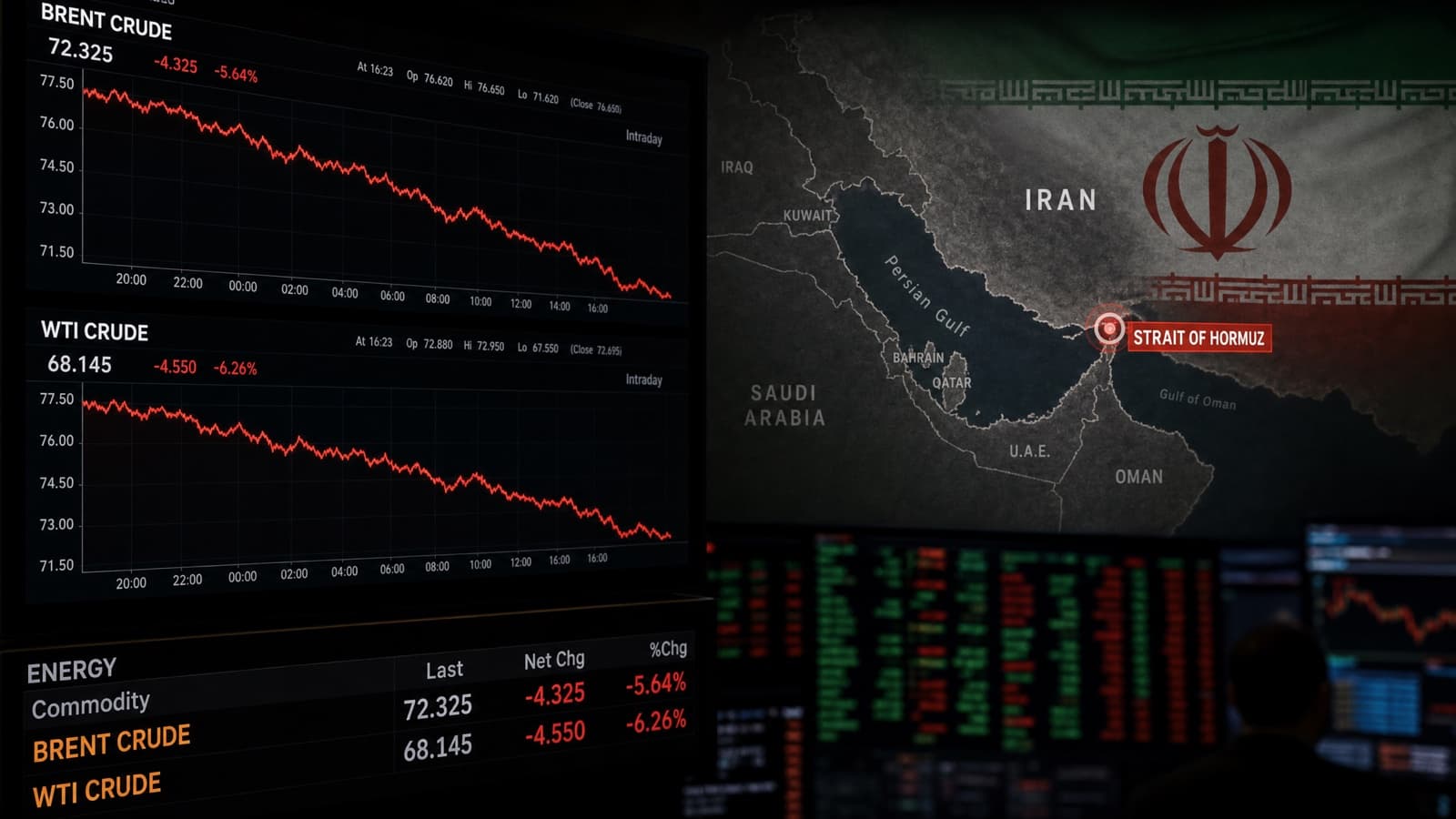
On the morning of August 3, 2026, financial markets exhaled. President Trump had called off a planned "massive attack" on Iran — one he described as potentially the biggest military strike since World War II — and announced that negotiations between Washington and Tehran would resume. West Texas Intermediate crude tumbled about 5% to close at $80.34 per barrel. Brent crude settled at $83.77, down 4.7% on the session. The Dow Jones Industrial Average surged to a record close.
But on prediction markets tracking the durability of peace in the Middle East, the crowd stayed cautious.
The "Israel x Iran ceasefire continues through...?" market on Polymarket — which had accumulated more than $19.6 million in trading volume since launching on July 16, 2026 — reflected something more measured than the exuberance in oil futures and equities. Even as commodity markets stripped out their war premium and equity indexes celebrated, traders with money on ceasefire durability were pricing meaningful probability that the fragile framework would not survive through later August dates.
The divergence is a case study in what prediction markets capture that traditional financial markets sometimes miss: the difference between an announcement and a credible, durable commitment.
Trump's Iran Playbook: Four Pauses, One Pattern
The August 2 cancellation was not a novel event. Since the US-Iran conflict escalated in early 2026, Trump has executed a nearly identical escalate-then-pause sequence at least four times:
April 2026: Trump threatened the complete destruction of Iranian infrastructure — warning of the "death of an entire civilization" — and set a hard deadline for capitulation. Less than two hours before the attack was set to begin, he backed down and agreed to a temporary two-week ceasefire brokered by regional actors.
May 2026: A major bombing campaign was prepared. Trump described it as potentially "the biggest attack since World War II." He paused it on May 18, crediting Gulf Arab allies for convincing him to pursue diplomacy because "serious negotiations" were progressing.
June 2026: Trump threatened to seize Iran's Kharg Island energy facilities and take "total control" of their oil and gas markets. He walked it back days later as talks produced the Islamabad Memorandum of Understanding — a 14-point ceasefire framework signed June 17-18, 2026.
August 2026: Another round of strikes authorized. Then a Truth Social post: "We have just been asked by Iran, and other Middle Eastern Countries, to hold off any attack in that the perimeters of a deal has been agreed to."
A pattern this consistent gets priced. Prediction market traders have seen each iteration of this cycle and calibrated accordingly. The announcement carries less signal than it once might have.
What the Ceasefire Market Shows
The Islamabad MOU — signed June 17-18, 2026 — was described at the time as a landmark diplomatic breakthrough. Iran's President called it "the center of gravity of our foreign relations in the future." It lasted until July 8, when fighting resumed after disputes over Strait of Hormuz transit protocols and retaliatory strikes.
The Polymarket ceasefire market launched on July 16 — after the Islamabad framework had already collapsed. Near-term resolution dates (July 31 and August 1) resolved in the ceasefire's favor as the truce held through those specific dates. But the market for later August outcomes reflects the accumulated evidence of how fragile these agreements have been.
Live market view — track ceasefire odds in real time:
The market context on Polymarket itself captures the core uncertainty: "Trader sentiment reflects the high uncertainty around whether direct bilateral or U.S.-mediated understandings can prevent renewed missile exchanges or proxy escalation through the remainder of 2026. Key upcoming catalysts include further Islamabad-format negotiations on sanctions relief, freedom of navigation, and missile limits, alongside any fresh incidents in the strait or Lebanese border that could trigger rapid retaliation."
Iran Denied the Talks. Markets Were Right to Notice.
The most significant detail from August 3 was not the canceled strikes. It was what Iran said immediately afterward.
While Trump announced that negotiations with Tehran would begin that afternoon, Iran's Foreign Ministry was explicit: no talks were under way and no meetings were planned. CNBC reported on August 3 that "Iran's foreign ministry spokesperson said there were no immediate plans for peace talks," directly contradicting Trump's public timeline.
This gap — between a US announcement of imminent talks and an Iranian public denial of any talks whatsoever — is precisely the information that prediction markets on ceasefire durability have to price. An oil futures contract has no mechanism for distinguishing "talks announced" from "talks mutually agreed upon." A prediction market on whether a ceasefire remains in effect through August 31 has to grapple with exactly that distinction.
Market analyst Tony Sycamore of investment platform IG framed the central question for The Guardian on August 3: "The bigger focus is whether this week turns into a rinse and repeat of last week — with hopes of a deal collapsing as Iran digs in its heels and continues to leverage its control over the strait, potentially through an attack on a US base or a tanker transiting the waterway."
"Rinse and repeat" is the prediction market thesis in a sentence.
The Oil Premium and the Ceasefire Gap
The August 3 oil price moves were among the sharpest single-session swings of the entire conflict arc:
- Brent crude fell as much as 7.3% intraday to $81.55 — its largest single-session decline of the July escalation cycle, according to Bloomberg
- Brent crude settled at $83.77, down 4.7% on the session (CNBC)
- WTI crude closed at $80.34, down roughly 5% (CNBC)
For context: Brent had surged nearly 24% in July — its strongest monthly gain since March 2026 — as traders priced in the risk of a prolonged Strait of Hormuz blockade. The August 3 decline reflected the withdrawal of an anticipated supply shock, not any observed improvement in actual shipping conditions through the strait.
GlobalSecurity.org's day-by-day Iran war operations report, citing Bloomberg, described the structural gap: "Traffic through the strait remained subject to Iranian permission on the same day the premium came out of the price. That gap between the risk the market discounted and the conditions ships face is the war's persistent economic feature, and it cuts in both directions: a market that gave back seven percent on an announcement of talks would give it back again on an announcement of their failure."
Oil traders price supply shock probability. Prediction market traders price sustainable commitment probability. These are related but different questions, and they respond differently to the same event — especially when the party announcing a deal and the party receiving it offer contradictory public statements.
What Prediction Markets Capture That Commodity Markets Miss
Traditional financial markets are efficient at aggregating information around expected outcomes when the parties involved share a common understanding of what was agreed. When they don't — when a US president announces talks and Iran's Foreign Ministry denies any talks are happening — the commodity price signal captures only part of the picture.
Oil futures pricing on August 3 reflected the withdrawal of anticipated supply shock risk. That's legitimate, tradeable information. What it doesn't capture is the IRGC's reported consideration of preemptive strikes should diplomatic talks collapse — reported by the Wall Street Journal — or Iran's systematic pattern of formally withdrawing from ceasefire commitments when conditions are perceived to have changed.
The Polymarket ceasefire market has been designed to resolve based on whether the ceasefire actually remains in effect — not on whether an announcement was made. That design makes it sensitive to Iran's contradictory public statement in a way oil futures are not. And the $19.6 million in trading volume across 19 date-milestone outcomes represents substantial aggregated judgment about the durability question.
The volume itself is significant: this is not a thinly traded, easily manipulated niche contract. It has become one of the most actively traded geopolitical prediction markets of 2026, drawing serious capital from traders who have been tracking every cycle of this conflict since April.
How US Traders Can Follow the Iran Arc
For US-based traders, Kalshi is the primary venue for CFTC-regulated event contracts. Kalshi holds a licensed designated contract market (DCM) and derivatives clearing organization (DCO) designation from the CFTC and offers macro and geopolitical event contracts accessible to US users.
The Iran ceasefire market discussed in this article — with $19.6 million in volume as of August 3 — operates on Polymarket's global platform. That platform is not accessible to US users through the CFTC-licensed QCX LLC venue (which operates as Polymarket US and offers sports markets only). US readers looking to track Iran conflict market data can follow live pricing at PredictionMarkets.US, which aggregates prediction market data across platforms.
FAQ
How much did oil prices fall on August 3 after Trump halted the Iran strike? West Texas Intermediate crude fell roughly 5% to close at $80.34 per barrel. Brent crude settled at $83.77, down 4.7% on the session. At its intraday low, Brent fell as much as 7.3% to $81.55, according to Bloomberg — the largest single-session decline of the July escalation cycle.
Did Iran confirm the peace talks Trump announced? No. Iran's Foreign Ministry explicitly denied that any talks were under way or planned, directly contradicting Trump's announcement. CNBC reported on August 3 that Iran's Foreign Ministry spokesperson said there were "no immediate plans for peace talks."
What was the Islamabad Memorandum of Understanding? The Islamabad MOU was a 14-point ceasefire framework brokered by Pakistan, signed June 17-18, 2026. It established a ceasefire between US-Israeli forces and Iran but collapsed on July 8 when fighting resumed, lasting only 20 days.
Why did prediction markets stay cautious when oil prices dropped sharply? Oil futures price the probability of a supply disruption. Prediction markets on ceasefire durability price whether a ceasefire actually holds — a different question that depends on sustained, verifiable restraint from both parties, not just one side's announcement. Trump's four cycles of maximum-pressure threats followed by last-minute cancellations have trained prediction market traders to assign limited signal value to any individual diplomatic announcement.
Where can US traders access Iran conflict event markets? Kalshi is the CFTC-licensed venue for macro and geopolitical event contracts for US traders. For cross-platform tracking of Iran conflict and ceasefire market data, PredictionMarkets.US aggregates live pricing from across the prediction market ecosystem.
Sources & Verification
- Oil prices tumble after Trump calls off attack on Iran — CNBC, August 3, 2026
- Oil Slumps as Trump Holds Off Iran Attack as Talks to Resume — Bloomberg, August 2, 2026
- CNBC Daily Open: Markets exhale as Trump steps back, OPEC+ steps up — CNBC, August 3, 2026
- Oil prices drop to three-week low after Trump cancels Iran attack — Reuters via USA Today, August 3, 2026
- Oil prices plunge and Europe's markets rally after Trump calls off Iran strikes — The Guardian, August 3, 2026
- Stock market news for Aug. 3, 2026 — Dow record close, Iran strike canceled — CNBC, August 3, 2026
- Aug 2-3, 2026: Trump calls off Iran strikes, Tehran denies talks — CNN, August 2-3, 2026
- Israel x Iran ceasefire continues through...? — Live market data — Polymarket, $19.6M volume as of August 3, 2026
- Iran War 2026 Day 157 operations report — GlobalSecurity.org, citing Bloomberg, August 3, 2026