
House Bill Would Bar Lawmakers from Prediction Market Trading — Here's What H.R. 9367 Does
Rep. Bryan Steil introduced H.R. 9367 on June 18, 2026, which would ban members of Congress, their spouses, and dependent children from trading on prediction markets tied to government policy or political outcomes.
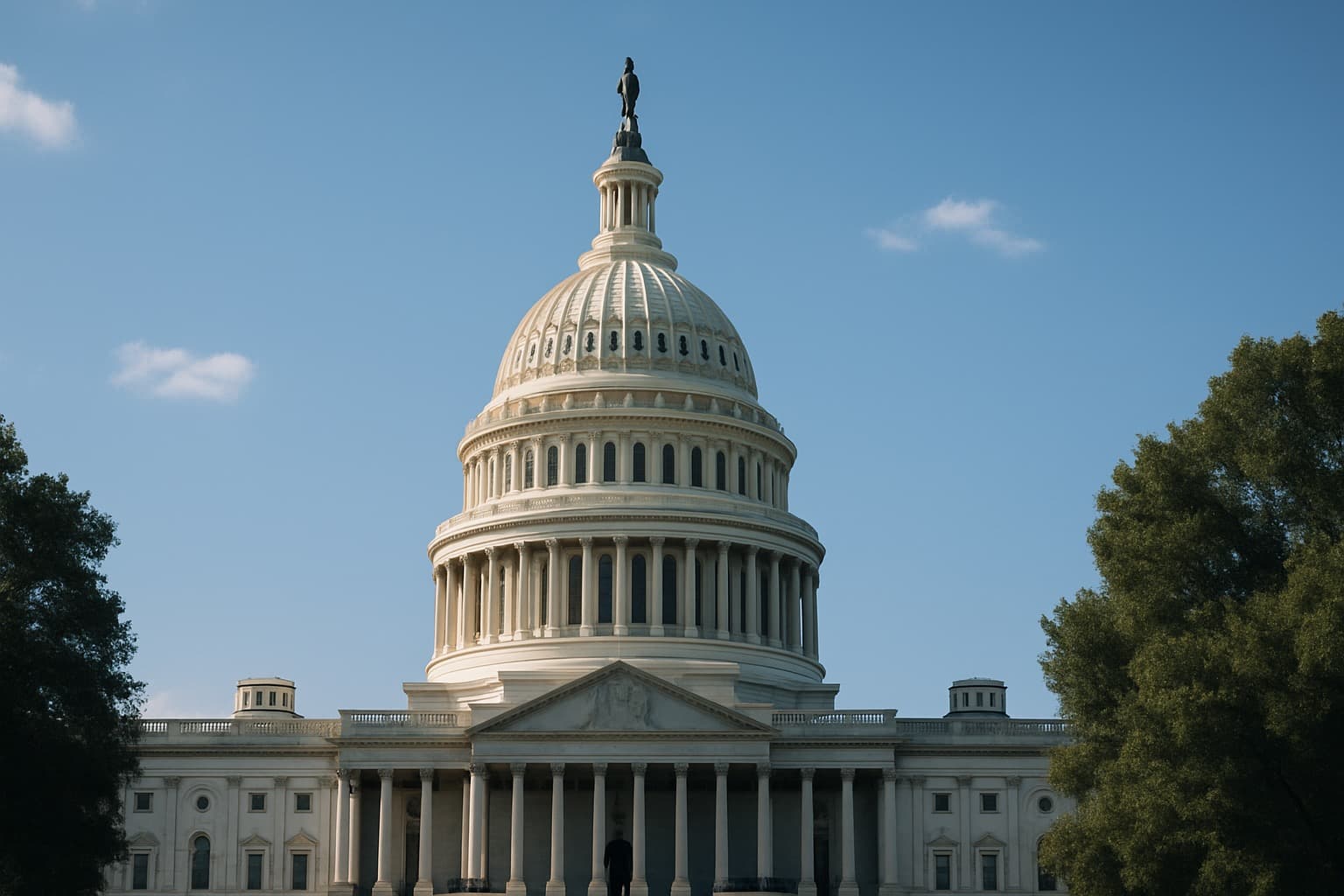
Representative Bryan Steil, the Wisconsin Republican who chairs the House Administration Committee, introduced H.R. 9367 — the Stop Lawmakers from Predicting Act — on June 18, 2026. The bill would prohibit members of Congress, their spouses, and their dependent children from wagering on government policy, government actions, or political outcomes on prediction market platforms like Kalshi and Polymarket. It arrives with support from Speaker Mike Johnson and President Trump, and follows a Senate rule change that already banned senators from doing the same.
What the Bill Prohibits
Under current law, there is no explicit prohibition on members of Congress trading event contracts on prediction markets. Steil's bill closes that gap.
The prohibited wagers cover a broad range: any bet on a specific government policy, government action, or political outcome. The language extends further still — the ban applies to any event "that came to the attention of a covered individual as a direct or indirect result of their service in Congress." In plain English: lawmakers couldn't trade on tariff announcements they received in a classified briefing, Fed appointments they had advance knowledge of, or legislation they were drafting.
Family scope matters here. Spouses and dependent children are explicitly covered, closing the routing-through-relatives loophole that critics noted in early congressional stock-trading reform efforts.
Penalties and Enforcement
Violators face a fine equal to $2,000 or ten percent of the value of the prohibited transaction — whichever is larger — plus the full net gain from the trade. The bill prohibits members from using their official congressional allowances, Senate personnel and office expense accounts, or political contributions to cover the fine. If a member resigns or retires without paying, the Justice Department can pursue civil enforcement.
Steil's framing was direct: "The American people deserve to know their Member of Congress is not profiting off insider information. The Stop Lawmakers from Predicting Act ensures that cannot happen. Lawmakers should be writing policy, not wagering on its outcome."
Why Now: The Insider Trading Backdrop
The timing is not accidental. Prediction markets exploded in trading volume over the past year — Kalshi alone processed $16.81 billion in May 2026, and the industry has drawn scrutiny for how much sensitive information its prices might reflect.
The pressure intensified in March 2026, when blockchain analysts identified suspiciously timed bets on prediction markets tied to the Iran conflict, including contracts on a U.S. military strike and the death of Ayatollah Ali Khamenei. Those wagers generated significant profits and appeared to have been placed with information unavailable to ordinary traders. Separately, Kalshi disclosed that it flagged and fined three congressional candidates who used insider knowledge of their own elections to place bets on those contests.
As Steil noted in his committee press release, the Stop Lawmakers from Predicting Act builds on the Stop Insider Trading Act, which the House Administration Committee advanced to the House floor in January 2026. The prediction market bill extends the same principle — that members shouldn't profit from nonpublic information — into event contracts.
The Senate Already Moved
In April 2026, the Senate passed a chamber rule change led by Sen. Bernie Moreno (R-OH) that barred senators and their staff from trading on prediction markets, effective immediately. The resolution covered all event contracts — the Senate language bans any "agreement, contract, swap, or transaction that provides for any purchase, sale, payment, or delivery of an excluded commodity...that is dependent on the occurrence, nonoccurrence, or the extent of the occurrence of a specific event or contingency." Both Kalshi and Polymarket publicly expressed support for the Senate action at the time.
Steil's bill differs from the Senate approach in one important respect. Where the Senate action was a chamber rule — enforceable internally but not carrying the force of law once a senator leaves office — H.R. 9367 is legislation. "I'm focused on legislation that would carry the force of law even after lawmakers leave the chamber," Steil told Bloomberg Government.
The Path to Law
Steil's strategy is to attach H.R. 9367 to the broader congressional stock-trading ban that his committee has already advanced. Speaker Mike Johnson told Bloomberg Government he intends to put the stock ban bill on the floor for a vote this summer.
If the prediction market language is included, the combined bill would need to pass the full House, clear the Senate, and be signed into law. In the Senate, the bipartisan Prediction Market Act introduced by Sens. Dave McCormick (R-PA) and Kirsten Gillibrand (D-NY) represents a parallel effort — that bill goes further, establishing a broader regulatory framework for prediction markets and banning public officials from owning event contracts.
Bloomberg noted that Congress has struggled for years to restrict members from trading individual stocks but is moving with unusual speed on prediction markets. "Lawmakers have wrangled for years over how to restrict themselves from trading stocks, but are moving more quickly to curb their access to prediction markets like Kalshi and Polymarket," Bloomberg reported on June 18.
What Kalshi and Polymarket Think
Both Kalshi and Polymarket have publicly supported restricting members of Congress from trading on their platforms. The industry's calculus is straightforward: if elected officials can trade markets on outcomes they directly influence or have advance knowledge of, it undermines market integrity for everyone else. A market is only useful for price discovery if traders are working with similar information.
Kalshi has gone further than most — the platform already flags and fines political candidates who use insider knowledge of their own races to place bets on those contests, according to CNBC.
What This Means for Traders
H.R. 9367 does not restrict ordinary users. Kalshi, which operates as a CFTC-designated contract market available in 42 states, would continue to operate normally. Polymarket's U.S. arm — QCX LLC, which offers sports event contracts to users in 48 states and the District of Columbia — would be similarly unaffected.
The bill targets a specific problem: elected officials and their immediate families holding positions in event contracts where they could possess material nonpublic information and directly influence the outcome. For the roughly 535 members of Congress and their families, the bill creates legal exposure where none currently exists under federal statute. For everyone else, nothing changes.
Sources & Verification
- Committee on House Administration press release — cha.house.gov, June 18, 2026 ( primary)
- Bloomberg — "House Republican Seeks to Ban Members From Prediction Markets" — bloomberg.com, June 18, 2026
- Bloomberg Government — "Republican Seeks to Add Kalshi, Polymarket Rules to Stock Ban" — bgov.com, June 4, 2026
- Fox Business — "New bill would ban lawmakers, their families from betting on prediction markets" — foxbusiness.com, June 18, 2026
- CNBC — "Prediction market firms face growing scrutiny as Congress weighs..." — cnbc.com, June 5, 2026
- Roll Call — "Will the House ban staff from prediction markets?" — rollcall.com, May 20, 2026
- gillibrand.senate.gov — Prediction Market Act of 2026, April 2026