
Ben Shelton's 3 A.M. Miracle: How the US Open's Biggest Upset Rewrote the Prediction Markets
Ben Shelton beat defending champion Carlos Alcaraz 6-7, 6-1, 6-3, 1-6, 7-6 at 3:33 a.m.—the latest US Open finish ever—and crushed the prediction markets.
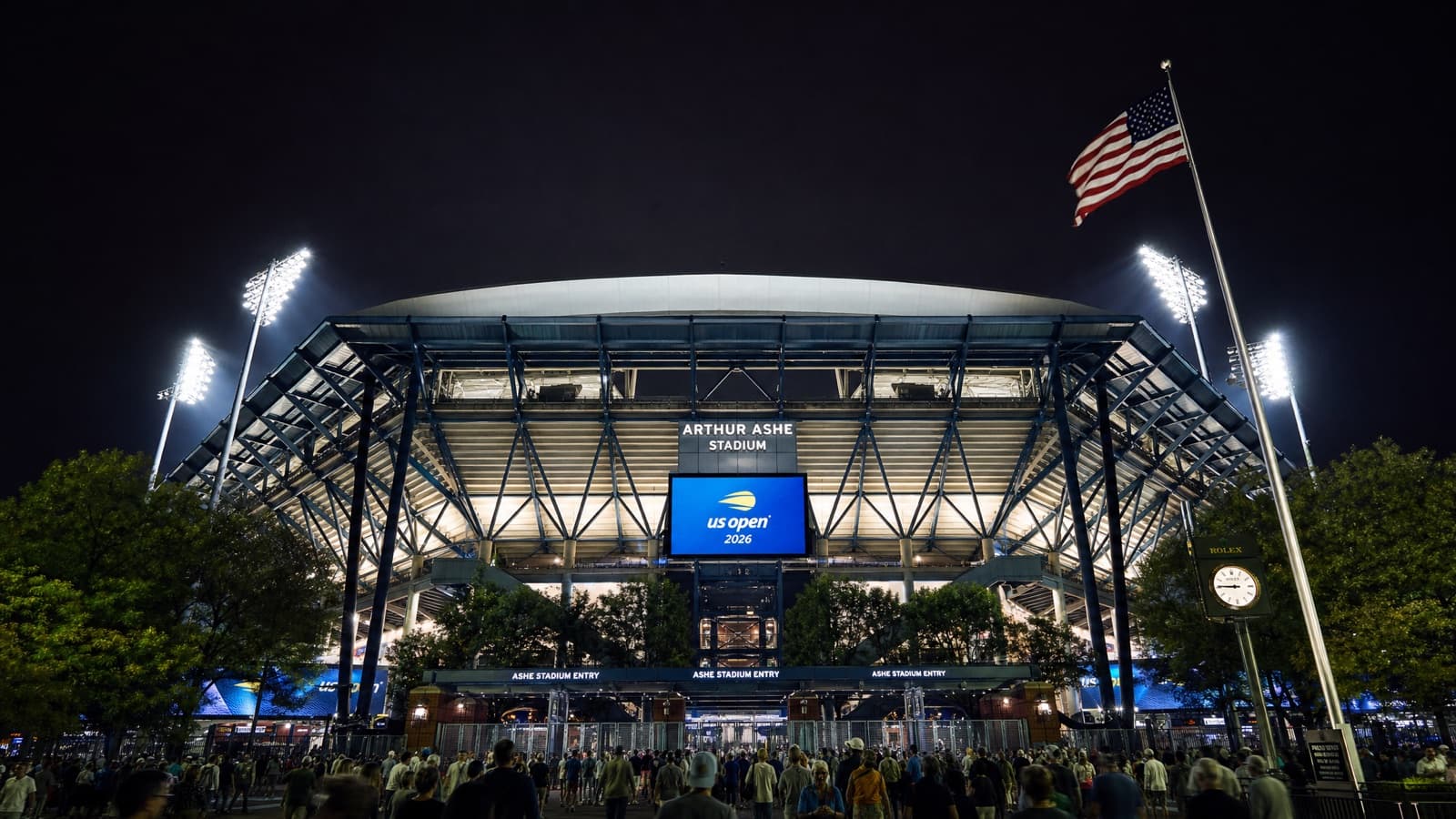
The last fans in Arthur Ashe Stadium had every reason to go home. By the time Carlos Alcaraz and Ben Shelton actually began their quarterfinal — after 11 p.m. Tuesday — the night had already been long. It would get longer. When Shelton's 146-mph ace finally ended the match at 3:33 a.m. Wednesday, the No. 8 seed had completed the biggest upset of the 2026 US Open: a 6-7(5), 6-1, 6-3, 1-6, 7-6(10-7) five-set win over the defending champion that shattered the record for the latest finish in tournament history.
The prediction markets, which had Alcaraz installed as a heavy favorite, got it spectacularly wrong. And in doing so, they gave traders and tennis fans one of the clearest illustrations of what probability means in live sport.
The Market's Call: 78 to 22
Heading into Tuesday's quarterfinal, the crowd of traders on Kalshi — the official prediction market partner of the 2026 US Open — had Alcaraz at 78% to win the match, with Shelton priced at 22%. Polymarket's global platform told a nearly identical story: Alcaraz at 79 cents, Shelton at 22 cents.
On the tournament winner market, Kalshi had Alcaraz priced at approximately 57% to defend his title — the clear favorite, with Alexander Zverev at 26% and Shelton at just 9%.
The logic was defensible. Alcaraz had beaten Shelton in all three of their previous meetings. The Spaniard entered as the No. 2 seed and had moved through his earlier rounds with authority. Shelton's 22-cent price was not a dismissal — it was an acknowledgment of genuine uncertainty. The market was saying: this outcome happens roughly one time in five.
What the market couldn't know was which of those five times this would be.
Five Sets, One Record
The quarterfinal began after 11 p.m. — already the last of four men's singles matches on Tuesday — and promptly delivered a match that none of the traders who opened it had adequately priced. Alcaraz claimed the first set in a tiebreak. Shelton responded by winning the second 6-1, breaking the Spaniard three times and reeling off nine consecutive games as the stadium buzzed with unlikely possibility.
Then Alcaraz did what defending champions do. He stormed back to take the fourth set 6-1 — matching Shelton's earlier demolition set for set. By the time the fifth set began, both players were running on fumes, and the crowd that had stayed past 2 a.m. wasn't leaving.
The final super tiebreak swung back and forth. Shelton led 3-1, Alcaraz clawed back to 5-3, then Shelton leveled and edged ahead. Alcaraz, managing a wrist injury that had kept him off the tour since April, had accumulated 53 unforced errors across the night. When Shelton hit a 146-mph unreturned ace at match point to win 10-7, the remaining fans — a few thousand diehards who had watched tennis until sunrise — gave him a standing ovation.
"That was a war, an epic match, so physical," Shelton said.
The finish time — 3:33 a.m. — broke the previous US Open record, set in 2022 when Alcaraz outlasted Jannik Sinner in a match that ended at 2:50 a.m.
The Realignment
The moment Shelton's ace landed, the tournament winner market changed permanently. Alcaraz's 57% title odds on Kalshi resolved to zero. The probability that had been concentrated in the defending champion redistributed across the remaining semifinalists in real time — no bookmaker adjusting a line, no overnight recalibration. The crowd of traders repriced the field immediately.
Zverev, the world No. 1 seed, absorbed a significant share of the freed probability. Shelton's own title odds surged — his 9% pre-match position on the tournament winner market became a materially different number in a semifinal field of four. On Polymarket's global platform, both Zverev and Shelton saw substantial gains following the upset, with Shelton posting one of the largest single-session moves of the tournament on the title market.
The repricing reflects how prediction markets handle elimination events: the entire probability stack from one player gets redistributed based on who's left standing. Alcaraz's tournament is over. His 57 cents of implied probability has become someone else's.
An All-American Semifinal
Shelton won't face Zverev immediately — the all-American matchup comes first. Frances Tiafoe advanced hours before Shelton's late-night epic, defeating fellow American Alex Michelsen 5-7, 3-6, 7-5, 6-3, 7-6 in yet another five-set quarterfinal, setting up an unprecedented semifinal pairing.
Shelton vs. Tiafoe represents a matchup that no serious prediction market would have priced as likely when the tournament started. Both players entered as long shots in the title markets. One of them is now guaranteed a place in the 2026 US Open final.
American men have faced a prolonged drought at the US Open, making this semifinal — regardless of who survives — one of the most significant results in the country's men's game in years. A new American finalist is confirmed. A new American champion is possible.
The USTA-Kalshi Partnership
Shelton's record-breaking quarterfinal unfolded inside a tournament that has formally embedded prediction markets in a way no Grand Slam had done before. Before the quarterfinals began, the United States Tennis Association announced Kalshi as the official prediction market partner of the 2026 US Open — a multi-year deal that put Kalshi branding courtside at Arthur Ashe Stadium and integrated Kalshi-powered match predictions into the tournament's official mobile app as real-time push notifications.
The arrangement means the experience of watching an Alcaraz-Shelton quarterfinal now existed on at least two simultaneous planes: the tennis itself, and the prediction market tracking thousands of trades as each set unfolded. Match odds shifted with every service break. The tournament winner market collapsed with a single ace at 3:33 a.m.
Whether that integration enhances or changes the experience of watching live sport is a live debate in tennis circles. What is undeniable is that the 2026 US Open has made prediction markets more visible at a Grand Slam than any point in the sport's history — and Tuesday's overtime classic gave those markets a moment they'll be citing for years.
What the Market Got Right
It is worth being precise about what happened. At 22%, the market was not wrong in any meaningful sense — it was accurately expressing uncertainty. A 22% probability means the underdog wins approximately one time in every five. The market was not saying Shelton had no shot. It was saying Alcaraz was the more likely outcome.
What no pre-match market could account for was the specific five-set arc: Alcaraz carrying a wrist injury from April. A match that didn't start until 11 p.m. and bled into the early morning hours. Fifty-three unforced errors accumulating under fatigue. Shelton's serve — among the fastest in the world — holding under the kind of pressure that separates semifinalists from champions. A home crowd reduced to its most loyal core, louder for it, willing Shelton through every tiebreak point.
Good probability estimates do not prevent upsets. They quantify how often those upsets should occur. At 22%, Ben Shelton was always a credible threat. Tuesday night in New York, at 3:33 in the morning, he was the one.
Looking Ahead: The Semifinal Odds
With Shelton and Tiafoe guaranteed in one half of the draw, attention now shifts to Zverev and the remaining quarterfinals scheduled for Wednesday. The winner of the other semifinal faces whichever American survives Shelton-Tiafoe.
Kalshi's US Open Men's Singles Winner market, updated continuously as the tournament progresses, now reflects a field from which Alcaraz has been eliminated. The semifinal odds will reprice again as Wednesday's results come in. Traders who held Shelton contracts at 9 cents on the title market Tuesday morning are watching a genuinely competitive US Open semifinal from a very different position than they expected.
That, in the end, is the value proposition prediction markets offer during a Grand Slam: not certainty, but a continuously updated, crowd-sourced estimate of uncertainty. When those estimates are wrong — when a 22-cent underdog hits a 146-mph ace at 3 a.m. to become a semifinalist — the resolution is instantaneous, exact, and paid out.
Follow the updated semifinal and US Open title odds at PredictionMarkets.US — live odds from Kalshi and Polymarket in one place.
Frequently Asked Questions
Who does Ben Shelton play in the US Open semifinals? Shelton faces Frances Tiafoe in the men's semifinal, scheduled for Thursday at Arthur Ashe Stadium. Both players came through five-set quarterfinal victories on Tuesday night — one of the most physically demanding nights in recent Grand Slam history.
What were the prediction market odds before Shelton vs. Alcaraz? Kalshi priced Carlos Alcaraz at 78% to win the quarterfinal, with Ben Shelton at 22%. Polymarket's global platform showed nearly identical figures: Alcaraz at 79 cents, Shelton at 22 cents.
Where can I trade on the US Open men's winner? The US Open Men's Singles Winner market is available on Kalshi — the official prediction market partner of the 2026 US Open — and on Polymarket's global platform. Note: Polymarket's global platform is not accessible to US users; US traders can access US Open markets through Kalshi.
What happened to Alcaraz's title odds after losing? Alcaraz had been priced at approximately 57% to win the title on Kalshi's tournament winner market entering Tuesday's quarterfinal. Following his five-set loss, his market odds fell to zero, with the freed probability redistributing to the remaining semifinalists — primarily Zverev and Shelton.
Is Frances Tiafoe also in the US Open semifinals? Yes. Tiafoe defeated Alex Michelsen 5-7, 3-6, 7-5, 6-3, 7-6 in a quarterfinal that also went five sets Tuesday night. The Shelton-Tiafoe semifinal will be an all-American match at Arthur Ashe Stadium.
Sources & Verification
- Match result (6-7(5), 6-1, 6-3, 1-6, 7-6(10-7)), finish time 3:33 a.m., match duration 4 hours 28 minutes, latest finish in US Open history: ESPN; NBC News
- Previous US Open latest finish record (2:50 a.m., 2022): USA Today
- Shelton's 146-mph ace, Alcaraz's 53 unforced errors, wrist injury return context: BBC Sport
- Shelton quote ("That was a war, an epic match, so physical"): BBC Sport
- Shelton's first win over Alcaraz in three career meetings: Olympics.com
- Pre-match Kalshi odds (Alcaraz 78%, Shelton 22%) and Kalshi title odds (Alcaraz 57%): Kalshi official news
- Pre-match Polymarket global odds (Alcaraz 79¢, Shelton 22¢): Polymarket
- Tiafoe defeats Michelsen 5-7, 3-6, 7-5, 6-3, 7-6: CBS Sports
- USTA-Kalshi official partnership, Kalshi courtside branding, match predictions in US Open app: The New York Times / The Athletic