
Prediction Markets Are Headed to the Supreme Court. Here’s What Traders Need to Know.
Federal appeals courts are splitting over CFTC preemption. A September 3 deadline puts prediction markets on the Supreme Court's docket.
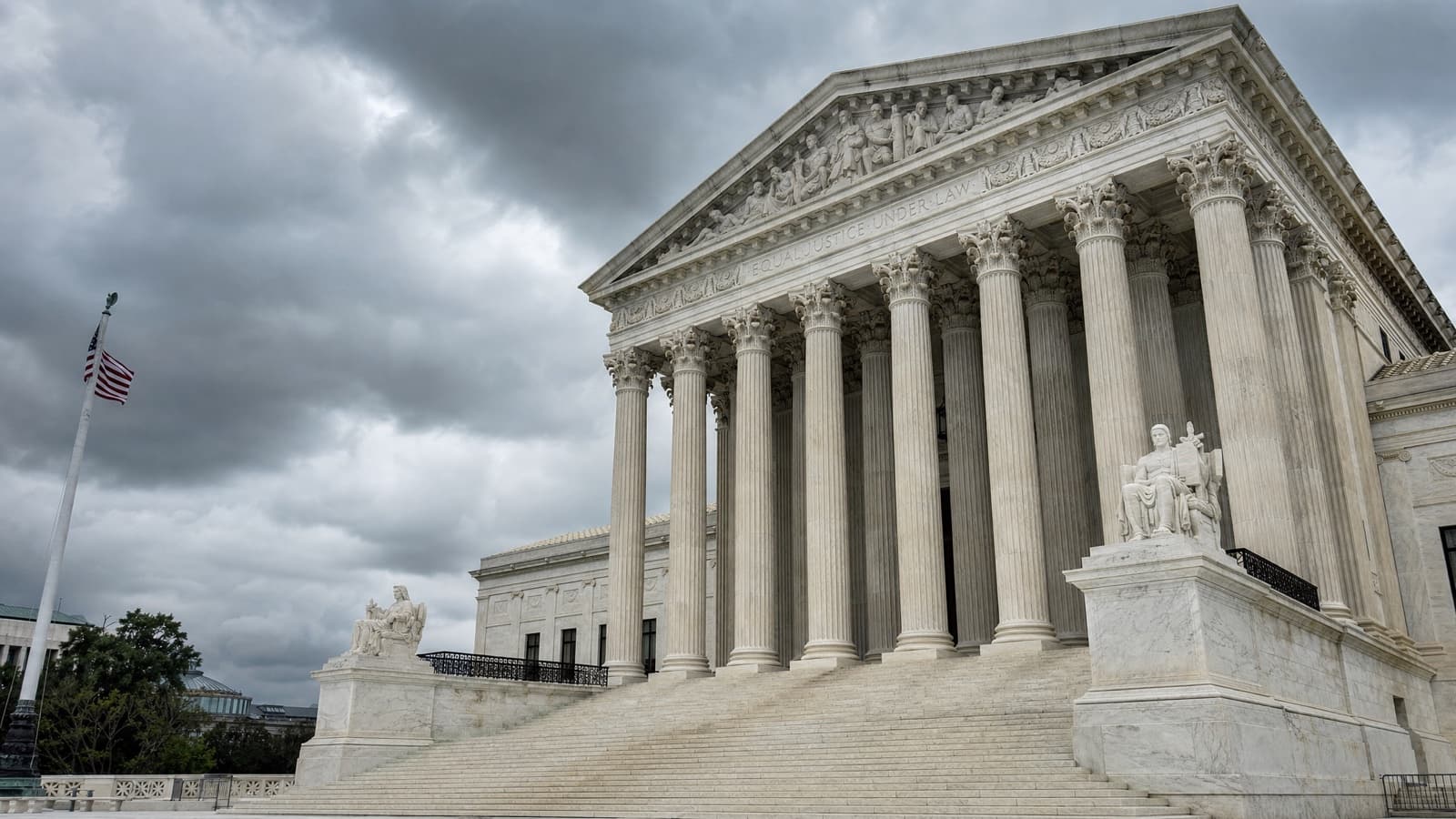
On September 3, 2026, New Jersey files a petition asking the U.S. Supreme Court to review a federal appellate decision that stripped its gambling laws of force against Kalshi. Justice Samuel Alito granted the state an extension to meet that deadline — and in doing so, converted Supreme Court review of prediction markets from speculation into an active legal process.
The petition comes as federal appeals courts have begun reaching opposite conclusions about the same legal question: does federal commodities law give the CFTC exclusive authority to regulate prediction market platforms, preempting state gambling rules entirely? The Third Circuit says yes. The Sixth and Ninth Circuits have heard arguments and appear likely to say no.
If a circuit split materializes — and legal analysts broadly expect one before the end of 2026 — the Supreme Court will almost certainly be forced to settle the question. A ruling could reshape what markets American traders can access, on which platforms, and under what rules.
How the Fight Reached the Supreme Court's Doorstep
Prediction market platforms like Kalshi are federally regulated by the Commodity Futures Trading Commission as Designated Contract Markets. Under this structure, they argue the CFTC has exclusive jurisdiction over their operations under the Commodity Exchange Act, blocking state gambling laws from applying to their contracts.
States disagree — forcefully. Attorneys general in more than 40 states have taken the position that event contracts tied to sports outcomes are functionally sports betting, regardless of how a platform classifies them. Their argument: a federal registration to trade financial derivatives does not override state authority over wagering conducted within state borders.
The conflict ignited into a multi-front legal war. More than a dozen states issued cease-and-desist orders. Kalshi and the CFTC sued back. By mid-2026, federal courts across four circuits were actively hearing the same core question: which government wins?
In April 2026, the Third Circuit became the first federal appeals court to answer — and it sided with the platforms. In KalshiEX LLC v. Flaherty, No. 25-1922 (3d Cir. Apr. 6, 2026), a two-to-one panel held that the Commodity Exchange Act preempts New Jersey's gambling laws for trades conducted on Kalshi's CFTC-licensed exchange. The majority found both field preemption and conflict preemption applied. It remains the only federal appellate ruling in Kalshi's favor.
Three Circuits Are Now Moving the Other Direction
The Third Circuit's ruling did not settle the question — it opened a rift.
The Sixth Circuit heard consolidated oral arguments on July 30, 2026 in challenges brought by Ohio and Tennessee. A three-judge panel repeatedly probed Kalshi's preemption arguments and did not sound persuaded. When Kalshi argued that the alternative — states applying 50 different regulatory frameworks to a federally licensed exchange — would be unworkable, one judge responded directly: "You're making a policy-based argument that things would come out badly when they fall within the purview of state regulators. I'm not sure I'm following that argument." A 37-state coalition of attorneys general filed amicus briefs supporting Ohio's position.
The Ninth Circuit heard oral arguments in April 2026 over Nevada's effort to enforce its gambling laws against prediction market platforms. Judges on that panel also appeared skeptical of the industry's preemption theory, according to reports from those proceedings.
The Fourth Circuit is reviewing Maryland's case, where oral arguments were held in May 2026, with 38 states filing amicus briefs supporting the state. The Second Circuit is also receiving appeals from Kalshi against adverse rulings in New York and Connecticut — and has denied platforms immediate injunctive relief in both cases, scheduling full panel review.
The pattern is stark. One circuit, ruling on a preliminary record in April, sided with Kalshi. Every other circuit hearing arguments since then has appeared skeptical.
"If just one of these appeals courts sides with the states over Kalshi, it will create a circuit split that will likely prompt the Supreme Court to step in," said Flip Pidot, Chief Strategy Officer at PredictIt, speaking to Fortune on August 21. Pidot expects that to occur as soon as November 2026. If the Supreme Court agrees to hear the case, a ruling would likely come by June 2027.
What the September 3 Filing Actually Means
New Jersey does not need to wait for a formal circuit split to ask the Supreme Court to hear its case. The state can petition for certiorari now, and that is exactly what the September 3 deadline represents: NJ's formal request that the Court review the Third Circuit's April ruling.
Justice Alito granted New Jersey additional time to file — a standard accommodation that reflects the complexity of the case, not a signal of how the Court might rule. But the extension is significant: it means the petition will land on the Court's docket alongside, or shortly before, any adverse rulings from the Sixth or Ninth Circuits.
Beyond the circuit split, other factors make Supreme Court review of this dispute nearly inevitable, according to Stephen Piepgrass, a partner at law firm Troutman Pepper Locke who advises on prediction markets. The case raises constitutional questions connecting to the Court's 2018 ruling in Murphy v. NCAA, which freed states to legalize sports betting by striking down a federal law that blocked them from doing so. States are now arguing that the CFTC is attempting to take away that hard-won state authority through a different mechanism.
"This is top of mind for so many Americans," Piepgrass told Fortune. "It has a huge potential impact on the economy, and we've only scratched the surface of it."
The Three Legal Questions the Court Would Have to Answer
The legal battle is not one question — it is three separate questions that courts have been conflating, with predictably inconsistent results.
Question 1: Are these contracts "swaps" under the Commodity Exchange Act? The CEA, as amended by Dodd-Frank, defines swaps to include agreements based on occurrences or events "associated with a financial, commercial, or economic consequence." Kalshi argues sports-event contracts qualify. States argue they don't. The Third Circuit sided with Kalshi on this. The Sixth and Ninth Circuits appear likely to disagree.
Question 2: Does CFTC self-certification equal CFTC permission? Kalshi lists new contracts through a self-certification process — the exchange files a notice, and the CFTC can object within a window. Kalshi argues this amounts to federal approval that preempts state review. Critics argue that a passive non-objection by the CFTC is not the same as an affirmative grant of exclusive authority.
Question 3: Does federal trading venue jurisdiction preempt state wagering conduct rules? This is the deepest question, and the one where courts are most divided. A federal judge in New York took the position that even if the contracts are swaps and the CFTC has jurisdiction over the exchange, that doesn't prevent a state from applying its gambling laws to the wagering conduct of people within its borders. The court assumed the contracts were swaps — conceding the federal identity completely — and still ruled against Kalshi, because state authority over wagering survived alongside federal trading authority.
The CEA itself gives competing answers. One provision grants the CFTC exclusive jurisdiction over its markets. The next preserves other regulatory authority. A specific list of transactions where Congress wrote express preemption of state gaming laws does not include the type of contracts Kalshi offers. Kalshi's lawyers argue the exclusive-jurisdiction grant independently controls trading. States' lawyers argue silence in the express list means Congress declined to preempt.
What This Means for Prediction Market Traders
For users of prediction market platforms, the legal uncertainty creates a tiered risk landscape that is already visible in real-world platform restrictions.
Sports and election contracts face the highest regulatory risk. Washington state's injunction against Kalshi — currently in effect — covers sports, elections, politics, entertainment, and mentions contracts. Michigan, Nevada, and Minnesota have also blocked some or all sports contract access. These are the contract categories states have most consistently targeted as resembling gambling.
Financial and economic contracts appear more legally defensible. Washington's injunction explicitly preserved Kalshi's ability to offer contracts tied to CPI readings, Federal Reserve rate decisions, and other macroeconomic indicators. No court has applied a gambling-law challenge to those products. The legal theory is that financial data markets satisfy information efficiency conditions that sports event contracts do not — making the gambling label harder to apply.
Platform access could change without notice. The litigation calendar now moves faster than user onboarding. States are adding restrictions, courts are issuing orders, and the CFTC is simultaneously suing states and proposing new rules. Traders who opened positions before a state restriction took effect have in some cases faced forced contract cancellations.
The Sixth and Ninth Circuit rulings — expected before the end of 2026 — will be the next major developments to watch. If either rules against Kalshi in a way that directly conflicts with the Third Circuit's preemption holding, the SCOTUS track accelerates. New Jersey's September 3 filing means at least one petition will be on the Court's docket when that happens.
Frequently Asked Questions
Will the Supreme Court definitely hear this case? Not automatically. The Court grants certiorari to roughly 1-2% of petitions. But multiple factors make this case unusually likely to attract review: a direct circuit split on a question of major economic and constitutional significance, a supermajority of state attorneys general opposing the CFTC's position, and the explicit connection to Murphy v. NCAA, a case the Court already decided. Legal analysts broadly expect the Court to take the case if a square circuit split develops.
What happens if the Supreme Court sides with the states? A ruling for the states would likely mean platforms could continue operating for financial and economic contracts — markets where no court has applied gambling law — but would need to comply with state-by-state frameworks for sports and potentially election contracts. Some states license sports betting; others ban it outright. The result would be a fractured national market, not a ban.
What happens if the Court sides with the platforms? A ruling for the CFTC's position would establish federal preemption as the controlling rule, allowing platforms to operate under uniform federal oversight without state-by-state permission. This is the outcome Kalshi and most platform operators are arguing for. Even then, the Court might preserve some state authority over wagering conduct distinct from exchange operations.
What should traders do right now? Check your platform's current state availability page before opening new positions. Restrictions can change with court orders that take effect quickly. For positions already open in restricted states, platforms have generally offered orderly wind-down periods — but that timeline varies by court order.
Sources & Verification
- Third Circuit ruling, KalshiEX LLC v. Flaherty, No. 25-1922: CourtListener federal docket
- NJ cert petition deadline and Justice Alito extension: MindCast AI legal analysis, August 21, 2026
- Flip Pidot and Stephen Piepgrass quotes: Fortune, August 21, 2026
- Sixth Circuit oral arguments skepticism: Forbes/MagLaw, August 18, 2026
- Sixth Circuit 37-state amicus and broader circuit analysis: National Law Review, August 21, 2026
- Murphy v. NCAA (2018) and preemption doctrine: City Journal, August 20, 2026