Seven MLB Teams Now Have Prediction Market Partners — and the Race Is Just Getting Started
Seven MLB teams now have prediction market partners. Kalshi signed five clubs, Novig the Mets, Polymarket the Yankees. What the land-grab means for fans.
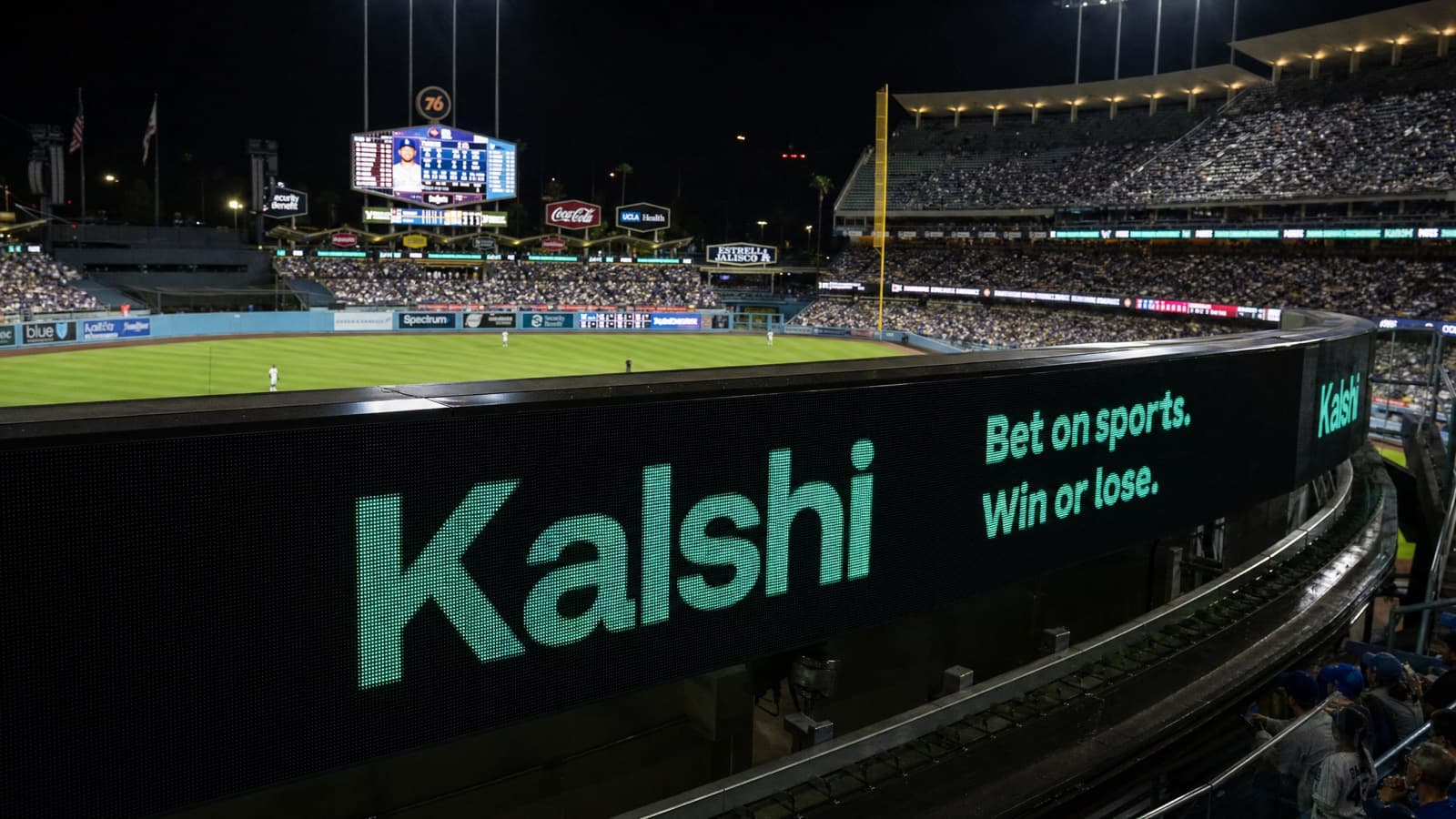
Seven Major League Baseball teams now have official prediction market partners. In the span of a single week, Kalshi, Novig, and Polymarket collectively turned professional baseball into the hottest battleground in prediction markets — signing deals with franchises from Boston to Los Angeles, even as lawsuits pile up in state courts and federal regulators square off against governors.
This is not a slow trend. It's a land-grab.
The Five-Team Kalshi Announcement
On August 25, 2026, Kalshi announced exclusive, multi-year brand partnerships with five Major League Baseball franchises: the Atlanta Braves, Boston Red Sox, Los Angeles Dodgers, San Diego Padres, and San Francisco Giants. The deals — the platform's first with any MLB teams — cover in-stadium signage, social media promotions, radio, fan activations, and branded spaces inside ballparks.
The most prominent deal is with the Los Angeles Dodgers. Under that agreement, Kalshi receives naming rights to the Gold Glove Bar inside Dodger Stadium — a large indoor sports bar directly beneath the Left Field Pavilion with a view of the bullpen — plus LED signage throughout the stadium and on-site activations in Centerfield Plaza.
"The Dodgers are always looking for innovative ways to connect with our fans, and Kalshi represents an exciting new category," said Lorenzo Sciarrino, the Dodgers' senior vice president of global partnerships, in the company's announcement.
The San Francisco Giants confirmed their own deal separately. "Creating unmatched experiences for our fans is a top priority, and we're excited to work with Kalshi to deliver on that commitment," said Steve Tseng, the Giants' senior vice president of partnerships.
Kalshi's head of sports partnerships, Adam Barrick, framed the announcements as a natural extension of where fan engagement was already happening: "Baseball fans have made Kalshi part of how they engage with the game. We're excited to keep investing in them and in the sport."
The Strategic Logic: Betting Where the Bets Are Banned
The geography of these deals is not an accident. Four of the five teams Kalshi signed play in states where traditional sports betting remains illegal or where the platform has faced active legal challenges.
The Dodgers, Padres, and Giants all play in California — a state that has twice failed to pass ballot initiatives legalizing traditional online sports betting. The Braves play in Georgia, which also prohibits sports wagering. The Red Sox play in Massachusetts, where a state court issued a preliminary injunction in January blocking Kalshi's sports event contracts pending a ruling from the Supreme Judicial Court — an injunction that has since been paused during appeal.
In short, Kalshi has chosen to entrench itself with some of the most iconic franchises in baseball, in some of the states most actively fighting prediction markets. The message is deliberate: we are not going anywhere.
"Kalshi's sports contracts are federally regulated derivatives overseen exclusively by the Commodity Futures Trading Commission," the company has argued in multiple lawsuits. For teams in states where traditional sportsbooks cannot operate, a CFTC-regulated prediction market platform represents a category of partner that traditional gambling sponsors cannot be.
A Three-Way Race: Kalshi, Novig, and Polymarket
Kalshi's five team announcements brought the total number of MLB franchises with prediction market partnerships to seven in a matter of weeks — a number that was zero at the start of the year.
The New York Mets signed a multi-year deal with Novig, a newer CFTC-regulated prediction market, earlier this summer. "We want to be cutting edge," said Nikhil Panu, Novig's senior vice president of growth. "We know we're newer to the market. Being able to be first movers on different things is important to us."
The New York Yankees — the Mets' crosstown rivals — went the other direction, partnering with Polymarket. The timing of both New York deals was striking: they were announced the same week that the state of New York filed a lawsuit against Kalshi, alleging its sports contracts constitute illegal gambling.
Polymarket has the more established baseball relationship at the league level. In March 2026, Major League Baseball announced Polymarket as its exclusive prediction-market partner, a deal that includes access to the league's official data feed through Sportradar. Kalshi's five team agreements, by contrast, are marketing and branding arrangements — they do not grant access to MLB's official Sportradar data feed, which remains Polymarket's exclusive domain at the league level.
This creates an unusual dynamic: Polymarket is MLB's official data partner, but Kalshi is signing more individual team deals. Industry observers note that nothing in MLB's exclusivity arrangement with Polymarket appears to prevent teams from signing their own separate brand partnerships with competing platforms.
Trading Volume Has Exploded
The sponsorship race is driven by genuine economics. Baseball-related contracts traded on Kalshi have grown approximately 36-fold compared to the same period in 2025, according to a company spokesperson cited by Fortune. Through late August 2026, Kalshi reported nearly 13 billion baseball-related contracts traded on its platform this year — a figure that would have been unimaginable during the 2025 season.
Kalshi's overall trading volume has surpassed $171 billion so far in 2026, as of late August, according to data from Paradigm, a major investor in the company. The surge was driven in part by the FIFA World Cup earlier this summer, which generated a record $1.2 billion single-day volume on June 14–15.
For MLB teams, that volume translates directly into fan engagement data they can point to in partnership negotiations. Fans are already trading on game outcomes without any official team relationship — the deals formalize what is already happening organically.
Platform-by-Platform Breakdown
Kalshi (CFTC-regulated designated contract market and designated clearing organization): Now partners with five MLB teams — Braves, Red Sox, Dodgers, Padres, Giants — as well as the NHL, Chicago Blackhawks, LALIGA North America, and Argentina Football Association. In talks with MLB about a potential league-level deal, per Fortune. Baseball contracts: 36x YoY growth.
Novig (CFTC-designated contract market, approved June 16, 2026): Partners with the New York Mets in a multi-year agreement announced earlier this summer. Commission-free sports market model. Launched July 2026.
Polymarket: Official prediction-market partner of Major League Baseball (March 2026, exclusive league deal). Partners with the New York Yankees. League deal includes official Sportradar data access. Also has an MLS partnership (January 2026). Note: US users access Polymarket sports markets through QCX LLC, the CFTC-regulated US entity, which focuses on sports contracts.
Will All 30 Teams Get a Deal?
Analysts quoted by The Athletic believe the current wave is the start of something larger. Four additional MLB teams play in states where traditional sports betting remains illegal — the Houston Astros, Los Angeles Angels, Minnesota Twins, and Texas Rangers — giving prediction market platforms a natural expansion path.
Whether the industry reaches total saturation with all 30 teams is less certain. But Kalshi's position with one-sixth of MLB franchises — after having zero such deals just months ago — is a dramatic acceleration. Multiple sources note that Kalshi is in active conversations with MLB about a league-wide deal that would challenge Polymarket's exclusive status.
The deals also reflect a broader normalization strategy. Sportico reported that Kalshi branding appeared quietly at Dodger Stadium weeks before the formal announcement, without social media fanfare — a deliberate low-key rollout designed to avoid the backlash that followed other prediction market partnership announcements earlier in the year.
What This Means for Fans
For baseball fans who already use prediction markets, the practical impact is straightforward: more access points, branded promotions, and potentially platform-specific offers tied to your team's home games. The Dodgers deal includes Kalshi-specific offers and activations throughout the season in Centerfield Plaza; the Giants deal includes similar in-ballpark integration.
For fans who haven't yet tried prediction markets, the stadium presence functions as awareness — a logo in the outfield signage rotation, a sponsored email from the Red Sox, a named sports bar at Dodger Stadium. These are the same normalization tactics that traditional sportsbooks used to build awareness in states where betting became legal.
The key difference: prediction markets operate as CFTC-regulated financial derivatives, not as licensed sportsbooks under state gambling law. That distinction is what Kalshi argues makes stadium deals in California and Georgia legally distinct from what a DraftKings or FanDuel could do in those same markets today.
Frequently Asked Questions
Can I use Kalshi in California, Georgia, or Massachusetts where these teams are based? Yes, for now. Kalshi operates under federal CFTC oversight and is currently available in most states including California and Georgia. In Massachusetts, a state court injunction blocking Kalshi sports contracts has been paused pending appeal, meaning the platform is currently accessible to Massachusetts residents. The legal status of sports event contracts remains in active litigation across multiple states.
Is Polymarket still MLB's official partner even though Kalshi signed team deals? Polymarket retains the exclusive league-level partnership with MLB, which includes access to official Sportradar data. Kalshi's five team agreements are marketing and branding arrangements with individual franchises, which appear to operate separately from the league's exclusivity arrangement.
Does having a team sponsorship affect what markets are available? No. The brand partnerships cover marketing integration — signage, promotions, fan activations — not market listings. The prediction market contracts available on each platform are determined by platform policy and CFTC rules, not by team partnerships.
How big is baseball trading on prediction markets? Kalshi reported roughly 13 billion baseball-related contracts traded in 2026 through late August — a 36-fold increase from the same period in 2025, according to a company spokesperson cited by Fortune. The growth reflects the broader explosion in prediction market trading volume since the platform's sports contracts became widely available.
Conclusion
Seven MLB teams with prediction market partners in a single week represents something real. The platforms that now have in-stadium branding alongside Budweiser and Toyota have made a bet — not on any game, but on their own permanence. They are embedding in the physical infrastructure of Major League Baseball's most storied franchises while the legal fights play out in state courts and federal circuits.
For fans at Dodger Stadium watching a game from the Kalshi Gold Glove Bar, the prediction market industry's regulatory battles may feel distant. For the lawyers and regulators who will ultimately decide whether Kalshi can operate in California at all, the blue-and-white logo behind home plate is a very deliberate statement about staying power.
To track live baseball prediction market prices and compare odds across platforms, visit PredictionMarkets.US.
Sources & Verification
- Kalshi five-team MLB announcement: Reuters, August 25, 2026
- Deal details, league partnership context: Fortune, August 25, 2026
- State restrictions and legal context: USA Today, August 25, 2026
- Three-platform race analysis: The Athletic, August 26, 2026
- Pre-announcement branding rollout: Sportico, August 24-25, 2026
- Giants official confirmation: The Reporter, citing Giants press release, August 25, 2026