
Prediction Market Taxes in 2026: What Kalshi, Polymarket, and Robinhood Traders Need to Know
Prediction market taxes are a mess mostly because the product category moved faster than the tax guidance around it. Traders now bounce between regulated venues like Kalshi, distribution layers lik...
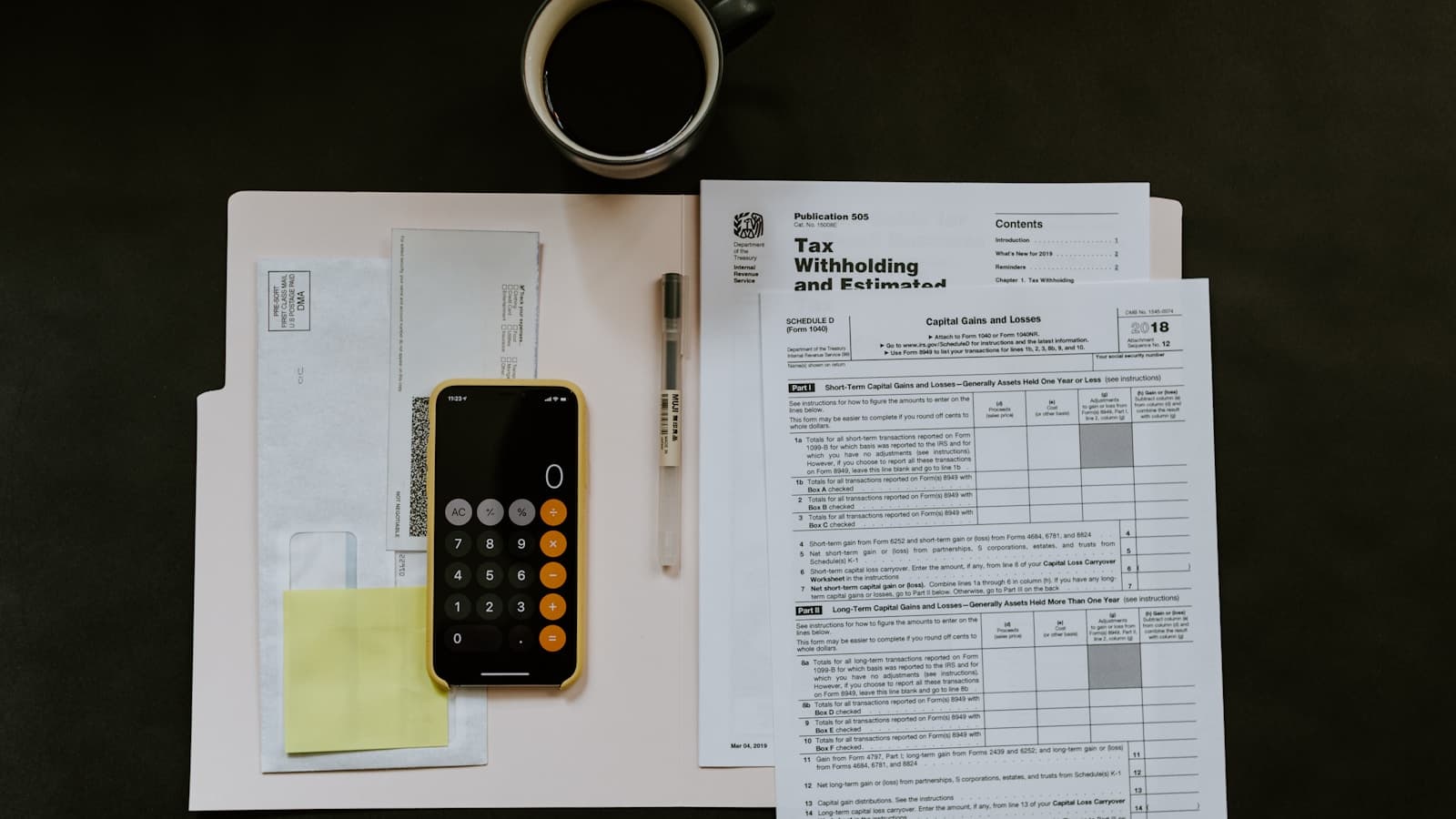
Prediction market taxes are a mess mostly because the product category moved faster than the tax guidance around it. Traders now bounce between regulated venues like Kalshi, distribution layers like Robinhood’s event contracts, and crypto-linked platforms like Polymarket’s U.S. setup, then discover at filing time that the easy part was picking markets. The hard part is figuring out what the IRS expects, what documents the platform actually gives you, and what records you need when the forms are incomplete.
The useful starting point is simple: if you made money, the IRS probably wants to hear about it. But the details matter. The IRS says gambling winnings are fully taxable and must be reported even when no Form W-2G is issued, while losses are deductible only if you itemize and only up to the amount of gambling income you report (IRS Topic No. 419). Meanwhile, platforms package tax data differently. Kalshi says users who hit certain IRS reporting thresholds may receive forms including 1099-INT, 1099-MISC, 1099-B, or 1099-DA, and that its P&L tool uses FIFO accounting and updates monthly (Kalshi Help Center).
This guide walks through the parts that actually matter: what the IRS clearly says, where platform reporting helps, where it does not, and how to keep records before tax season punches you in the throat.
The one thing the IRS is crystal clear about
The cleanest source here is the IRS itself, not random forum lore and not whatever your friend in a Discord tax channel swears his CPA said. In IRS Topic No. 419, the agency says gambling winnings are fully taxable and must be reported on your tax return. It also says a payer may issue Form W-2G for certain gambling winnings or withholding situations, but you still have to report winnings even if you never receive one.
That matters for prediction market traders because a lot of people still think “no tax form” means “no tax event.” That is not how this works. If you closed profitable positions on markets like Kalshi’s Iran Strait of Hormuz contract or Polymarket’s March Fed decision market, the lack of a neat, idiot-proof year-end form does not erase the income.
The IRS also says losses may be deductible only if you itemize deductions on Schedule A and only up to the amount of gambling income you reported (IRS Topic No. 419). It further says you need an accurate diary or similar record plus receipts, tickets, statements, or equivalent documentation to support both winnings and losses (IRS Topic No. 419). In plain English: if your recordkeeping sucks, your tax position sucks.
Why prediction market taxes feel harder than they should
Prediction markets look simple in the app. You buy YES at 92 cents, sell later, or hold to settlement. But tax reporting gets weird fast because these platforms can sit somewhere between gambling, financial trading, and digital-asset activity depending on the venue and the funding rail.
Kalshi is the easiest place to start because it is a regulated U.S. exchange, and its own documentation at least tells users what they might receive. Kalshi says users who hit certain IRS reporting thresholds may receive 1099-INT for interest, 1099-MISC for credits or rewards, 1099-B for broker transaction proceeds tied to crypto transfers, and 1099-DA for digital asset transaction reporting from ZeroHash (Kalshi Help Center). Kalshi also says its account-level tax page provides trading activity by year, that P&L includes fees and rebates, and that the calculation uses FIFO (Kalshi Help Center).
That is helpful, but it still is not the same thing as the platform telling you, in one sentence, exactly which IRS treatment applies to every trade. That gap is why so many traders end up relying on tax blogs, accountants, and specialized trackers. The category is young enough that users are still stitching together the final reporting logic from IRS base rules, platform support pages, and transaction exports.
A live example: why active traders need records before year-end
Let’s use real markets so this does not drift into generic sludge. As of the March 9 price snapshot, Kalshi’s most active non-sports market was “Will Iran close Strait of Hormuz before May 2026?” with about $376.8K in 24-hour volume, while Polymarket’s top event was “Fed decision in March?” with about $14.1M in 24-hour volume (Kalshi market snapshot, Polymarket event page).
Those markets show the bookkeeping problem. Maybe you bought the Hormuz YES contract at 72 cents last week and sold at 92 cents today. Maybe you legged into the Fed “no change” structure through several fills across multiple days. Maybe you rotated capital from one event into another three times in a week. By March, you may already have dozens or hundreds of economically meaningful taxable moments depending on how your accountant classifies the activity and how the platform exports it.
That is why platform CSVs matter, and why waiting until April is dumb. You want a running ledger with at least:
- trade date
- market/event name
- side bought or sold
- number of contracts or shares
- entry price
- exit or settlement price
- fees paid
- rebates received
- net profit or loss
- wallet transfer details where relevant
- screenshots or PDFs of year-end platform statements
If you use multiple venues, this gets uglier. A Robinhood user trading event contracts through Kalshi’s rail may receive documents through Robinhood’s broader tax-doc workflow, while a direct Kalshi user is looking at Kalshi’s own tax center, and a Polymarket user may need to rely more heavily on exports, wallet history, and third-party tax tooling. Different wrapper, same underlying headache: if your data is fragmented, tax prep becomes a forensic exercise.
Kalshi, Polymarket, and Robinhood: what is actually verified today
Here’s the part people need most: the boring, verified stuff.
| Platform | Verified tax-reporting detail | Source |
|---|---|---|
| Kalshi | Users who hit certain IRS reporting thresholds may receive 1099-INT, 1099-MISC, 1099-B, and 1099-DA; P&L uses FIFO and updates monthly | Kalshi Help Center |
| Robinhood | Robinhood has a tax-documents support flow and explains access to tax forms through its support center, though public fetches are rate-limited / blocked in some contexts | Robinhood Taxes and Forms support page |
| Polymarket | Public search results surface third-party tax guides and calculators, but I could not verify an official Polymarket support page that cleanly states a standard U.S. 1099 workflow from publicly accessible documentation during this run | Search results overview |
That last row is annoying, but pretending certainty would be worse. If you are writing about taxes, you do not get to freestyle. For Polymarket specifically, the honest answer is that users should not assume a familiar brokerage-style tax packet will solve the problem automatically. If the official documentation is thin or gated, your backup plan is transaction-level records plus a tax professional who understands digital assets and event trading.
If you want the broader platform context first, our guides on how prediction markets work and prediction market fees guide help frame the mechanics before you get into taxes.
Does the IRS treat prediction market profits as gambling income or something else?
This is where everyone wants a universal answer and the real answer is less satisfying. The IRS page we can verify directly talks about gambling winnings and losses in a broad sense and lays out the reporting basics (IRS Topic No. 419). But prediction markets are now operating across multiple rails and legal structures, so practitioners disagree on whether every platform and every fact pattern lands in the exact same bucket.
That does not mean anything goes. It means you should separate two questions:
- Is the income reportable? Yes, if you have income, you report it.
- Exactly how should a specific platform’s activity be characterized on a return? That may depend on the venue, documentation, and your advisor’s interpretation.
This is also why some CPAs are publishing platform-specific guides instead of generic “betting tax” explainers. They are trying to solve the mismatch between old IRS language and new product design. You can see that in recent specialist writeups discussing Kalshi, Polymarket, and Robinhood specifically, but treat those as interpretation layers rather than final law (Monaco CPA, Camuso CPA).
My view: if you trade prediction markets seriously and you are still hoping for a magical one-size-fits-all retail answer, you are already behind. The right move is to treat tax classification as a real operations problem, not an afterthought.
What records to keep if you do not want tax season to become a crime scene
The IRS says you need records that show both winnings and losses if you want to deduct losses up to winnings (IRS Topic No. 419). For prediction market traders, that should translate into a records stack that is much more detailed than “I have some screenshots somewhere.”
Keep these all year:
- monthly CSV exports from every platform
- year-end tax documents, even if they seem incomplete
- deposit and withdrawal logs
- wallet addresses and transaction hashes for crypto-linked activity
- fees, rebates, and financing details where applicable
- notes on transfers between platforms and wallets
- screenshots of large settled positions
- copies of support-page guidance that explains how the platform computes P&L
Kalshi explicitly says its P&L includes fees and rebates and uses FIFO (Kalshi Help Center). That means if you later reconcile your own numbers and they differ, you know one place to start checking. Without saved documentation, you are stuck reconstructing logic from memory, which is a terrible way to do taxes and an even worse way to defend a return.
Common mistakes prediction market traders make
1. Assuming no form means no reporting obligation
The IRS explicitly says you must report gambling winnings even if no W-2G is issued (IRS Topic No. 419). That alone kills the most popular excuse.
2. Ignoring fees in profit calculations
Kalshi says its P&L includes fees and rebates (Kalshi Help Center). If you track gross wins without netting the actual economics, you can create sloppy records and mismatches.
3. Waiting until filing season to export data
By then, you may have missing statements, changed interfaces, stale wallet labels, and no clue why one CSV does not match another.
4. Treating every platform identically
That is lazy. A regulated U.S. exchange, a brokerage wrapper, and a crypto-linked event platform do not necessarily hand you the same paperwork or the same reporting path.
5. Taking internet certainty at face value
Prediction market tax content is full of people talking way too confidently about unsettled questions. If a guide makes everything sound perfectly settled, that is usually your cue to get suspicious.
A practical filing checklist for 2026
If you traded prediction markets this year, here is the non-glamorous checklist that will save your ass later:
- Download every platform statement now, not next spring.
- Save tax forms as PDFs the day they appear.
- Export full transaction history, not just account summaries.
- Reconcile fees and rebates against platform P&L.
- Keep a spreadsheet that ties each market to a realized gain or loss.
- If you used crypto rails, keep wallet histories and transaction hashes.
- Flag any platform where official tax guidance is unclear.
- Bring the whole packet to a CPA who understands both trading and digital assets.
That last part matters more than people want to admit. Taxes are one of the few areas where “I watched three videos and read some tweets” is a genuinely stupid operating system.
If you are still deciding which venue fits you best before this becomes your problem, start with our best prediction market apps guide and Kalshi vs. Polymarket comparison.
FAQ
Do prediction markets send tax forms?
Sometimes. Kalshi says users who hit certain IRS reporting thresholds may receive forms including 1099-INT, 1099-MISC, 1099-B, and 1099-DA (Kalshi Help Center). But you should not assume every platform will hand you a complete, brokerage-style packet that answers every reporting question.
Do I have to report prediction market winnings if I did not get a W-2G?
Yes, the IRS says gambling winnings are fully taxable and must be reported even if no Form W-2G is issued (IRS Topic No. 419).
Can I deduct prediction market losses?
The IRS says gambling losses may be deducted only if you itemize deductions, and only up to the amount of gambling income you reported (IRS Topic No. 419). You also need records to support the deduction.
What records should I keep for prediction market taxes?
Keep transaction exports, monthly statements, tax forms, deposit and withdrawal logs, wallet records where relevant, fee data, and your own running ledger. The IRS specifically says you need an accurate diary or similar record plus supporting documents for winnings and losses (IRS Topic No. 419).
Are Kalshi, Polymarket, and Robinhood taxed the same way?
Not necessarily in practice. The underlying income is still reportable, but documentation and reporting workflows can differ by platform. That is exactly why serious users should not rely on a one-line answer from social media.
The bottom line
Prediction market taxes are not impossible. They are just unforgiving. The IRS has already made the broad rule clear: taxable winnings are reportable, and losses require documentation and itemization limits (IRS Topic No. 419). Platforms can help, but they are not a substitute for your own records, and they definitely are not a substitute for actual tax advice.
The traders who handle this well will be the boring ones: the people who save exports, reconcile statements monthly, track fees, and stop pretending tax cleanup is something Future Me can deal with. In prediction markets, that boring discipline is a real edge.
If you want to get smarter before your next trade, explore more platform comparisons, market explainers, and live pricing coverage at PredictionMarkets.us.