
Peru Presidential Election 2026: What Prediction Markets Say About Fujimori, Belmont, and the June Runoff
Peru's chaotic April 12 first round confirmed Fujimori in the lead but left the June 7 runoff bracket unresolved. Here's how Polymarket is pricing the final winner with $13.79M at stake.
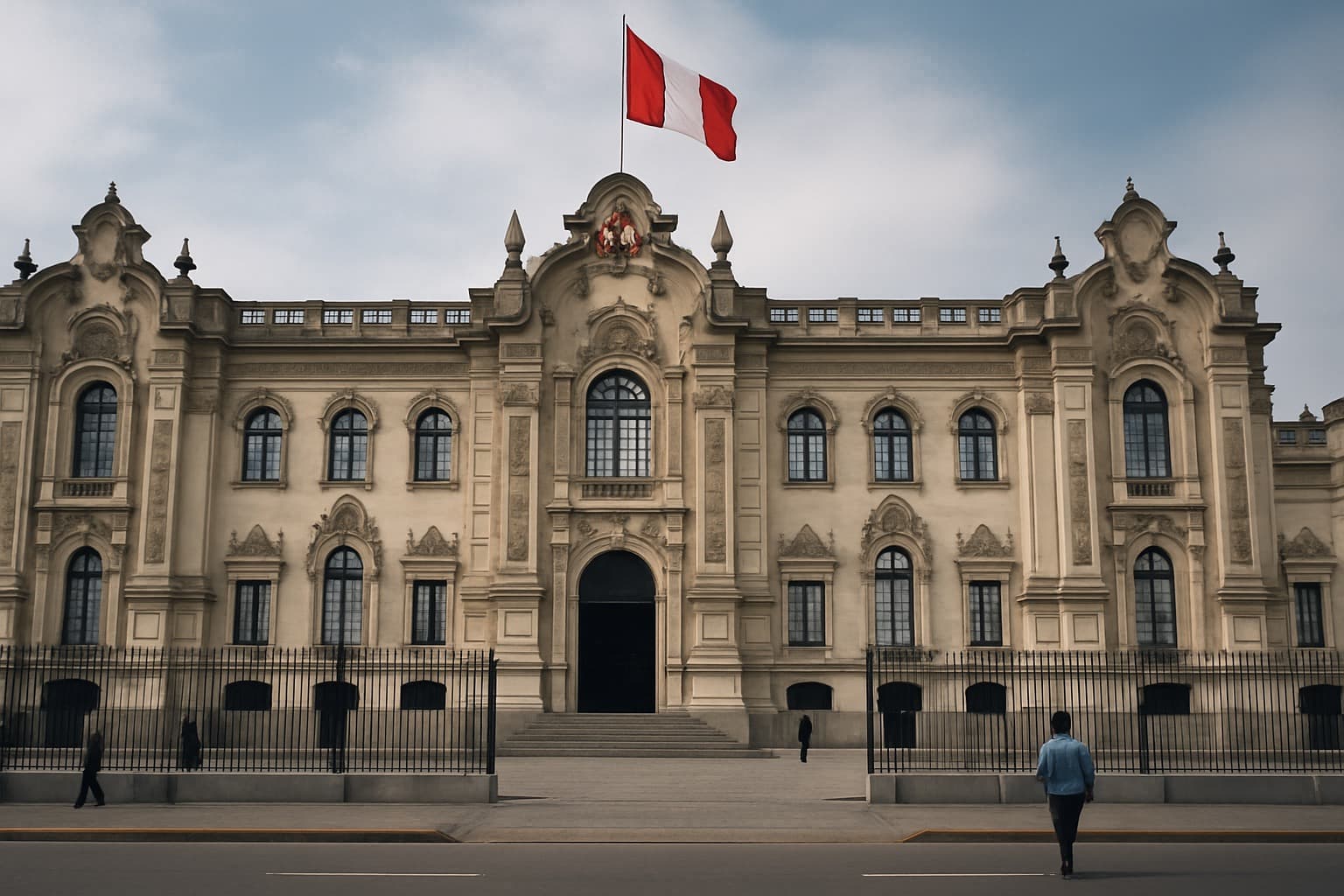
Peru just held the most chaotic first-round presidential election in its modern history — and prediction markets had nearly $14 million at stake when the polls closed.
The April 12, 2026 first round produced no surprises in one direction: conservative Keiko Fujimori advanced to her fourth consecutive runoff appearance. But the identity of her June 7 opponent is still being counted, and prediction markets are treating it as one of the most genuinely uncertain runoff setups on the board right now.
Here is how markets are pricing Peru's presidential race, what the first-round results tell us, and what to watch heading into the June 7 final.
What Just Happened in Peru's First Round
Peru went to the polls on April 12 with a record 35 presidential candidates, a ballot described by reporters as nearly half a meter long, and deep public distrust of every major political figure on it.
An Ipsos Peru exit poll released Sunday evening showed Keiko Fujimori of the conservative Fuerza Popular party leading with 16.6% of the vote. Leftist candidate Roberto Sánchez Palomino trailed at 12.1%, followed closely by center-left populist Ricardo Belmont at 11.8%, according to Reuters.
Early official results from Peru's National Office of Electoral Processes (ONPE) — with approximately 37% of ballots counted — showed Fujimori at 17.17%, narrowly ahead of ultra-conservative former Lima mayor Rafael López Aliaga at 16.97%, according to Reuters.
The election was marred by significant logistical failures. According to Reuters, polling station delays and missing electoral materials left approximately 63,000 voters unable to cast ballots on Sunday, prompting authorities to extend voting in Lima through Monday, April 13. Fraud allegations emerged quickly — López Aliaga claimed "grave electoral fraud" and called on supporters to protest, though election authorities said the logistical failures posed no threat to result integrity.
No candidate came close to the 50% threshold needed to win outright in the first round. A runoff between the top two finishers is scheduled for June 7, 2026.
Understanding Peru's Prediction Market Action
Global Polymarket has attracted $13.79 million in total trading volume on its "Peru Presidential Election Winner" event, with $6.75 million traded in the 24 hours surrounding the first round. That places Peru among the top-five most actively traded events on the platform on April 13.
⚠️ US Access Disclaimer: The Peru presidential election markets are on global Polymarket (polymarket.com), which is not accessible to US users. Polymarket's US entity, QCX LLC (a CFTC-licensed exchange), currently offers sports markets only. US readers can follow Peru market prices for analysis purposes on PredictionMarkets.US, but cannot trade these contracts directly.
Kalshi, which operates its own CFTC-licensed exchange, does not currently offer Peru presidential election contracts.
How Markets Are Pricing the Final Winner
With the first round complete and a four-way statistical tie scrambling for the second runoff spot, here is how Polymarket is pricing each candidate's odds of winning the entire election — including the June 7 runoff:
| Candidate | Polymarket Implied Probability | Volume |
|---|---|---|
| Keiko Fujimori | 31% (32¢ YES) | $952K |
| Ricardo Belmont | 24% (24¢ YES) | $1.39M |
| Rafael López Aliaga | 20% (21¢ YES) | $1.75M |
| Carlos Álvarez | 14% (14¢ YES) | $1.30M |
| Roberto Sánchez Palomino | 5.5% (5.5¢ YES) | $944K |
| Jorge Nieto | 4% (4¢ YES) | $1.52M |
Source: Polymarket "Peru Presidential Election Winner" event, accessed April 13, 2026. Prices reflect trading post-first round.
The most striking feature of this table is not Fujimori's lead — it is the gap between her first-round result and her market-implied probability of actually winning. Despite leading the first round by a clear margin, she is priced at just 31¢. The market is telling you something specific: Fujimori may be the most likely winner, but she is far from a lock because whoever she faces in the runoff matters enormously.
The Belmont Premium: What Markets Are Really Saying
Ricardo Belmont's 24% market probability deserves explanation. In the first round exit polls, he was running third at 11.8% — not obviously headed for the runoff. Yet Polymarket is pricing him as the second most likely overall winner.
This reflects a common dynamic in two-round systems: the runoff opponent shapes the outcome more than first-round rankings do.
If Belmont makes the runoff against Fujimori, the market believes he has a credible path to victory. His left-populist positioning — "hugs not bullets" was his signature slogan — appeals to the broad anti-Fujimori coalition that has beaten Keiko three times already (in 2011, 2016, and 2021, per Reuters). A Fujimori-Belmont matchup could consolidate center-left and protest voters behind Belmont.
Contrast that with a Fujimori-López Aliaga runoff: two right-wing candidates splitting a right-of-center electorate, potentially alienating left-leaning voters who simply stay home. In that scenario, Fujimori becomes the more moderate-seeming option — potentially advantaging her.
The Polymarket prices are modeling all of these scenarios simultaneously and pricing based on each candidate's probability-weighted path through the bracket.
Why Peru Matters Beyond Its Borders
Peru is the world's third-largest copper producer, a status that makes its elections relevant to commodity markets, US-China strategic competition, and Latin American investment flows. As Reuters noted in pre-election coverage, Peru's deepening economic relationship with China — its largest trading partner — has raised concerns in Washington, which stepped up diplomatic engagement ahead of the vote.
The country has cycled through eight presidents since 2018 alone, according to Reuters — a pace of turnover that has eroded investor confidence and institutional credibility. Whoever wins in June inherits a newly reinstated Senate and a fragmented Congress with near-90% disapproval ratings, according to NPR reporting. The structural conditions for another impeachment battle are already in place.
For prediction markets, Peru represents exactly the kind of high-uncertainty, high-complexity electoral environment that multi-candidate systems create. Fragmented first rounds, runoff reversals, and coalition mathematics are exactly what liquid markets should be good at pricing — and with $6.75M traded in a single day, the Peru event is demonstrating real interest from global traders.
What to Watch Before June 7
The June 7 runoff is still 54 days away. Several things will move the market significantly between now and then:
1. The final first-round count. As of April 13, only 37% of ballots were counted. The second-place finisher — Fujimori's runoff opponent — remains genuinely unclear. López Aliaga led the early official count at 16.97%, but Nieto, Belmont, and Sánchez Palomino were all competitive in exit polling. The ONPE results are the authoritative source (onpe.gob.pe).
2. Coalition endorsements. In two-round Peruvian elections, the candidates who lose in the first round endorse or stay neutral, and their voter bases largely follow. Who Nieto, Álvarez, and López Chau endorse will matter significantly to the June 7 outcome.
3. Fraud investigation fallout. López Aliaga has already alleged fraud, and prosecutors raided the electoral authority's subcontractor. Whether any formal legal challenge materializes before the runoff could affect candidate positioning and voter turnout.
4. Crime and security as the swing issue. NPR reported that public insecurity — record homicide rates and extortion tied to drug trafficking and illegal mining — was the dominant voter concern in this election. How each runoff candidate positions on military deployment and organized crime will define the June 7 debate.
How Prediction Markets Add Value Here
Most international media coverage of Peru's election focuses on polling averages and candidate profiles. Prediction markets do something different: they aggregate the probability-weighted judgment of thousands of traders who have real money on specific outcomes, in real time.
The Peru markets have demonstrated their value already. Pre-election, Polymarket was pricing Fujimori as the most likely first-round leader but not a certainty — a 46% implied probability, per the first-round winner contract. That reflected the genuine uncertainty in a field of 35 candidates, 20–30% undecided voters, and two major pollsters showing slightly different results. The markets were right to hedge.
Now, with the first round confirming Fujimori's lead but leaving the runoff bracket unresolved, the winner markets are repricing dynamically. Belmont's rise to second in the winner market despite uncertain first-round standing is a real-time signal of how the market is modeling runoff coalition dynamics — not just vote counts.
This is what prediction markets are built for.
FAQ
Can US users trade the Peru election markets on Polymarket? No. Global Polymarket (polymarket.com) is not accessible to US users. Polymarket's US entity, QCX LLC, operates under a CFTC license and currently offers sports markets only. US users should treat Peru market prices as analytical tools rather than tradable contracts.
Is Kalshi offering Peru election markets? Not as of April 13, 2026. Kalshi's CFTC-regulated exchange focuses primarily on US-domestic events and weather markets. Kalshi does not currently list Peru presidential election contracts.
What happens if the results aren't official by October 31, 2026? Polymarket's Peru Presidential Election Winner market resolves to "Other" if official results aren't available by October 31, 2026, 11:59 PM ET. This is a standard Polymarket backstop clause for elections with delayed certification.
When will the runoff happen? The second round is scheduled for June 7, 2026, per Peru's electoral authority. Only candidates finishing in the top two of the April 12 first round will participate.
How many people voted in Peru's first round? Peru has approximately 27 million eligible voters, according to Reuters pre-election reporting. Turnout from the first round is still being counted, with voting extended through April 13 for the approximately 63,000 voters blocked by polling station failures in Lima.
Conclusion
Peru's presidential election is a live case study in what prediction markets do well: price high-uncertainty, multi-candidate outcomes in real time while accounting for runoff bracket dynamics that polling alone struggles to capture. With $13.79 million in total volume and a June 7 runoff still ahead, the Peru markets on global Polymarket are among the most actively contested political markets in the world right now.
Fujimori is the market-implied frontrunner at 31%. Belmont sits at 24% as the most likely challenger. But with the second-place runoff spot still unresolved and 54 days of coalition politics ahead, the markets are pricing genuine uncertainty — exactly as they should.
For the latest Peru market prices and other global prediction market data, see predictionmarkets.us.
Sources & Verification
- Fujimori first in exit poll (16.6%): Reuters, April 12, 2026 — verified April 13, 2026
- Official ONPE count (37% counted): Fujimori 17.17%, López Aliaga 16.97%: Reuters, April 13, 2026 — verified April 13, 2026
- 35 candidates, 27 million eligible voters, nine leaders in a decade: NPR, April 11, 2026 — verified April 13, 2026
- Candidate profiles (Fujimori, López Aliaga, Belmont, Nieto): Reuters, April 8, 2026 — verified April 13, 2026
- 63,000 voters unable to cast ballots, voting extended to April 13: Reuters, April 13, 2026 — verified April 13, 2026
- Eight presidents since 2018: Reuters election overview, April 13, 2026 — verified April 13, 2026
- Polymarket market prices and volumes: Polymarket Peru Presidential Election Winner event — accessed April 13, 2026
- Peru as world's third-largest copper producer, US-China geopolitics: Reuters, April 13, 2026 — verified April 13, 2026