
New York City Council Opens Deceptive Marketing Investigation Into Kalshi, Polymarket, Coinbase, and Gemini Titan
NYC Council opened a formal investigation into deceptive marketing by Kalshi, Polymarket, Coinbase, and Gemini Titan, with a 14-day response deadline.
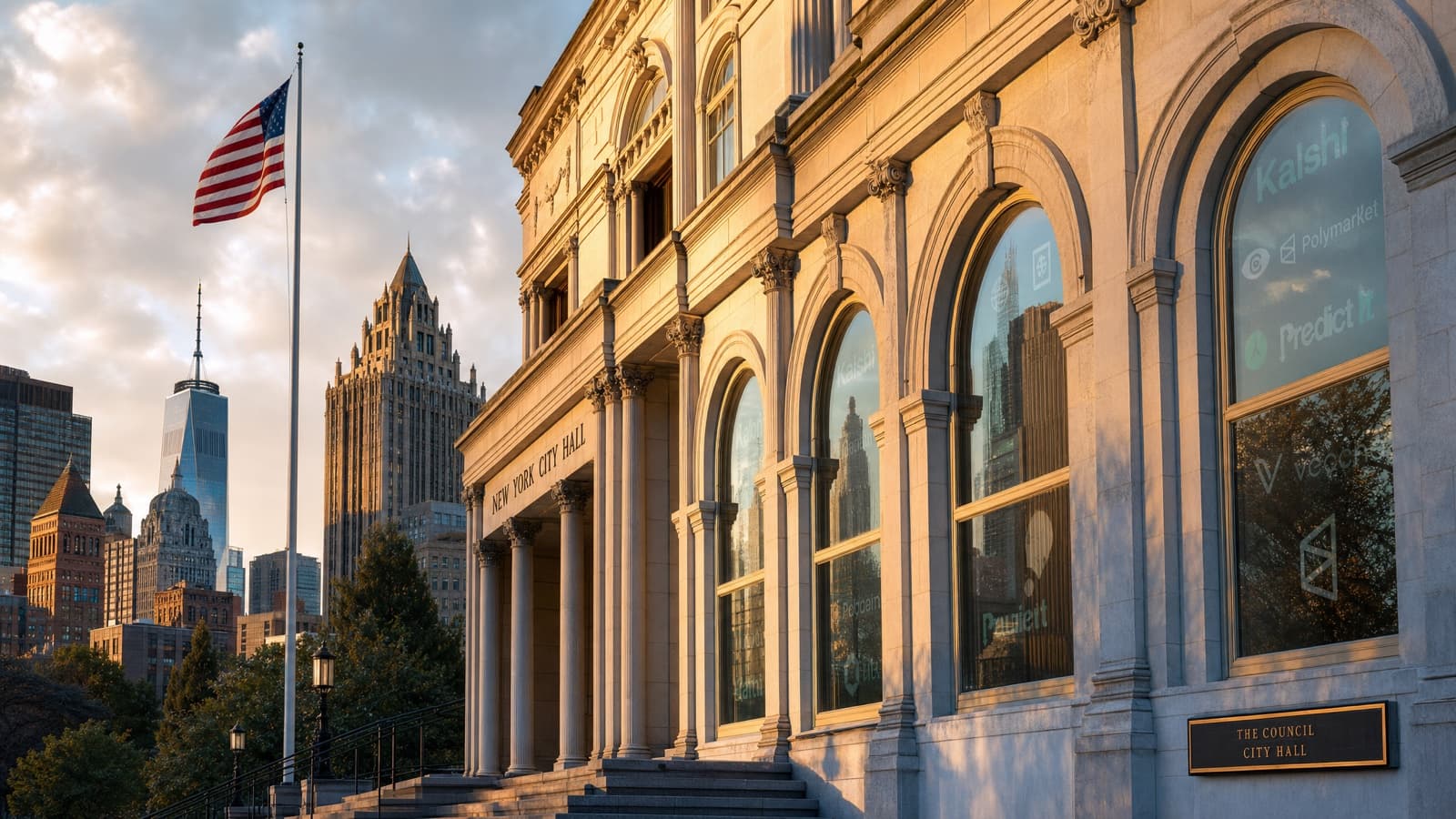
The New York City Council launched a formal investigation into four major prediction market platforms on August 12, adding a regulatory front that targets the industry's marketing and advertising practices — not the underlying contracts. Led by Speaker Julie Menin, the probe gives platforms 14 days to disclose internal documents or face compelled disclosure through the Council's investigative powers.
The four platforms under scrutiny: Kalshi, Polymarket, Coinbase, and Gemini Titan. The Council cannot ban prediction markets outright — federal jurisdiction under the Commodity Exchange Act limits its reach over the contracts themselves — but it can examine how those markets advertise to New Yorkers, and it is using that authority aggressively.
"Prediction markets aggressively entice consumers to bet and wager on sports, politics, culture, weather, and pretty much anything," Menin said in the official announcement. "We refuse to let New Yorkers, especially our young people, become collateral damage."
What the Investigation Covers
The Council's inquiry centers on three core concerns: potentially false or deceptive marketing claims, advertising directed toward adults between 18 and 20 who cannot legally gamble in New York State (the state minimum gambling age is 21, while prediction markets accept traders starting at 18), and undisclosed partnerships with social media influencers.
Under its oversight authority, the NYC Council can compel platforms to turn over details about their advertising operations. The 14-day window — which expires around August 26 — requires each platform to produce information about its advertising spend, target audiences, influencer relationships, and user age distribution among New York City residents.
Council Member Harvey Epstein, chair of the Committee on Consumer and Worker Protection, put the industry's scale in context. "Online prediction markets are surging in popularity, with some projecting $300 billion in volume on the platforms this year," he said at the announcement. "With the industry aggressively marketing to New Yorkers, we have a responsibility to investigate their claims and the advertising tactics these companies are using to ensure they are following the law."
The investigation could lead to new consumer protection legislation, expanded enforcement referrals to state and city agencies, public education campaigns, or health measures targeting compulsive wagering. The Council has explicitly said it is evaluating all of these options.
The Influencer Marketing Controversy That Started This
The Council's investigation was triggered in large part by a June exposé in The Wall Street Journal that uncovered Polymarket's influencer marketing operation. According to the Journal's reporting, Polymarket paid content creators to post videos showcasing supposed trading wins — but the wins were fabricated. The Journal found that if viewers had actually mirrored those featured trades, they would have lost money.
Following the report, Polymarket said it would review and audit its promotional content. The Commodity Futures Trading Commission subsequently opened its own broad investigation into Polymarket's marketing practices, according to Bloomberg's June 26 reporting.
The NYC Council's probe now extends that scrutiny industry-wide. Letters sent to all four platforms reference the Journal's findings and ask whether similar influencer practices were used by Kalshi and the exchange-access platforms.
The investigation also examines advertising specifically aimed at 18-to-20-year-olds. Prediction platforms have marketed through channels popular with that age group — including sponsored content on TikTok and social media influencer partnerships. Critics argue these campaigns disproportionately reach adults barred from traditional sports betting in New York, where the minimum age is 21.
Kalshi has pushed back on that framing. A company spokesperson said the 18-to-20 age cohort accounts for "just 3% of trading volume."
The Four Platforms Under Scrutiny
Kalshi is a federally regulated designated contract market licensed and overseen by the CFTC. Headquartered in New York City, Kalshi is the leading US prediction market exchange, offering contracts across sports, politics, economics, and a wide range of other categories.
Polymarket operates globally through polymarket.com and in the United States through QCX LLC, a CFTC-regulated exchange that Polymarket acquired. The US venue — QCX LLC, doing business as Polymarket US — is limited to sports markets for US users under the terms of its CFTC authorization. Polymarket's broader global platform, which covers political and other categories, is not accessible to US users under that license.
Coinbase provides US customers access to prediction markets through a partnership with a CFTC-regulated exchange. The CFTC oversees both the underlying exchange and the access arrangement.
Gemini Titan is a New York-based platform that similarly routes users to CFTC-regulated prediction markets.
Of the four, Polymarket offered the most detailed public response, saying it "looks forward to engaging with the New York City Council on this matter." Coinbase said it "offers our customers access to federally regulated prediction markets overseen by the CFTC, and fully complies with applicable laws." Kalshi and Gemini Titan did not immediately respond to requests for comment at the time of initial reports.
Prediction Market Odds on the Regulatory Fight
Live price — will a law banning sports prediction markets be enacted in 2026?
Across prediction markets, contracts tracking the probability of federal sports-related bans have remained in the low single digits. Trader pricing reflects a consensus that federal protection will hold even as state legal pressure intensifies — a gap between political noise and market conviction that has persisted through months of regulatory escalation.
Can the Council Actually Do Anything?
The answer is more complicated than it might appear — and that complexity reflects the multi-front legal war prediction markets are fighting.
On the contracts themselves, the Council's reach is limited. The CFTC holds exclusive authority over derivatives markets under the Commodity Exchange Act, and the agency has exercised that authority forcefully in recent weeks. On August 11, the CFTC invoked its emergency powers to order Kalshi to continue operating in New York after state Attorney General Letitia James filed a lawsuit on July 31 seeking more than $36 billion in damages. CFTC Chairman Michael Selig said at the time: "New York has no business regulating these interstate financial markets."
But advertising is a different matter. New York City's consumer protection laws give the Council enforcement tools over how products are marketed within the five boroughs, regardless of where the product itself is regulated at the federal level. Speaker Menin, a former Commissioner of Consumer Affairs, has direct experience with exactly this type of investigation — she previously led inquiries into for-profit colleges, fraudulent auto loans, and illegal gun dealers.
The Council can also refer its findings to the New York Attorney General, who already has the prediction market industry in her sights. James's lawsuit against Kalshi — which alleges the platform operates an illegal gambling business without a state gaming license — could be strengthened by evidence of deceptive marketing practices uncovered by the Council's probe. The marketing investigation is legally separate from the contracts dispute, but it adds documents, disclosures, and potentially damaging admissions to the public record.
Where This Fits in the Larger New York Legal War
New York has pursued multiple simultaneous strategies against prediction markets over the past year:
- The New York State Gaming Commission issued cease-and-desist orders to platforms over sports contracts
- Attorney General James filed suit against Kalshi on July 31, seeking $36 billion in damages and a permanent ban on New York operations
- State legislators are weighing the ORACLE (Oversight and Regulation of Activity for Contracts Linked to Events) Act, which would impose tighter requirements on prediction market exchanges
- The NYC Council has now opened a parallel probe targeting advertising specifically
At the federal level, the CFTC has moved equally aggressively in the other direction. The agency has filed lawsuits against nine states — including New York — arguing that prediction markets are federally regulated financial instruments beyond state authority to ban. Its August 11 emergency order to keep Kalshi operating in New York is one of the most direct federal interventions in the state-federal standoff to date.
Council Deputy Speaker Dr. Nantasha Williams captured the tension carefully. "We have to recognize the potential harms associated with these platforms, particularly when it comes to young people, compulsive wagering, and how these products are marketed to consumers," she said. "It is important that we hear from all stakeholders, deepen our knowledge of this emerging market, examine the practices and potential impacts at issue, and allow that information to guide our work."
The Council is explicitly asking: what can the city do about this, even if it cannot stop the trading itself?
Frequently Asked Questions
What is the NYC Council investigation into prediction markets about? The New York City Council is investigating whether four prediction market platforms — Kalshi, Polymarket, Coinbase, and Gemini Titan — engaged in false, deceptive, or abusive marketing practices targeting New York City residents. The probe focuses specifically on advertising tactics, influencer marketing, and whether platforms disproportionately targeted adults aged 18 to 20 who cannot legally gamble under New York State law.
Can New York City ban prediction markets? No. The Commodity Futures Trading Commission holds exclusive federal authority over prediction market contracts under the Commodity Exchange Act. New York City's legal authority extends to advertising and consumer protection within the five boroughs — it cannot ban the underlying contracts themselves. The separate question of whether New York State can ban the contracts is being litigated in federal and state courts.
What triggered the NYC Council investigation? A Wall Street Journal investigation in June 2026 revealed that Polymarket paid social media influencers to post videos depicting fabricated trading wins. The CFTC subsequently opened its own investigation into Polymarket's marketing practices. The NYC Council announced its broader industry-wide probe on August 12, citing the Journal's findings and expanding the scope to all four platforms.
What could happen if the investigation finds violations? The Council could pass new consumer protection legislation governing prediction market advertising within New York City, refer findings to the Attorney General for potential enforcement, fund public education campaigns, or implement health measures around compulsive wagering. Platforms that do not comply with the voluntary 14-day document request could face compelled disclosure.
How is the NYC Council probe different from the NY AG's lawsuit against Kalshi? The Attorney General's lawsuit challenges whether Kalshi can legally operate prediction market contracts in New York at all, alleging they constitute unlicensed gambling. The Council's investigation is legally separate and targets only how platforms market their products to New York City residents — not whether the products themselves are lawful.
Sources & Verification
- New York City Council Announces Investigation of Deceptive and Predatory Marketing Practices by Prediction Market Platforms, NYC Council official press release — August 12, 2026
- New York City Council probing Kalshi, Polymarket and other prediction markets over marketing claims, CBS News — August 12, 2026
- NYC Council investigates ad tactics for prediction markets Kalshi, Polymarket, Washington Post — August 12, 2026
- Polymarket and Kalshi Now Face NYC Probe Over 'Deceptive' Ads, New York Magazine — August 12, 2026
- CFTC Issues Emergency Order to Kalshi to Keep Operating Despite NY Lawsuit, PYMNTS — August 12, 2026
- Prediction markets place odds on election results. Officials say they could erode public trust, Votebeat — August 13, 2026