
New Jersey Files for Supreme Court Review of Prediction Market Ruling
New Jersey files for Supreme Court review. Here's what the 3rd vs. 9th Circuit split in Flaherty v. KalshiEX means for prediction market users.
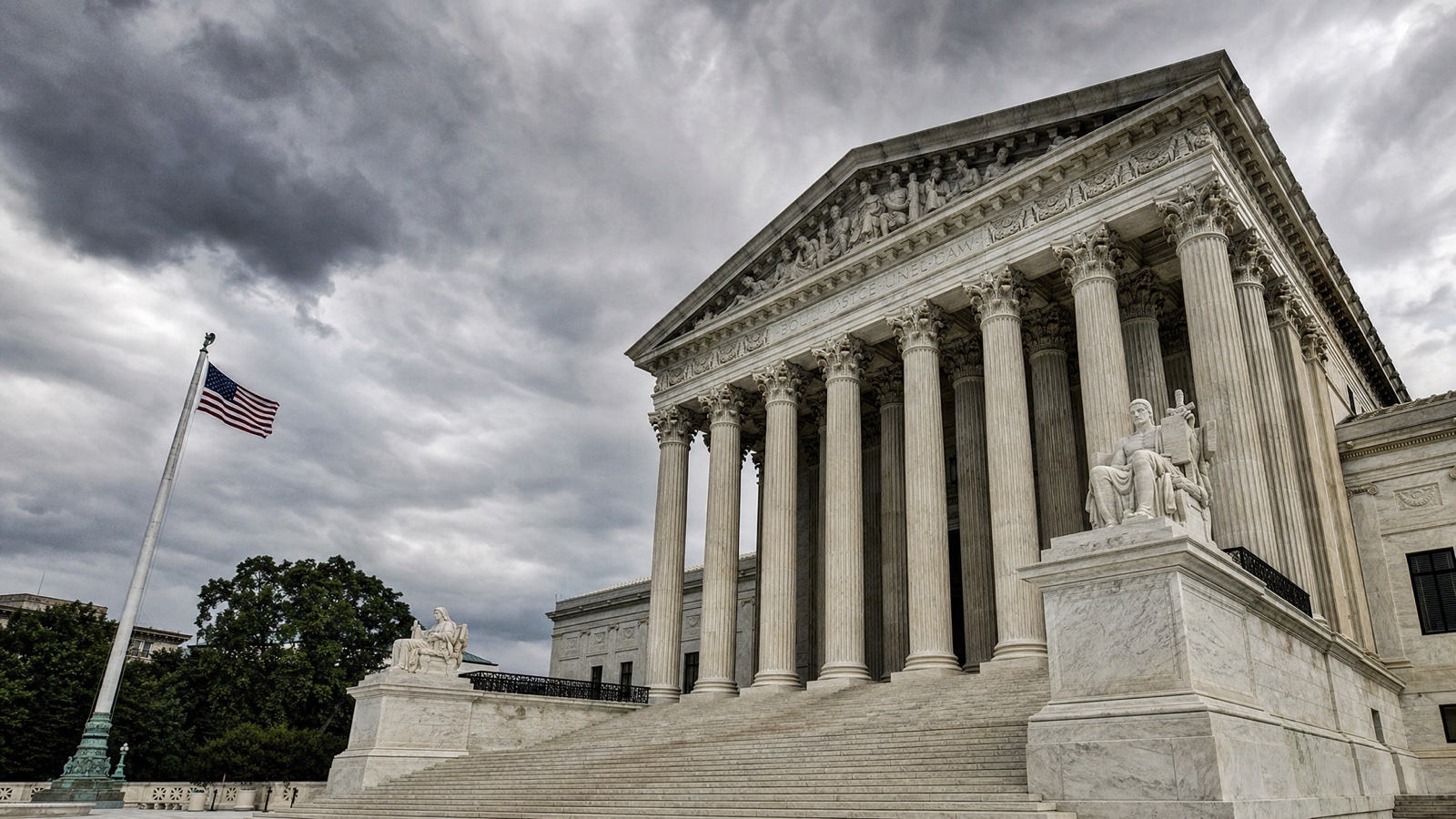
New Jersey has filed a petition asking the U.S. Supreme Court to hear Flaherty v. KalshiEX — a move that could reshape the prediction market industry across the United States. The state submitted the petition today, one day ahead of its Justice Alito-set deadline of September 3.
"We intend to file a petition for a writ of certiorari in this case," the New Jersey attorney general's office said in a statement to Bloomberg Law.
The move comes days after the Ninth Circuit Court of Appeals ruled unanimously that states can regulate sports prediction markets as gambling — a decision that directly contradicts the Third Circuit's April ruling in favor of Kalshi and federal preemption. Two federal appellate courts. Same question. Opposite answers.
That is the textbook definition of a circuit split — and it is exactly the kind of conflict the Supreme Court was designed to resolve.
Two Courts, Two Answers
For the past year, prediction market platforms have battled states in courtrooms from coast to coast. The central legal question is deceptively simple: are sports event contracts "swaps" regulated exclusively by the Commodity Futures Trading Commission under the Commodity Exchange Act (CEA), or are they gambling products subject to state gaming laws?
The Third Circuit answered "swaps" in April 2026. In a 2-1 decision in KalshiEX LLC v. Flaherty, the court ruled that KalshiEX LLC's sports event contracts qualify as federally regulated derivatives — and that the CEA preempts New Jersey from enforcing its gaming laws against the platform.
The Ninth Circuit answered "gambling" on August 28, 2026. A three-judge panel ruled 3-0 in the Nevada case that states can ban sports prediction markets under existing gaming laws.
"The substance of the sports event contracts offered on Kalshi's exchange is sports gambling, regardless of whether Kalshi calls them swaps," the Ninth Circuit wrote. The panel found that "Kalshi's attempts to distinguish its sports event contracts from sportsbook betting are unpersuasive."
The court went further, quoting Shakespeare: "Just as '[t]hat which we call a rose by any other name would smell as sweet,' placing sports bets, even when called by another name, is still gambling."
What the Ninth Circuit Actually Said
The Ninth Circuit panel — Judge Ryan D. Nelson (author), Judge Bridget S. Bade, and Judge Kenneth K. Lee (concurrence), all appointed by President Trump — preferred a narrow textual reading of the Commodity Exchange Act over Kalshi's broader interpretation.
The court's core finding: while the CEA gives the CFTC exclusive jurisdiction over "transactions involving swaps traded or executed" on designated contract markets, a sports event contract must first independently qualify as a swap. The Ninth Circuit found it does not.
Congress, the panel ruled, did not intend "to upend its decades of careful regulation of gambling based on broad definitions of the words used in a Wall Street Reform Bill." Without a "limiting principle" separating sports event contracts from ordinary sports bets, the court concluded, Kalshi's argument would effectively make the CFTC the regulator of sportsbooks nationwide.
The CFTC disagreed sharply. Agency spokesman Zach Fulton said: "Unfortunately, the Ninth Circuit misreads both our statute and our regulations when it comes to swaps and the Special Rule."
The ruling also extended to Crypto.com and Robinhood, which were party to related Nevada cases. All three platforms remain blocked from offering sports event contracts in Nevada. Notably, the Ninth Circuit also asked the district court to reconsider Nevada's challenges to election contracts "consistent with this opinion" — raising questions about whether the anti-preemption logic could eventually reach political and other market categories.
Why New Jersey Is Filing Now
New Jersey did not rush its cert petition. After the Third Circuit ruled against the state in April — finding that Kalshi's contracts qualify as federally regulated derivatives under the CEA —, the state obtained extensions from Justice Samuel Alito to delay filing — watching as other circuits weighed in. With the Ninth Circuit now squarely on the opposite side, New Jersey has its circuit split in hand.
Justice Alito had set September 3, 2026 as the final deadline for the state's petition. New Jersey moved one day early, filing today.
New Jersey's incentive is clear. A cert grant in Flaherty v. KalshiEX — with New Jersey as the petitioner — would center SCOTUS review on whether the Third Circuit erred by siding with Kalshi. The state would control the framing. If instead the Supreme Court waits for a later case, New Jersey may lose the procedural advantage it currently holds from the Third Circuit's preliminary injunction in its favor.
What Supreme Court Review Would Mean
If the Supreme Court agrees to hear the case, it would be the most consequential ruling for prediction markets since the CFTC licensed KalshiEX as a designated contract market.
A ruling that sports event contracts are swaps would effectively preempt all state gambling laws. Platforms like Kalshi, Robinhood, and other CFTC-regulated prediction market operators could offer sports markets nationwide without state-level gaming licenses. The CFTC would hold exclusive regulatory authority.
A ruling that states can regulate prediction markets would hand power back to state gaming commissions, potentially requiring platforms to obtain individual state licenses — the same framework that governs traditional sportsbooks. States where Kalshi is already restricted, including Michigan, Nevada, and Washington, could make those restrictions permanent.
The stakes extend beyond sports. The Ninth Circuit specifically asked the lower court to reconsider election and entertainment contract categories under the same logic — suggesting a broad anti-preemption ruling could sweep political markets and other non-sports categories into state jurisdiction as well.
"This decision reflects the zig-zag of rulings on this space, given the early win by Kalshi before a reversal by the same judge in the same lower court," said Stacie Hartman of Morgan, Lewis & Bockius LLP, who has defended clients before the CFTC, in a statement to Bloomberg Law.
Current Platform Availability
As of September 2, 2026, the legal map is uneven across states:
- Michigan, Nevada: Sports prediction markets restricted; state enforcement orders in place
- Washington: Phase 2 GeoComply geofencing enforcement began September 2
- New Jersey: Sports markets currently available under Third Circuit preliminary injunction
- Massachusetts: Awaiting ruling from the state's Supreme Judicial Court
- Utah: Federal district court sided with state; appeal pending
- Most other states: Platforms operating under CFTC authority without state restrictions
Forty-four state attorneys general have submitted a letter to the CFTC arguing the agency lacks authority over sports prediction markets — a coalition encompassing nearly every state in the union.
What Happens if SCOTUS Denies Cert?
If the Supreme Court declines New Jersey's petition, the split remains unresolved. The Third Circuit's ruling protects Kalshi in New Jersey; the Ninth Circuit's ruling threatens the platform in Nevada, California, Arizona, and six other western states. Both rulings are preliminary-injunction decisions — not final judgments on the merits — meaning the underlying cases continue at the district court level.
Kalshi has separately signaled it may seek rehearing en banc at the Ninth Circuit, which would place the case before the full panel rather than the three-judge panel. If the en banc court grants rehearing and reverses, the circuit split dissolves — and the urgency for SCOTUS intervention drops.
The CFTC's ongoing rulemaking, which proposed explicit rules for sports event contracts in June 2026, could also shift the legal record before any Supreme Court ruling, though the timeline for a final rule remains uncertain.
Former CFTC regulator Carl Kennedy, now at Katten Muchin, told Bloomberg Law: "Given the conflict and broader implications for prediction-market regulation, Supreme Court review is now substantially more plausible."
What's Next
September 3, 2026: New Jersey files cert petition (intent confirmed) Fall 2026: Kalshi may petition for Ninth Circuit rehearing en banc; Fourth Circuit ruling in Maryland case expected Early 2027: If cert granted, briefing schedule begins 2027 term: Merits argument, if SCOTUS grants review
The prediction market industry has grown from a niche product to a multi-billion dollar market in under two years. The Supreme Court's decision — whether to take the case, and how to rule — will determine whether that growth continues under a single federal framework or fractures across a patchwork of 50 state-by-state regulatory regimes.
Frequently Asked Questions
What is the September 3 deadline? New Jersey's Division of Gaming Enforcement has until September 3, 2026 to file its petition for a writ of certiorari in Flaherty v. KalshiEX with the U.S. Supreme Court. The state has confirmed it intends to file.
What is a circuit split? A circuit split occurs when two different federal appellate courts reach opposite conclusions on the same legal question. The Third Circuit (covering New Jersey, Pennsylvania, and Delaware) ruled in April 2026 that Kalshi's sports event contracts are federally regulated swaps preempting state gaming laws. The Ninth Circuit (covering Nevada, California, Arizona, and six other states) ruled on August 28, 2026 that those same contracts are gambling subject to state regulation.
Does SCOTUS have to take the case? No. The Supreme Court grants certiorari in only a small fraction of the thousands of petitions it receives each year. However, direct circuit splits on important federal questions significantly raise the likelihood of a grant. Whether New Jersey's petition becomes the vehicle — as opposed to a later petition from Kalshi or from another circuit — depends on the Court's discretion.
What happens to prediction market access while the case is pending? The status quo continues on a circuit-by-circuit basis. Platforms operate under their respective preliminary injunctions until those cases reach final judgment. A SCOTUS cert grant would not immediately change platform availability — that would await a decision on the merits.
Is Polymarket affected by this case? QCX LLC, d/b/a Polymarket US, operates as a separate CFTC-regulated exchange focusing on sports markets for U.S. users. As a federally licensed designated contract market, it operates under the same legal framework as Kalshi and faces the same jurisdictional questions in any state where enforcement actions arise. The Ninth Circuit's ruling addressed Crypto.com and Robinhood alongside Kalshi in the Nevada cases.
Sources & Verification
- New Jersey attorney general stated intent to file cert petition: Bloomberg Law, August 31, 2026
- Ninth Circuit ruling, August 28, 2026 — circuit split framing: CNN, August 28, 2026
- NJ September 3 deadline, state restriction status: American Banker, August 31, 2026
- Justice Alito extension, Sportico legal analysis: Sportico, August 31, 2026
- CFTC spokesman Zach Fulton quote, Ninth Circuit legal reasoning: Reason, September 1, 2026
- KalshiEX designated contract market registration: CFTC.gov DCM registry