
Ninth Circuit Rules States Can Regulate Prediction Markets as Gambling, Setting Up Supreme Court Showdown
Ninth Circuit rules 3-0 that sports event contracts are 'sports bets,' not swaps—creating a circuit split that makes a Supreme Court fight near-certain.
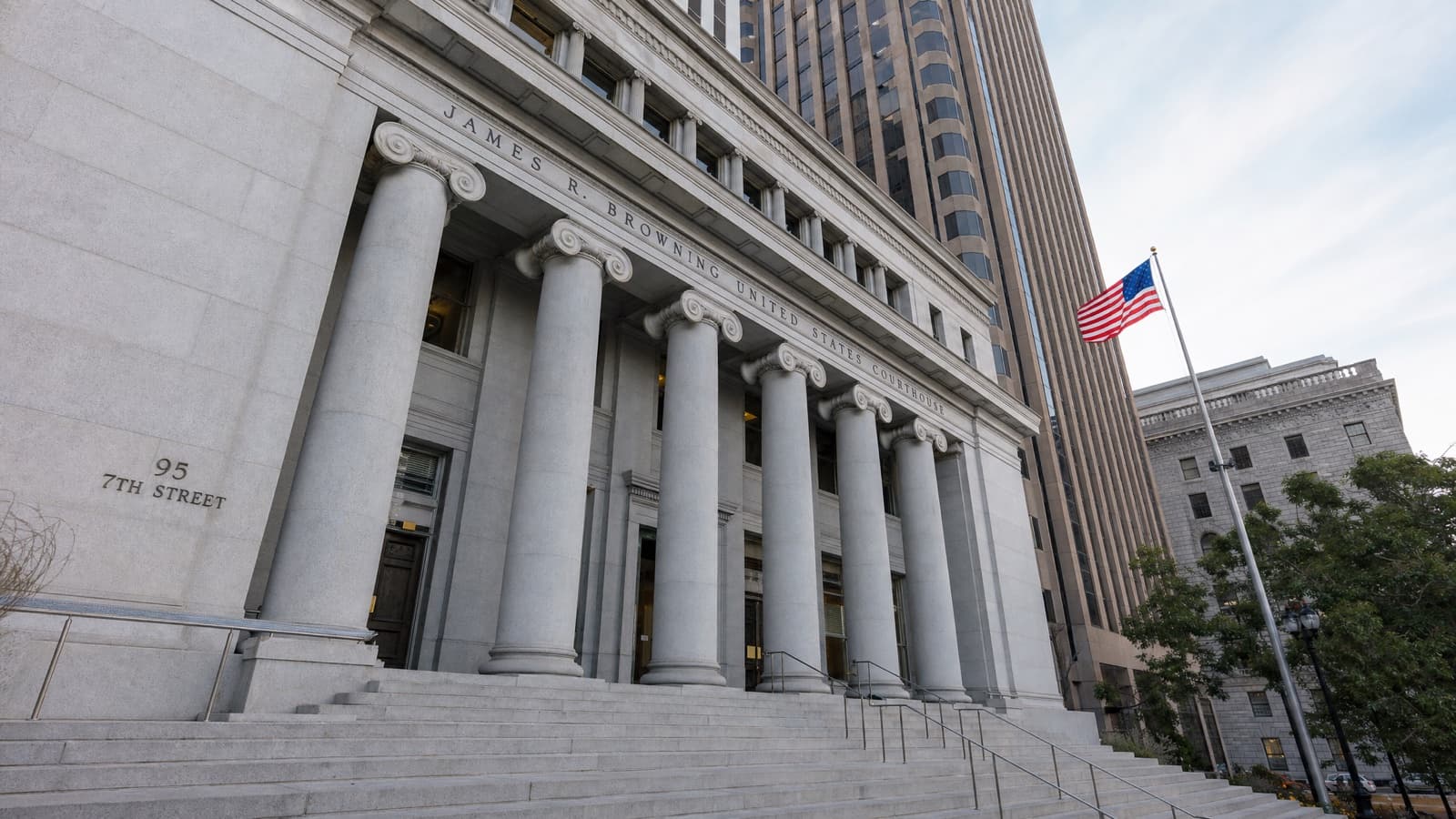
A federal appeals court dealt the prediction markets industry its most significant legal setback yet on Friday, ruling that states can treat sports event contracts as gambling rather than federally regulated financial instruments.
The Ninth U.S. Circuit Court of Appeals, in a unanimous 3-0 decision, rejected emergency injunctions sought by Kalshi, Crypto.com, and Robinhood, allowing Nevada to continue blocking those platforms from offering sports-related event contracts in the state. The ruling directly contradicts an April 2026 decision by the Third Circuit Court of Appeals, creating what legal experts are calling an inevitable path to the U.S. Supreme Court.
The Ruling: Sports Bets, Not Swaps
The central question before the court was whether sports event contracts — the contracts at the heart of the prediction markets industry — qualify as "swaps" under the federal Commodity Exchange Act (CEA). If they are swaps, the Commodity Futures Trading Commission has exclusive jurisdiction and states cannot regulate them. If they are not, states retain the power to classify them as gambling.
The Ninth Circuit came down firmly on the states' side.
"The sports event contracts were not 'swaps' because they were sports bets," the court wrote in its opinion in Case No. 25-7516.
That single sentence may be the most consequential line of text in the prediction markets industry's brief legal history. By declining to classify sports event contracts as swaps, the court concluded that the federal CEA likely does not preempt Nevada's gaming regulations — meaning states like Nevada are within their rights to ban or regulate platforms offering sports prediction markets.
The three-judge panel consisted entirely of Trump-appointed judges, a detail that caught some observers off guard given that the current administration has been broadly supportive of the prediction markets industry and its federal regulator.
The Circuit Split That Changes Everything
Friday's ruling creates what Columbia Law School professor Joshua Mitts described as "a classic circuit split."
In April 2026, the Third U.S. Circuit Court of Appeals — which covers New Jersey, Pennsylvania, and Delaware — ruled the opposite: that only the CFTC has the jurisdiction to regulate sports-related event contracts and that states cannot apply their gambling laws to federally licensed prediction market platforms. That ruling blocked New Jersey from enforcing its gaming laws against Kalshi.
Now two federal appeals courts have reached directly contradictory conclusions on the same fundamental legal question. "Ultimately, this is the kind of legal controversy or legal difference of opinion which will make its way to the Supreme Court," Mitts told CNBC.
Circuit splits rarely go unresolved for long. When federal appeals courts disagree on a question of federal law, the Supreme Court's certiorari jurisdiction exists precisely to resolve that disagreement and establish a uniform national rule. Legal experts had long anticipated this moment; the only question was when, not if.
Who's Affected — and What Happens Next
The immediate impact falls hardest on Kalshi, Crypto.com, and Robinhood — all three had sought emergency injunctions to prevent Nevada from enforcing its gaming regulations against their sports event contract offerings. All three were denied.
Kalshi and Crypto.com did not immediately respond to press requests following the ruling. Robinhood was more direct: the company said it plans to appeal. "Every eligible customer should have access to these markets, which are federally regulated by the CFTC and offered through our CFTC-registered Futures Commission Merchant," a Robinhood spokesperson said.
Robinhood's options on appeal include seeking an en banc rehearing from the full Ninth Circuit or petitioning the Supreme Court for certiorari. Given the now-confirmed circuit split, a cert petition would carry far more weight than it would have even a day ago.
For the broader industry, the ruling's implications depend almost entirely on geography. The Third Circuit (covering NJ, PA, DE) still protects platforms operating in those states. But states within the Ninth Circuit's jurisdiction — Nevada, California, Washington, Oregon, Arizona, and others — now have stronger legal ground to enforce their gaming regulations against prediction market sports contracts.
The CFTC's Response
The CFTC, which has filed lawsuits against nine states to block state-level enforcement of gaming laws against prediction markets, pushed back sharply on the ruling.
In a statement, a CFTC spokesperson said the court correctly understood that swaps are exclusively regulated by the commission — but argued it was wrong to conclude that sports event contracts fall outside that definition.
"A derivative contract structured as a swap is a swap regardless of the underlying subject matter — the only exceptions in statute are onions and movie box office receipts," the spokesperson said. "The Ninth Circuit erred today when it invented a new and atextual exception to the CEA."
The "onions and movie box office receipts" reference is a specific legal point: the CEA explicitly carves out onion futures and box office revenue swaps from federal coverage because Congress set those carve-outs deliberately. The CFTC's argument is that courts cannot invent new carve-outs by judicial interpretation alone.
The CFTC has not only filed lawsuits against states; it has also issued emergency orders directing platforms like Kalshi to continue operating in states where local courts had moved to restrict them. Friday's ruling substantially complicates that posture in Ninth Circuit states, where the appeals court has now sided with state regulators over the federal agency.
44 States and the Weight of Political Math
The prediction markets legal battle has never been purely a legal question — it's also a political and economic one. As of July 2026, 44 states had submitted briefs or public comments arguing that sports event contracts are nothing more than sports betting under a different label, and that the CFTC has no authority to override state gambling laws for such products.
That near-consensus among state attorneys general represents a substantial political force. States collect billions in taxes and licensing fees from regulated sports betting operations. Allowing federally licensed prediction markets to operate without state oversight, states have argued, creates an uneven competitive playing field that harms both state revenues and consumer protection frameworks.
The financial markets reacted to the ruling as good news for traditional sportsbooks. DraftKings shares jumped 7% following the announcement, while Flutter Entertainment — the parent company of FanDuel — rose more than 6%. Both companies have faced headwinds over the past year from investor concerns that prediction markets could disrupt their established businesses, and both have launched their own prediction market exchanges in response.
What This Means for Prediction Market Traders
For active traders, the immediate practical question is access: does this ruling change what's available in your state?
The short answer is it depends on where you live — and it may change again.
Nevada: Sports event contracts from Kalshi, Crypto.com, and Robinhood remain blocked. The ruling upholds the Nevada Gaming Control Board's position.
Washington: Already operating under a separate injunction blocking Kalshi's access (King County Superior Court, August 2026). Today's ruling adds appellate-level support to Washington's enforcement position.
California, Oregon, and other Ninth Circuit states: These states now have stronger legal precedent to pursue their own restrictions if they choose to. No immediate access change has occurred, but the regulatory landscape has shifted meaningfully.
Third Circuit states (NJ, PA, DE): Access remains protected under the Third Circuit's April ruling, which went the opposite direction.
Other states: Governed by district court precedents and the ongoing CFTC enforcement lawsuits, neither of which is directly resolved by Friday's ruling.
The Supreme Court, if it grants certiorari, would likely hear the case in its October 2027 term at the earliest — and its ruling would establish a single national standard, eliminating the current patchwork of circuit-by-circuit outcomes.
You can track how markets are currently pricing the federal-versus-state outcome at PredictionMarkets.US.
FAQ
What did the Ninth Circuit actually rule? The court ruled 3-0 that sports event contracts are "sports bets," not "swaps" as defined under the federal Commodity Exchange Act. Because they are not swaps, the federal law giving the CFTC exclusive jurisdiction over swaps likely does not apply — meaning states like Nevada can treat these contracts as gambling and ban or regulate them accordingly.
Why does this create a circuit split? The Third Circuit Court of Appeals reached the opposite conclusion in April 2026, ruling that the CFTC has exclusive jurisdiction over sports event contracts and that states cannot apply their gambling laws to federally licensed platforms. When two federal appeals courts disagree on the same question of federal law, it's called a circuit split. The Supreme Court typically steps in to resolve these conflicts.
Does this mean prediction markets are illegal? No. The ruling does not make prediction markets illegal nationwide. It gives states within the Ninth Circuit stronger grounds to enforce their own gaming laws against sports event contracts specifically. Platforms continue operating in the vast majority of U.S. states.
Will the Supreme Court hear this case? Legal experts widely believe the Court will eventually take up the question — the Ninth Circuit-Third Circuit split is now established, which is one of the most reliable triggers for Supreme Court review. Timing is uncertain, but 2027 is the earliest realistic window.
How does this affect the CFTC's lawsuits against states? The CFTC has filed suit against nine states to block their enforcement actions. Those cases continue in various district courts. The Ninth Circuit ruling doesn't directly end those cases, but it provides strong appellate-level support for the states' position within that circuit, complicating the CFTC's broader litigation strategy.
The Bottom Line
Friday's ruling is the most significant legal setback prediction markets have faced. It formalizes a direct circuit split that transforms the regulation question from a federal preemption argument into an active Supreme Court dispute.
The industry's federal ally — the CFTC — is not backing down, and it has the explicit backing of the current administration. But two separate federal appeals courts have now reached opposite conclusions on the same core question. That means this fight will ultimately be decided by nine justices — and probably not before 2027 at the earliest.
Prediction market traders, platforms, and state regulators should expect the legal battle to intensify before the Supreme Court brings any clarity.
Sources & Verification
- Ninth Circuit opinion, Case No. 25-7516: U.S. Court of Appeals, Ninth Circuit, August 28, 2026
- CNBC coverage of the ruling: U.S. appeals court rules against prediction markets, sets up likely fight at Supreme Court — verified August 28, 2026
- Third Circuit April 2026 ruling: New Jersey cannot regulate Kalshi's prediction market, US appeals court rules — CNBC, April 7, 2026
- 44-state coalition: 44 states say CFTC has no authority over sports prediction markets — CNBC, July 28, 2026
- CFTC lawsuits against states: Where the feds are fighting states over prediction markets — CNBC, May 21, 2026