
Nevada Turns North Carolina's Prediction Market Tax Into a Federal Court Weapon Against Kalshi
Nevada told the 9th Circuit that Kalshi accepting North Carolina's 6% prediction market tax undermines its federal preemption defense. Ruling pending.
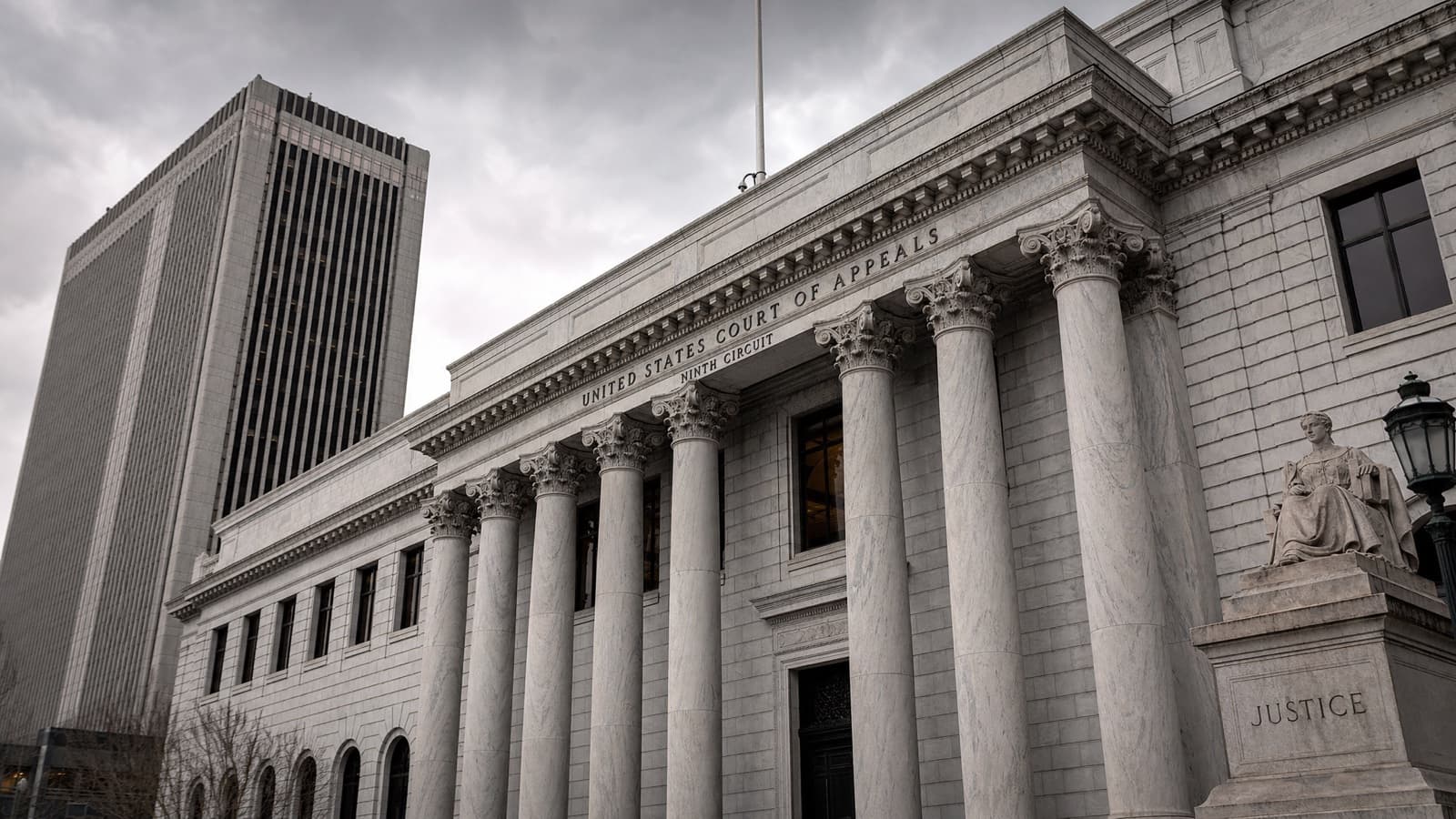
North Carolina welcomed prediction markets with open arms — a 6% tax, no state gaming license required, and the first law in the country to formally recognize the federal Commodity Futures Trading Commission's authority over the sector. Kalshi didn't fight it. That decision just became Nevada's sharpest legal weapon in a federal appeals court.
Nevada's attorney general filed a two-page argument with the U.S. Court of Appeals for the Ninth Circuit on Thursday, August 21, using Kalshi's acceptance of North Carolina's prediction market tax law against the company's own preemption defense. If states have no power to regulate CFTC-licensed exchanges, Nevada's deputy attorney general asked the court, why did Kalshi embrace a state-imposed tax on its trading revenue without a legal challenge?
The filing introduces the most pointed legal theory in the year-long fight between prediction markets and state regulators — and the Ninth Circuit is still weighing a ruling that could set the terms for the entire country.
North Carolina Took a Different Path
Most states that have engaged with prediction markets have done so through enforcement: cease-and-desist letters, court orders, lawsuits. North Carolina did the opposite.
Governor John Stein signed Senate Bill 257 as part of the state's budget law, making North Carolina the first state to codify federal oversight of prediction markets into statute. The law explicitly states that registration with the CFTC gives platforms like Kalshi and Polymarket the legal right to operate in the state, and it frames the CFTC's authority as "exclusive federal regulatory authority" over the contracts.
Rather than requiring a separate state gaming license or imposing the regulatory burden that states like Illinois have pursued, North Carolina simply imposed a 6% tax on prediction market trading fee revenue attributable to state residents, effective January 1. Sports betting operators in North Carolina, by contrast, pay a 23% tax on gross wagering revenue — a 17-percentage-point gap that reflects the legislature's view that prediction markets occupy a different regulatory category.
Kalshi didn't contest the law. It didn't sue North Carolina. It accepted the framework.
Nevada's Argument: Acceptance Is Admission
Nevada Deputy Attorney General Abigail Pace told the Ninth Circuit that Kalshi's silence on North Carolina constitutes a "stunning about-face" from its preemption arguments in the Nevada litigation.
"By embracing S.B. 257, Kalshi is admitting that a state has the power to regulate its operations in the state," Pace wrote in the filing, first reported by gaming attorney Daniel Wallach on LinkedIn.
Nevada's argument targets two distinct preemption theories Kalshi has advanced in the case.
On field preemption — the argument that federal law occupies the entire regulatory space and leaves no room for state action — Pace pointed to the text of North Carolina's statute operating directly on Designated Contract Market transactions. "Kalshi argued that the Commodity Exchange Act creates a 'regime that leaves no room for states to supplement it,'" Pace wrote. "Yet S.B. 257 acts directly in the very field Kalshi claims is preempted — on DCM transactions."
On conflict preemption — the argument that state law conflicts with a federal policy of uniform national regulation — Pace noted that Kalshi has argued Nevada's gaming laws would undermine that uniformity. But North Carolina's law, she wrote, "imposes exactly that type of state-specific regulation by requiring Kalshi to identify its gaming activity attributable to North Carolina and pay taxes on that activity."
The core of Nevada's position: "Kalshi attempts to draw a distinction between regulating its contracts and taxing its revenue from these contracts, but that is purely a formalism. Both are forms of regulation by the state."
The 9th Circuit's Pending Decision
The Ninth Circuit has been sitting on its ruling since April 16, when a three-judge panel heard consolidated oral arguments in the Nevada cases involving Kalshi, Robinhood Derivatives, and Crypto.com's American Derivatives Exchange. The hearing gave observers a clear read on where the panel was leaning.
Judge Ryan Nelson pressed Kalshi's counsel hard, questioning whether the company had told the D.C. Circuit in earlier proceedings that its contracts were gaming contracts — an inconsistency that cut against its current argument that they are purely federal financial instruments. Judge Bridget Bade probed Nevada's limiting principle on the swap definition. Judge Kenneth Lee appeared open to a narrower reading of preemption that could give the CFTC exclusive jurisdiction over on-exchange trading while leaving state sportsbook regulation intact.
The panel did not rule from the bench. Legal observers have broadly assessed the questioning as favorable to Nevada, but the Ninth Circuit has not issued its decision.
A ruling against Kalshi in the Ninth Circuit would create a direct conflict with the Third Circuit, which ruled 2-to-1 in Kalshi's favor in April, holding that sports event contracts are swaps under the Commodity Exchange Act and that CFTC preemption applies. That circuit split would likely be the vehicle for the Supreme Court to take up the question — a case that would define the legal status of a rapidly growing industry.
Nevada's new filing is a supplemental argument, not a motion. It adds the North Carolina evidence to the record the Ninth Circuit already has before it.
The Illinois Contrast: Inconsistency as Evidence
Kalshi's response to Illinois offers Nevada a secondary argument. When Illinois enacted Senate Bill 3019 — a tiered transaction tax of 1.75% on the first five million exchange wagers and 3.5% on subsequent wagers, plus a requirement to obtain a state sports-betting license at a cost of $15 million for a four-year term — Kalshi sued to block it.
The contrast is legally significant. Kalshi's opponents can argue that the company's selective willingness to comply with state laws based on how burdensome they are reveals a pragmatic calculation rather than a principled legal position. If CEA preemption were absolute and uniform, the argument goes, Kalshi would either fight all state regulation or accept it all. Instead, the company accepted a light-touch tax from a cooperative legislature and sued to overturn a heavier regulatory regime from a hostile one.
Kalshi's counter-position is that the two laws are categorically different: North Carolina's statute expressly defers to CFTC authority and imposes no separate licensing or regulatory framework, making it consistent with federal preemption. Illinois, by contrast, requires Kalshi to obtain a state sports-betting license and comply with state gaming rules — the kind of parallel state regulatory structure that the CEA was designed to displace.
That distinction may be persuasive to some judges. But Nevada's filing frames Kalshi's NC acceptance as an acknowledgment that a state can, at minimum, "identify" and "tax" prediction market activity — a principle that, if accepted, significantly narrows the scope of Kalshi's preemption claim in the Nevada litigation.
Where the Enforcement Fight Stands
Nevada's legal argument arrives while a parallel compliance dispute over Kalshi's geofencing of the state remains unresolved.
After a series of court orders and a contempt dispute, Kalshi agreed in July to implement multi-source geofencing through third-party vendor GeoComply by August 12, under an agreement with the Nevada Gaming Control Board. If Kalshi missed the deadline, the company agreed to pay $120,000 per day until compliance was confirmed.
Nevada's Gaming Control Board says that after August 12, its investigators were able to place nine contracts through Kalshi from within the state. Kalshi counters that those tests involved investigators misrepresenting their location — using false address information to defeat the GeoComply system — which the company says violates federal law. The dispute over whether the geofence worked as required remains pending before the state court.
The Ninth Circuit's ruling on the underlying preemption question, whenever it arrives, will shape whether the geofencing fight was ever legally necessary in the first place.
What to Watch
The Ninth Circuit has discretion over whether to address Nevada's new filing. The argument arrived after oral arguments concluded and as the panel is deliberating — an unusual posture that may or may not receive a substantive response.
For the broader market, the timing matters. The New Jersey case — the vehicle for the Third Circuit's Kalshi-favorable ruling — has a Supreme Court petition deadline of September 3, when the state may ask the justices to review the Third Circuit's decision. A circuit split between the Third and Ninth Circuits would give the Supreme Court a cleaner reason to grant certiorari.
Congress is also moving on a parallel track. The CLARITY Act, which would provide an explicit federal framework for prediction market event contracts, remains before the Senate, though its odds of passage in the current session have dropped significantly.
Until one of those tracks produces a definitive resolution, every state filing — including Nevada's two-page argument about a North Carolina tax — adds new texture to a legal battle that has no clear endpoint.
Frequently Asked Questions
What is federal preemption and why does it matter here? Federal preemption is the constitutional principle that federal law takes precedence over state law when Congress has established authority over a field, or when state and federal laws directly conflict. Kalshi argues the Commodity Exchange Act gives the CFTC exclusive authority over prediction market contracts, preempting state gambling laws. States argue the CEA was never intended to override traditional state gaming regulation.
What did North Carolina actually do? North Carolina's Senate Bill 257, signed into law in July 2026, was the first state statute to explicitly recognize CFTC-registered prediction market exchanges as lawful under federal authority. It imposes a 6% tax on prediction market trading revenue attributable to state residents and does not require a separate state gaming license.
Why is Nevada's timing significant? Nevada filed its supplemental argument roughly four months after the Ninth Circuit heard oral arguments in April. Supplemental filings after argument are unusual and require the court's leave to consider. Their purpose is typically to bring new, material evidence to the panel's attention before a decision issues.
Is Kalshi currently blocked in Nevada? Yes. Under court orders from Nevada's First Judicial District Court, Kalshi is required to geofence Nevada residents from its sports, election, and entertainment contracts. The August 12 compliance deadline is the subject of an ongoing dispute between Kalshi and Nevada's Gaming Control Board over whether the geofencing system functioned as required.
What happens if the Ninth Circuit rules against Kalshi? A Ninth Circuit ruling against Kalshi would create a direct conflict with the Third Circuit, which ruled in Kalshi's favor in April. That circuit split is widely expected to be the vehicle for Supreme Court review of the preemption question.
Sources & Verification
- North Carolina Senate Bill 257: North Carolina General Assembly — Tier 1 primary source
- Illinois Senate Bill 3019: Illinois General Assembly — Tier 1 primary source
- Nevada 9th Circuit filing and Pace quotes: U.S. Court of Appeals for the Ninth Circuit, Nev. v. KalshiEX, LLC, No. 26-1304 and consolidated cases; filing dated August 21, 2026 — court record (primary source)
- 9th Circuit oral arguments background: Bloomberg Law — Tier 2, verified August 24, 2026
- Nevada geofencing compliance dispute: The Nevada Current — Tier 2, verified August 24, 2026
- Nevada $120K/day deadline and agreement: Reno Gazette-Journal — Tier 2, verified August 24, 2026
- Legal Sports Report on geofencing settlement: Legal Sports Report — Tier 2, verified August 24, 2026
- 3rd Circuit ruling (April 7, 2026): Bloomberg Law — Tier 2, verified August 24, 2026