
Minnesota's Prediction Market Ban Hits August 1: What Traders and Platforms Need to Know
Minnesota's first-in-the-nation prediction market ban takes effect August 1, 2026. Four federal lawsuits are pending, no injunction has been issued, and platforms are preparing to block Minnesota users. Here's what the law does and what comes next.
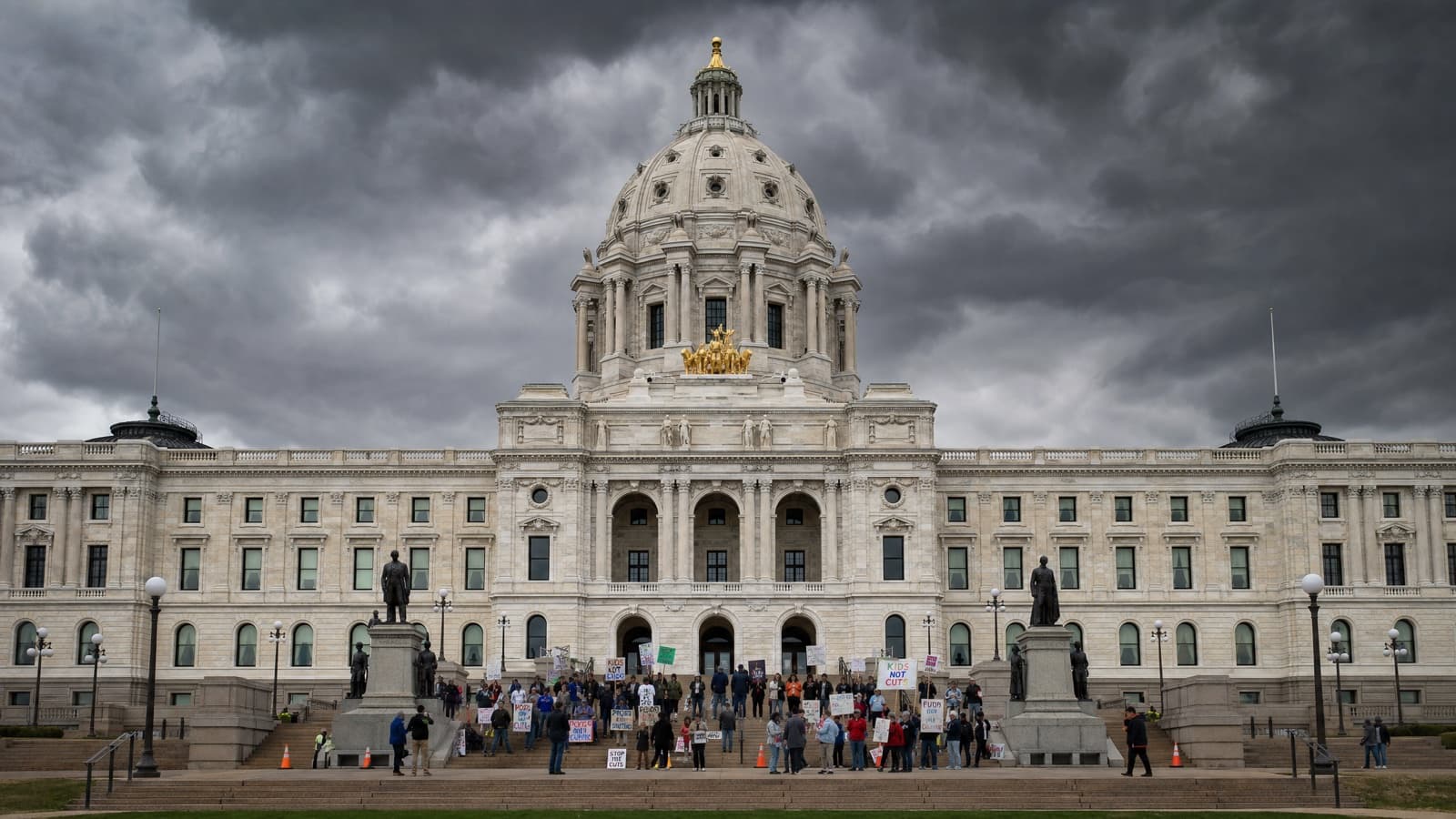
In five days, Minnesota becomes the most aggressive state in the country to crack down on prediction markets — and despite multiple federal lawsuits asking courts to intervene, no judge has issued an injunction as of July 27, 2026.
The law takes effect August 1. Here's what it does, where the legal fight stands, and what Minnesota traders should expect.
What the Minnesota Law Actually Does
On May 18, 2026, Gov. Tim Walz signed a public safety omnibus bill that contains what federal regulators have described as the most far-reaching state crackdown on prediction markets in the country.
The law makes it a criminal felony to host, operate, or advertise a prediction market in Minnesota. It covers platforms that let users place wagers on the outcome of future events — including sports, elections, live entertainment, political speeches, and world affairs. A person who creates, operates, or advertises a prediction market could face up to five years in prison and a $10,000 fine under the new statute.
Critically, the law also targets the infrastructure that enables access to platforms. Virtual private networks — which many traders have used to reach overseas prediction market sites — are specifically listed as a supporting service that falls within the ban. If a VPN provider knowingly helps a Minnesotan access a prediction market, that company could face felony charges.
Importantly, the law does not criminalize individual users who place bets. It targets the platforms and service providers, not the traders themselves.
The bill passed with substantial bipartisan margins: 100 to 32 in the Minnesota House and 57 to 9 in the Senate. State Representative Emma Greenman, a Democrat who introduced the legislation, framed the vote as a question of state authority. "We as a state should decide how best and what regulations we think should attach to gambling, to protect public safety, to protect our kids," Greenman told NPR.
Live market — will Congress ban sports prediction markets in 2026?
The First of Its Kind
Minnesota is the first state to pass a law that outright bans prediction market platforms. Other states — Nevada, Michigan, Massachusetts, Washington, New York — have used state courts to block individual platforms or specific market categories. Minnesota went further, writing a blanket criminal prohibition into statute.
Tribal-owned casinos operate in Minnesota, but the state does not permit online gambling or sports betting. Prediction market platforms had reached Minnesota traders because the federal government classifies their products as commodity derivatives, not gambling — an argument state lawmakers rejected.
"Minnesota banning prediction markets is like trying to ban the New York Stock Exchange," Kalshi spokeswoman Elisabeth Diana said in a statement to NPR. "This actively harms users because it reduces competition and drives activity offshore."
A Polymarket spokesman told NPR that Minnesota's ban "runs counter to the federal government's established framework for regulating prediction markets."
The Federal Government Pushed Back — Immediately
The Commodity Futures Trading Commission filed a lawsuit against Minnesota the day after the bill was signed, on May 19, 2026. The CFTC is seeking a preliminary injunction to stop the law from going into effect on August 1.
"This Minnesota law turns lawful operators and participants in prediction markets into felons overnight," CFTC Chairman Michael S. Selig said in the agency's press release announcing the lawsuit. "Minnesota farmers have relied on critical hedging products on weather and crop-related events for decades to mitigate their risks. Governor Walz chose to put special interests first and American farmers and innovators last."
The CFTC's complaint, filed in the U.S. District Court for the District of Minnesota (Case No. 0:26-cv-02661), argues that the Commodity Exchange Act gives the CFTC exclusive regulatory authority over event contracts listed on designated contract markets. Under that argument, Minnesota's statute is preempted by federal law and cannot constitutionally stand.
The U.S. Department of Justice filed a separate lawsuit the same day, also seeking to block the law. Kalshi and Polymarket each filed their own individual lawsuits. At least four separate federal legal challenges are pending against a single state statute.
The Hearing That Hasn't Produced an Injunction
Attorneys for Kalshi and Polymarket appeared before U.S. District Judge Katherine Menendez in early July, seeking an emergency order blocking the law before its August 1 effective date. The hearing, held over two days on July 1 and 2, was closely watched as a potential early indicator of where federal courts would land in the state-versus-federal fight.
Sports Business Journal reported that Judge Menendez questioned whether sports event contracts are meaningfully different from traditional sports betting — a line of inquiry that signaled a difficult path for the platforms' preemption argument. As of July 27, no ruling has been issued.
With five days until the ban takes effect and no injunction in hand, the window for a court order arriving before August 1 is narrowing fast. If no ruling comes before the deadline, prediction market platforms will face a binary choice: geofence Minnesota users or continue operating in a state where doing so carries felony exposure.
What Minnesota Traders Can Expect
If the law takes effect without a court block, the practical outcome for Minnesota traders follows the pattern already established in Nevada and Michigan: platforms will geofence the state, cutting off access by Minnesota IP addresses.
CBS Sports' legal state tracker, which monitors Kalshi and Polymarket availability across all 50 states, already lists Minnesota as "Not Live" as of July 2026 — reflecting the platforms' anticipation that enforcement will begin August 1.
Individual users face no criminal liability under the law. But access will be cut off. Traders who might consider using VPNs to circumvent the geofence should be aware that the law explicitly extends to VPN providers that knowingly facilitate access. That chilling effect may cause major VPN services to restrict use of their products for prediction market access within Minnesota — or to block all Minnesota-originating traffic to these platforms entirely.
The Broader State-Federal Fight: A Circuit Split Building Toward the Supreme Court
Minnesota's case sits inside a fast-moving and deeply divided legal landscape. Courts at the state and federal level have reached contradictory conclusions about whether the Commodity Exchange Act preempts state gambling law when applied to prediction market platforms.
The Third Circuit Court of Appeals ruled in April 2026 that federal law preempts state gambling enforcement against prediction market platforms, handing the industry a significant win. That ruling binds New Jersey, Pennsylvania, Delaware, and the Virgin Islands. But a federal district court in New York reached the opposite conclusion in July 2026, denying Kalshi's attempt to block state enforcement there. State courts in Nevada, Michigan, Massachusetts, and Washington have each granted orders restricting platform operations in those states.
The result is a growing circuit split. The Sixth Circuit Court of Appeals is scheduled to hear oral arguments this Thursday, July 30, in cases arising from Ohio and Tennessee. That ruling will add another data point to the mounting appellate divergence.
The CFTC has now sued Arizona, Connecticut, Illinois, New York, Rhode Island, New Mexico, Kentucky, Wisconsin, and Minnesota, in each case arguing exclusive federal jurisdiction over prediction markets. Courts have granted injunctions in some of those states while denying them in others. The inconsistency makes Supreme Court review not just likely but increasingly necessary.
Sports Business Journal noted in its July 24 newsletter that more states are expected to follow as conflicting decisions continue working up the appellate ladder, "likely culminating with a request to be heard by the Supreme Court next year."
Minnesota's law — the most aggressive enacted to date — will almost certainly be part of that eventual appeal package.
FAQ
Is prediction market trading legal in Minnesota after August 1? Individual traders face no criminal penalty under Minnesota's new law. But platforms like Kalshi and Polymarket are expected to block Minnesota users beginning August 1, 2026, unless a court issues an injunction before then. As of July 27, no such order has been issued.
Can I use a VPN to access prediction markets in Minnesota? Minnesota's law extends to VPN providers that knowingly facilitate access to banned prediction market platforms. This creates legal exposure for VPN companies. Users should expect VPN providers to restrict access to prediction market platforms from Minnesota IP addresses.
Has a court blocked the Minnesota ban? Not as of July 27, 2026. At least four separate federal lawsuits — from the CFTC, the DOJ, Kalshi, and Polymarket — are pending. A preliminary injunction hearing was held July 1-2 before U.S. District Judge Katherine Menendez. No ruling has been issued.
How does Minnesota's approach differ from other states? Other states — Nevada, Michigan, Massachusetts, Washington, New York — have used administrative cease-and-desist orders or state court injunctions to restrict prediction market platforms. Minnesota took the more aggressive step of enacting a criminal statute. Hosting or advertising a prediction market in Minnesota after August 1 is a felony, not a civil violation.
What would change if the court does issue an injunction? A federal court injunction would pause the Minnesota law while the case proceeds, allowing platforms to operate in the state. That outcome, which remains possible even after August 1, would follow the pattern in Arizona and Tennessee, where courts granted injunctions after initial state enforcement actions. The underlying legal fight would continue regardless.
Sources & Verification
- Law signed May 18, 2026; ban details, quotes from Rep. Greenman and platform spokespeople: NPR, Bobby Allyn, "Minnesota becomes first state to ban prediction markets" — May 19, 2026
- CFTC lawsuit, Chairman Selig quotes, complaint case number: CFTC Press Release 9233-26, "CFTC Sues Minnesota to Block State Law" — May 19, 2026
- CFTC complaint text and case filing: CFTC OGC Minnesota Complaint, Case No. 0:26-cv-02661, D. Minn. — May 19, 2026
- Felony penalties (5 years / $10,000 fine), VPN provisions, individual user exemption: The New York Times, "Minnesota Becomes First State to Ban Prediction Markets" — May 19-20, 2026
- Platform legal status, "Not Live" Minnesota listing: CBS Sports, "Are sports prediction markets legal? Status of Kalshi and Polymarket in all 50 states" — July 24, 2026
- Minnesota hearing details; circuit split trajectory toward SCOTUS: Sports Business Journal, SBJ Betting newsletter — July 24, 2026