
Federal Judge Blocks Minnesota's Prediction Market Ban: What the CEA Preemption Ruling Means
A federal judge issued a preliminary injunction July 27 blocking Minnesota's felony ban on prediction markets — the first ruling to freeze a criminal state ban on federal preemption grounds. Here's what it means.
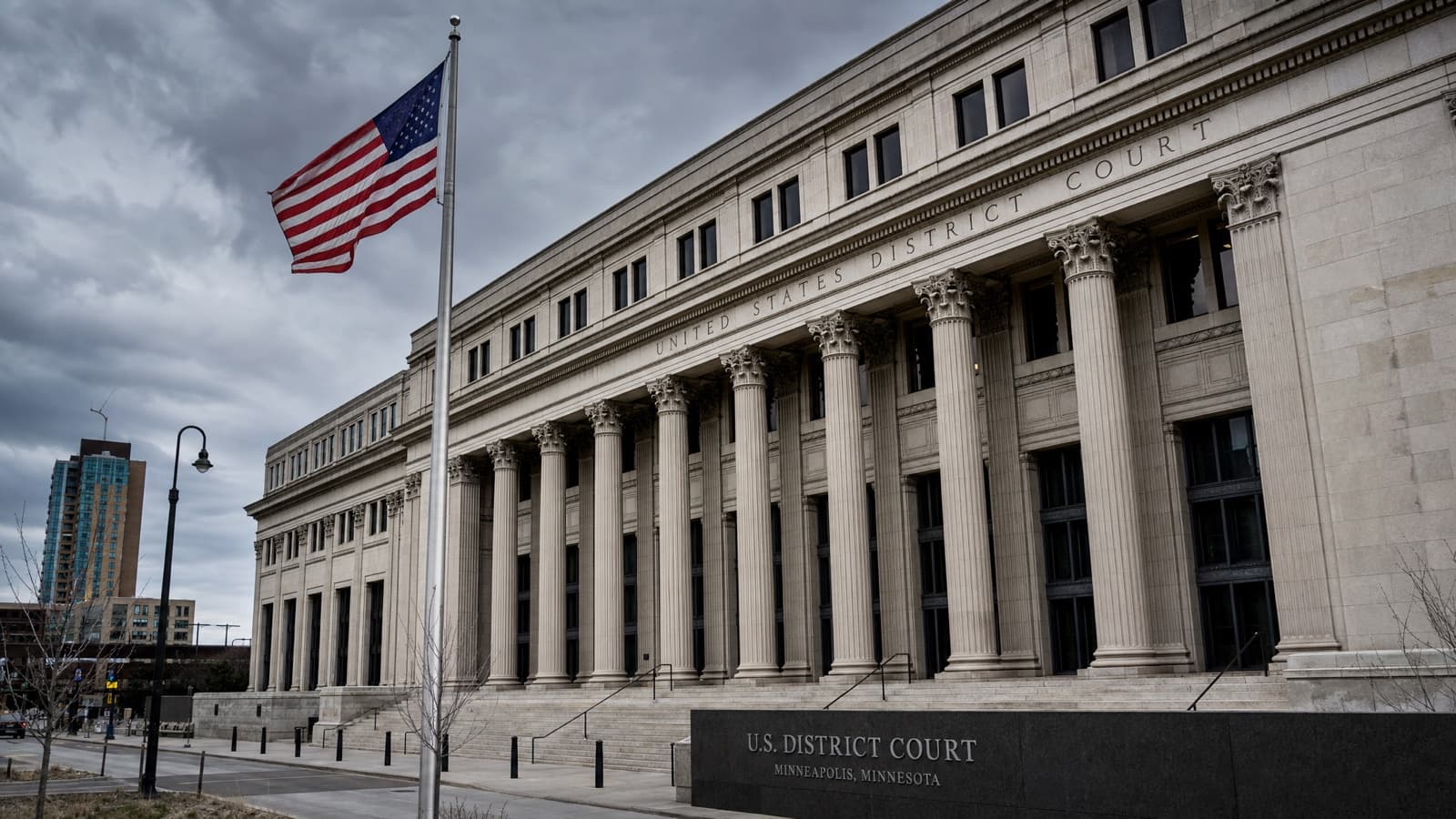
Four days before Minnesota's felony ban on prediction markets was set to take effect, a federal judge stopped it cold.
On July 27, 2026, U.S. District Judge Katherine Menendez granted a preliminary injunction preventing Minnesota from enforcing SF 3432 against Kalshi and Polymarket US — two platforms regulated by the federal Commodity Futures Trading Commission (CFTC). The ruling came after the Justice Department, the CFTC, Kalshi, and QCX LLC (which operates as Polymarket US) filed suit challenging the law.
The decision is the fourth time in 2026 that a federal court has sided with prediction market platforms against a state-level ban. But it's the most consequential yet: this was the first state law in the country to directly criminalize prediction market operations, and the preliminary injunction is the first to freeze a criminal legislative ban on federal preemption grounds.
Here's what the ruling actually says, why the win is narrower than the headlines suggest, and what it means for the ongoing legal battle between federal regulators and state governments.
What Minnesota's Law Would Have Done
Minnesota SF 3432, signed by Governor Tim Walz on May 18, 2026, was the most aggressive state move against prediction markets in U.S. history. The statute made it a felony — punishable by up to five years in prison and a $10,000 fine — to create, operate, facilitate, or advertise a prediction market in the state, and to support such markets with data or payment services.
Unlike other states that have applied existing gambling laws to prediction markets, Minnesota embedded its ban directly in a public safety bill, treating the platforms as an illegal gambling product and a public health risk.
The law targeted companies, not users: Minnesota residents could still access prediction markets under the statute, but platforms would have faced criminal liability for operating there. It was set to take effect August 1.
"Gambling has always been a public health and a public safety issue since states have been regulating it, and that has always been an uncontested fact," Minnesota state Rep. Emily Greenman told NBC News.
What the Court Decided
Judge Menendez's 44-page order found that Kalshi, Polymarket US, and the CFTC had "met their burden to show they are likely to succeed, at least in part" on their claim that federal law preempts Minnesota's ban. The order bars enforcement of the law against entities registered with the CFTC as designated contract markets (DCMs) while the underlying lawsuits proceed toward a final ruling.
The legal theory is rooted in the Commodity Exchange Act (CEA). Under that federal statute, the CFTC has exclusive jurisdiction over transactions involving "swaps" traded on DCMs. Both Kalshi and QCX LLC are registered with the CFTC as DCMs.
Menendez found that "Minnesota's prediction market statute is likely at least partially preempted by the CEA because the CFTC has been given exclusive jurisdiction over transactions involving swaps traded on DCMs."
As The Hill reported, the judge wrote: "Specifically, it appears that whether the Minnesota statute is expressly preempted turns on whether the state law attempts to regulate trades in event contracts that qualify as 'swaps' within the meaning of the CEA."
The court also found that Kalshi and Polymarket US would suffer irreparable harm if the law took effect — a required element for a preliminary injunction. The order is effective until the court reaches a final decision on the merits.
"A preliminary injunction prohibiting Defendants from enforcing Minnesota's prediction market statute strikes the right balance of harms while preserving the status quo," Menendez wrote.
Live market price — will a federal law banning sports prediction markets pass in 2026?
Live market price — will a federal law banning sports prediction markets pass in 2026?
The Central Legal Question: What Makes an Event Contract a "Swap"?
The most important nuance in the ruling: not every prediction market contract is automatically protected.
Menendez found that prediction market contracts qualify as swaps under the CEA when they "concern the occurrence of events with clear potential economic, financial, or commercial consequences." Her order identified Senate race contracts, World Cup winner markets, and contracts tied to the reopening of the Strait of Hormuz as examples that fit this definition.
But contracts tied to pop culture occupy murkier territory. The judge specifically mentioned predictions about who might win the TV show "Love Island" as an example of a contract that may not meet the federal swap definition — and thus may not be shielded from state law.
Menendez wrote: "The Minnesota statute may not be preempted in all its applications. But the Court finds the state law is likely preempted in many respects. Therefore, temporarily enjoining enforcement of the statute maintains the status quo while enabling further development on this issue and others."
As Courthouse News reported, the judge warned that if some contracts don't fit the CEA's swap definition, "any permanent injunctive relief may be much narrower."
This contract-by-contract analysis — not just platform registration status — is the core of the legal fight going forward.
Why This Win Is Narrower Than the Headlines Suggest
The preliminary injunction is a real legal win, but it is explicitly not a final judgment.
It's temporary. Menendez described the ruling as a preliminary assessment designed to "preserve the existing position while the cases proceed." The court has not decided that Minnesota's law is unconstitutional — only that the plaintiffs are likely to succeed enough to justify a pause.
The protection is contract-by-contract. Registration with the CFTC as a DCM does not automatically shield every event contract. The judge rejected the argument that platform registration alone resolves every contract's legal status. Contracts that don't qualify as swaps — those without clear economic or financial consequences — could potentially remain subject to state law even after a final ruling.
First Amendment arguments weren't addressed. Polymarket argued that the ban violated its First Amendment right to advertise. Menendez ruled she "did not need to decide the First Amendment questions at this stage," leaving those arguments for later proceedings.
Minnesota is continuing its defense. Attorney General Keith Ellison said the state "respectfully disagrees" with the decision and will continue defending the law. "The proper 'status quo' to maintain is one that allows predatory gambling apps to proliferate," Ellison said in a statement — signaling no concession on the merits.
The 4th Federal Win in 2026: A Pattern Is Forming
The Minnesota ruling is the fourth time this year that federal courts have sided with prediction market platforms against state-level restrictions:
- Arizona — A federal judge blocked criminal prosecution of Kalshi, finding the CFTC's jurisdiction preempts state gambling laws.
- New Jersey / Third Circuit — Federal appellate proceedings supported the CFTC's jurisdictional position.
- Nevada — Kalshi reached a settlement agreement, with geofencing of certain contracts while federal litigation proceeds.
- Minnesota — The Menendez ruling, the first to freeze a criminal legislative ban on preemption grounds.
CFTC Chairman Michael S. Selig had described Minnesota's law at passage as "the most aggressive move by a state to shut down CFTC-regulated markets and undermine the federal regulatory regime set up by Congress more than 50 years ago."
The pattern of federal wins does not mean the battle is settled. Massachusetts, Michigan, and Washington have separate proceedings restricting parts of Kalshi's activity. And the courts have yet to issue a definitive ruling on which specific prediction market contracts qualify as swaps — the question that will determine how broad any permanent protection actually is.
Minnesota's Response and the National Battle
Ellison's "respectfully disagree" response reflects a genuine policy disagreement that has driven multiple state bans. States argue that prediction markets function as de facto gambling platforms accessible without the consumer protections that licensed sportsbooks provide — namely age verification, self-exclusion programs, and limits on predatory advertising.
Minnesota's ban gained particular political momentum after a controversy in which Kalshi suspended a Minnesota political candidate for betting on his own race — an incident that lawmakers cited in pushing the public safety framing.
Other states are watching. Rhode Island, New Jersey, and California are pursuing similar restrictions, and the Menendez ruling gives platforms a strong precedent to cite in those fights. But each state's law will face its own legal analysis, and the swap definition fight will play out differently depending on the specific contracts and statutes involved.
What the CFTC Rulemaking Adds
A parallel development compounds the uncertainty. The CFTC's June 2026 Notice of Proposed Rulemaking (NPRM) proposed creating a contract-by-contract review process for event contracts involving gaming, war, terrorism, and other categories. Its public comment period closed on July 27 — the same day as the Menendez ruling.
The NPRM received significant opposition, including from a coalition of eleven consumer organizations, former CFTC Chair Timothy Massad, and former Sen. Christopher Dodd. If the rule is finalized, it could directly affect which contracts qualify for federal protection — either by clarifying the swap definition or by creating a new category of CFTC-reviewed event contracts.
The interplay between the litigation and the rulemaking is the central uncertainty for the next six to twelve months: the courts are defining preemption based on existing CEA language while the CFTC is simultaneously proposing new rules that could shift those boundaries.
Frequently Asked Questions
Can I still use Kalshi and Polymarket in Minnesota? Yes. The preliminary injunction allows Kalshi and Polymarket US to continue operating in Minnesota while the lawsuits proceed. Minnesota's law never targeted users — only the platforms themselves.
Does this ruling make prediction markets legal in all states? No. The ruling is specific to Minnesota and applies only to CFTC-registered designated contract markets (Kalshi and Polymarket US). Massachusetts, Michigan, Nevada, Washington, and other states have separate legal proceedings that are unaffected by the Menendez ruling.
What is a "swap" and why does it matter? A swap is a type of financial contract regulated by the CFTC under the Commodity Exchange Act. When prediction market contracts qualify as swaps — because they involve events with economic or financial consequences — they fall under exclusive federal jurisdiction, which states cannot override. The central question this litigation will resolve is which specific prediction market contracts meet that legal definition.
Could Minnesota's ban still be enforced? The current preliminary injunction prevents enforcement against Kalshi and Polymarket US. But it is a temporary ruling that can be modified or narrowed as the case proceeds. A final ruling on the merits — which will take months or longer — could look different from the preliminary one.
What happens to contracts that don't qualify as swaps? Judge Menendez explicitly left open the possibility that some contracts — particularly those tied to entertainment or sports without clear economic consequences — may not qualify as swaps under the CEA. If that's the case, those contracts would not be protected by federal preemption and could potentially be subject to state law even after a final ruling.
What This Means for Prediction Market Users
The Menendez ruling provides the strongest legal foundation yet for the CFTC's jurisdictional argument. For traders using Kalshi and Polymarket US, the practical impact is immediate: both platforms remain fully accessible in Minnesota, and neither faces enforcement risk while the cases proceed.
The longer-term picture is more complex. The preliminary injunction validated the preemption theory for contracts with clear economic consequences — Senate races, commodity-adjacent event markets, geopolitical outcomes. It left unresolved whether sports and entertainment prediction contracts receive the same protection. That question will shape how the final ruling reads, and ultimately how the national regulatory map looks.
Track prediction market pricing and the evolving regulatory landscape at PredictionMarkets.US.
Sources & Verification
- Federal judge blocks Minnesota's prediction market ban: NBC News, July 27, 2026 — court ruling quotes, AG Ellison statement, Minnesota Rep. Greenman quote, broader state context
- Minnesota prediction market ban paused by federal judge: The Hill, July 28, 2026 — judge's swap definition analysis, "likely to succeed" quote, AG Ellison response
- Judge blocks Minnesota ban on prediction markets: Courthouse News, July 27, 2026 — contract scope analysis, "much narrower" quote, contract submission requirements
- Minnesota Judge Blocks First State Ban on Prediction Markets: The New York Times, July 27, 2026 — irreparable harm finding, broader regulatory context, platform popularity
- Prediction Markets Saved From Minnesota Ban by Last-Minute Ruling: Gizmodo, July 28, 2026 — CFTC Chairman Michael S. Selig statement on the Minnesota law