
Michigan Issues Preliminary Injunction Against Kalshi: $500,000 Daily Fine for Sports Contract Violations
Michigan's formal preliminary injunction against Kalshi raises daily fines to $500,000 and requires MGCB-licensed geolocation compliance. Here's what it means.
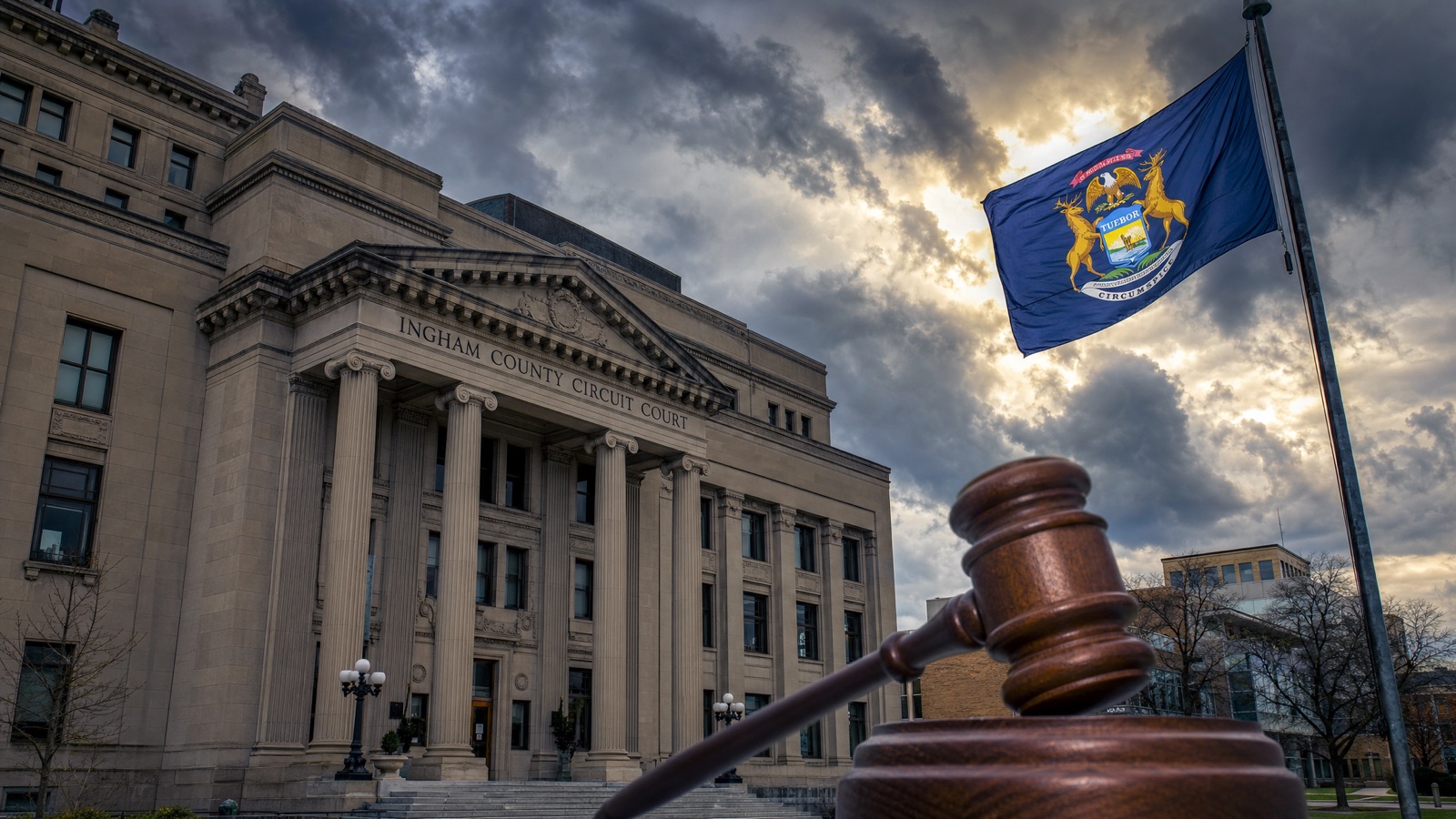
Michigan Attorney General Dana Nessel has secured a formal preliminary injunction against KalshiEx, LLC, converting a June temporary restraining order into a standing court block that will remain in effect until the underlying lawsuit reaches a final verdict. Judge Rosemarie E. Aquilina of the Ingham County Circuit Court signed the order on September 1, 2026. Violations now carry a fine of $500,000 per day — more than four times the $120,000 daily penalty attached to the earlier temporary order.
The ruling is the latest escalation in a national legal fight over whether prediction markets offering sports-related contracts are operating as federally regulated derivatives exchanges or as unlicensed sports-betting operations under state law. For Michigan residents, it means one thing immediately: sports event contracts remain inaccessible on Kalshi, and the financial stakes of any compliance failure just got substantially higher.
What the Preliminary Injunction Requires
The September 1 order goes beyond a simple "stop taking bets" directive. Judge Aquilina's preliminary injunction bars KalshiEx from:
- Offering, listing, matching, executing, clearing, settling, or facilitating any contract that constitutes internet sports betting under Michigan law to any person located in the state
- Advertising, marketing, or soliciting sports-related contracts in Michigan through any channel — including mobile apps, push notifications, influencer deals, affiliate programs, or paid placements
- Accepting deposits from Michigan residents
- Creating or funding accounts for users located within Michigan's borders
- Facilitating any product "functionally similar" to internet sports betting, a clause that captures parlays, moneyline markets, over-under contracts, in-game betting, and proposition bets
The order also has an unusual technical component. Kalshi must use a third-party geolocation provider that holds active licensing from the Michigan Gaming Control Board (MGCB) and that meets the regulator's specific geofencing specifications. This is a stricter technical standard than most other state orders have imposed. It is not enough for Kalshi to implement generic geofencing — the provider itself must be MGCB-certified.
Compliance is ongoing, not a one-time act. Every day the court finds Kalshi has failed to meet the geolocation requirement is a separate $500,000 violation. The injunction remains active until Judge Aquilina issues a final order in the case.
There is one carve-out in the order that reflects the complexity of the modern prediction-market ecosystem. Kalshi will not be held responsible for a futures commission merchant's (FCM) customers when those users' location data is held solely by the intermediary and outside Kalshi's control. This matters because Kalshi's infrastructure powers third-party platforms including Robinhood, Coinbase, and others that serve their own user bases. The order acknowledges the multi-layer distribution structure without fully resolving who bears responsibility at each layer.
How the Case Got Here
Michigan Attorney General Nessel filed suit against Kalshi in March 2026, alleging the company violated Michigan's Lawful Sports Betting Act (LSBA) by allowing residents to speculate on sports outcomes through event contracts without obtaining a license from the Michigan Gaming Control Board.
Nessel's theory is straightforward: regardless of how Kalshi classifies its products — as federally regulated event contracts traded on a CFTC-designated contract market — the end result is Michigan residents placing wagers on sporting outcomes, which is something Michigan regulates and licenses. The MGCB, not the CFTC, controls who can offer sports wagering in Michigan.
Kalshi's response has been equally direct: the Commodity Exchange Act grants the CFTC exclusive jurisdiction over event contracts traded on registered exchanges. State gambling law simply does not apply to a federally chartered derivatives market.
In June, Judge Aquilina sided with Michigan enough to issue a temporary restraining order, barring Kalshi from offering or promoting sports contracts in the state while the case proceeded. The original TRO carried a $120,000 daily fine for violations.
Kalshi attempted to remove the case from Ingham County Circuit Court to the U.S. District Court for the Western District of Michigan, a move that would have placed the dispute in front of a federal judge more likely to be receptive to the federal preemption argument. That effort failed. The federal court granted the state's motion to remand the case back to Ingham County, returning it to Judge Aquilina.
With the case back in state court and the underlying litigation continuing, Aquilina converted the temporary order to a formal preliminary injunction — the longer-term procedural posture that will hold until a final ruling.
What Kalshi Is Saying
The company has not gone silent. In letters sent to both the Michigan and Washington state attorneys general around September 2, Kalshi attorney Porter raised what the company frames as a selective-enforcement problem.
"To be clear, it remains Kalshi's position that event contracts traded on federally-regulated designated contract markets are subject to the exclusive jurisdiction of the Commodity Futures Trading Commission. But we recognize that position is contested, and appreciate that Michigan, unlike states such as Nevada and Washington, is not seeking to favor some industry participants at the expense of others," Porter wrote, according to Michigan Advance reporting.
Porter went further: "Kalshi disputes that harm, but recognizes that, if it exists, it is inflicted equally by other market participants that presently are allowed to operate in Michigan. As such, Kalshi must reserve its right to move for dissolution of the Court's forthcoming preliminary injunction order in the event Michigan does not seek to address the purported harms inflicted by Kalshi's competitors."
The argument is a version of equal protection: if the harm Nessel alleges from unlicensed sports betting exists, other platforms offering similar contracts in Michigan are inflicting the same harm, and the state's decision to pursue only Kalshi is an impermissible targeting. It is a legal argument that may surface more prominently as the litigation moves toward final judgment.
Attorney General Nessel was not sympathetic. Her office's statement framed the outcome in terms of consumer protection and state authority.
"Kalshi long attempted to pass itself off as a legitimate gaming operation in our state, and I am relieved that this order further protects Michigan residents from its predatory, unlicensed practices," Nessel said in the September 2 press release.
Judge Aquilina's order used notably pointed language. Her written ruling called Kalshi "a sports betting operation masquerading as an investment opportunity" — language that signals how the court views the substance of the product, regardless of how it is labeled under federal commodities law.
The Broader Legal Battleground
Michigan's preliminary injunction lands at a moment when the federal-versus-state jurisdiction question is reaching its most contested phase yet.
At least five states now have active enforcement actions or injunctions against Kalshi's sports contracts: Michigan, Washington, Nevada, New York, and Connecticut. The CFTC has counter-sued several states — including Arizona, Connecticut, and Wisconsin — arguing that federal law preempts their gambling regulations. That counter-litigation has produced conflicting outcomes across circuits.
The sharpest divergence is between the Third and Ninth Federal Circuits. In April 2026, the Third Circuit ruled 2-1 in KalshiEX LLC v. Flaherty that the CFTC has exclusive jurisdiction over Kalshi's sports contracts under the Commodity Exchange Act, upholding a preliminary injunction that allowed Kalshi to continue operating in New Jersey pending final resolution. That was a clear win for Kalshi's federal preemption argument.
Then, in late August 2026, the Ninth Circuit reached the opposite conclusion. In a ruling covering Washington state and related challenges, the Ninth Circuit held that state authority to regulate gambling survives the CFTC's jurisdiction over event contracts — meaning states can apply their gaming laws to prediction markets even when those platforms operate under federal registration.
Two federal appeals courts. Same legal question. Diametrically opposed answers. That is the definition of a circuit split, and it is the procedural condition that makes Supreme Court review most likely.
The SCOTUS Question
One day after the Michigan preliminary injunction was signed, New Jersey formally petitioned the U.S. Supreme Court to take up Flaherty v. KalshiEx. New Jersey Attorney General Jennifer Davenport and Division of Gaming Enforcement head Mary Jo Flaherty filed the cert petition on September 2, directly challenging the Third Circuit's April ruling.
If the Supreme Court grants certiorari, oral arguments could be scheduled as early as fall 2026, with a decision expected by next summer. A SCOTUS ruling would settle the preemption question nationally — either confirming the CFTC's exclusive authority or affirming that states retain the right to regulate the products offered by federally registered exchanges.
Until that happens, every state-level injunction, including Michigan's, operates as a preview of the substantive legal arguments that will eventually play out at the highest level. Michigan's case adds a data point: a third preliminary injunction in state court, secured by a state AG, applying state gambling law to a platform operating under federal registration.
What This Means for Michigan Prediction Market Users
For Michigan residents, the immediate picture is unchanged from what has been in place since the June TRO. Sports event contracts on Kalshi are not accessible in Michigan. The platform's non-sports markets — covering politics, economics, finance, and other categories — remain available to Michigan users and are unaffected by the injunction.
The formal PI changes a few things, however. The financial pressure on Kalshi to maintain compliance is now materially higher. At $500,000 per day, a two-week compliance failure would cost $7 million. The MGCB-licensing requirement for the geolocation provider adds a state-specific technical certification hurdle that other state injunctions have not uniformly imposed.
Prediction market users in Michigan who want access to sports contracts currently have limited regulated alternatives. PredictIt operates under a CFTC no-action letter, and its focus has historically been on political markets. Interactive Brokers' ForecastEx operates as a separate CFTC-registered exchange with its own sports market offerings, though availability and liquidity differ from Kalshi's platform.
The broader landscape for Michigan sports fans interested in prediction markets — a federally regulated format distinct from traditional sports betting — remains contingent on how the SCOTUS question resolves. If the Supreme Court affirms federal preemption, state injunctions like Michigan's would likely be dissolved. If it sides with state authority, Michigan's block becomes permanent until the legislature and MGCB create a licensing pathway for prediction market operators.
Frequently Asked Questions
What is a preliminary injunction, and how is it different from a temporary restraining order? A temporary restraining order (TRO) is a short-term emergency measure granted quickly by a court to preserve the status quo while a lawsuit is pending. A preliminary injunction is a longer-term order that requires a fuller showing — the court must find, among other factors, that the party seeking the injunction is likely to succeed on the merits of the underlying case and would suffer irreparable harm without the block. Michigan's PI will remain in place through the remainder of the litigation, potentially through a trial or final ruling.
Does the injunction affect non-sports markets on Kalshi? No. The injunction is specifically scoped to sports event contracts and products functionally similar to internet sports betting under Michigan's Lawful Sports Betting Act. Kalshi's political, economic, financial, and other non-sports markets are unaffected by the order and remain accessible to Michigan users.
Can Kalshi appeal the preliminary injunction? Yes. Kalshi can seek an interlocutory appeal of the PI ruling or challenge it through other procedural mechanisms. However, Kalshi's stated strategy has been to push the federal preemption argument — and to argue at the federal appellate level that state jurisdiction doesn't apply at all. The New Jersey Supreme Court cert petition, if granted, could also create a procedural path to a nationally dispositive ruling that would affect Michigan's injunction.
Why $500,000 per day? Why is that different from the earlier $120,000? TRO fines are typically set at a level sufficient to deter violations while the court considers the preliminary injunction. Once a PI is issued — reflecting a fuller judicial finding that the party seeking relief is likely to prevail — courts often increase the penalty to reflect the greater evidentiary weight behind the order. The jump from $120,000 to $500,000 signals the court's view that the legal basis for the block is now stronger.
What happens if Kalshi wins at the Supreme Court? A Supreme Court ruling affirming federal preemption under the Commodity Exchange Act would likely void state-level injunctions against CFTC-registered prediction markets, including Michigan's. States would still retain authority over unlicensed operators, but platforms operating under CFTC registration would be shielded from state gaming regulation for federally regulated event contracts.
Conclusion
Michigan's formal preliminary injunction is the most financially consequential state court order yet issued against Kalshi, raising the daily compliance penalty more than fourfold while adding a technically specific MGCB-licensing requirement for the geolocation provider. It also adds legal weight to the state-authority side of the federal preemption debate — weight that may matter as the Supreme Court weighs whether to take up the case New Jersey filed the following day.
For Michigan residents, sports event contracts remain off the table on Kalshi until the courts settle the jurisdictional question. For the prediction-market industry, the Michigan ruling is a reminder that state-level enforcement is accelerating in parallel with the federal appellate process — and that SCOTUS review, if granted, cannot arrive quickly enough to prevent significant operational disruption in the meantime.
Sources & Verification
- Michigan preliminary injunction issued September 1, 2026; announced September 2, 2026: AG Nessel Secures Second Order Halting Unlawful Kalshi Sports Wagers in Michigan — michigan.gov — verified September 3, 2026
- $500,000/day fine; MGCB-licensed geolocation provider requirement; injunction scope: Michigan blocks Kalshi from offering online sports bets — WILX/News10 — verified September 2-3, 2026
- Kalshi attorney Porter quotes; selective enforcement argument: Nessel wins injunction against Kalshi as prediction market says Michigan lacks regulatory authority — Michigan Advance — verified September 3, 2026
- Judge Aquilina's "masquerading" language; Nessel press statement quotes: Michigan judge blocks Kalshi from offering sports contracts in state — Spectrum News Michigan — verified September 2, 2026
- TRO-to-PI conversion; $120,000 prior daily fine; federal removal attempt: Attorney general halts Kalshi from offering online sports betting in Michigan — WNEM/CBS5 — verified September 2, 2026
- Michigan Gaming Control Board (MGCB) licensing authority: Michigan Gaming Control Board — michigan.gov/mgcb — Tier 1 regulatory authority
- Third Circuit ruling (April 2026, pro-Kalshi); Ninth Circuit ruling (August 2026, pro-state); NJ SCOTUS cert petition (September 2, 2026): Prior published reporting verified by this desk, September 2026