
Michigan Court Orders Kalshi to Block Sports Markets: What the $120,000-Per-Day TRO Means
A Michigan judge ordered Kalshi to block all sports event contracts for Michigan users through July 13, with a $120,000 daily fine for non-compliance. Here is what the TRO requires and what happens next.
Updated: July 1, 2026
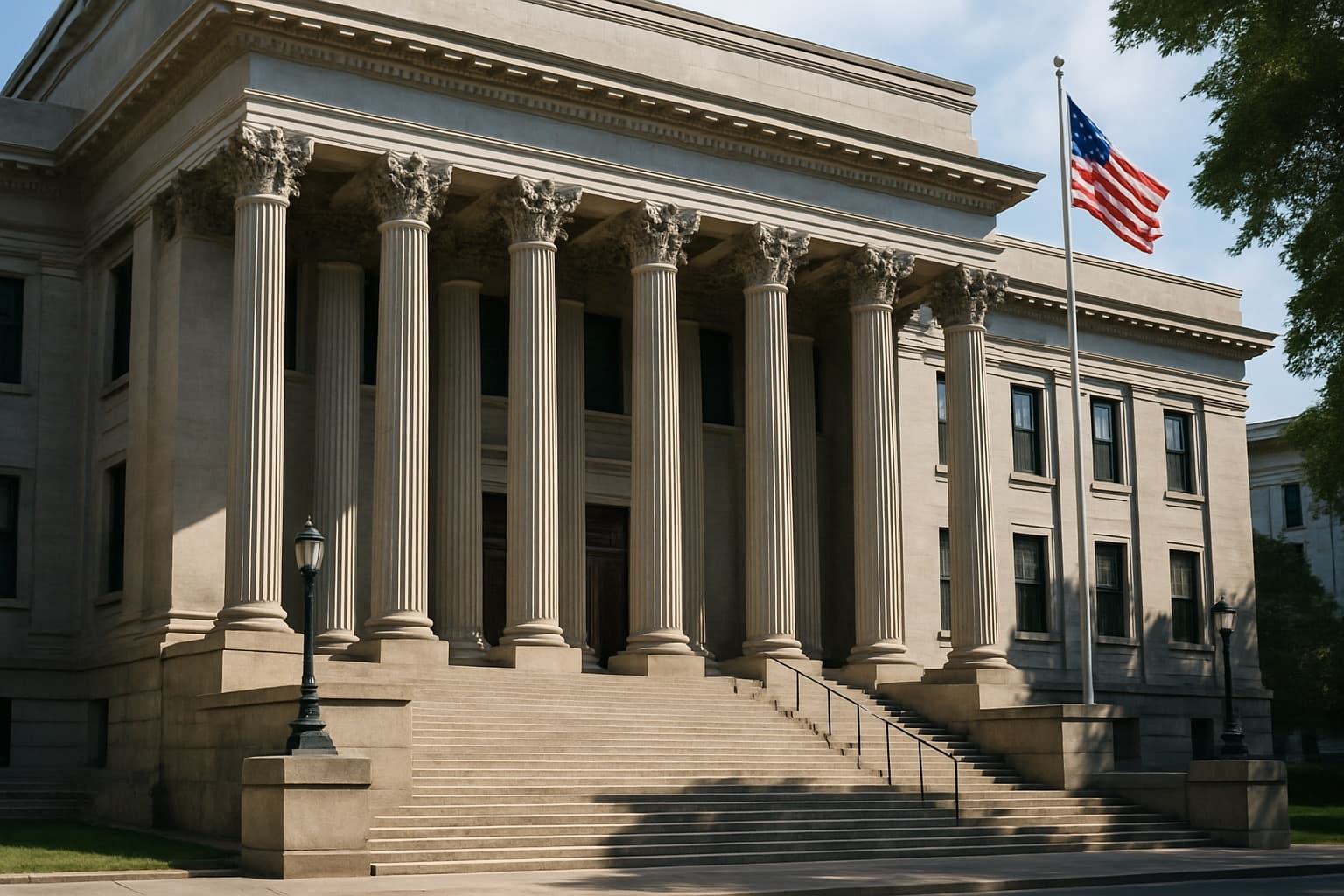
A Michigan state judge has ordered prediction market platform Kalshi to immediately stop allowing Michigan residents to trade sports event contracts — and threatened the company with a $120,000 fine for each day it fails to comply. The ruling, issued June 29 by Ingham County Circuit Court Judge Rosemarie Aquilina, marks an escalation in the ongoing clash between federally regulated prediction markets and state gaming regulators.
Kalshi says it will comply with geofencing requirements while fighting the order in court. Here's what happened, what the order requires, and what comes next.
What the Court Order Says
Judge Aquilina granted a temporary restraining order (TRO) at the request of Michigan Attorney General Dana Nessel on June 29, 2026. The four-page ruling prohibits Kalshi from:
- Offering, listing, matching, executing, or settling any sports event contract to anyone located in Michigan
- Advertising its sports betting products to Michigan residents
- Accepting deposits for online sports betting contracts from Michigan users
- Operating parlays, pools, and other combination products to Michigan users
The order stays in effect for 14 days, expiring on Monday, July 13, 2026. At that point, Attorney General Nessel can seek a longer preliminary injunction to keep the ban in place while the underlying lawsuit proceeds.
Failure to comply with the geolocation blocking requirements carries a $120,000 fine per day.
"Michigan and its most vulnerable citizens are suffering and will continue to suffer immediate and irreparable harm absent relief from being exploited by Kalshi's sports betting operation masquerading as an investment opportunity," Judge Aquilina wrote in her ruling.
Why Judge Aquilina Granted the Order
To issue a TRO, a court must find that the moving party — here, the Michigan Attorney General — faces irreparable harm if relief isn't granted immediately. Aquilina found three reasons Michigan qualified:
1. Age requirements. Michigan law requires sports bettors to be at least 21 years old. Kalshi allows users as young as 18 to place sports event contracts. The judge wrote that allowing Kalshi to continue "could cause irreparable harm on Michigan's youth" that would be "profound."
2. Competitive fairness. Kalshi operates without a Michigan Gaming Control Board license, which the judge said gives the company "a massive and unfair advantage over entities that comply with Michigan's regulatory structure" — meaning licensed sportsbooks that follow state rules and pay gaming taxes.
3. Tribal gaming revenue. The court found Kalshi's unlicensed operations deprive Michigan's tribal gaming operators of sports betting tax revenues — an explicit harm to sovereign tribal interests the judge found sufficient to support emergency relief.
Michigan Gaming Control Board Executive Director Henry Williams echoed the court's reasoning in a statement: "Whether Kalshi calls its product an 'event contract' or a 'trade,' it's a sports wager being offered to Michigan residents without a license and without the consumer protections our state requires."
How Michigan Got Here: A Timeline
March 2026 — Attorney General Dana Nessel filed a civil lawsuit against KalshiEx LLC in Ingham County Circuit Court, alleging violations of Michigan's Lawful Sports Betting Act (LSBA). The complaint claims Kalshi's sports event contracts constitute unlicensed internet sports betting.
March–June 2026 — Kalshi attempted to move the case to federal court, arguing that federal jurisdiction — specifically, the Commodity Exchange Act and CFTC oversight — preempts any state gaming enforcement. The case landed in the U.S. District Court for the Western District of Michigan.
June 25, 2026 — Federal Judge Paul Maloney granted Michigan's motion to remand the case back to state court. Judge Maloney found that the lawsuit cites violations of Michigan law, and Kalshi would need to prove federal law applied — a threshold Kalshi did not meet to his satisfaction. He did not grant Michigan's request for costs and fees.
June 29, 2026 — With the case back in state court, Judge Aquilina issued the 14-day TRO, effective immediately.
The remand to state court was the critical procedural development: it allowed Aquilina to act with full authority. As long as the case remained in federal court, the state could not issue its own emergency order.
What Kalshi Must Do Now
Under the TRO, Kalshi is required to use a third-party geolocation services provider licensed by the Michigan Gaming Control Board to block Michigan-based users from accessing sports markets. If Kalshi uses a geolocation provider licensed in another state, Michigan must first determine whether that provider can comply with Michigan's specific regulations.
Kalshi has confirmed it is implementing geofencing measures to comply. According to Elisabeth Diana, Kalshi's Head of Communications:
"It's no surprise that we disagree with the state's decision and will fight it in court. Kalshi is subject to exclusive federal jurisdiction. We won't be bullied by interests that care more about protecting their monopolies than their consumers. In the meantime, we're implementing restrictions."
Michigan Becomes the Second State With a Court-Ordered Ban
The Michigan TRO is significant because it joins Nevada as one of only two states where a court has formally ordered Kalshi to stop offering sports event contracts.
Nevada's Gaming Control Board obtained a TRO in March 2026 after a federal court remanded a similar case to state court. In Massachusetts, a state court injunction was granted but is currently on hold while Kalshi pursues an appeal.
The contrast with New Jersey is instructive: on April 6, 2026, the U.S. Court of Appeals for the Third Circuit ruled 2-1 in favor of Kalshi, holding that federal law preempts New Jersey's gaming enforcement. That ruling has been the industry's strongest legal victory — but it applies only within the Third Circuit (New Jersey, Pennsylvania, Delaware, and the U.S. Virgin Islands). Michigan falls under the Sixth Circuit, where no equivalent ruling exists.
Specter-tracked data puts the broader picture in focus: Kalshi faces active legal challenges in more than 10 states and is now operating under geofencing restrictions in Michigan while defending parallel litigation across the country.
The Federal vs. State Jurisdictional Fight
At the center of this dispute is a question that courts across the country are still resolving: does the CFTC's exclusive jurisdiction under the Commodity Exchange Act preempt state gaming laws when applied to prediction markets?
Kalshi's position is straightforward: as a CFTC-designated contract market (DCM) and designated clearing organization (DCO), it operates under comprehensive federal regulation. The company argues this automatically preempts state gaming enforcement.
The CFTC agrees. Chairman Michael S. Selig has filed lawsuits against multiple states — including Arizona, Illinois, Connecticut, Wisconsin, New Mexico, and Kentucky — to establish that federal law controls. In a June 12, 2026 press release announcing the New Mexico lawsuit, Selig said:
"New Mexico is the latest state seeking to nullify black letter law and decades of judicial precedent by imposing state gaming laws on federally regulated derivatives exchanges subject to the CFTC's exclusive jurisdiction. The CFTC has the expertise and responsibility to protect its exclusive jurisdiction over commodity derivatives, and that's exactly what we'll continue to do."
Michigan is a notable absence from the CFTC's direct federal litigation campaign — the agency has not yet filed a parallel preemption suit against Michigan. The state is instead litigating purely on state law grounds, which is why the state court has been able to maintain jurisdiction.
What Happens July 13
July 13 is the expiration date of the 14-day TRO. If Michigan wants to maintain the Kalshi block beyond that date, the Attorney General must file a motion for a preliminary injunction — a longer-duration court order that requires a higher evidentiary showing than a TRO.
At the July 13 hearing, both sides will have the opportunity to present arguments and evidence. Kalshi's legal team is expected to challenge the TRO's findings and contest jurisdiction. Michigan will need to demonstrate a likelihood of success on the merits of its underlying LSBA claim.
The stakes of that hearing go beyond Michigan's borders: how a Sixth Circuit state handles the federal preemption question could influence other Midwestern state courts handling similar litigation. The Third Circuit has already ruled once; the Ninth Circuit heard oral arguments in April 2026 and has not yet ruled; the Sixth Circuit has not yet taken up the issue directly.
What This Means for Michigan Prediction Market Users
If you are located in Michigan:
- Sports event contracts on Kalshi are currently unavailable. Geofencing based on your physical location, not your account address, is in effect.
- Politics, economics, and other non-sports markets on Kalshi are not covered by the TRO, which is limited to internet sports betting as defined under MCL 432.403(s). Non-sports markets should remain accessible.
- Other platforms operating in Michigan — including Polymarket (US sports), FanDuel Predicts, and DraftKings Predictions — have their own separate legal situations. This TRO applies only to Kalshi.
- The July 13 hearing will determine whether the ban continues. Significant legal arguments are expected on both sides.
Sources & Verification
- Michigan Attorney General — (Official Press Release): AG Nessel Secures Order Temporarily Halting Unlawful Kalshi Michigan Operations, June 29, 2026 — michigan.gov
- Reuters — : "Michigan judge blocks Kalshi from allowing residents to place sports bets," June 29, 2026 (reporting by Nate Raymond, Boston bureau) — via reuters.com
- CBS News Detroit — : "Judge temporarily blocks Kalshi from allowing Michigan residents to place online sports bets," June 29, 2026 — cbsnews.com
- CFTC Press Release 9251-26 — : CFTC Sues New Mexico, June 12, 2026 (source of Selig quote on exclusive jurisdiction) — cftc.gov
- CFTC DCM Registry — : KalshiEx LLC Designated Contract Market registration — cftc.gov