
Michigan's Kalshi Showdown Hits a Turning Point Tomorrow. Here's What's at Stake.
A Michigan court's 14-day ban on Kalshi sports markets expires July 13. Judge Aquilina will decide whether to issue a longer preliminary injunction — here's what that means for Michigan users and the national regulation fight.
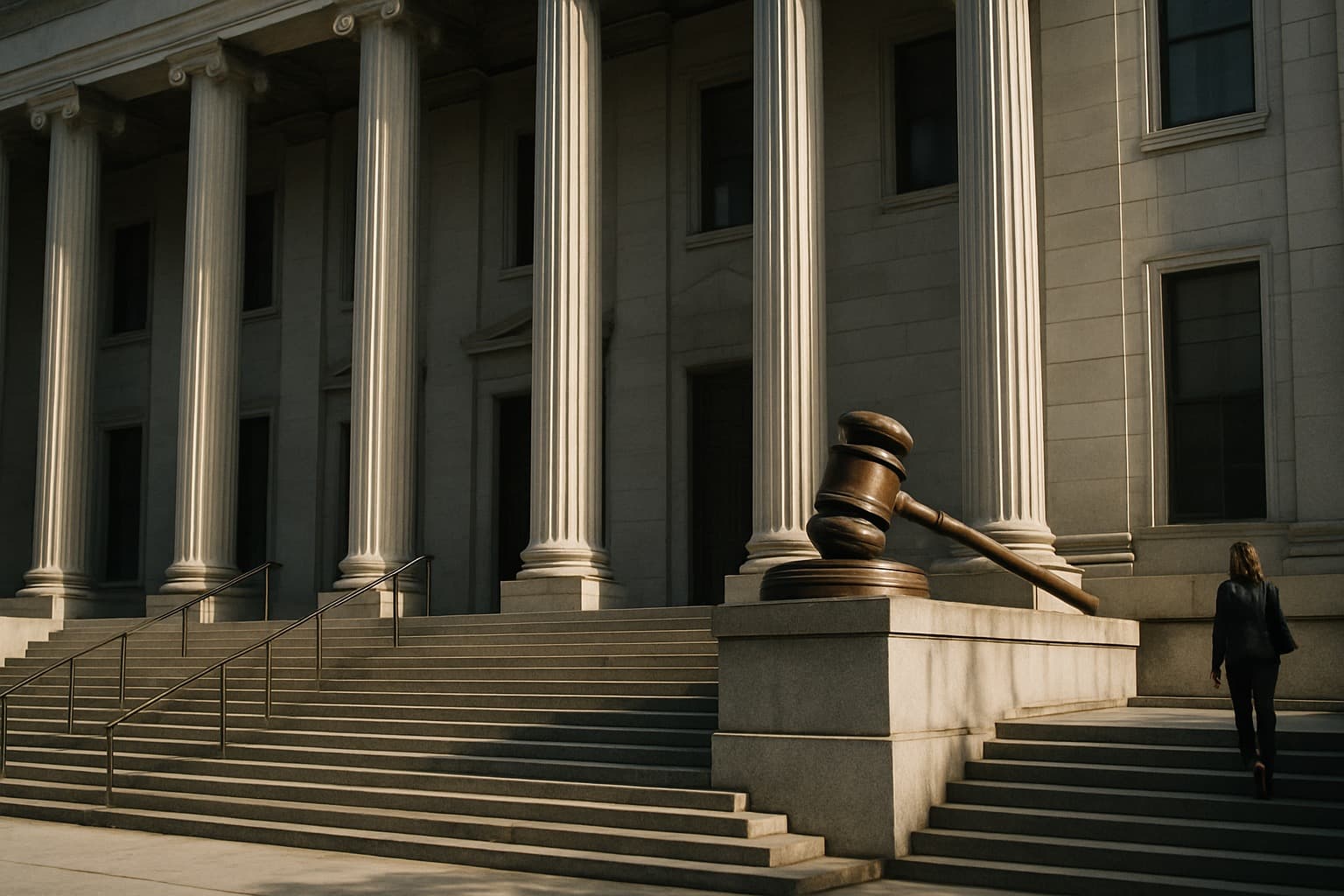
Michigan's Kalshi Showdown Hits a Turning Point Tomorrow. Here's What's at Stake.
A Michigan state court's 14-day emergency order banning Kalshi's sports markets expires on Monday. What happens next could shape prediction market access for millions of users — not just in Michigan.
Tomorrow, July 13, an Ingham County Circuit Court judge will decide whether to convert a temporary restraining order into a longer-lasting preliminary injunction against KalshiEX, LLC. If she does, Kalshi's sports contracts could be blocked in Michigan for months — or longer — while the underlying lawsuit grinds through the courts. If she doesn't, Kalshi gets a reprieve and a chance to reopen sports markets for Michigan's approximately 10 million residents.
This is the hearing to watch.
How Michigan Got Here
The legal fight started in March 2026, when Michigan Attorney General Dana Nessel filed suit against Kalshi in Ingham County Circuit Court, alleging the platform violated Michigan's Lawful Sports Betting Act (LSBA). Nessel's argument: that Kalshi's sports event contracts — binary bets on whether a team wins, a player scores, or a game goes over — are functionally identical to sports wagers, regardless of what Kalshi calls them.
Kalshi immediately tried to move the case to federal court, arguing that as a Designated Contract Market registered with the Commodity Futures Trading Commission (CFTC), it operates under exclusive federal jurisdiction and Michigan's gambling laws simply don't apply. That's a powerful argument — and it's the one that won in the Third Circuit Court of Appeals in April 2026.
But it didn't win in Michigan.
U.S. District Judge Paul L. Maloney rejected Kalshi's federal jurisdiction claim on June 25, remanding the case back to state court. In a 14-page ruling, Maloney found that Kalshi had not established a sufficient federal nexus to justify removal — the lawsuit was about Michigan law, not federal commodities law. Four days later, Ingham County Circuit Court Judge Rosemarie Aquilina signed a temporary restraining order.
"Michigan and its most vulnerable citizens are suffering and will continue to suffer immediate and irreparable harm absent relief from being exploited by Kalshi's sports betting operation masquerading as an investment opportunity," Aquilina wrote in her four-page order.
The $120,000 Question
The TRO carries teeth. Kalshi faces a $120,000-per-day fine for any day it fails to comply with the court's geofencing requirements. That number wasn't arbitrary: the court calculated it as a conservative estimate based on Kalshi's fee revenue attributable to Michigan users, derived from the platform's daily trading volume divided across states, with one percent extracted as Kalshi's estimated fee income from Michigan.
The message was deliberate. This isn't a symbolic slap. It's a compliance lever designed to make non-compliance economically irrational.
Kalshi announced it would comply while fighting the order. "It's no surprise that we disagree with the state's decision and will fight it in court," said Elisabeth Diana, Kalshi's Head of Communications. "Kalshi is subject to exclusive federal jurisdiction. We won't be bullied by interests that care more about protecting their monopolies than their consumers. In the meantime, we're implementing restrictions."
Michigan users began receiving in-app notices that they were "not currently allowed to open positions in Sports." Kalshi also sent emails clarifying that its other markets — crypto, weather, world news — remained available in Michigan.
What the Amended TRO Changed
Since the original June 29 order, the compliance picture has gotten more nuanced. The initial TRO required Kalshi to use a Michigan-licensed third-party geolocation service to enforce the ban. Kalshi filed an emergency motion arguing that address-based blocking — using verified account addresses rather than real-time geolocation — was a more practical compliance method.
On July 9, the court amended the TRO to give Kalshi time to evaluate that approach. As of this writing, Kalshi is blocking Michigan users through account address verification rather than active geolocation tracking. The court is still assessing whether that method satisfies the TRO's intent.
That question becomes part of Monday's agenda: is address-based blocking sufficient for a longer preliminary injunction, or must Kalshi implement real-time geolocation technology?
TRO vs. Preliminary Injunction: Why Monday Matters More
A TRO is an emergency measure. Courts grant them quickly when urgent harm is alleged — typically for no more than 14 days — without requiring full briefing or argument. The June 29 TRO was exactly that: fast, emergency relief while the court got its bearings.
A preliminary injunction is a different creature. To win one, Michigan must demonstrate:
- That it is likely to succeed on the merits of its underlying claim (that Kalshi is violating the Lawful Sports Betting Act)
- That it will suffer irreparable harm without the injunction
- That the balance of harms favors an injunction (Michigan's harm from unregulated sports betting outweighs Kalshi's harm from restricted operations)
- That the public interest supports granting the injunction
Preliminary injunctions can last months or even years — until a case reaches final judgment. If Michigan wins tomorrow, Kalshi's sports markets stay blocked in the state while the underlying lawsuit plays out. That could mean most of 2026 and potentially beyond.
Kalshi has indicated it intends to appeal to the Michigan Court of Appeals if the PI is granted.
The Bigger Jurisdiction Fight
Michigan isn't operating in a vacuum. At least 17 states have taken some form of legal action against Kalshi, Polymarket, or other prediction market platforms in 2026. The central question in every case is the same: does federal law under the Commodity Exchange Act preempt state gambling statutes when it comes to CFTC-registered event contracts?
Courts have split sharply on the answer. The Third Circuit Court of Appeals ruled on April 6, 2026 that federal preemption likely applies — a major win for Kalshi that applies to courts in New Jersey, Pennsylvania, Delaware, and the Virgin Islands. But U.S. District Judge Analisa Torres in New York ruled on July 8 that Kalshi's CFTC registration doesn't automatically exempt it from New York's gambling licensing requirements.
Michigan sits in the Sixth Circuit. That court has oral arguments scheduled for July 30 — the ruling that emerges will carry binding authority over federal district courts in Michigan, Ohio, Kentucky, and Tennessee. Whatever happens Monday in Ingham County Circuit Court, the federal appellate question will eventually shape the longer-term legal landscape.
The CFTC, under Chair Michael Selig, has filed lawsuits against nine states — Arizona, Connecticut, Illinois, New York, New Mexico, Minnesota, Rhode Island, Wisconsin, and Kentucky — asserting that federal law gives it exclusive authority over CFTC-registered event contracts. A 267-page proposed rulemaking published June 10 is in its public comment phase through July 27.
Michigan Gaming Control Board Executive Director Henry Williams was direct: "Kalshi is targeting Michigan's most vulnerable residents with sports betting dressed up as investing — and without intervention, the harm will keep getting worse."
Where Other Platforms Stand in Michigan
Michigan is fighting on multiple prediction market fronts simultaneously. QCX LLC — doing business as Polymarket US — was also denied a preliminary injunction in Michigan federal court by the same Judge Paul Maloney who remanded Kalshi's case to state court. Polymarket US is restricted to sports-only markets for U.S. users through QCX LLC's CFTC-registered entity; the global polymarket.com platform and its non-sports prediction markets are not accessible to U.S. users.
Robinhood, which routes prediction market activity through Kalshi's exchange infrastructure, has restricted Michigan users from sports event contracts while the court order is in effect.
The Michigan Gaming Control Board has also withdrawn from the National Council on Problem Gambling over that organization's partnership with Kalshi — a signal of the depth of the regulatory conflict.
Senate Democrats Push Back in Washington
While Michigan litigates in Lansing, a group of Senate Democrats is working to constrain the federal government's role in the same dispute at the national level. Senators Adam Schiff and Alex Padilla joined Richard Blumenthal, Jeff Merkley, and more than a dozen colleagues in sending a letter to the Senate Appropriations Subcommittee on Financial Services and General Government.
Their ask: include language in the fiscal year 2027 appropriations bill barring the CFTC from spending federal money to block states and tribes from enforcing their own gambling laws against prediction market platforms.
The senators argue that prediction markets have expanded far beyond their original purpose of hedging financial and agricultural risk — into sports, politics, foreign affairs, and entertainment betting — without meaningful congressional authorization to displace decades of state consumer protection law.
What Michigan Users Can Do Right Now
If you're a Michigan resident, here's the practical picture as of July 12, 2026:
Sports markets on Kalshi: Blocked via the Kalshi app and white-label partners including Robinhood and Coinbase that route through Kalshi's exchange. This covers all sports event contracts — NFL, NBA, MLB, World Cup, and any other athletic competition outcomes.
Non-sports markets on Kalshi: Crypto markets, weather contracts, macroeconomic event markets, and world news contracts remain fully available to Michigan residents. The TRO is specifically limited to sports event contracts.
Polymarket US (QCX LLC): U.S. sports markets are accessible through QCX LLC but face similar regulatory pressure in Michigan. The global polymarket.com platform's non-sports prediction markets are not accessible to U.S. users regardless of state.
What to watch on Monday: If Judge Aquilina grants the preliminary injunction, sports markets remain blocked for an extended period — potentially through trial. If she denies or narrows it, Kalshi could move to restore Michigan sports access while the appeal proceeds.
PredictionMarkets.US will track the ruling as it becomes available.
FAQ
What is the difference between a temporary restraining order and a preliminary injunction? A TRO is an emergency measure, typically lasting no more than 14 days, granted quickly when a court finds urgent harm is likely. A preliminary injunction requires a full hearing with argument from both sides and can last until the case reaches a final judgment — months or years. Monday's hearing is about whether Michigan gets that longer order.
Can Kalshi users in Michigan still trade? Yes, partially. Non-sports markets — crypto, weather, macro events, world news — remain available. Only sports-related event contracts are subject to the current court order.
Why is the fine $120,000 per day? Judge Aquilina calculated it as a conservative estimate of Kalshi's daily fee revenue from Michigan users, making non-compliance economically irrational. It's a compliance enforcement mechanism, not a statutory penalty.
Does the Third Circuit's pro-Kalshi ruling apply to Michigan? No. The Third Circuit's April 6, 2026 ruling binds federal courts in New Jersey, Pennsylvania, Delaware, and the Virgin Islands. Michigan sits in the Sixth Circuit, which hears its own prediction market arguments on July 30. That ruling will be more directly relevant to Michigan's legal outcome.
If I'm a Michigan resident, should I close my Kalshi account? No immediate reason to. Non-sports markets remain open. If the preliminary injunction is denied, sports access would likely be restored. If it's granted, the sports block continues pending the lawsuit's outcome. Michigan is pursuing enforcement against the platform — not account holders.
Sources & Verification
- Michigan AG press release, June 29, 2026: AG Nessel Secures Order Temporarily Halting Unlawful Kalshi Michigan Operations — verified June 29, 2026
- Axios Detroit, July 6, 2026: Michigan judge temporarily bars Kalshi sports prediction markets — verified July 6, 2026
- CBS Detroit, June 29, 2026: Judge temporarily blocks Kalshi from allowing Michigan residents to place online sports bets — verified June 29, 2026
- Detroit News, June 29-30, 2026: Kalshi, prediction market platform, ordered to halt sports bets in Michigan — verified June 30, 2026
- Detroit Free Press, June 30, 2026: Judge blocks Kalshi prediction market from operating in Michigan — verified June 30, 2026
- Spectrum Local News, June 30, 2026: Michigan judge temporarily blocks Kalshi's sports event contracts — verified June 30, 2026
- Sports Betting Dime, June 29, 2026: Judge Orders Kalshi to Temporarily Halt Sports Event Contracts in Michigan — verified June 29, 2026
- SBC Americas, July 10, 2026: SBC Details Latest Shake Ups in US Prediction Market Space — verified July 10, 2026
- Sportsbook Review, July 8, 2026: Kalshi Starts Blocking Michigan Users After Judge Issues Temporary Ban — verified July 8, 2026