
Why Kalshi and Polymarket Skipped the 2026 Kentucky Derby
While prediction markets have beaten state regulators in court, one 48-year-old federal law—the Interstate Horseracing Act—kept them off the Kentucky Derby entirely. Here's why horse racing has a weapon no other sport does.
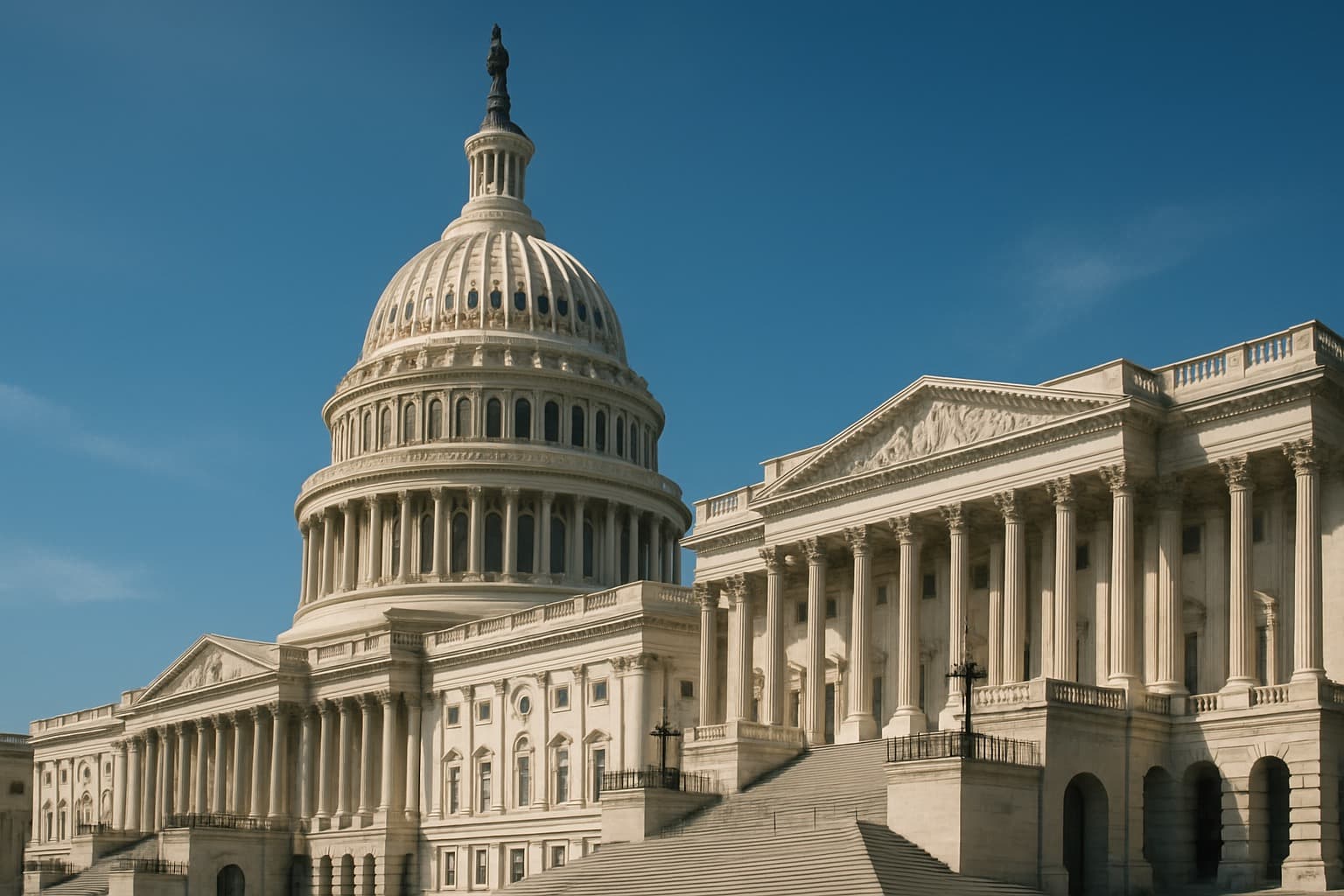
Today, over $200 million in legal wagers will flow through Churchill Downs on horse racing's biggest day. But none of it will go through Kalshi, Polymarket, or any other prediction market platform. While prediction markets have spent the past year fighting—and often winning—against state regulators who tried to block them, horse racing stopped them without a single lawsuit.
The reason comes down to a 48-year-old federal law that gives racetrack owners a weapon no professional sports league possesses.
What Happened: Polymarket Pulled Its Market, Kalshi Never Listed One
The 2026 Kentucky Derby is the 152nd running of America's most famous horse race. Prediction markets have been expanding aggressively into sports since 2025, offering event contracts on the NFL, NBA, NHL, and major international competitions. The Derby—a two-minute race that draws record wagering every year—looked like a natural fit.
It wasn't.
As of April 30, 2026, no Kentucky Derby market appeared on Kalshi's platform. A "2026 Kentucky Derby: Winner" market on Polymarket's global platform led to a broken link. Churchill Downs Senior Director of Communications Breck Thomas-Ross confirmed to The Courier Journal that CDI had asked Polymarket to take down its Derby market—and Polymarket complied. Kalshi, which began offering sports event contracts in early 2025, has not listed Kentucky Derby markets at any point.
"CDI has not contacted any other prediction market companies, as we are unaware of any other prediction market companies that were offering wagers on the Derby," Thomas-Ross told The Courier Journal.
Kalshi declined to comment. Polymarket did not respond to media inquiries.
The Federal Law Prediction Markets Can't Argue Their Way Around
The core of horse racing's legal protection is the Interstate Horseracing Act of 1978 (IHA), codified at 15 U.S.C. Chapter 57. Congress passed it to regulate interstate commerce in horse racing wagering and to protect the financial infrastructure of the sport—the tracks, horsemen, and state racing commissions that sustain it.
The IHA's consent framework is specific: an interstate off-track wager may only be accepted if the party taking the wager has obtained consent from three entities:
- The host racing association (the track itself—for the Derby, that's Churchill Downs)
- The host racing commission (the state racing authority where the race is held)
- The off-track racing commission (the authority in the state where the wager is being placed)
Additionally, the host racing association's consent is conditioned on having a written agreement with the applicable horsemen's group—the organization representing horse owners and trainers.
Churchill Downs CEO Bill Carstanjen has been explicit about what this means for prediction markets.
"Pari-mutuel wagering on horse racing is conducted under the Interstate Horseracing Act, which is a federal umbrella statute that essentially gives us a series of rights—call them intellectual property rights—in our content," Carstanjen told CNBC. "To take wagers across any forum, whether it be a sports wagering platform, another horse racing platform, or a prediction markets platform, you need our express consent. You can't just do it without that. We haven't agreed to provide our content to prediction markets."
Churchill Downs has provided those consents to certain traditional sports betting operators. It has not given them to prediction market platforms.
Why This Is Different From Every Other Prediction Market Legal Battle
Prediction market platforms have spent the past year arguing—successfully in several federal courts—that CFTC regulation of event contracts preempts state gaming law. The Third Circuit upheld that argument in April 2026. The Ninth Circuit heard arguments the same month. The basic theory: the Commodity Exchange Act gives the CFTC exclusive jurisdiction over swaps and event contracts, and state gambling regulators cannot impose their own rules on federally regulated financial products.
That argument works when the conflict is between federal CFTC authority and state gaming law.
It doesn't work when the conflict is between the CFTC's framework and a separate federal statute specifically designed to govern wagering on horse racing.
Platforms cannot argue that federal law (the CEA) preempts another federal law (the IHA). The IHA was enacted by Congress to govern horse racing wagering precisely because of horse racing's unique economic structure and its status as America's original regulated gambling activity. Arguing that CFTC authority supersedes a law that Congress explicitly created for this purpose would be a difficult legal claim—and prediction markets have apparently decided it isn't worth making.
The National Thoroughbred Racing Association formalized this argument in a letter to the CFTC earlier in 2026, arguing that event contracts based on horse racing outcomes "circumvent the Interstate Horseracing Act of 1978" and "fall squarely within" the CFTC's authority to prohibit contracts contrary to the public interest under the Commodity Exchange Act—while also noting they are "preempted by other federal laws," meaning the IHA itself.
The Economic Stakes: Why Churchill Downs Has Every Incentive to Hold the Line
The 2025 Kentucky Derby set a new all-time wagering record: $234.4 million bet on the race itself, $349 million across the full Derby Day card, and $473.9 million across Derby Week—all records, according to Churchill Downs Incorporated's official investor relations announcement.
Those are not numbers CDI is willing to see redirected to platforms over which it has no contractual relationship and receives no revenue. The IHA's consent framework was specifically designed to ensure that wagering revenue flows back to the tracks, horsemen, and purse accounts that sustain the sport.
Carstanjen made the company's position clear in an interview with CNBC: "You need to actually go to us, those who own the race tracks, to cut a deal. And from our perspective, that's not something we're interested in doing."
Tom Rooney, president and CEO of the National Thoroughbred Racing Association, indicated the industry's position is not a permanent wall—but the door is firmly closed right now.
"There is a door that could be opened," Rooney said in widely reported comments. "We don't have that yet."
What Prediction Markets Can and Can't Access
For users on Kalshi, the Derby absence is straightforward: Kalshi has not listed Kentucky Derby markets at any point in its history as a sports contract platform. The platform's sports event contracts have focused on leagues where it has official partnerships—the NHL, NFL, and others—or where the platforms have simply proceeded under CFTC authorization without seeking track-by-track consent.
For users of Polymarket's U.S. platform, the picture is different in an important structural way. Polymarket's U.S. operation, run through QCX LLC (a CFTC-designated contract market), currently operates as a sports-only platform focused on NFL, NBA, NHL, MLB, and major soccer competitions. It has not offered horse racing markets under its U.S. structure.
Polymarket's international platform—accessible to users outside the United States—has previously offered Kentucky Derby markets. In 2025, the global platform took in approximately $1.2 million in Derby-related trading volume. For the 2026 race, the global platform briefly listed a winner market before CDI's outreach prompted its removal.
U.S. users do not have access to global Polymarket (polymarket.com) for any markets through the QCX LLC regulated venue. That is a separate restriction unrelated to the IHA issue.
The Rest of the Triple Crown: Same Rules Apply
The prohibition on prediction market horse racing coverage doesn't end today. The same IHA consent framework covers all three legs of the Triple Crown:
- Preakness Stakes: May 16, 2026, at Laurel Park in Laurel, Maryland (temporarily relocated from Pimlico during renovations)
- Belmont Stakes: June 6, 2026, at Saratoga Race Course in Saratoga Springs, New York (temporarily relocated from Belmont Park during renovations)
Unless prediction market platforms reach consent agreements with the host tracks, horsemen's groups, and racing commissions for those races—which nothing in current reporting suggests is happening—neither the Preakness nor the Belmont will appear on Kalshi, Polymarket, or any other federally regulated prediction market platform.
Churchill Downs has also recently acquired rights to the Preakness Stakes, giving CDI control over two of the three Triple Crown races and strengthening its position in any future industry negotiation.
How This Fits Into the Broader Prediction Market Legal Landscape
Prediction markets have won their most significant legal battles by arguing they operate under federal commodity law, not state gambling law. That argument has held up in the Third Circuit (the New Jersey case), helped Kalshi maintain operations in most states despite ongoing litigation, and formed the basis for the CFTC's defense of the industry.
But those victories all share a common feature: they were arguments about federal supremacy over state authority. The horse racing situation presents a different kind of legal question—one where a specific federal statute predates and arguably overlaps with the CFTC's general authority over financial contracts.
The platforms' compliance with CDI's request—Polymarket removing its market, Kalshi never listing one—suggests they reached the same legal conclusion that most observers have: the cost and uncertainty of fighting the IHA isn't justified by the potential upside of horse racing contracts, at least not yet.
Prediction markets are simultaneously fighting more than a dozen state attorneys general, a 41-AG CFTC comment filing, ongoing federal circuit court appeals, and the beginning of a potential path to Supreme Court review. Horse racing is a front that, for now, they've decided not to open.
Could a Deal Ever Happen?
Rooney's "door that could be opened" comment points to the theoretical path forward: a revenue-sharing agreement between prediction market platforms and the horse racing industry that would satisfy the IHA's consent requirements while providing tracks, horsemen, and racing commissions with a share of wagering revenue.
Such a deal would require consent from all three statutory parties for each race—not just the host track, but also the relevant racing commissions. That makes a blanket industry agreement more complex than a single partnership deal (like the kind Kalshi has with the NHL).
Whether the economics work is another question. Prediction market platforms earn a small percentage on each transaction. Whether that margin leaves room for the kind of host fees horse racing currently receives from traditional simulcasting arrangements is uncertain.
For now, the Kentucky Derby runs without prediction market involvement. The 152nd running of the Run for the Roses will be decided on Churchill Downs' dirt track at approximately 6:57 p.m. ET. The platforms that have disrupted sports betting, challenged state regulators in federal court, and drawn billions in trading volume are watching from the outside.
FAQ
Q: Can I bet on the Kentucky Derby through Kalshi or Polymarket? No. Neither Kalshi nor Polymarket has listed 2026 Kentucky Derby markets. Kalshi has not offered Derby event contracts at any point. Polymarket briefly had a global platform market but removed it at Churchill Downs' request.
Q: Why are prediction markets allowed to offer NFL and NBA contracts but not horse racing? The NFL and NBA operate under state sports betting frameworks (or argue they operate under CFTC jurisdiction when challenged by states). Neither the NFL nor NBA has a federal statute specifically governing wagering on their events. The Interstate Horseracing Act of 1978 gives horse racing tracks explicit consent authority over any entity accepting wagers on their races—a right professional sports leagues do not have.
Q: Is the horse racing restriction a permanent legal barrier? Not necessarily. The IHA's consent mechanism means prediction markets could theoretically offer horse racing contracts if they obtain written consent from the host track, the host racing commission, and the off-track racing commission—with the track also needing a written agreement with the relevant horsemen's group. Churchill Downs has indicated it has no interest in granting that consent to prediction market platforms at this time. NTRA president Tom Rooney has said "a door could be opened" if the conditions are right.
Q: Does this affect US-based Polymarket users specifically? Polymarket's U.S. platform operates through QCX LLC (a CFTC-designated contract market) and currently offers sports-focused markets. It has not offered horse racing markets under its U.S. structure. The IHA issue applies to Polymarket's global operation, which previously offered Derby markets for non-U.S. users. Global Polymarket is not accessible to U.S. users through the QCX LLC regulated venue.
Q: What other horse races might prediction markets want to list someday? The Preakness Stakes (May 16, 2026) and Belmont Stakes (June 6, 2026) are the other two legs of the Triple Crown. The Kentucky Oaks, Breeders' Cup, and Travers Stakes are among the other marquee events the industry would theoretically want. All are subject to the same IHA consent framework.
The Bigger Picture
Horse racing stopped prediction markets not through lawsuits or lobbying against CFTC authority, but by holding a federal card no other sport possesses. The Interstate Horseracing Act wasn't written with prediction markets in mind—it predates them by decades—but its consent architecture has proven effective precisely because it operates at the federal level.
Every other battleground in the prediction market regulatory wars has involved state regulators trying to use state law against federally regulated products. This one is different. The track owners have federal law on their side—and for now, that's been enough.
Sources & Verification
- CDI CEO Bill Carstanjen quote ("intellectual property rights" / "need our express consent"): CNBC — Why you won't find Kentucky Derby bets on prediction platforms, May 1, 2026 — verified May 2, 2026
- CDI spokesperson Breck Thomas-Ross confirmed Polymarket removal / CDI contacted no other platforms: The Courier Journal — No Kentucky Derby 2026 betting available on Kalshi, Polymarket, May 1, 2026 — verified May 2, 2026
- IHA consent requirements (three parties): 15 U.S.C. Chapter 57 — Interstate Horseracing, uscode.house.gov — primary source
- IHA legislative history: S.1185, 95th Congress (1977-1978) — congress.gov — primary source
- 2025 Kentucky Derby wagering records ($234.4M race / $349M Derby Day / $473.9M Derby Week): Churchill Downs Incorporated investor relations press release — Sovereignty Wins 151st Running of the Kentucky Derby — official corporate release
- Preakness May 16 / Belmont June 6: NYRA — Belmont Stakes 2026 — official racing authority
- NTRA letter to CFTC on IHA/CEA preemption: Referenced in CNBC coverage; original filing in CFTC public comment system