
Kalshi Calls Wisconsin's Election Betting Law 'Voter Suppression' — and It Could Shape How Prediction Markets Handle the 2026 Midterms
Kalshi called Wisconsin's election betting law 'voter suppression' — and the fight is now reshaping how prediction markets operate in the 2026 midterms.
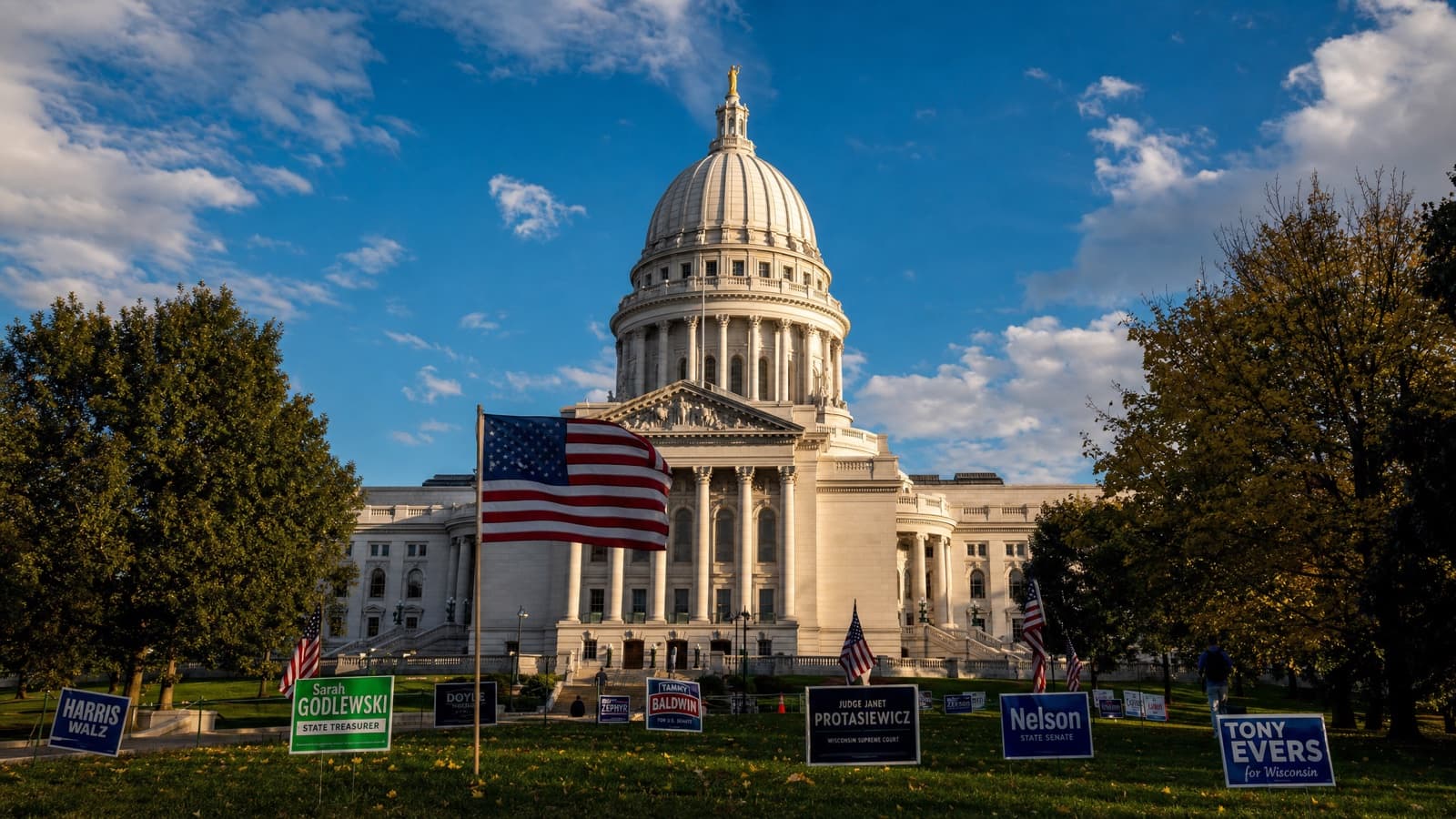
Ann Jacobs was sitting at her desk when her phone lit up. Twitter alerts — dozens of them — from employees, lawyers, and boosters of the prediction market company Kalshi. The source of the outrage? A routine advisory from the Wisconsin Elections Commission telling voters about a state law that has been on the books since 1849.
"My reaction was, boy howdy are they mad," Jacobs, a Wisconsin Elections Commission commissioner, told NPR.
What Jacobs didn't expect was the word Kalshi would use to characterize her agency's advisory: voter suppression.
The fight that erupted in late July has since become one of the most unexpected flashpoints in the ongoing battle between prediction markets and the states trying to regulate them — and it carries real stakes for anyone who wants to bet on the 2026 midterms.
What the Wisconsin Law Actually Says
The Wisconsin Elections Commission's advisory, issued ahead of the state's August 11 primary, was not announcing new policy. It was restating the basics of two longstanding Wisconsin statutes.
The first, Wisconsin Statute § 6.03(2), reads: "No person shall be allowed to vote in any election in which the person has made or become interested, directly or indirectly, in any bet or wager depending upon the result of the election."
The second, Wisconsin Statute § 12.13(1)(a), makes it a felony to intentionally vote in an election without being legally qualified to do so.
Together, the statutes mean that a Wisconsin voter who bets on the outcome of a race — on Kalshi or anywhere else — could be disqualified from voting in that same race, or even face criminal referral.
"We want voters to understand that they cannot legally make a bet on an election and cast a ballot in that same election," said Meagan Wolfe, the WEC's administrator. "We are not able to police someone placing a bet on these platforms, but it's important for voters to understand the consequences if they bet on an election outcome."
To Jacobs, the advisory was "simply responsible work by a government entity." The commission was spurred to act because prediction markets had grown mainstream enough that voters might not know about the restriction heading into a competitive primary season.
Kalshi's Response: 'This Is Insane'
Kalshi's reaction was swift and unequivocal.
Benjamin Freeman, a leader of Kalshi's politics team, posted publicly within hours of the WEC advisory: "THIS IS INSANE. Not only is the Commission's statement illegal and dishonest, it's active voter suppression!"
Robert J. DeNault, a Kalshi attorney, followed: "The Wisconsin Elections Commission threatening to prosecute Wisconsin voters and strip away their voting rights for engaging in legal trading activity is unconstitutional and illegal."
Kalshi's core argument runs like this: because betting on a race might motivate someone to vote who otherwise wouldn't have, a law that forces those people to choose between betting and voting functions as a suppression mechanism. The company says its election contracts are federally regulated financial instruments — not bets in any traditional sense — and that state laws like Wisconsin's cannot legally restrict them.
Kalshi spokeswoman Elisabeth Diana addressed the concern that poll workers or election officials might manipulate results to profit from wagers they had placed. "None of these people are allowed to trade, so these hypothetical traders, even after the fact, would be caught," she told NPR.
What Prediction Markets Actually Offer on Wisconsin
Kalshi is not talking abstractly about Wisconsin. The company launched a midterm election dashboard allowing traders to monitor and place money on hundreds of individual races across the country. As of late July 2026, Kalshi users had already wagered more than $2 million on Wisconsin's August 11 Democratic gubernatorial primary alone.
That kind of volume is exactly why the WEC felt the advisory was necessary — and why Kalshi pushed back so hard. Wisconsin is a genuine battleground state, and election markets there carry real informational value. The same qualities that make Wisconsin midterm contracts attractive for traders are what make the WEC's restriction feel, to election officials, like a necessary safeguard.
Election Experts: The Integrity Concerns Are Real
The voter suppression framing did not sit well with election researchers.
"There should be absolutely no money involved in the outcome of our democracy," said Matt Barreto, director of the UCLA Voting Rights Project. "We should be voting on candidates for their positions and policies to represent us, not because we can make a buck."
Barreto pushed back directly on Kalshi's voter turnout argument. "If they sincerely cared about voter suppression, they would use some of their profits to set up a charity to mobilize the vote."
Charles Stewart, who directs MIT's Election Data and Science Lab, took a more measured position. Most states have vote-counting checks that would prevent outright manipulation, he acknowledged. But prediction markets create new risks at the margins.
"If you are looking for a reason to be skeptical about election results, election officials trying to manipulate them for financial gain becomes another straw to grasp at," Stewart said. "However, these people don't need prediction markets to concoct some conspiracy theory to explain away why their candidate lost."
Stewart's concern is not hypothetical. In 2026, federal authorities investigated a former White House teleprompter operator over whether he used advance knowledge of presidential remarks to trade on Kalshi markets. Separately, Kalshi has said it blocked "dozens" of political campaign staffers who tried to bet on their own candidates since May 2026.
Live market view — track 2026 midterm odds yourself:
Wisconsin's Broader Legal War With Prediction Markets
The voter suppression dispute is one skirmish in a much larger conflict.
In April 2026, Wisconsin Attorney General Josh Kaul filed three separate lawsuits against prediction market platforms including Kalshi and Polymarket, arguing that betting and commercial gambling "have long been illegal in Wisconsin." The suits allege the platforms are bypassing state law by recharacterizing sports bets and election wagers as federally regulated financial instruments.
The Commodity Futures Trading Commission responded by filing a countersuit against Wisconsin, asserting exclusive federal jurisdiction over event contracts under the Commodity Exchange Act. The Ho-Chunk Nation, a federally recognized Wisconsin tribe with legal gaming operations, also filed a federal lawsuit claiming prediction market platforms threaten authorized tribal gaming.
Wisconsin is one of roughly half the states currently in active legal disputes with Kalshi. The results have varied sharply by jurisdiction: courts in Maryland, Nevada, Ohio, New York, and Wisconsin have ruled against Kalshi; courts in New Jersey, Arizona, and Minnesota have sided with the platforms (with the Minnesota injunction still on appeal). The 2026 midterm cycle is arriving in the middle of this unresolved patchwork.
What This Means for Prediction Market Users in 2026
For traders evaluating Wisconsin election markets, a few practical realities apply:
If you are a Wisconsin voter: Placing a bet on a race you also vote in could, under Wisconsin law, disqualify your ballot or trigger a referral to the district attorney. The WEC is not conducting active enforcement sweeps, but the legal exposure is real.
If you are not a Wisconsin voter: You can trade Wisconsin election contracts freely on federally regulated platforms. The state restriction applies only when you personally vote in the same race.
Platform availability: Despite the ongoing lawsuits, Kalshi and Polymarket continue to operate in Wisconsin. No court has issued an injunction pausing their operations in the state.
The jurisdictional fight between federal and state authority is not resolved — and the November 2026 general election will test the system under conditions of maximum political intensity.
The Stakes for the Industry
Kalshi's decision to characterize Wisconsin's advisory as "voter suppression" was a deliberate provocation, not a defensive legal move. The company is betting that public opinion, shaped by the language of civil rights, will help it in a fight where courts have not uniformly sided with it.
The broader prediction market industry is watching closely. If Wisconsin's election betting restriction survives legal challenge, other battleground states facing contested 2026 races have every incentive to adopt similar policies. Arizona, Georgia, Michigan, and Pennsylvania — all states with competitive Senate or gubernatorial races and active prediction market disputes — could follow the same playbook.
For the CFTC, the Wisconsin spat creates an uncomfortable question. The agency has consistently argued it holds exclusive jurisdiction over event contracts. But election integrity is one area where federal regulators have historically deferred to state authority. Siding fully with Kalshi in the voter suppression framing would put the CFTC in the unusual position of saying that federal derivatives law overrides state election protection statutes written before the Civil War.
The 2026 midterms are shaping up as the first major national election in which prediction markets are a genuine mass-market tool. How the Wisconsin dispute resolves — in courts, at the CFTC, and in public discourse — will set the template for what comes next.
Frequently Asked Questions
Can I legally bet on Wisconsin midterm races? Yes, if you are not a Wisconsin voter — you can trade Wisconsin election contracts freely on federally regulated platforms. If you are a Wisconsin voter, placing a bet on a race in which you also cast a ballot could disqualify your vote under state law. The WEC is not running active enforcement, but the risk is documented.
Why is Kalshi calling this voter suppression? Kalshi's argument is that banning election betting reduces voter turnout: people who bet on a race may be motivated to vote who otherwise wouldn't. Election integrity experts dispute this framing, noting the 1849 Wisconsin law was designed to prevent financial conflicts of interest from corrupting election results — the same logic that prevents judges from ruling on cases in which they have a financial stake.
Is Kalshi currently operating in Wisconsin? Yes. Despite three active lawsuits from the Wisconsin AG and a CFTC countersuit, prediction market platforms including Kalshi continue to operate in Wisconsin. No court has issued an injunction pausing operations in the state.
How much money is being bet on Wisconsin midterm races? As of late July 2026, Kalshi users had wagered more than $2 million on Wisconsin's August 11 Democratic gubernatorial primary alone. The platform's midterm dashboard covers hundreds of individual races across the country.
What happens if Wisconsin wins its lawsuits? If Wisconsin prevails and courts uphold state authority to ban election-related prediction market contracts, it could force platforms to geo-block Wisconsin users from those specific markets — or exit the state entirely. A ruling for Kalshi would reinforce federal preemption and limit states' ability to impose their own election betting rules.
Sources & Verification
- WEC advisory, Jacobs/Wolfe quotes, Barreto/Stewart expert quotes, Diana/Freeman/DeNault statements, midterm dashboard details: Kalshi attacks a Wisconsin law banning election bets as 'voter suppression' — NPR, Bobby Allyn, July 27, 2026
- Wisconsin Statute § 6.03(2) — betting disqualification: Wisconsin Legislature
- Wisconsin Statute § 12.13(1)(a) — felony provision: Wisconsin Legislature
- April 2026 Wisconsin AG lawsuits: Wisconsin Department of Justice press release
- State-by-state legal status: CBS Sports, August 7, 2026