
Kalshi's CEO Heads to the White House on Wednesday — the Same Day Washington's Geofence Goes Live
On August 19, Kalshi meets with President Trump while simultaneously facing a court-ordered geofencing deadline in Washington state.
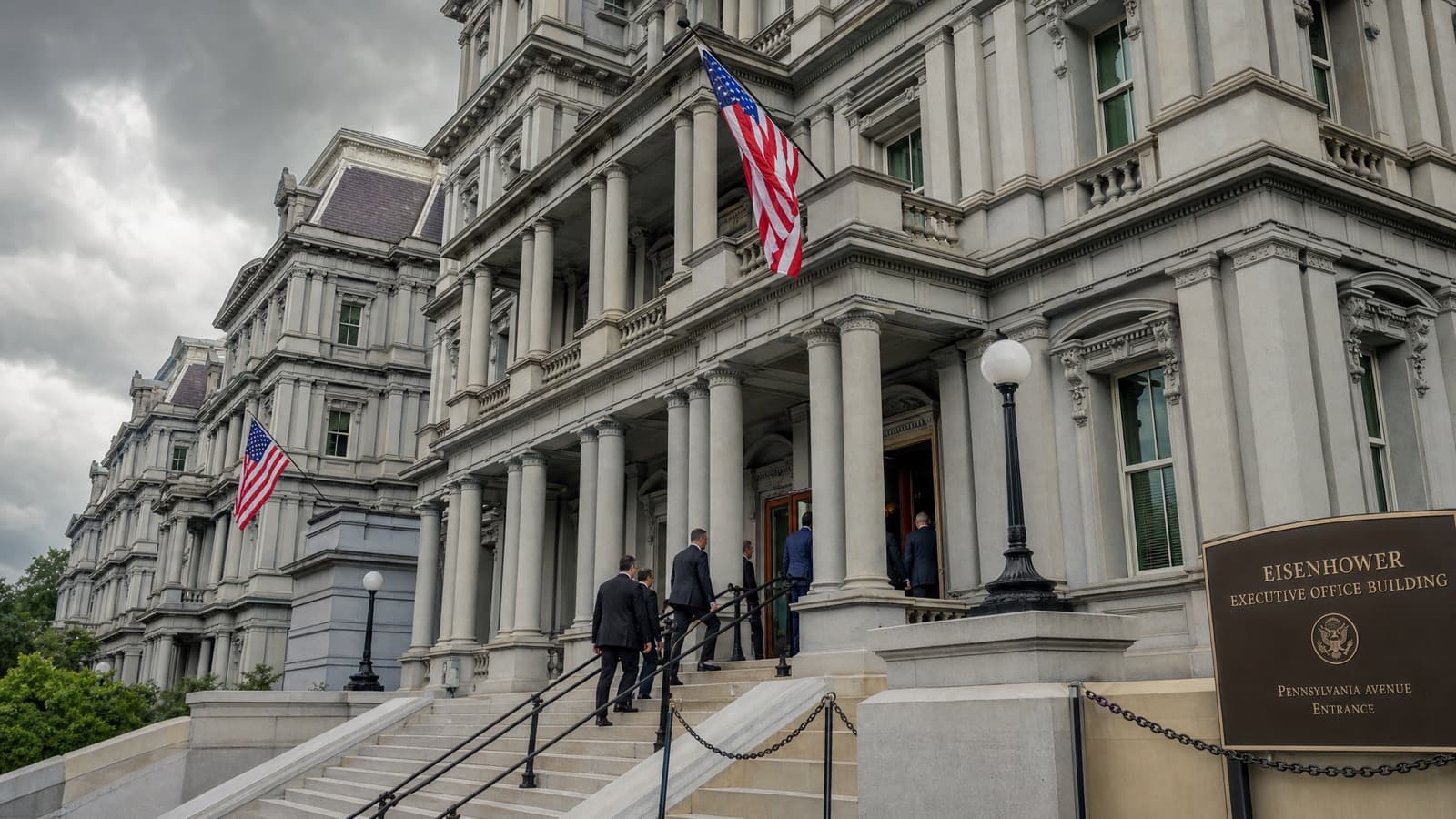
On Wednesday, August 19, 2026, the prediction markets industry will have two simultaneous appointments with the U.S. regulatory system. One is at the Eisenhower Executive Office Building, where Kalshi CEO Tarek Mansour is expected to walk into a meeting with President Trump, SEC Chair Paul Atkins, and CFTC Chair Michael Selig. The other is a court-ordered technical deadline: by the close of business, Kalshi must have an IP address and residency-based geofence live in Washington state, blocking residents from accessing sports, elections, politics, entertainment, culture, tech, science, and mentions markets.
The same CEO. The same day. One room says prediction markets have arrived at the highest levels of American policy. One court order says they're illegal gambling.
That is the state of prediction market regulation in August 2026.
The White House Meeting
On August 13, Politico reported that the White House was planning a private meeting with crypto and prediction market executives for August 19. By August 15, Bloomberg had confirmed President Trump's expected attendance, and an SEC spokesperson confirmed SEC Chair Paul Atkins would participate. CFTC Chair Michael S. Selig is also expected to attend.
The meeting is set for 2:30 p.m. ET at the Eisenhower Executive Office Building, directly adjacent to the White House. Executives from at least six firms are expected, including Coinbase (CEO Brian Armstrong), Ripple (CEO Brad Garlinghouse), a16z, Chainlink, Paradigm, Kalshi, and the Digital Chamber trade group. Polymarket CEO Shayne Coplan is also expected to attend, alongside NYSE and Nasdaq executives who have reportedly been invited.
Patrick Witt, executive director of the President's Council of Advisers for Digital Assets, is attending as well.
The gathering is framed as a small-group kickoff for the CFTC's inaugural Innovation Advisory Committee meeting the following day. That 35-person committee includes both Mansour and Coplan as members, alongside executives from CME Group, DTCC, Robinhood, Gemini, and others.
The White House has not published a formal agenda. But the broader context makes the priorities clear: the CLARITY Act, the federal-versus-state jurisdiction fight over prediction markets, and what the administration can do through executive action while Congress deliberates.
Washington's Deadline — Same Morning
At some point that same Wednesday, August 19, Kalshi is required to have an operational geofence blocking Washington state residents from most of its platform.
King County Superior Court Judge John F. McHale issued a final order on August 13 requiring KalshiEX to cease offering event contracts on sports, elections, politics, entertainment, culture, technology, science, and mentions to anyone in Washington. The Washington Attorney General's Office sued Kalshi in March, arguing the platform was operating an illegal gambling business under the state's Gambling Act and Consumer Protection Act.
The order carried two compliance deadlines. The first — an IP address and residency-based geofence — is due August 19. The second, a more comprehensive GeoComply multi-source geofencing system, is due September 2. Missing the September 2 deadline triggers $120,000 per day in penalties.
"Kalshi has gotten rich promoting wagers on sports, elections, natural disasters, events related to the Iran War, and more," Washington Attorney General Nick Brown said in a statement after the order. "Under this order, Kalshi is banned from offering wagers on most of those topics in Washington."
Four categories remain permitted in Washington: commodities, climate, economics, and finance. Kalshi users in Washington can also continue to exit positions they already hold.
Washington's Court of Appeals denied Kalshi's request to stay the injunction while it appeals.
The Federal Counter-Order
Here is where August 19 becomes genuinely strange. On August 11 — two days before the Washington order — the CFTC used emergency authority to order Kalshi to continue operating nationwide under federal rules, citing a separate lawsuit filed by the New York Attorney General seeking more than $36 billion in damages and asking a state court to halt Kalshi's contracts entirely.
"A state cannot force a DCM to violate its obligations, and federal law does not permit a DCM to discriminate against a state's residents," CFTC Chair Selig said in that order.
So on August 19, Kalshi will be simultaneously:
- Subject to a federal order requiring it to operate nationally
- Subject to a state court order requiring it to geofence Washington residents
- Represented at the White House by its CEO
The CFTC's emergency order was issued in response to the New York case, not the Washington case. It is not entirely clear how Kalshi resolves the apparent conflict. The prediction market industry's legal reality in August 2026 is that these two tracks are running on different rails, and the collision has not yet been adjudicated.
The CFTC's Innovation Advisory Committee
The day after the White House meeting, on August 20 from 1:00 p.m. to 4:00 p.m. ET, the CFTC will hold the inaugural meeting of its Innovation Advisory Committee in Washington. The public can watch virtually; the Federal Register notice is at 2026-16328.
Chairman Selig released the agenda on August 13. The three-hour session covers three topics: crypto asset regulation, artificial intelligence in financial markets, and prediction markets. The prediction markets session — approximately 50 minutes — will address:
- The growth of event contracts and their role in price discovery and risk management
- The respective roles of federal and state regulators in overseeing prediction markets
- Recent litigation and enforcement actions
- Event-contract product design
- Market surveillance, manipulation risks, and customer protections
That agenda describes, in bureaucratic language, almost exactly the legal fight that has produced the Washington geofence and the New York lawsuit. The committee is not a rulemaking body — it advises the CFTC chairman — but its discussions can signal where the agency's formal actions are headed.
"America has long been the global hub of financial innovation," Selig said when releasing the agenda. "I look forward to meeting with the entrepreneurs, thinkers, and builders of the CFTC's Innovation Advisory Committee."
The committee's 35 members include executives from Coinbase, Ripple, CME Group, DTCC, Kalshi, Polymarket, Robinhood, Gemini, and Nasdaq, among others.
The CLARITY Act: Markets Price Skepticism
The legislative vehicle for resolving the federal-versus-state fight is the CLARITY Act, which would establish a comprehensive federal framework for digital assets and prediction markets.
Live market view — CLARITY Act passage odds:
Senate Majority Leader John Thune has scheduled a procedural cloture vote for September 15. The bill needs 60 votes to advance. Polymarket traders were pricing a 19% chance of passage this year as of August 14. The contract had traded as high as 82% probability in February 2026, before negotiations stalled over government ethics provisions, stablecoin rewards, decentralized finance rules, and financial crime controls.
A separate Kalshi contract on whether the Senate will vote on the bill before October 1 was trading at 88% as of August 11, with about $1.23 million in trading volume — meaning markets expect the cloture vote to happen, but remain deeply skeptical about whether 60 senators will support it.
Galaxy Research has estimated a 10% probability of passage this year, citing unresolved policy disputes and the limited number of Senate working days before midterm recess.
If the CLARITY Act fails, the federal-versus-state fight continues in courts — and Washington, New York, and any future state actions become the operating environment.
The Sports Ban Market
Live market view — prediction market sports ban odds:
Separate from the CLARITY Act, traders on PredictionMarkets.US have been pricing the probability that a law explicitly banning sports prediction markets will be enacted in 2026. That contract captures the legislative downside risk to the industry from the state-level fight — and reflects how seriously markets take the possibility that Congress could move against sports event contracts specifically, rather than legislate in the industry's favor.
The Washington order and the 8 active federal court cases between the CFTC and states are the most direct inputs into that market's price.
What to Watch
On August 19: Whether Kalshi confirms geofencing compliance with the Washington court order. Any public signal from White House participants about where the administration stands on the federal-versus-state jurisdiction fight.
On August 20: How CFTC IAC members respond during the prediction markets session. Whether Chair Selig signals any new rulemaking or enforcement posture. Whether the conversation reveals any administration preference for the CLARITY Act's scope or timing.
September 15: The Senate cloture vote on the CLARITY Act. If it clears 60 votes, the legislative path opens. If it fails, the courts become the only near-term resolution mechanism.
The prediction market industry has never been closer to the center of U.S. policy attention. It has also never faced more simultaneous legal exposure. Both of those things are true on the same Wednesday in August.
FAQ
What is the Washington state geofencing deadline for Kalshi? King County Superior Court Judge John McHale ordered Kalshi to implement an IP address and residency-based geofence by August 19, 2026, blocking Washington state residents from accessing sports, elections, politics, entertainment, culture, technology, science, and mentions event contracts. A more comprehensive GeoComply multi-source geofencing system is required by September 2, 2026. Missing the September 2 deadline carries a $120,000-per-day penalty.
Who is attending the August 19 White House meeting? Expected attendees include President Trump, SEC Chair Paul Atkins (confirmed by an SEC spokesperson to Bloomberg), CFTC Chair Michael Selig, and executives from Kalshi, Polymarket, Coinbase, Ripple, Gemini, Robinhood, a16z, Chainlink, Paradigm, the Digital Chamber, NYSE, Nasdaq, and DTCC. Patrick Witt of the White House Digital Assets Advisory Council is also attending.
What is the CFTC Innovation Advisory Committee? The IAC is a 35-member advisory body the CFTC launched in 2026 to provide input on how emerging technologies affect financial markets. Its inaugural meeting on August 20 will cover crypto regulation, artificial intelligence, and prediction markets. The meeting runs from 1:00 p.m. to 4:00 p.m. ET and is open to the public virtually. It does not vote on new rules.
What does the CLARITY Act do for prediction markets? The CLARITY Act would establish a federal market structure framework for digital assets, which its supporters argue would clarify federal preemption of state gambling laws for CFTC-regulated prediction market platforms. The bill faces a September 15 procedural vote requiring 60 Senate votes. Prediction markets are currently pricing approximately 19% odds of passage in 2026.
Can prediction market traders in Washington state still use Kalshi? Under the court order, Washington state residents are blocked from sports, elections, politics, entertainment, culture, technology, science, and mentions markets on Kalshi. Contracts related to commodities, climate, economics, and finance remain available. Existing positions can still be closed.
Conclusion
Wednesday, August 19 represents a compressed portrait of exactly where prediction markets stand in American law and policy: invited to the White House in the afternoon, geofenced out of an NFL season in the morning. The federal government and state courts are issuing contradictory instructions to the same company on the same day.
The Innovation Advisory Committee meeting on August 20 won't resolve that contradiction — but it signals that the CFTC intends to shape the outcome. Whether through new rules, new litigation, or congressional pressure on the CLARITY Act, the next 60 days will determine whether federal law or state gambling statutes govern the fastest-growing corner of American finance.
Follow the live markets and track the odds on PredictionMarkets.US.
Sources & Verification
- Washington state geofencing order, Judge McHale: Washington Attorney General press release, August 13, 2026
- Washington state ruling details: Bloomberg, August 13, 2026
- Washington state ruling details: The New York Times, August 13, 2026
- White House meeting attendee list: Yahoo News (Semafor), August 14, 2026
- Trump and Atkins attendance confirmation: Bloomberg, August 15, 2026
- CFTC IAC agenda: CFTC Press Release 9283-26, August 13, 2026
- CFTC IAC Federal Register notice: Federal Register 2026-16328, August 11, 2026