
Federal Judge Rules Utah Can Enforce Gambling Laws Against Kalshi: What the CEA Preemption Decision Means
A federal district court ruled Tuesday that the Commodity Exchange Act does not shield Kalshi from Utah's anti-gambling laws — the first federal court to reject the industry's preemption defense. Tenth Circuit appeal ahead.
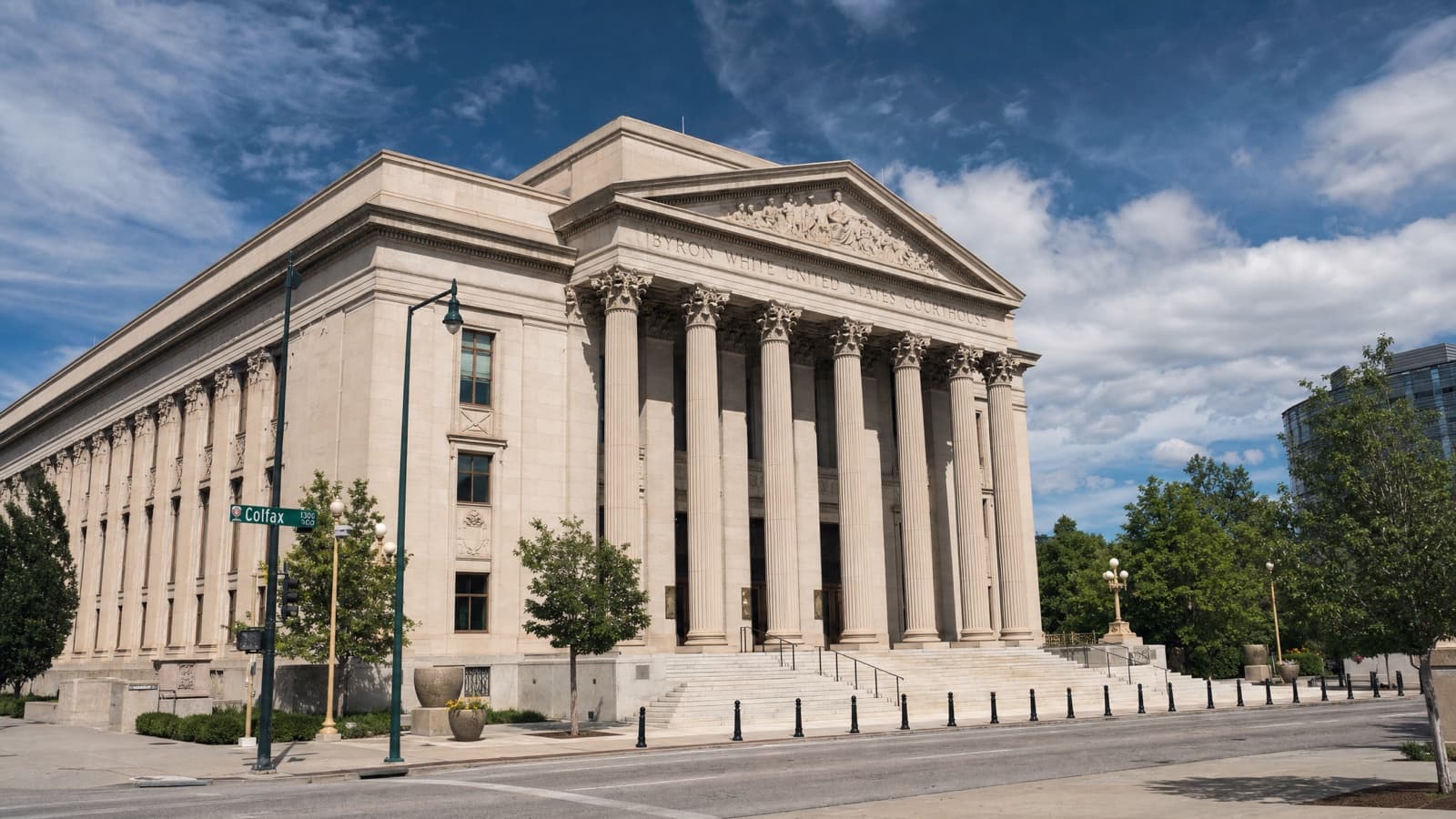
A Utah federal judge handed the prediction market industry a significant legal setback Tuesday, ruling that the Commodity Exchange Act does not preempt the state's anti-gambling statutes — a decision that clears the way for Utah to pursue criminal enforcement against Kalshi and creates the first federal district court ruling to reject the industry's core legal defense.
U.S. District Judge Robert J. Shelby, sitting in the U.S. District Court for the District of Utah, granted summary judgment to Utah state officials on August 4, rejected the lawsuit Kalshi had filed in February seeking to block the state from treating its sports event contracts as illegal gambling, denied Kalshi's motion for a preliminary injunction, and ordered the case closed.
"The court concludes the federal law relied upon by Kalshi does not preempt Utah's ability to enforce its anti-gambling laws," Shelby wrote in his decision.
The ruling lands at a pivotal moment. Every previous federal appellate ruling on prediction market preemption — including the Third Circuit's 2-1 decision in April that sided with Kalshi in New Jersey — had favored the industry. Judge Shelby is the first federal judge to reach the opposite conclusion. Within hours of the ruling, New York's Attorney General submitted Shelby's decision as supplemental authority in its own ongoing federal case against Kalshi.
The Case: Kalshi Sued Utah First
The legal conflict began in February 2026, when Kalshi took an unusual step: it sued Utah preemptively, naming Governor Spencer Cox and Attorney General Derek Brown as defendants.
Kalshi's complaint stated the company was "concerned that Utah intends to bring a criminal enforcement action against it to prohibit it from offering sporting event contracts." Rather than wait to be charged, Kalshi asked the federal court to declare its operations protected from state enforcement under the Supremacy Clause of the U.S. Constitution.
The timing followed CFTC Chairman Mike Selig's public announcement that the commission would defend prediction markets from state-level challenges. Utah Governor Cox responded immediately. "These prediction markets you are breathlessly defending are gambling — pure and simple," Cox wrote on X. "They are destroying the lives of families and countless Americans, especially young men. They have no place in Utah."
Within weeks of Kalshi's filing, nearly two dozen Native American tribes and gaming associations — with significant financial stakes in maintaining the legal boundary between regulated gambling and unregulated alternatives — filed briefs in support of Utah's position.
In March 2026, the Utah legislature passed H.B. 243, explicitly adding proposition bets in prediction markets to the state's legal definition of gambling. Offering online gambling in Utah is a third-degree felony.
The Legal Question: Does the CEA Trump State Gambling Authority?
Live price — will Congress ban sports prediction markets in 2026?
Kalshi's central argument rested on federal preemption doctrine: as a federally designated exchange regulated by the Commodity Futures Trading Commission, state gambling laws cannot reach its event contracts.
The Commodity Exchange Act, Kalshi argued, granted the CFTC exclusive jurisdiction over its markets and expressly preempted conflicting state regulation. The company also invoked the Dodd-Frank Wall Street Reform Act of 2010, which expanded the CEA's scope in the aftermath of the financial crisis, as additional grounds for federal preemption.
Utah's position, supported by its motion for summary judgment, held that gambling regulation is a core state police power — recognized by Congress and the courts for more than a century — and that the CEA's language expressly preserved that state authority rather than displacing it.
What Judge Shelby Found
Shelby sided with Utah on every major legal question.
On express preemption, he found that the CEA's own text "strongly signals there is room for State regulation." The statute explicitly states it does not supersede or limit the jurisdiction of any state — language Shelby said directly undercut Kalshi's reading of congressional intent.
On implied preemption, he rejected the idea that federal commodities oversight is so comprehensive that it crowds out state gambling enforcement entirely. "Given the [Commodity Exchange Act's] framework and the history of State regulation of gambling, the court cannot conclude the CEA is so pervasive that there is no room for the State of Utah to supplement it," the judge wrote.
On Dodd-Frank, Shelby dismissed Kalshi's reliance on the 2010 law as implausible: "It is simply implausible that Congress would silently reverse course through an act addressing the 2008 housing financial crisis."
He also turned Kalshi's Supremacy Clause argument against the company: "It would be inconsistent for Congress to allow States to regulate their gambling laws but to simultaneously require States to provide citizens access to every event contract, including those that constitute gambling under State law."
On the compatibility of state and federal regulation, Shelby wrote that "State regulation of its gambling laws does not prevent the CFTC from serving the public interest in regulating derivatives markets, preventing price manipulation, ensuring financial integrity, protecting market participants, and promoting innovations. Kalshi has not met its burden of showing otherwise."
The court closed the case. Utah is now legally positioned to pursue enforcement — a development that, under state law, could expose prediction market operations to criminal charges as third-degree felonies.
Reactions: Celebration in Salt Lake City, Defiance in New York
Utah Attorney General Derek Brown issued a pointed statement after the ruling. "You can't rebrand illegal gambling as a federal commodity, and today a federal judge agreed with us," Brown said. "Kalshi bet that clever branding would beat Utah law. Kalshi lost and Utah won. Utah's constitution bans gambling to protect Utah families, and my office will enforce that ban. Gambling is gambling no matter what any company calls it."
Governor Spencer Cox wrote on X: "Prediction markets are gambling, full stop. They are causing tremendous harm to countless American families. Today's ruling affirms that Utah's anti-gambling laws are an appropriate way to protect our citizens and are not preempted by federal law."
Kalshi spokesperson Jacki McGavick gave a brief response: "We disagree with today's decision and will appeal. Multiple courts have already recognized that prediction markets fall under exclusive federal jurisdiction, and we will continue to defend that position."
The Tenth Circuit Is Next
Kalshi's appeal from a Utah district court goes to the Tenth Circuit Court of Appeals, based in Denver. That court covers Utah, Colorado, Wyoming, Kansas, Oklahoma, and New Mexico — a region that includes several states with no current enforcement actions, plus Utah's constitutional gambling ban.
The Tenth Circuit has not previously ruled on prediction market preemption. If it sides with Utah, a direct appellate conflict with the Third Circuit — which ruled for Kalshi in New Jersey in April 2026 — would be established. An appellate circuit split of that magnitude is among the most reliable pathways to U.S. Supreme Court review.
Three circuits are now actively involved or closely watching: the Third (NJ), the Second (NY, where Kalshi faces the state AG lawsuit), and the Tenth (Utah). A split on federal preemption of state gambling authority over CFTC-regulated exchanges would be one of the most consequential jurisdictional questions in American financial regulation in years.
The supplemental brief filed by New York's AG on Tuesday — citing Shelby's reasoning within hours of the decision — signals that state regulators across the country are already treating this ruling as persuasive authority in their own litigation. That pattern has the potential to accelerate other district court rulings before the Tenth Circuit can weigh in.
Where This Fits: Kalshi's 18-State Legal War
Utah's win is one data point in a sprawling national litigation. Prediction market platforms face more than 18 state-level legal actions as of August 2026. Key milestones in the legal landscape:
- New Jersey (Third Circuit, April 2026): 2-1 ruling in favor of Kalshi — the only appellate-level ruling to date holding that the CEA preempts state gambling enforcement. Kalshi cites this decision as controlling precedent in other courts.
- Nevada: TRO granted March 20; Kalshi restricted from offering sports, election, and entertainment contracts statewide. The state adopted a complete ban, and enforcement has been actively applied.
- New York: Governor Hochul and AG James filed suit July 31, calling Kalshi an "illegal, unlicensed gambling operation." NY's AG cited Judge Shelby's Utah ruling as supplemental authority the same afternoon it dropped.
- Arizona: CFTC filed a TRO in federal court on April 10. Separately, Arizona AG Kris Mayes filed criminal charges against Kalshi — the first criminal action by any state attorney general against a prediction market operator.
- Washington State: AG civil suit filed March 27. State enforcement under H.B. 2052 took effect August 5, 2026 — today.
- Minnesota: State ban on prediction markets took effect August 1, 2026. Kalshi is challenging the ban in federal court.
The 38-state amicus coalition that filed briefs supporting state regulatory authority in various cases reflects a political alignment that crosses partisan lines. Utah's Republican governor and attorney general stand alongside Democratic AGs from New York, Illinois, Wisconsin, and elsewhere.
What This Means for Traders
With Shelby's ruling, Utah has the legal authority to pursue enforcement. As of Tuesday evening, the Utah Division of Consumer Protection and the Attorney General's Office said they were evaluating next steps — no enforcement timeline has been announced.
What enforcement could look like in practice: when Nevada's TRO took effect in March, Kalshi proactively geofenced users in the state and restricted access to all affected contract categories. A similar approach is likely in Utah if state enforcement begins — meaning traders based in Utah may see restricted access, particularly for sports event contracts.
Kalshi has not pre-emptively restricted Utah access following the ruling, indicating it will rely on the Tenth Circuit appeal process while continuing to operate in the state.
Traders with active Kalshi positions in Utah should monitor developments closely. The state has not signaled immediate action, but the legal pathway to enforcement is now clear.
FAQ
Does this ruling ban Kalshi nationally? No. Judge Shelby's ruling applies only to Utah's ability to enforce its own gambling statutes. It does not bind other states or other federal circuits. The Third Circuit's ruling in favor of Kalshi in New Jersey remains the law in that circuit — creating a genuine split that may ultimately require Supreme Court resolution.
Could this reach the Supreme Court? Potentially. First, Kalshi must appeal to the Tenth Circuit. If the Tenth Circuit rules against Kalshi and that ruling conflicts with the Third Circuit's pro-Kalshi decision, a circuit split would be formally established. Circuit splits on federal preemption questions are among the most common grounds for Supreme Court certiorari.
What happens to existing Kalshi contracts in Utah? Utah has not announced enforcement specifics. When Nevada's TRO took effect, Kalshi restricted access and resolved open contracts for Nevada users. A similar approach is likely if Utah moves to enforce. Individual traders are not the target of state enforcement — the focus is on platform operations.
Does this affect other prediction market platforms? Yes. Judge Shelby's ruling addresses "Kalshi and other prediction markets" — the language is broader than a single company. Platforms holding CFTC DCM designation that operate in states with anti-gambling laws face the same legal question. That includes Novig (Ludlow Exchange LLC, DCM approved June 2026), ProphetX (DCM+DCO approved June 2026), and PredictIt, which operates under a CFTC no-action letter.
Why did Kalshi sue Utah rather than wait? Kalshi's complaint stated the company was concerned that Utah would "imminently bring a criminal enforcement action" against it. Under Utah law, operating online gambling is a third-degree felony — a criminal exposure that justified preemptive federal litigation. The strategy failed at the district court level; the Tenth Circuit appeal is the next test.
Conclusion
Tuesday's ruling does something no other federal court had done: it tells a prediction market company, in a final judgment, that operating under CFTC oversight does not immunize it from state gambling law. The court's conclusion — that Congress never intended the Commodity Exchange Act to silently override decades of state gambling authority — is now a live precedent that state regulators are already incorporating into their own cases.
The Tenth Circuit appeal will take months. In parallel, more than a dozen state enforcement proceedings continue, the CFTC is actively defending prediction markets in federal courts, and Congress has a bill — the CLARITY Act — that, if enacted, would resolve the preemption question by statute. That bill stalled in the Senate without a cloture vote and is unlikely to advance before the August recess ends.
For the prediction market industry, Shelby's ruling is the most significant legal setback in a litigation campaign that had, until Tuesday, run up an unbroken appellate-level winning streak. A federal judge, applying federal law, concluded that state gambling authority survives alongside CFTC regulation — and that conclusion is now on its way to the Tenth Circuit.
Follow the state-by-state legal picture at PredictionMarkets.US.
Sources & Verification
- U.S. District Court for the District of Utah, Judge Robert J. Shelby decision, August 4, 2026: Kalshi v. Utah federal district court decision (PDF)
- Utah Attorney General Derek Brown: Utah AG press release — Utah defeats Kalshi in federal court
- Bloomberg Tax — Utah Can Apply Anti-Gambling Laws Against Kalshi, Judge Says, August 4, 2026
- Courthouse News — No dice for Kalshi in federal lawsuit against Utah, August 4, 2026
- Kalshi complaint against Utah officials (PDF)
- CFTC Designated Contract Market order — Kalshi
- ABC4 Utah — Judge rules that Utah can enforce anti-gambling laws against Kalshi, August 4, 2026
- ReadWrite — Kalshi to appeal Utah sports prediction market ruling, August 5, 2026
- SBC Americas — Is Kalshi's Next Battleground Tenth Circuit After Utah Loss?, August 5, 2026