
Kalshi's US Open Deal Sparks Debate: Jessica Pegula, Push Notifications, and Prediction Markets' Biggest Tennis Stage Yet
Kalshi became the US Open's first official prediction market partner. Jessica Pegula spoke out on player experience. Here's what the deal means for tennis.
The tournament was barely underway when the push notifications started arriving.
Within hours of the United States Tennis Association announcing a new partnership with prediction market platform Kalshi on August 31, 2026, fans who had downloaded the official US Open app began receiving alerts linking to sponsored match-prediction content. For some, it felt like a natural extension of how they already follow the sport — a new data layer on top of the score. For others, including at least one top-ranked player competing at Flushing Meadows, it was a step too far.
"We get a lot of hate," Jessica Pegula said at a post-match press conference, after defeating fellow American Sofia Kenin in straight sets, 6-3, 6-1, to advance to the third round. Asked directly about the tournament's new partnership with Kalshi, the World No. 3 was candid: she acknowledged that betting and prediction market companies had become an important driver of sports engagement and revenue, but she was equally candid about the cost. Players, she said, often absorb the hostility that financially invested bettors direct at people on the court when outcomes don't go their way.
Pegula's comments crystallized a debate that has been building across professional tennis — and more broadly across American sports — about where legitimate fan engagement ends and something more uncomfortable begins. The Kalshi–US Open deal is the most prominent instance yet of that tension playing out in public.
The Deal That Changed US Open Advertising
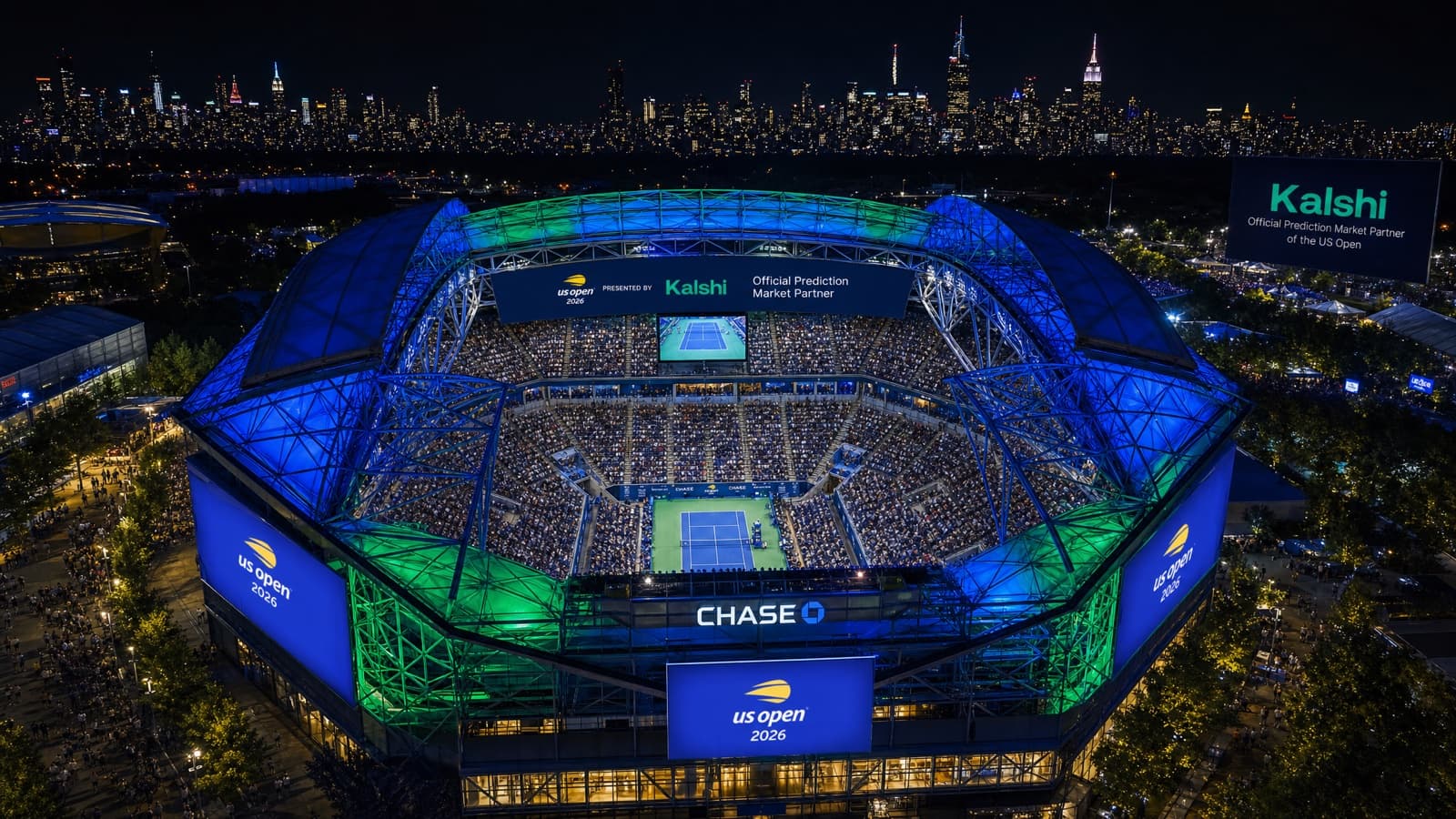
By any measure, the Kalshi–USTA partnership is a significant moment for prediction markets. Kalshi became what the USTA officially called the "first-ever Official Prediction Market Partner of the US Open," a multi-year agreement that took effect with the 2026 singles main draw on August 31.
Under the partnership, Kalshi's branding appears on screens and on-court signage throughout the Billie Jean King National Tennis Center. Over the course of the deal, Kalshi plans to integrate its live market data into US Open coverage — from match previews and draw breakdowns to round recaps and daily highlights — giving fans a continuously updated read on how the tournament is unfolding in real time.
Kalshi CEO and co-founder Tarek Mansour framed the deal as a natural extension of how tennis fans already use the platform. "Millions of people turn to our markets to understand what's happening in the tournament as it unfolds," Mansour said in an official statement. "This partnership will deepen how fans understand tennis through the power of open markets, live price discovery, and the wisdom of crowds. Alongside the USTA, we're also building a comprehensive integrity framework grounded in data-sharing, education, and market surveillance. We're proud to invest in tennis, and in our city's great tradition."
USTA CEO Craig Tiley, who joined the organization in February after more than a decade leading Tennis Australia, played a central role in getting the deal across the finish line for this year's tournament. "We're relentless about keeping tennis at the cutting edge of global sports innovation and fan connection," Tiley said. "Partnering with Kalshi gives us an opportunity to pioneer that next generation of fan engagement while ensuring the integrity of our sport."
The agreement also includes a notable commercial restriction: Kalshi holds exclusivity in the prediction market category, meaning no other prediction market platform can advertise at the venue or across tournament broadcasts, including ESPN.
The Push Notification Controversy
Where the deal became contentious was in its immediate rollout.
Shortly after the USTA announced the partnership, the US Open's official app pushed notifications linking fans to sponsored match-prediction content from Kalshi. For an audience already attentive to the line between editorial coverage and promotional material, the timing and the delivery channel caught attention across the tennis community.
The core question the pushback raised is one that every major sports property entering a prediction market partnership will eventually face: when a team's official app or media presence delivers sponsored odds content through the same channel it uses to deliver scores, standings, and injury news, where does coverage end and advertising begin?
The question isn't unique to Kalshi or to tennis. But the US Open's global profile and the US Open app's reach into millions of fans' phones made the issue unusually visible in the opening days of the 2026 tournament.
"We Get a Lot of Hate" — A Player Speaks Out
Pegula's press conference statement was brief, but it carried weight precisely because it came from someone competing in the tournament whose sponsor deal she was being asked about. She wasn't speaking as an outside critic — she was speaking as a player who has experienced what it means for bettors to hold athletes personally accountable for financial outcomes the athletes didn't choose to create.
Her comments identified a cost that is easy to overlook when framing prediction market sports partnerships as straightforwardly positive for the sport. Revenue growth through commercial deals funds prize pools. The 2026 US Open features the largest prize fund in the tournament's history, at $108 million total — a 20% increase over 2025. Players benefit directly from that.
But prediction markets and their sportsbook predecessors also change how a subset of fans relate to the athletes whose performance they've staked money on. When markets move against a bettor because a player loses a set or drops a service game, some portion of that frustration gets directed at the player. It's a pattern Pegula has evidently experienced firsthand.
Platform-by-Platform: Where to Follow the Markets
The US Open's prediction market landscape this year is headlined by the Kalshi–USTA official partnership, but market activity extends beyond the official partner.
On Kalshi, which operates as a CFTC-regulated designated contract market and clearing organization, the platform offers live markets on match winners, set outcomes, and tournament futures. Tennis-related trading volume on Kalshi is up 25 times year over year as of the 2026 tournament, the company reported at the time of the partnership announcement — a figure that reflects the broader explosion in American interest in prediction market trading across sports.
As of Saturday afternoon at Flushing Meadows, Carlos Alcaraz remains the heavy favorite on prediction markets for the men's title, priced near 46 cents on the dollar on major platforms — implying roughly a 46% chance of winning the tournament. That price reflects the current draw position following today's semifinals.
On the women's side, Aryna Sabalenka has entered the final stretch of the tournament as the market favorite, consistent with her position as the top-ranked women's player in the world heading into the tournament.
The Integrity Framework Built Into the Deal
One of the more substantive elements of the Kalshi–USTA deal is the integrity architecture the two organizations built into it from the start.
Under the joint integrity framework, Kalshi does not offer markets tied to umpire decisions, player injuries, or code violations — eliminating the financial incentive that could, even theoretically, compromise in-match behavior or create perverse competitive dynamics.
Beyond the market restrictions, Kalshi has established a confidential data-sharing agreement with the International Tennis Integrity Agency, the independent body responsible for protecting professional tennis from corruption. Under the agreement, ITIA analysts can monitor Kalshi's market activity in real time throughout the tournament, enabling rapid identification of and response to any unusual trading patterns.
It's a more comprehensive integrity structure than most traditional sports betting partnerships include, and it signals that Kalshi has approached the partnership with an understanding that prediction market platforms bear responsibility for the integrity environment of the sport — not just for their own compliance.
Whether those protections are visible to or trusted by the players on the court is a different question. Pegula's press conference suggests they don't fully address the concerns she raised.
Prediction Markets and Sports Sponsorships: The Bigger Picture
The Kalshi–US Open deal didn't happen in isolation. It's part of a wave of sports organization partnerships with prediction market platforms that has accelerated through 2026.
Kalshi has secured official partnerships with multiple Major League Baseball clubs, and the US Open represents the company's first Grand Slam tennis deal. The trajectory is clear: prediction market platforms are moving from financial exchanges trading in obscurity to official presences at America's biggest sporting events.
The institutional structures supporting that growth — CFTC oversight, integrity frameworks, data-sharing agreements with sports governing bodies — have grown significantly more sophisticated over the past two years. But the social and human dimension of what it means to turn athletic outcomes into tradeable financial contracts remains a work in progress.
Pegula wasn't the first athlete to raise concerns about betting-adjacent sponsorships at major sports events, and she won't be the last. But the directness of her comment — "we get a lot of hate" — and the context in which she made it, at an official tournament press conference of the event that just signed the deal she was discussing, is a signal worth taking seriously.
The money is moving fast. The frameworks are being built in real time. The players are navigating consequences that weren't written into any sponsorship term sheet.
Frequently Asked Questions
What is the Kalshi–US Open partnership? Kalshi became the first official prediction market partner of the US Open in a multi-year agreement with the USTA beginning with the 2026 main draw. The deal includes on-court signage, digital integrations across US Open platforms, and a shared integrity framework with the International Tennis Integrity Agency.
What did Jessica Pegula say about the Kalshi sponsorship? Pegula expressed disappointment at a press conference during the 2026 US Open, saying players "get a lot of hate" from bettors and highlighting the tension between tournaments profiting from prediction market partnerships while players absorb the resulting negative fan behavior.
What is Kalshi and is it legal in the US? Kalshi is a CFTC-regulated designated contract market and clearing organization. It is federally regulated and accessible to eligible users in most US states. The platform offers markets on sports events including tennis, as well as markets on economic and other outcomes.
What markets are restricted under the Kalshi–USTA integrity agreement? Contracts tied to umpire decisions, player injuries, and code violations are excluded under the joint integrity framework. Kalshi also shares real-time market data with the International Tennis Integrity Agency for market surveillance during the tournament.
Is Kalshi the only prediction market at the US Open? Under the exclusivity clause in the partnership agreement, Kalshi is the only prediction market platform permitted to advertise at the tournament venue or across US Open broadcasts including ESPN.
Conclusion
Jessica Pegula's press conference moment lasted a few seconds and drew far fewer headlines than any of her match results. But it named something real: the gap between the financial logic of prediction market sports sponsorships and the human experience of being the athlete those markets are priced on.
Kalshi's US Open partnership represents the kind of official legitimacy the prediction market industry has been working toward — a Grand Slam deal with a robust integrity framework and a federally regulated operator. The structural pieces are in place. The push notifications have arrived. The question Pegula raised — about what this all means for the people on the court — doesn't have an easy answer inside any sponsorship contract.
The US Open final is this weekend. The markets will keep updating in real time through every point.
Sources & Verification
- Kalshi-USTA multi-year partnership announcement, CEO Tarek Mansour quote, tennis trading volume 25x YoY, integrity framework, ITIA agreement, exclusivity clause: Kalshi official press release, August 31, 2026
- USTA CEO Craig Tiley quote: Kalshi official press release, August 31, 2026
- Jessica Pegula "We Get a Lot of Hate" statement, Sofia Kenin match result (6-3, 6-1): Yahoo Sports, September 3, 2026
- US Open 2026 prize fund $108 million, 20% increase over 2025: Sportcal, September 1, 2026
- Men's US Open winner market prices (Carlos Alcaraz ~46¢): Polymarket US Open Winner Market, verified September 5, 2026
- Kalshi CFTC designation as DCM and DCO: CFTC DCM/DCO Registry