
How Wall Street Is Discovering Prediction Markets: Talos, Kalshi, and the Institutional Pivot
On July 22, Talos — a top institutional digital asset infrastructure provider — announced a full Kalshi integration. Here's what it means for prediction markets and the institutional investors now paying serious attention.
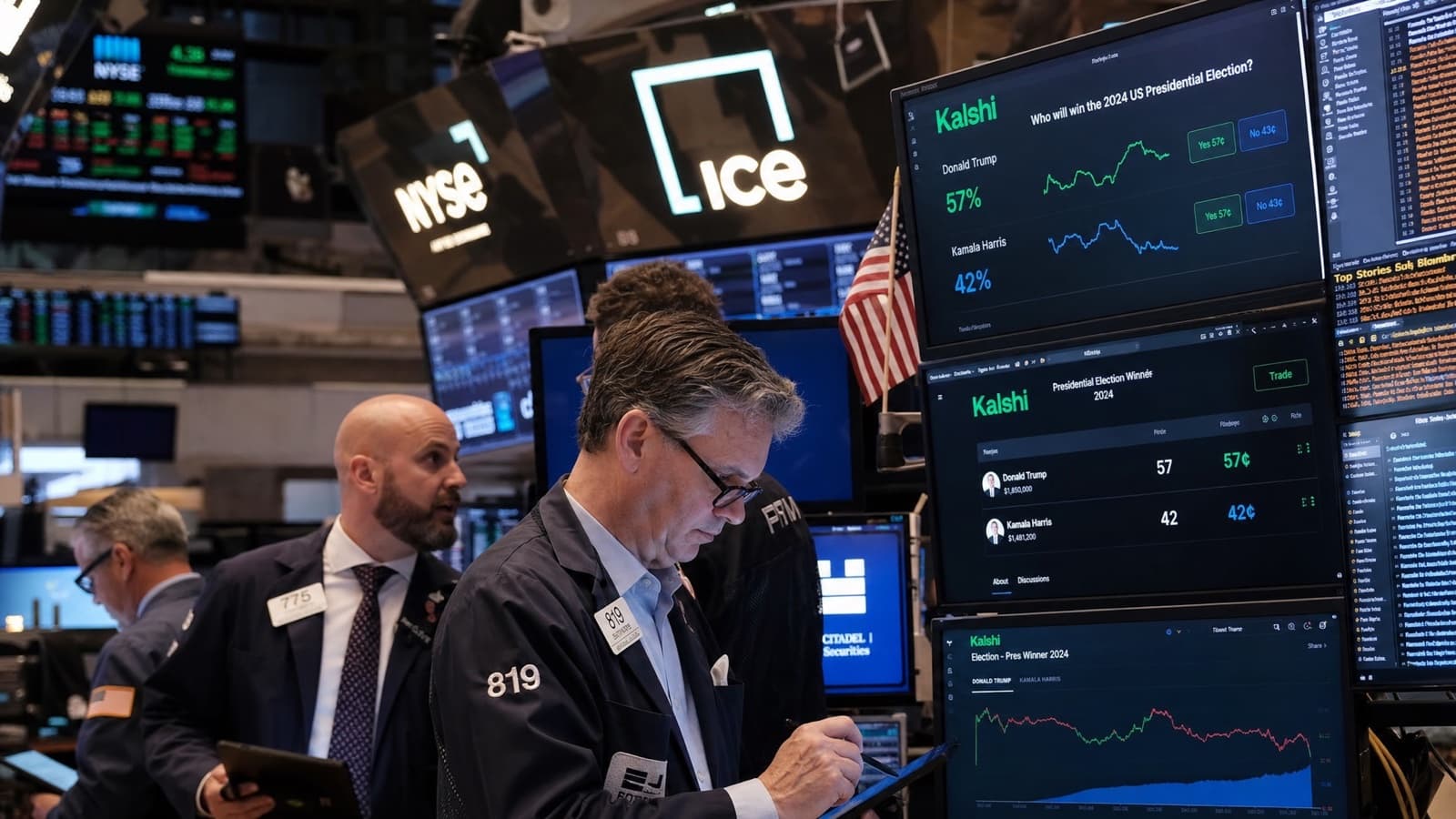
Prediction markets hit $31 billion in monthly trading volume in June 2026. That number, reported by CNBC citing Dune Analytics data, is striking on its own — a 70% surge from May's $17.9 billion, fueled by World Cup trading fever. But the more consequential development may be what happened the very next month: on July 22, the infrastructure that powers institutional finance started connecting directly to prediction markets for the first time.
Talos — one of the most widely used institutional digital asset infrastructure providers — announced a full integration with Kalshi, the CFTC-regulated prediction market exchange. The deal gives hedge funds and market makers direct access to Kalshi's event contracts through the same trading terminals they already use for crypto and derivatives. Cantor Fitzgerald advised on the build-out. This is not another retail-first product launch. It is plumbing, the kind that precedes serious institutional capital.
From Retail Phenomenon to Institutional Asset Class
Prediction markets grew up fast. A year ago, the sector's total weekly trading volume rarely topped $1 billion even in its busiest moments. By the week ending June 21, 2026, a16z Crypto documented $14.4 billion in a single week's volume across the major platforms — the sector's third consecutive record-breaking week. Non-sports volume on Kalshi and Polymarket combined reached $3.6 billion that week alone, more than the entire prediction market sector generated in all of 2025.
That scale shift has forced a recalibration among professional investors. Open interest in prediction markets — the measure of capital actively committed in live, unresolved contracts — climbed to $1.6 billion by late June, an eightfold increase from under $200 million less than a year earlier. Those figures represent institutional-sized positions in long-duration contracts on interest rate outcomes, geopolitical events, and electoral results — not just retail sports bets.
Institutional infrastructure moves preceded the Talos announcement by months. Galaxy Digital launched an OTC prediction markets desk in June, giving institutional clients private-market access to prediction market exposure outside the limits of exchange order books. Elwood Technologies and LO:TECH each built Kalshi data feeds into institutional workflows. In July, CryptoStruct integrated Kalshi for ultra-low-latency access — the kind of feed architecture typically reserved for high-frequency trading desks.
The Talos Integration — Wall Street's On-Ramp
The Talos integration is the most structurally significant move yet in prediction markets' institutional migration. Talos connects institutional counterparties — prime brokers, exchanges, OTC desks, and custodians — through a single trading interface. Its client base spans the world's largest asset managers, hedge funds, and market makers.
Under the integration, institutional clients can trade Kalshi event contracts and US-regulated crypto perpetuals through the same interface they use for every other asset class. No separate onboarding. No new API integration. Prediction markets appear in the existing order management system alongside equities, crypto, and derivatives.
The technical capabilities go beyond a simple connectivity bridge. Talos is deploying its full algorithmic trading suite — Iceberg, Pegged, Sniper, TWAP, and POV — for Kalshi prediction market trading. These are the standard execution algorithms institutions use to work large orders without moving the market. The availability of algo-driven execution for event contracts signals that infrastructure providers expect real institutional order flow to arrive.
The Talos RFQ (request-for-quote) platform — the same system its ETF issuer clients use for create/redeem workflows — will provide a block trading interface for large off-exchange prediction market trades, connecting to Talos's OTC liquidity provider network. That is the same mechanism institutions use to execute large block trades in bond and credit markets.
Cantor Fitzgerald, the global investment bank, advised Talos on the build-out. "Prediction markets are emerging into a credible institutional asset class, and firms that engage early will help shape the market structure, liquidity and execution standards that underpin its growth," said Matt DeCicco, Managing Director and Head of Digital Assets for Global Markets at Cantor, in a statement released with the announcement.
Talos CEO Anton Katz framed the integration as part of a broader market transformation. "Trading is moving to 24/7, prediction use cases are growing rapidly, and every asset class is migrating to digital rails. We believe these trends will fundamentally change how risk is priced, hedged and settled across the market," Katz said.
A planned unified prediction market data feed — covering events, trades, order books, open interest, and implied probabilities across venues — will allow Talos clients to access standardized prediction market data through the same API they use for crypto market data. Kalshi is expected to be among the first venues supported.
Andy Ross and the Institutional Pitch
The person most responsible for converting Wall Street skeptics into Kalshi participants is Andy Ross, who joined Kalshi as Head of Institutional in March 2026. Ross came from Standard Chartered Bank, where he led UK financial markets. Before that, he was chief executive of CurveGlobal — an interest rate derivatives venture launched by the London Stock Exchange Group and a group of major dealer banks.
"The last time I was this excited I was pacing the delivery room waiting for my first child to be born," Ross wrote on LinkedIn when announcing his move. "I believe prediction markets are the single most important disruptive force in financial markets since the development of the eurodollar future."
In a July 22 interview with Business Insider, Ross laid out three distinct pitches he makes to institutional investors.
The first is hedging precision. Prediction markets offer binary, specific-outcome contracts that traditional instruments cannot replicate. A company worried about a regulatory outcome can buy a contract directly tied to that outcome. A portfolio manager with political risk exposure can hedge it with a market specifically priced on the political event in question, rather than constructing a complex options structure with basis risk attached.
The second is data. "Kalshi's current relevance to Wall Street is arguably more as a data source than a trading venue," Ross told Business Insider. Kalshi's markets aggregate millions of real-money positions into a continuous, crowdsourced forecast of everything from Federal Reserve decisions to election outcomes. Ross cited an internal Kalshi analysis indicating that the platform's markets have been correct approximately 93% of the time when measured one week before event resolution. "I can't tell you the number of conversations that I've had, which is, 'Give me the data. Great, right, wow, that's amazing. Explain how I can trade now tomorrow please,'" he told the outlet.
The third is regulatory structure. Kalshi operates as a CFTC Designated Contract Market (DCM) and a registered Derivatives Clearing Organization (DCO) — the same frameworks that govern the Chicago Mercantile Exchange and other major US financial exchanges. For compliance-focused institutions that have spent years managing regulatory risk in crypto, CFTC oversight is a meaningful differentiator.
Why Prediction Markets Matter as a Hedging Tool
The traditional hedging toolkit has inherent limits. Interest rate swaps, currency forwards, and equity options address broad market risks — but they cannot precisely target specific binary outcomes that prediction markets price natively.
Consider the example Ross described: a hedge fund wanted to execute a trade tied to a specific US CPI outcome. Not a broad inflation hedge, but a targeted position on whether the next CPI print would exceed a given threshold. On a traditional exchange, that requires a complex options structure with basis risk and multiple counterparty layers. On Kalshi, it is a single binary contract with a defined settlement.
"He personally called a market maker to help a hedge fund set up a trade on US CPI," Business Insider reported, describing how Ross facilitated the trade manually. That level of hands-on service reflects where the institutional market currently sits — early-stage, requiring human facilitation for larger positions — but the direction is established. As market makers and banks join as active participants, the manual facilitation step disappears.
The hedging use case extends across industries. A pharmaceutical company awaiting an FDA ruling on a drug approval. A financial institution tracking a specific CFTC rulemaking that affects its product line. A technology company watching Congressional action on a data privacy bill. For each, prediction market contracts offer something traditional hedges cannot: a direct market price on the exact binary outcome at stake.
The Liquidity Challenge — Getting Banks on Board
Ross is direct about the single biggest obstacle to full institutional adoption: order book depth. Prediction markets are still developing the liquidity that institutions need to execute large trades without significant market impact.
The benchmark Ross watches most closely is banks coming onto the platform as active participants rather than data consumers. "They're doing it because their clients want to. There's palpable demand around that. That's the thing that I think is the key sort of trigger point that I'm looking at," he told Business Insider.
The Talos block trading interface addresses part of this by routing large trades through its OTC liquidity network rather than an exchange order book. Visible exchange-level order flow signals intent and creates adverse price movement; OTC block trading avoids that problem, the same way institutional bond markets handle large flows off-exchange.
For addressing concerns about market manipulation and insider trading — a standard objection from institutional compliance teams — Ross offers a direct response. "If you want to try and do some market manipulation, insider trading on Kalshi, we will find you. We know where you are, and you'll go to jail," he told Business Insider.
FAQ
What did Talos and Kalshi announce on July 22, 2026? Talos, a leading institutional digital asset trading infrastructure provider, announced a full integration with Kalshi, the CFTC-regulated prediction market exchange. Institutional clients — hedge funds, market makers, and asset managers — can now access Kalshi prediction market contracts and US-regulated crypto perpetuals through the same trading interface they already use, with no separate integration required. The integration includes algorithmic trading tools and an RFQ block-trading platform, with a unified market data feed planned for a later phase.
Why are institutional investors paying attention to prediction markets now? A confluence of factors: monthly trading volume reached $31 billion in June 2026 (per CNBC/Dune Analytics data), open interest climbed to $1.6 billion by late June (per a16z Crypto data), and multiple institutional-grade infrastructure providers — Talos, Elwood Technologies, LO:TECH, Galaxy Digital — have connected prediction market access directly into institutional workflows. Kalshi's CFTC regulated structure is a key credibility signal for compliance-focused institutions.
How do prediction markets work as hedging instruments? Prediction markets trade binary contracts priced between $0 and $1, settling at $1 if the predicted event occurs and $0 if it does not. For institutional hedgers, this structure allows a direct position on a specific outcome — a regulatory ruling, an election result, an economic data release — rather than a broad-based options hedge with basis risk attached.
Is Kalshi regulated for institutional participation? Yes. Kalshi is a CFTC Designated Contract Market (DCM) and a registered Derivatives Clearing Organization (DCO). This regulatory framework provides institutions with cleared settlement — the same structural guarantee they rely on in traditional futures markets. It is a critical distinction from unregulated offshore prediction market platforms.
What is the main constraint on institutional prediction market adoption? Liquidity. Prediction market order books are still developing the depth needed for large institutional block trades without significant market impact. The Talos RFQ block-trading interface and OTC liquidity network are the current structural solution; broader bank participation on the platform is the longer-term answer.
The Road Ahead
The Talos integration marks a structural transition, not a completion. Prediction market order books still need the depth that follows institutional participation, and that depth follows institutions themselves — a timing problem that has characterized every emerging asset class from OTC derivatives to crypto.
The pace of resolution will depend partly on the CFTC's regulatory trajectory. The agency's 267-page proposed rulemaking — with a public comment deadline of July 27, 2026 — is being watched closely by institutional compliance teams looking for clarity on which contract types will remain permitted and under what framework. A clearer regulatory perimeter accelerates institutional participation; prolonged uncertainty delays it.
History in financial markets offers a rough pattern: infrastructure arrives before capital, and capital follows infrastructure once enough of it is in place. The Talos integration, Galaxy's OTC desk, Elwood and LO:TECH's data connections, and CryptoStruct's low-latency feed represent the infrastructure layer. If the pattern holds, the capital is not far behind.
Sources & Verification
- Kalshi June 2026 volume ($31 billion; 70% surge from May's $17.9B): CNBC, July 4, 2026 — Dune Analytics data
- Talos-Kalshi integration announcement, all quotes (Ross, Katz, DeCicco): PRNewswire, July 22, 2026
- Weekly volume record ($14.4B, June 21 week); open interest $1.6B; non-sports volume $3.6B: a16z Crypto, June 24, 2026
- Andy Ross background and institutional pitch (93% accuracy figure, bank trigger quote, CPI hedge trade): Business Insider, July 22, 2026
- Andy Ross biographical background (Standard Chartered, CurveGlobal/LSEG): Markets Media, July 21, 2026
- CFTC NPRM public comment deadline: CFTC.gov