
Kalshi Loses New York Injunction: What the SDNY Ruling Means for Prediction Markets
SDNY Judge Torres denied Kalshi a preliminary injunction against New York gambling laws July 8. What it means for users, the 2nd/3rd Circuit split, and the road to SCOTUS.
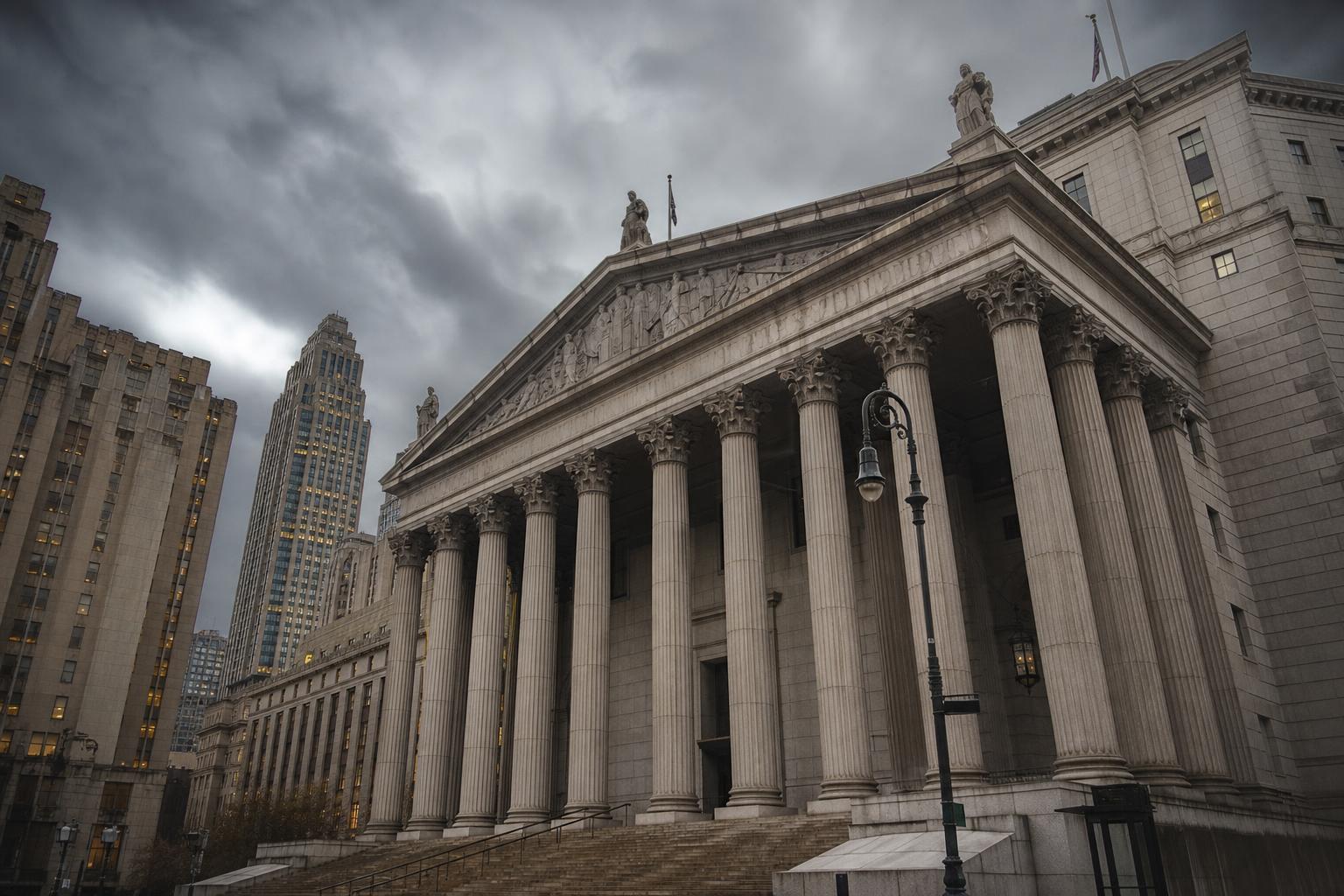
A federal judge in New York just handed Kalshi its biggest legal defeat to date — and it happened in the financial capital of the United States.
Judge Analisa Torres of the Southern District of New York (SDNY) denied Kalshi's request for a preliminary injunction against New York gaming regulators on July 8, 2026. The ruling means New York can continue enforcing its gambling laws against Kalshi's sports-event prediction contracts while the case moves to the motion-to-dismiss stage.
For sports gaming attorney Daniel Wallach, the stakes were clear: "Major, major loss for Kalshi in the financial capital of the US, with likely knock-on effects in other cases."
If you're a prediction market user, this ruling shapes where you can trade, what legal protection platforms can claim, and how close this fight is to reaching the U.S. Supreme Court.
What Happened in the SDNY on July 8
The case is KalshiEX LLC v. Williams, Case No. 1:25-cv-08846 (S.D.N.Y.).
Here's the timeline:
- October 24, 2025: New York State Gaming Commission (NYSGC) sends Kalshi a cease-and-desist letter over its sports-event contracts.
- October 27, 2025: Kalshi sues the NYSGC, seeking a temporary restraining order and preliminary injunction to block state enforcement.
- October 28, 2025: NYSGC agrees not to enforce the C&D while the court considers the motion.
- July 8, 2026: Judge Analisa Torres denies Kalshi's motion for a preliminary injunction. Kalshi files a same-day appeal to the U.S. Court of Appeals for the Second Circuit.
Judge Torres, known for presiding over the high-profile SEC v. Ripple Labs XRP case, wrote a 22-page opinion finding that "New York gambling laws as applied to Kalshi's sports-event contracts are not preempted by the CEA," and that Kalshi had not made "a clear or substantial showing that it is likely to succeed on the merits" — the legal standard required to win a preliminary injunction.
The Legal Core: Three Preemption Theories, All Rejected
Kalshi's central argument is that its sports-event contracts are CFTC-regulated swaps traded on a designated contract market (DCM) under the Commodity Exchange Act (CEA), and therefore federal law preempts state gambling regulation. Judge Torres rejected all three preemption theories Kalshi advanced.
Field Preemption
Kalshi argued that Congress intended federal commodities law to occupy the entire regulatory field, leaving no room for state gambling laws to apply.
Torres rejected this, citing the CEA's own savings clause and the Special Rule in 7 U.S.C. § 7a-2(c), which explicitly allows the CFTC to prohibit event contracts tied to "gaming" and "activity that is unlawful under any Federal or State law." The court found this provision "severely undercuts Kalshi's suggestion that Congress intended to displace all state laws."
The court applied the presumption against preemption, noting that "the scope of laws regulating gambling and lotteries is clearly a matter of predominantly state concern."
Conflict Preemption
Kalshi argued that complying with New York's gambling laws would directly conflict with CFTC rules — specifically, the requirement that DCMs provide impartial market access.
Torres was unconvinced. She wrote that "there is nothing preventing Kalshi from obtaining a license pursuant to New York law." Get a state license, and there's no conflict.
Why This Matters Legally
The court's use of the CEA's own savings clause against Kalshi is significant. If Congress had wanted to fully preempt state gambling authority, it wouldn't have given the CFTC explicit power to prohibit contracts tied to activities that state laws deem unlawful. Torres read that language as evidence Congress left room for state regulation — the opposite of what Kalshi needs to win.
All Four Winter Factors Weighed Against Kalshi
To win a preliminary injunction, a party must satisfy all four factors from the Winter v. Natural Resources Defense Council test:
-
Likelihood of success on the merits — Torres found Kalshi had not made the required "clear or substantial showing." FAIL.
-
Irreparable harm — The court held that Kalshi's alleged injuries were "largely monetary" and that the cost of geolocating users state-by-state was an "ordinary burden" of complying with government regulation. FAIL.
-
Balance of equities — The court sided firmly with New York, citing risks to individuals between the ages of 18 and 24 (considered a "high-risk population for gambling addictions"), concerns over the integrity of college sports, and the state's sovereign interest in enforcing democratically enacted statutes. FAIL.
-
Public interest — Aligned with the balance of equities analysis. FAIL.
A clean 0-for-4 on the Winter test is a decisive loss, not a close call.
The Circuit Scorecard: Where Kalshi Stands Nationally
The SDNY ruling doesn't exist in a vacuum. Courts across the country have split on whether federal law preempts state gambling authority over prediction markets.
Courts that granted Kalshi injunctive relief (pro-platform):
- Nevada: KalshiEx LLC v. Hendrick — preliminary injunction granted
- New Jersey / Third Circuit: KalshiEX LLC v. Flaherty, No. 25-1922 (3d Cir. Apr. 6, 2026) — Third Circuit ruled for Kalshi
Courts that denied Kalshi injunctive relief (pro-state):
- Maryland: KalshiEx LLC v. Martin, No. 1:25-cv-01283 (D. Md.) — ruled against Kalshi
- Massachusetts: Commonwealth v. KalshiEx LLC — ruled against Kalshi
- New York: KalshiEX LLC v. Williams, No. 1:25-cv-08846 (S.D.N.Y.) — today's ruling
This is now an explicit circuit split in the making. The Third Circuit (covering New Jersey) ruled for Kalshi in April 2026. The Second Circuit (covering New York and Connecticut) now gets Kalshi's appeal. The split between circuits is precisely the kind of disagreement that pushes cases toward the U.S. Supreme Court.
What Happens Next
Second Circuit appeal: Kalshi filed a notice of appeal on the same day as the ruling, taking the case to the U.S. Court of Appeals for the Second Circuit. Kalshi will also likely seek an emergency injunction pending that appeal, to prevent New York enforcement during the appellate process. If the 2nd Circuit denies that stay, enforcement could begin imminently.
NY AG civil action: New York Attorney General Letitia James is expected to file a civil enforcement action against Kalshi in state court seeking restitution, disgorgement, civil penalties, and injunctive relief.
Connecticut: Kalshi is fighting Connecticut in KalshiEx LLC v. Cafferelli, No. 3:25-cv-02016 (D. Conn.). Attorney Wallach flagged Connecticut specifically as the jurisdiction most at risk from today's outcome — the SDNY reasoning will be cited directly.
Coinbase and Gemini: The NY AG also sued Coinbase Financial Markets and Gemini Titan in April 2026 over their prediction market products, cases now in federal SDNY. Today's ruling could embolden the AG to push harder on those fronts as well.
CFTC NPRM: The CFTC's June 10, 2026 Notice of Proposed Rulemaking on sports event contracts is still pending. Federal legislative or rulemaking action could change the preemption calculus — but that's months away.
What Does This Mean for Prediction Market Users?
If you're currently trading on Kalshi in New York: Nothing changes today. The case moves to the motion-to-dismiss stage, and Kalshi's same-day 2nd Circuit appeal could result in a stay that pauses enforcement. You can still access the platform.
Longer-term risk: If Kalshi loses the 2nd Circuit appeal and can't get a stay, New York enforcement could force Kalshi to restrict NY users from sports-event contracts — or require a New York gaming license. Judge Torres ruled obtaining that license is an option Kalshi has; Kalshi argues it isn't.
For traders on other platforms: Robinhood routes through Kalshi's exchange for event contracts, so its New York sports market exposure follows the same trajectory. Polymarket (QCX LLC), operating under its own CFTC DCM designation for US sports markets, faces parallel state-level pressure. FanDuel Predicts and DraftKings Predictions route through CME Group infrastructure — their legal analysis is separate.
FAQ
What is the preliminary injunction that was denied? A preliminary injunction would have blocked New York from enforcing its gambling laws against Kalshi's sports-event contracts while the full lawsuit played out. Kalshi lost that request. The underlying lawsuit continues — Kalshi can still try to win at the motion-to-dismiss stage or at trial.
What's a circuit split, and why does it matter? Federal courts are grouped into circuits. The 2nd Circuit covers New York; the 3rd Circuit covers New Jersey. When two circuits reach opposite conclusions on the same legal question, that's a "circuit split" — and the Supreme Court often resolves them. The 3rd Circuit ruled for Kalshi in April 2026. If the 2nd Circuit rules against Kalshi, that's a split with SCOTUS potential.
Can Kalshi still operate in New York? For now, yes. Today's ruling moves the case to motion-to-dismiss briefing, not an immediate shutdown. Kalshi's 2nd Circuit appeal also creates the possibility of a stay pending appeal. But enforcement risk is now elevated, and the legal shield Kalshi had before today is gone.
Does this affect Polymarket or Robinhood? Polymarket (QCX LLC) faces its own state-level legal pressure but under a separate structure. Robinhood's New York event-contract exposure tracks Kalshi's since it uses Kalshi's DCM. Users of both platforms in New York should watch the Second Circuit closely.
What's the CEA Special Rule Judge Torres cited? 7 U.S.C. § 7a-2(c) allows the CFTC to prohibit event contracts involving activity "that is unlawful under any Federal or State law." Torres read this as Congress explicitly leaving room for state law to define what's unlawful — meaning the CEA itself doesn't preempt state gambling authority the way Kalshi argued.
The Bigger Picture
The prediction market legal map is more fragmented than ever. Kalshi has won in some states and lost in others, creating a national patchwork that is ultimately unsustainable — and increasingly likely to force a Supreme Court resolution.
Short-term: watch the Second Circuit for a ruling on a stay pending appeal. Medium-term: watch for the NY AG's civil enforcement action. Long-term: watch for whether the CFTC's sports event contract NPRM finalizes rules that could settle the preemption question through rulemaking rather than years of additional litigation.
PredictionMarkets.US is tracking every ruling, filing, and regulatory development as this fight moves toward its conclusion. Explore our state-by-state prediction market guide to see where you can trade today.
Sources & Verification
- KalshiEX LLC v. Williams, Case No. 1:25-cv-08846 (S.D.N.Y.) — CourtListener — case docket; case details, timeline, and all parties verified — July 8, 2026
- 7 U.S.C. § 7a-2(c) — CEA Special Rule, Cornell Law LII — Special Rule provisions verified
- Winter v. Natural Resources Defense Council, 555 U.S. 7 (2008) — Justia — four-factor preliminary injunction standard verified
- CFTC Press Release 9211-26 — Third Circuit ruling for Kalshi — Third Circuit ruling (KalshiEX LLC v. Flaherty, 3d Cir. Apr. 6, 2026) confirmed
- Daniel Wallach (Wallach Legal), public statement July 8, 2026 — "Major, major loss for Kalshi in the financial capital of the US, with likely knock-on effects in other cases"
- Eleanor Terrett, Fox Business, July 8, 2026 — SDNY denial and same-day Second Circuit appeal filing reported
- Prediction Market Litigation Tracker — Mick Bransfield — case numbers for all state-level Kalshi litigation confirmed