
Swaps or Sports Bets? Inside Kalshi's Massachusetts Supreme Court Showdown
The Massachusetts Supreme Judicial Court heard oral arguments in Commonwealth v. KalshiEX LLC on May 4, 2026 — the first state high court to weigh whether sports prediction contracts are federally regulated swaps or state-regulated bets.
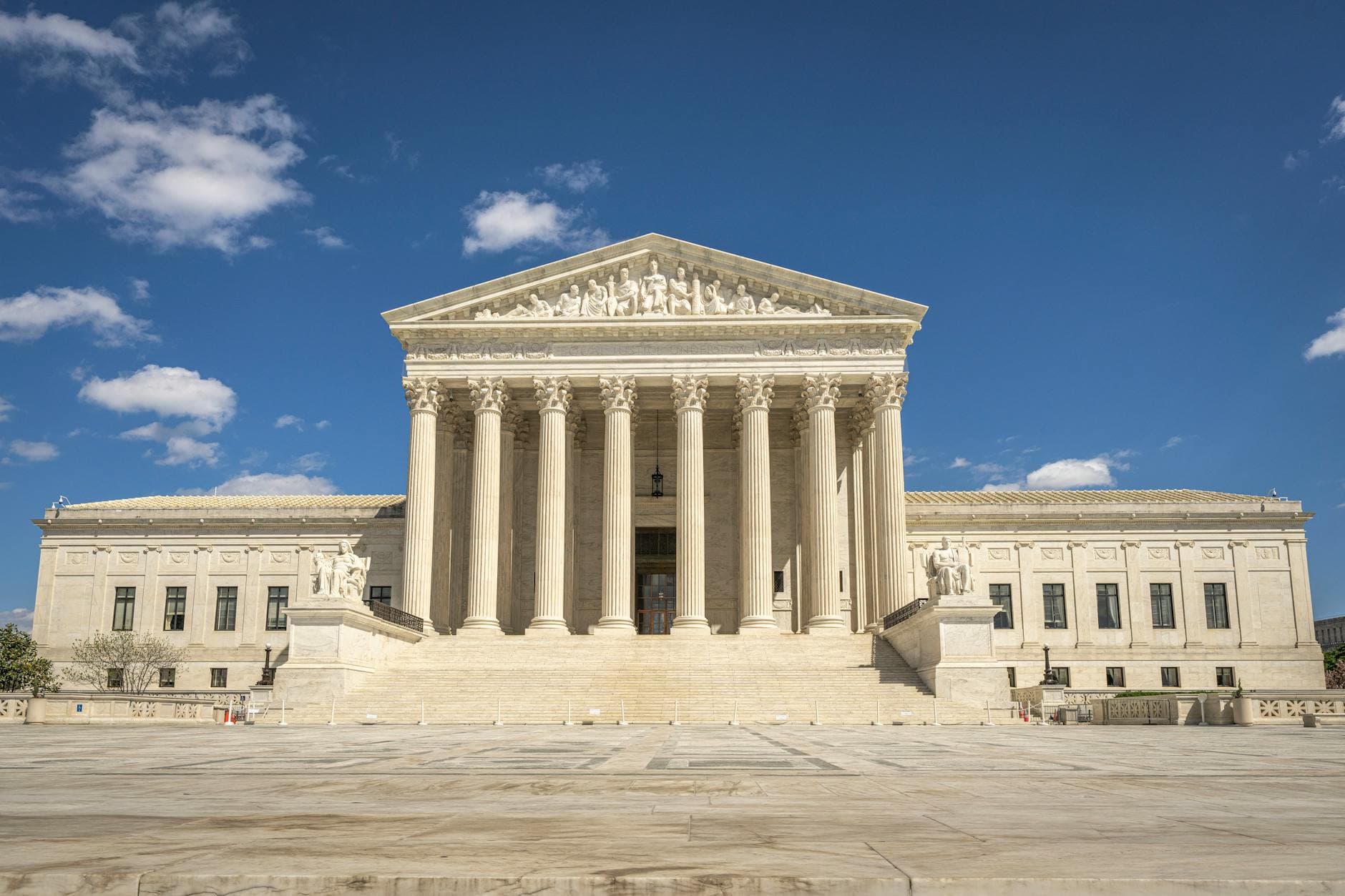
On Monday, May 4, 2026, the Massachusetts Supreme Judicial Court heard oral arguments in one of the most consequential legal fights in prediction market history. The question the seven justices wrestled with for over an hour: are Kalshi's sports-event contracts financial derivatives subject to exclusive federal regulation — or are they simply sports bets dressed in Wall Street language?
The answer will help determine whether states can ban prediction markets from offering sports contracts, or whether federal law locks the door.
The Case That Got Here First
Massachusetts was the first state to sue Kalshi. In September 2025, Attorney General Andrea Joy Campbell filed suit alleging that Kalshi was operating illegal sports wagering without a state license, in violation of Massachusetts' Sports Wagering Act of 2022 (Chapter 23N of state law). The lawsuit accused Kalshi of sidestepping consumer safeguards, including the state's minimum gambling age of 21, and claimed the platform uses design features that encourage "impulsive engagement" and diminish users' "perception of financial risk."
A Suffolk Superior Court judge issued a preliminary injunction in February 2026, barring Kalshi from offering sports-events contracts in Massachusetts. Kalshi appealed immediately, and the injunction was placed on hold while the case moved forward. The Massachusetts Supreme Judicial Court accepted direct appellate review — fast-tracking the dispute to the state's highest court.
The case is Commonwealth of Massachusetts v. KalshiEX LLC, SJC-13906. It is the first time any state high court has addressed whether prediction market sports contracts fall under federal or state authority.
The Legal Question at the Core
The dispute turns on a single consequential question: does the Commodity Exchange Act (CEA), as updated by the Dodd-Frank Act of 2010, grant the Commodity Futures Trading Commission such "exclusive jurisdiction" over swap contracts that state sports-wagering laws cannot apply to Kalshi's sports-event markets?
Kalshi's position: Its sports-event contracts are swaps — financial derivatives that fall under the CEA's definition of a swap as any contract dependent on "the occurrence, non-occurrence, or the extent of the occurrence of an event or contingency associated with a potential financial, economic, or commercial consequence." Congress granted the CFTC exclusive authority over swaps in the Dodd-Frank Act. Because Kalshi is a CFTC-registered designated contract market, Massachusetts law cannot apply.
Massachusetts's position: Kalshi's sports contracts are sports bets, not swaps. They don't carry the kind of financial, economic, or commercial consequence that qualifies them as derivatives under the CEA. And even if they technically met the swap definition, they still constitute "accepting wagers on sporting events" under Chapter 23N — a category Congress never intended to hand to the CFTC.
What the Justices Said
The court did not hide its skepticism of Kalshi's position. But justices also pressed the state — and at least one exchange revealed genuine uncertainty about whether Kalshi's exchange model is categorically different from a sportsbook.
Chief Justice Scott Kafker was the sharpest skeptic. He pressed Kalshi's lawyer, Grant Mainland of Milbank, on why Congress would have silently stripped states of their historical authority over sports wagering when it expanded the CFTC's swap jurisdiction in 2010.
"Sports gambling's huge," Kafker observed. "If Congress was going to shift it to the CFTC, wouldn't it do it more clearly and distinctly?"
Kafker called Kalshi's argument an "elephant in a mouse hole" — invoking the major-questions doctrine, which holds that Congress must speak clearly when handing agencies authority over issues of major economic and political significance. He was equally plain about how an ordinary person would experience Kalshi's platform: "If you want to gamble on a game, this is one way to do it." And when Mainland insisted that prediction market contracts are fundamentally different from sportsbook wagers, Kafker replied: "I just feel like you're swimming upstream."
Justice Gabrielle Wolohojian challenged Kalshi's framing directly. "In what way do they differentiate from what would colloquially be known as a bet?" she asked. If one "zoomed up one level," she suggested, Kalshi's swaps "would not be conceptually incompatible with what we historically understand to be a bet or a wager."
Justice Dalila Argaez Wendlandt took a distinctive approach — opening by pressing the state's attorney first. "The definition of swap is pretty broad so tell me why it hasn't preempted state law," she asked deputy state solicitor Gerard Cedrone. But she later joined the skeptical wing: "If Congress was going to take some role in sports gambling, it would have been more explicit."
Justice Serge Georges Jr. offered the most substantive pushback on the state's theory. "Kalshi operates this marketplace where users set odds with each other," he noted. "Doesn't that resemble more of a financial exchange, rather than a house-based system?" — a question that cut at the state's claim that Kalshi is just another sportsbook.
Justice Elizabeth Dewar raised the practical problem with the state's position: "Doesn't it make sense that something that's on a DCM, which is this federally CFTC-regulated market, that it would be really unwieldy for 50 different states' laws to be applicable to those transactions?" The CFTC's own amicus brief had flagged exactly this risk — that a ruling for Massachusetts could trigger a "patchwork of state restrictions" on nationally traded swaps.
Justice Frank Gaziano took a different tack against Kalshi — challenging whether purely entertainment-focused prop bets could possibly qualify as swaps under the CEA's financial-consequence requirement. Would contracts on "whether the chain gang is going to come out and measure for a first down in the Super Bowl" or "the color of the Gatorade" qualify as contracts with financial, economic, or commercial consequences? Gaziano suggested the answer is obviously no.
The Arguments for Each Side
Grant Mainland for Kalshi (Milbank): Kalshi is a CFTC-registered designated contract market and derivatives clearing organization operating under continuous federal regulatory supervision. The Dodd-Frank Act of 2010 broadened the CEA's definition of swaps to include event-contingent contracts with potential financial consequences — and Congress was aware when it did so that event contracts might involve sports. The CFTC has affirmed this interpretation under the current administration.
Mainland also argued structural differences: Kalshi doesn't set odds, doesn't act as the house, and operates an open marketplace where prices are set by competing participants. Insurance companies with sports exposure, he said, use the platform to hedge against risk — a genuinely financial use case that distinguishes it from casino gambling.
Gerard Cedrone for Massachusetts (Massachusetts AG's Office): Kalshi's contracts look like sports bets because they are sports bets. The CEA's swap definition requires financial, economic, or commercial consequences tied to a contractual relationship — not consequences that flow solely from the outcome of a game. The "event" at issue is a game result or player performance, not an economic occurrence.
Cedrone drew an analogy to parimutuel horse racing: racetracks don't set odds, bettors wager against each other, and prices fluctuate based on money wagered. It's structurally similar to Kalshi. But it has never been classified as commodity trading — it is sports betting, regulated by the states.
Accepting Kalshi's argument, Cedrone told the court, would usher in a "sea change" in gaming regulation: "blocking out state regulation of what is in all respects a sports bet." He also disputed Mainland's characterization of Kalshi as a neutral marketplace — noting that Kalshi has an affiliated entity that sometimes takes the other side of user bets on its own platform.
The National Legal Battlefield
Massachusetts is one front in a war now spanning more than 30 state and federal actions. Two critical federal appellate rulings have already shaped the landscape:
Third Circuit (April 6, 2026 — for Kalshi): In KalshiEX LLC v. Flaherty, the Third Circuit ruled 2-1 that the CFTC has exclusive jurisdiction over Kalshi's sports-event contracts, upholding a preliminary injunction that blocked New Jersey gaming regulators. This is the strongest federal appellate ruling in Kalshi's favor — and the one Mainland cited repeatedly at the SJC argument.
Ninth Circuit (argument April 2026 — pending): The Ninth Circuit heard arguments on Nevada's case last month. Nevada is currently the only state that has successfully implemented a court-ordered block on Kalshi's sports contracts. A ruling is pending. The Fourth and Sixth Circuits also have active cases on the same issue.
The Massachusetts case is distinct: it is the first state high court to weigh in, and its ruling will not be bound by the Third Circuit's federal precedent. A split between state and federal court conclusions would sharpen the case for U.S. Supreme Court review.
The coalition arrayed against Kalshi is large and bipartisan: 38 state attorneys general and dozens of tribal organizations filed amicus briefs supporting Massachusetts' authority to regulate sports betting within its borders. The CFTC filed its own amicus supporting Kalshi — warning that if Massachusetts prevails, other states could characterize any derivative as prohibited gambling, "thereby subjecting nationally (and internationally) traded swaps to a patchwork of state restrictions."
What This Means for Traders
If the Massachusetts SJC rules against Kalshi, the company would be barred from offering sports-event contracts to Massachusetts residents — joining Nevada as the second state with a court-ordered ban in effect.
For traders in other states, the immediate practical impact would be limited: Kalshi's sports markets remain fully operational while litigation continues. The Third Circuit's ruling keeps federal preemption alive in New Jersey, and Kalshi continues operating its sports markets nationally (subject to ongoing state-level uncertainty).
A SJC ruling against Kalshi would, however, create legal ammunition for other states pursuing their own enforcement actions, and it would deepen the split between state and federal court decisions — accelerating pressure for a Supreme Court resolution.
Kalshi remains a CFTC-regulated designated contract market and derivatives clearing organization. It charges a formula-based fee of up to 1.75 cents per contract on sports markets. Availability of specific market categories varies by state as litigation progresses.
What Comes Next
The Massachusetts SJC's ruling is expected within approximately four months of the May 4 oral argument — likely by late summer or early fall 2026. The case was accepted on direct appellate review; the SJC's decision is final at the state level (subject only to any U.S. Supreme Court petition).
Regardless of the Massachusetts outcome, the prediction market sports-betting fight is building toward a national resolution. With nearly 40 states unified against the CFTC's preemption position and multiple federal circuits in play, a Supreme Court petition — from one side or the other — appears increasingly likely.
The oral argument's most interesting signal: even Kafker, the court's sharpest skeptic, acknowledged that Kalshi's exchange structure has features that "resemble more of a financial exchange" — suggesting the court may not rule on a simple swap/bet binary but instead craft a narrower doctrinal framework. Watch for a ruling that turns on whether specific market types (parlays, live in-game bets, prop bets) qualify as swaps even if the category broadly does not.
Frequently Asked Questions
Can I still trade on Kalshi's sports markets? Yes — in most states. The Massachusetts preliminary injunction remains on hold while the appeal is pending. Kalshi continues to offer sports-event contracts nationally, except in Nevada, where a court-ordered block is in effect. Check Kalshi's platform availability page for current state-level status.
What is the CFTC's role in this dispute? The CFTC regulates Kalshi as a designated contract market and derivatives clearing organization under the Commodity Exchange Act. The agency filed an amicus brief in the Massachusetts SJC case supporting Kalshi's position that the CEA preempts state sports-wagering laws. The current administration has consistently sided with prediction markets in the federal-versus-state jurisdiction fight.
What would a Massachusetts ruling against Kalshi mean nationally? A ruling against Kalshi would affirm Massachusetts' authority to ban sports-event contracts without a state gaming license. It wouldn't bind other states or federal courts, but it would deepen the split with the Third Circuit's federal ruling — likely accelerating a U.S. Supreme Court petition. A ruling for Kalshi would weaken other states' enforcement efforts and reinforce the Third Circuit precedent.
How is Kalshi different from a regular sportsbook? Kalshi operates as an open exchange: users trade contracts with each other, prices fluctuate based on market activity, and the platform charges a percentage-based fee rather than setting odds. Traditional sportsbooks set their own lines and take bets against the house. Whether this structural difference is legally meaningful under the CEA is precisely what the SJC is deciding.
When will the SJC issue its ruling? The ruling is expected within approximately four months of the May 4, 2026 oral argument — likely by late summer or early fall 2026.
Conclusion
The Massachusetts Supreme Judicial Court's oral arguments reveal a court that is skeptical of Kalshi's core claim — but genuinely uncertain about where to draw the line. The "swimming upstream" and "elephant in a mouse hole" language signals a court inclined toward state authority. But questions from Justices Georges and Dewar about Kalshi's exchange structure and the chaos of 50-state regulation suggest the ruling may be more nuanced than a simple loss for prediction markets.
What is already clear: the prediction market industry's claim to exclusive federal protection is being tested simultaneously in every federal circuit and now in the first state high court. The Massachusetts SJC ruling — expected by fall 2026 — won't settle the national debate, but it will define the stakes for whoever ultimately takes this to the Supreme Court.
For the full landscape of state and federal actions, see The State Legal Battle Over Prediction Markets. For background on the Third Circuit ruling that Kalshi is citing as its strongest precedent, see Kalshi Wins in New Jersey: What the Third Circuit Ruling Means. For context on how prediction markets compare to traditional sportsbooks, see Prediction Markets vs. Sports Betting: What's the Difference?.
Sources & Verification
- Massachusetts SJC docket SJC-13906: Massachusetts Appellate Courts — verified May 5, 2026
- Massachusetts AG Campbell's complaint: Official AG filing
- Kalshi's SJC brief: SJC-13906 Appellant Brief
- Commonwealth's SJC brief: SJC-13906 Appellee Brief
- Reuters, May 4, 2026: Massachusetts top court appears open to state ban on Kalshi sports betting
- CommonWealth Beacon, May 4, 2026: Clash with prediction market giant Kalshi reaches SJC
- Massachusetts Lawyers Weekly, May 4, 2026: Swaps or bets? SJC digs into sports prediction market case
- Courthouse News Service, May 4, 2026: Massachusetts high court puts Kalshi on defense
- CFTC DCM registry listing for Kalshi: CFTC Organization Filing 42993 — verified May 5, 2026
- Third Circuit ruling, April 6, 2026: Confirmed via Reuters and CommonWealth Beacon; CFTC press release