
John Oliver Just Covered Prediction Markets. Here's What Traders Actually Need to Know.
HBO's John Oliver spent 33 minutes critiquing Kalshi and Polymarket on April 19. Here's a balanced breakdown of what's verifiable, what's missing context, and what it means for traders.
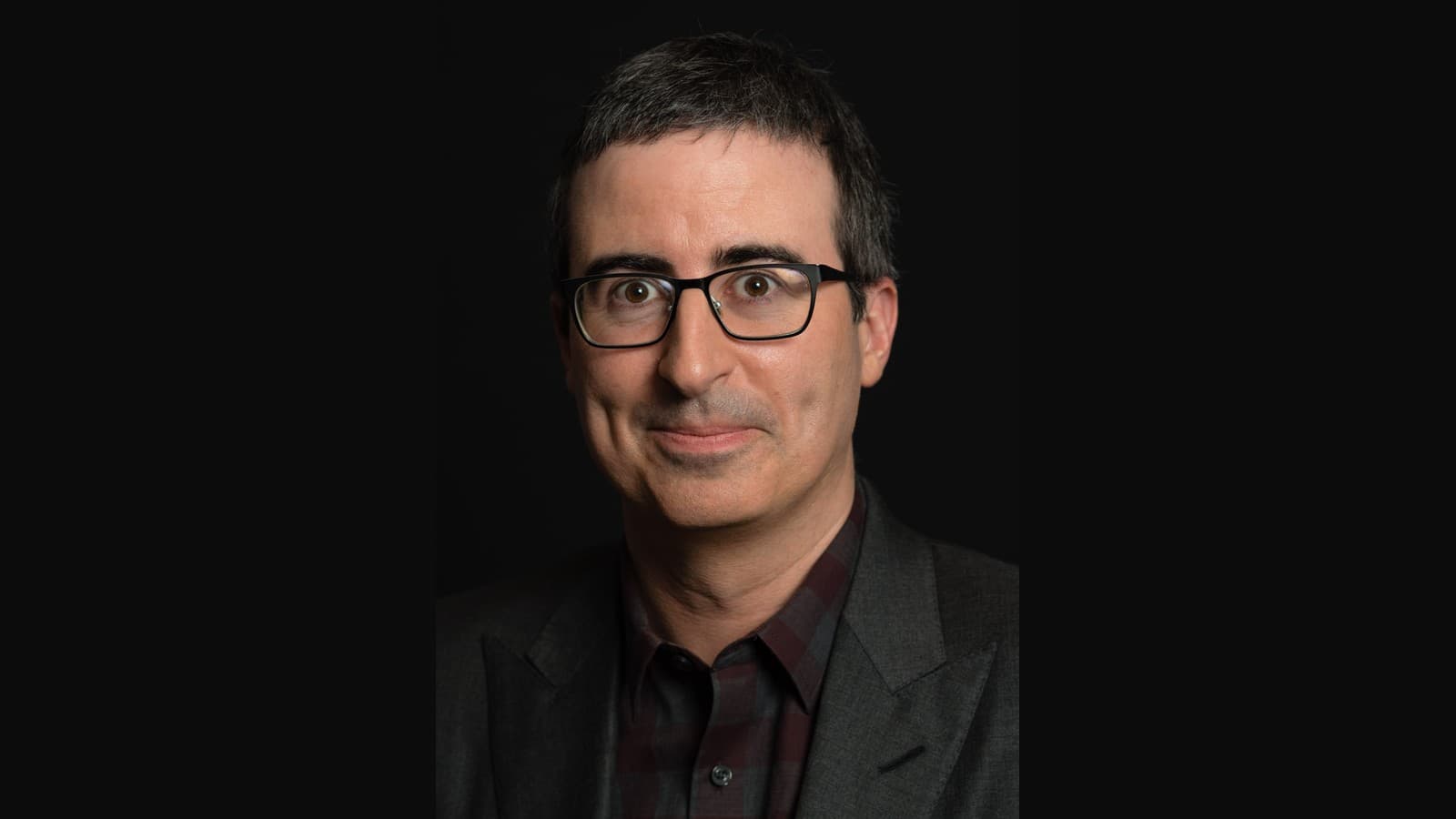
On Sunday, April 19, 2026, HBO's Last Week Tonight with John Oliver aired a 33-minute segment on prediction markets — the longest mainstream television takedown of Kalshi and Polymarket to date. If you trade on either platform, or are thinking about it, the segment raised questions worth answering honestly.
Oliver's critique covered five areas: whether prediction markets are really "not gambling," the concentration of winnings among a small group of traders, media partnership disclosures, Donald Trump Jr.'s advisory roles at both companies, and suspicious geopolitical trades that look like insider trading. Some of those arguments are well-sourced and land. Others are oversimplified. This article breaks down what's verifiable, what's missing context, and what it means for you as a trader.
What the Segment Actually Covered
Oliver framed his argument around two central claims that prediction market companies make about themselves: (1) that they're not gambling sites, and (2) that they're useful forecasting tools that benefit society. He argued both claims are overstated.
On the gambling question, Oliver's structural point is accurate: Kalshi and Polymarket are federally regulated under the Commodity Exchange Act, not state gambling laws. That's the legal basis for their operation in states where traditional sports betting remains illegal. Whether that makes them "not gambling" is a legitimate ongoing policy debate — more than 20 states have sued, arguing the distinction is a legal fiction. Courts are deciding it now, with the Third and Ninth Circuits having recently reached conflicting conclusions.
On the accuracy claim, Oliver acknowledged some wins (prediction markets outperformed polls on the 2024 U.S. election) while noting some misses (the 2026 Texas Republican Senate primary, where Polymarket showed Ken Paxton at 83% odds and he lost). That's an accurate representation of the record. Prediction markets aggregate available information efficiently — but they're not oracles, and they can fail badly in low-information environments.
The Media Partnership Disclosures
The segment's sharpest point was about media partnerships. Oliver noted that major news organizations have entered paid arrangements with prediction market companies:
-
CNN × Kalshi (December 3, 2025): Kalshi became CNN's official prediction market partner. CNN anchors incorporate Kalshi probability data into on-air reporting, and a Kalshi-branded ticker runs during relevant segments. CNN's own March 2026 reporting disclosed: "CNN has a partnership with Kalshi and uses its data to cover major events. Editorial employees are prohibited from participating in prediction markets." That disclosure appeared in a CNN story about the Trump family's prediction market ties.
-
CNBC × Kalshi (December 4, 2025): CNBC announced a multi-year exclusive partnership, the first between a major financial news network and a prediction market platform. Per the official CNBC press release, Kalshi data now appears in flagship programs including Squawk Box and Fast Money, and the deal includes exclusivity provisions preventing CNBC from working with competing platforms.
-
Fox Corporation × Kalshi (April 7, 2026): A sponsored integration covering FOX News Channel, FOX Business Network, FOX Weather, and FOX One streaming, announced via Reuters. The deal explicitly carves out Fox's political coverage (Fox will not use Kalshi data there) and excludes Kalshi's war and death markets from integration.
-
Dow Jones × Polymarket (January 7, 2026): The publisher of The Wall Street Journal, Barron's, and MarketWatch struck an exclusive data partnership with Polymarket, announced via Business Wire. Polymarket data now appears in dedicated modules across Dow Jones properties.
Oliver's concern was not that these partnerships are illegal, but that viewers watching CNN or Fox should know when the platform providing the "odds" on screen has a financial relationship with the outlet reporting those odds.
That's a fair transparency concern — and notably, CNN's own editorial policies address it (employees are prohibited from trading). But the viewer watching CNN see Kalshi probability graphics doesn't necessarily know that CNN has a paid exclusive deal with Kalshi, or that Kalshi is also paying Fox for a similar integration. Whether that level of disclosure is sufficient is a legitimate question for media ethics debates. For traders, the practical implication is simpler: these partnerships are good for platform liquidity (more users means tighter spreads), even if the editorial relationships raise disclosure questions.
The Concentration Problem: Who's Actually Winning?
Oliver cited "one analysis" showing more than two-thirds of all money won on Polymarket was held by approximately 740 accounts, despite the platform having over two million users.
The underlying data is real. Blockchain analyst DeFi Oasis published an on-chain analysis in December 2025 — reported by Yahoo Finance — examining over 1.7 million Polymarket trading addresses. The findings:
- Roughly 70% of trading addresses recorded net losses
- Fewer than 0.04% of addresses captured over 70% of total realized profits (totaling approximately $3.7 billion)
- 668 addresses with individual profits exceeding $1 million accounted for 71% of all realized gains
This is structurally similar to most financial markets: a small group of sophisticated traders (or algorithms) extracts most of the value from a large base of retail participants. It's the same pattern found in equity trading during the 2020-2021 retail boom.
What this doesn't mean: it doesn't mean the platform is "rigged." It means prediction markets, like most markets, reward information advantages and better probabilistic reasoning. The trader who correctly assessed in October 2024 that Trump would win the election made very large profits. The trader who bet on Parolin to become Pope lost. That's how markets work.
What it does mean for you: if you're trading prediction markets for expected profit, understand that you're competing against some of the sharpest probabilistic traders on the internet. Trading for hedging purposes (genuinely reducing exposure to a real risk) or for information value (using prices to understand probability distributions) are more defensible use cases than treating these platforms as easy money.
The Trump Jr. Conflict
Oliver flagged that Donald Trump Jr. serves in advisory roles at both major prediction market platforms simultaneously — a fact that has been reported across multiple news outlets.
Timeline of the disclosures:
-
January 13, 2025: Kalshi announced Trump Jr. as a strategic advisor. Fortune reported the role is paid and focused on partnerships and market strategy.
-
August 26, 2025: Polymarket announced Trump Jr. would join its advisory board as part of a strategic investment by 1789 Capital, the venture fund where Trump Jr. is a partner. Yahoo Finance reported the Polymarket role as unpaid but investment-linked.
-
January 15, 2026: The New York Times summarized the arrangement as: "Donald Trump Jr. is both an investor in and an unpaid adviser to Polymarket, and a paid adviser to Kalshi."
Trump Jr.'s spokesperson told CNN in March 2026 that he does not trade on prediction markets and has not interacted with the federal government on behalf of either company.
The reason this matters: the Trump administration's CFTC is actively defending prediction market companies against state lawsuits and is writing the rulemaking that will determine the industry's future. Having the president's son advising both of the largest platforms creates at minimum an appearance of conflict, even if no legal lines have been crossed. Ethics watchdogs have flagged it; multiple congressional Democrats have raised it publicly.
For traders, this is primarily a policy risk factor: if political winds shift, the favorable regulatory environment these platforms currently enjoy could change. The Trump family's financial ties make the current environment uniquely permissive — and that environment may not persist indefinitely.
The Insider Trading Concern
This is where Oliver's critique is most grounded in documented reporting.
Over the past several months, a series of suspiciously well-timed trades on Polymarket have attracted significant coverage:
Venezuela (January 2026): An anonymous trader made approximately $436,000 by betting that Venezuelan President Nicolás Maduro would be out of office, hours before U.S. special forces captured him. Reported by NPR and the BBC.
Iran war (February 2026): Six accounts created that month collectively earned $1.2 million betting the U.S. would strike Iran by February 28, with bets placed hours before the attacks began. Bloomberg and NPR reported the trades; blockchain analytics firm Bubblemaps identified the accounts. Five of the six accounts went dormant immediately after.
Iran ceasefire (April 2026): The Associated Press reported that at least 50 newly created Polymarket accounts placed substantial bets on a U.S.-Iran ceasefire in the hours and minutes before President Trump announced it. These were the only bets made through those accounts.
Harvard paper (March 2026): Researchers estimated that $143 million in profits have been made on Polymarket by individuals who potentially had insider information across events ranging from Taylor Swift's engagement to the Nobel Peace Prize — per AP and NPR reporting.
Rep. Ritchie Torres (D-NY) sent a formal letter to the CFTC demanding investigation. "What is the statistical likelihood that of anyone other than an insider trader placing a winning bet 12 minutes before a market-moving presidential announcement?" he asked.
The White House denied any administration officials were involved. Polymarket said it "maintains the highest standards of market integrity" and works with regulators.
The Kalshi difference: This insider trading concern applies specifically to Polymarket's global platform, which is crypto-based, offshore, and allows pseudonymous trading. Kalshi requires identity verification for all U.S. users and cooperates with the CFTC. When a Kalshi employee's associate (a video editor for MrBeast) was found to have traded on insider information, Kalshi identified the pattern, fined him, and disclosed the case publicly. That's a meaningful structural difference.
What Oliver Got Wrong (or Oversimplified)
Oliver made two claims that deserve pushback.
The accuracy record is stronger than he portrayed. Oliver highlighted the Texas Senate primary miss and the 2026 Super Bowl loss as evidence of unreliability. Both are real misses. But a recent paper cited by Futurism found Kalshi's economic and Fed policy predictions were "roughly consistent with those of professional forecasters." The accuracy story is more nuanced than a handful of high-profile misses suggest.
The "gambling" framing ignores real use cases. Oliver mocked the hedging argument. His example — what risk am I hedging against if I bet on the Masked Singer? — is fair for entertainment markets. But the Fed rate decision markets, hurricane probability contracts, and GDP release contracts do serve genuine hedging and risk-management purposes for businesses and investors. Those markets exist precisely because a party with real exposure to a Fed decision can lay off risk against a counterparty who disagrees. That's textbook derivatives.
The regulatory environment is actually improving. Oliver characterized the CFTC as doing nothing. In reality, the CFTC issued an Advance Notice of Proposed Rulemaking in March 2026 that explicitly asks what responsible gaming protections — including self-exclusion, deposit limits, and advertising warnings — should be required for prediction markets. That's not "not even trying."
What This Means for Traders
The Oliver segment isn't going to shut down Kalshi or Polymarket — both are federally regulated, both have significant institutional backing, and the courts have so far been broadly favorable on the federal preemption question.
But the segment is likely to accelerate three things:
-
More scrutiny on media partnerships. Expect news organizations to face more pressure to prominently disclose financial arrangements before featuring prediction market odds on screen.
-
More regulatory pressure on Polymarket's global platform. The insider trading pattern on Polymarket's offshore platform is the industry's most serious credibility problem. Congressional pressure for CFTC action on anonymous geopolitical trading will intensify.
-
More attention to concentration disclosure. If 70% of users are losing money and a tiny group of sophisticated traders captures most of the gains, platforms may eventually face disclosure requirements — similar to how stock brokers are required to disclose that most day traders lose money.
For traders who understand the odds they're up against and are using these platforms deliberately — for genuine hedging, for information value, or for carefully considered speculative positions — none of this changes the fundamental mechanics. The markets still price probabilities accurately enough to be useful. Just don't confuse "interesting data source" with "easy money."
Frequently Asked Questions
Does CNN knowing about Kalshi's data partnerships affect the odds I see? No. The market prices on Kalshi and Polymarket are set by traders, not by news organizations. CNN's editorial partnership doesn't influence what markets are priced at — it only affects how and whether that data gets mentioned on air.
Is it actually illegal to bet on Polymarket if I'm in the U.S.? Polymarket's global platform (polymarket.com) is not authorized for U.S. users. The U.S.-legal version is QCX LLC d/b/a Polymarket US (polymarketexchange.com), which currently offers sports markets only and operates under CFTC oversight. U.S. users who access the global platform via VPN may be violating terms of service.
Was the Maduro or Iran trade definitely insider trading? No criminal charges have been filed. The trades are suspicious and multiple congressional members have asked the CFTC to investigate. Polymarket denies knowledge of insider trading. No evidence has emerged publicly linking specific government officials to these accounts.
Is Kalshi safer from insider trading than Polymarket? Kalshi requires identity verification, cooperates with regulators and law enforcement, uses IC360's ProhiBet system to screen prohibited traders, and has demonstrated willingness to investigate and penalize insider trading cases. Polymarket's global platform allows anonymous crypto-based trading. Structurally, Kalshi has stronger insider trading controls for U.S. users.
Do prediction market companies have to disclose conflicts of interest? CFTC regulations require designated contract markets to have rules against insider trading and procedures for monitoring for it. There are no explicit disclosure requirements for advisory board relationships or political connections. That's one of the open questions in the CFTC's current rulemaking process.
Sources & Verification
- Last Week Tonight with John Oliver, Season 13, Episode 8 (April 19, 2026): HBO Max listing — verified April 21, 2026
- CNN × Kalshi partnership + CNN editorial disclosure: CNN.com, March 21, 2026 — verified April 21, 2026
- CNBC × Kalshi exclusive partnership: CNBC.com official press release, December 4, 2025 — verified April 21, 2026
- Fox Corporation × Kalshi integration: Reuters, April 7, 2026 — verified April 21, 2026
- Dow Jones × Polymarket exclusive deal: Business Wire via Yahoo Finance, January 7, 2026 — verified April 21, 2026
- Trump Jr. joins Kalshi as paid strategic advisor (January 2025): Fortune, January 13, 2025 — verified April 21, 2026
- Trump Jr. joins Polymarket advisory board, 1789 Capital invests (August 2025): Yahoo Finance, August 26, 2025 — verified April 21, 2026
- Trump Jr. "unpaid adviser to Polymarket, paid adviser to Kalshi": New York Times, January 15, 2026 — verified April 21, 2026
- Trump Jr. spokesperson denial of government contact on behalf of either company: CNN.com, March 21, 2026 — verified April 21, 2026
- Polymarket profit concentration (70% of addresses lost money; fewer than 0.04% captured 70%+ of gains): Yahoo Finance / DeFi Oasis, December 29, 2025 — verified April 21, 2026
- Maduro trade ($436,000 profit hours before capture, January 2026): NPR, March 1, 2026 — verified April 21, 2026
- Iran war trades ($1.2M profit across 6 accounts, February 2026): NPR, April 10, 2026 + BBC — verified April 21, 2026
- Iran ceasefire trades (50+ new accounts, minutes before announcement): AP via NPR/LA Times, April 10, 2026 — verified April 21, 2026
- Harvard paper on $143M potential insider trading profits on Polymarket: AP via LA Times, April 10, 2026 — verified April 21, 2026
- Rep. Torres CFTC letter, "12 minutes before" quote: AP via NPR, April 10, 2026 — verified April 21, 2026
- CFTC ANPRM on responsible gaming standards (March 16, 2026): Federal Register — verified April 21, 2026
- Kalshi identity verification + IC360 ProhiBet partnership: Axios, March 23, 2026 — verified April 21, 2026