
How to Read Fed Rate Prediction Markets: October 2026 FOMC Guide
The Fed raised rates to 3.75–4% in September. The October 27–28 FOMC meeting is 15 days away. Here's how to read prediction market odds on Kalshi and what the current ~83% hold probability means for investors and traders.
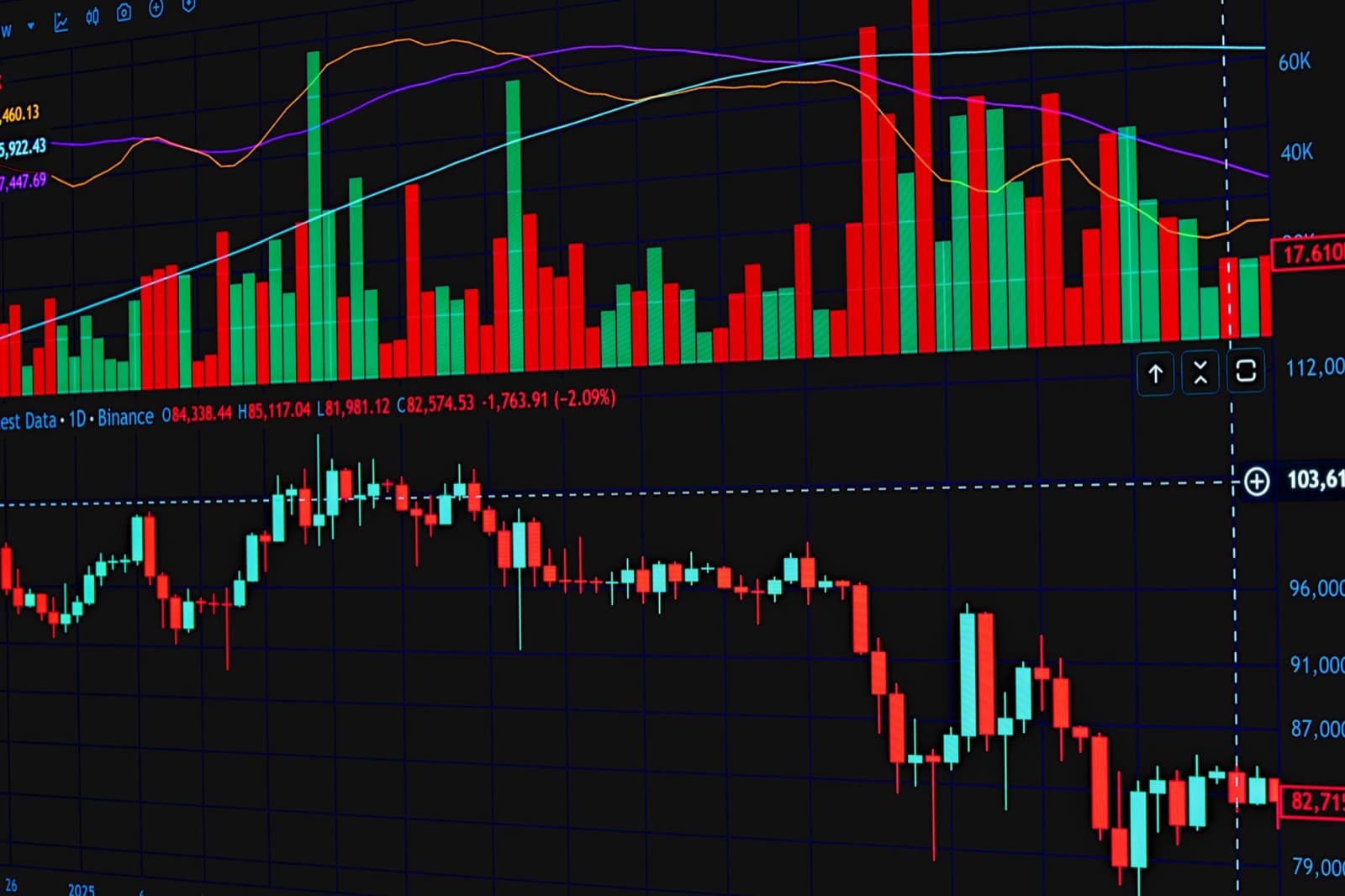
The Federal Reserve raised its benchmark rate to a target range of 3.75 to 4 percent on September 16, 2026 — a unanimous 12-0 vote, driven by persistently elevated inflation. Now, with the next Federal Open Market Committee meeting set for October 27–28, 2026, traders and investors are turning to prediction markets to gauge what the Fed will do next.
If you've wondered how to read and use Fed rate prediction markets, this guide breaks it all down — what these markets are, where to find them, what the current odds mean, and how to use them in your financial decision-making.
What Are Fed Rate Prediction Markets?
Fed rate prediction markets are financial contracts that let you trade on the outcome of upcoming FOMC decisions. Instead of analyzing economic data yourself, you can look at the aggregate judgment of thousands of traders who have put real money behind their views.
Prices in these markets reflect probabilities. If a contract titled "Fed holds rates in October" is priced at 83 cents, the market collectively assigns an 83% probability to the Fed holding rates steady at its October 27–28 meeting. If the outcome occurs, the contract pays $1. If it doesn't, it pays $0.
This is fundamentally different from a poll or a bank's internal forecast — participants have real financial skin in the game, which creates a powerful incentive for accuracy. And unlike analyst surveys, prediction markets update in real time as new data arrives.
Where to Find Fed Rate Prediction Markets
There are three main tools US investors and traders use to track Fed rate odds:
1. Kalshi (US-Licensed, Fully Accessible)
Kalshi is a CFTC-regulated Designated Contract Market (DCM) and Derivatives Clearing Organization (DCO), making it fully licensed for US participants. It offers dedicated markets on each FOMC meeting, including the October 2026 decision.
A standout feature: Kalshi's monetary policy and Fed funds rate markets carry zero taker fees. That means US traders can take a position on the FOMC outcome without paying a trading cost — one of the few categories on any regulated US prediction market exchange where that's true.
Kalshi's October 2026 market is live at kalshi.com/markets/kxfeddecision, offering contracts across all three major outcomes: Fed holds, Fed hikes 25 basis points, and in some meeting cycles, a Fed cut.
2. Polymarket (Global Platform — Not Available to US Users for This Market)
Polymarket is one of the world's largest prediction market platforms and runs extensive coverage of Fed rate decisions. However, US users need to understand an important structural distinction.
Polymarket's US-licensed entity — QCX LLC — relaunched for US users in December 2025 and is currently limited to sports markets only. Financial and monetary policy markets on Polymarket exist exclusively on the global platform, which is geo-blocked for US users. If you're based in the United States, Polymarket's Fed rate markets are not accessible through any licensed channel.
For non-US readers, Polymarket's Federal Reserve rates dashboard aggregates multiple FOMC meeting markets in one view.
3. CME FedWatch (Futures-Based — Different Methodology)
The CME FedWatch Tool is not technically a prediction market — it derives Fed rate probabilities from 30-Day Fed Funds futures contracts traded on CME Exchange. These futures reflect expected average interest rates over calendar months, not binary yes/no outcomes on a single FOMC decision.
CME FedWatch tends to track closely with Kalshi on rate decisions, but the participant pools differ: futures markets primarily aggregate institutional traders (banks, hedge funds, asset managers), while Kalshi includes a broader mix of retail and institutional participants. Both are worth monitoring when they diverge.
Current October 2026 FOMC Odds
As of mid-October 2026, prediction markets are strongly pricing in a rate hold at the upcoming October 27–28 FOMC meeting:
| Outcome | Market Probability | Notes |
|---|---|---|
| Fed holds at 3.75–4% | ~83% | Dominant market view |
| Fed hikes 25 bps to 4–4.25% | ~16% | Minority but meaningful |
| Fed cuts | <1% | Not meaningfully priced |
Prices reflect Kalshi's October 2026 Fed market as of mid-October 2026 and shift continuously. See Kalshi's live market for the current contract price.
The case for a hold: The September 16 hike was only six weeks before the October meeting — historically, the FOMC rarely moves twice in rapid succession without a material shift in the data. The committee's own language was measured: strong job gains, solid economic activity, and inflation "elevated" but not accelerating. Markets read that as a signal to pause and assess.
The case for another hike: "Inflation remains elevated" is the Fed's own framing. If CPI or PCE data released before October 27 surprises to the upside, the 16% hike probability could reprice quickly toward 30–40%. That minority contract is real risk capital, not noise.
What the September 2026 Decision Tells Us
The Fed's September 16, 2026 statement provides key context for reading October odds:
- Unanimous vote: The 12-0 decision suggests complete committee alignment. No dissenters calling for a pause, no hawks pushing for a double hike.
- Inflation framing: "Today's policy action will support a timelier return to the Committee's 2 percent goal" — the Fed still sees itself in tightening mode, but the word "timelier" implies patience over aggression.
- Growth language: "Economic activity is expanding at a solid pace" and "productivity growth is strong" — not the distress signals that would justify emergency action at the very next meeting.
The predictive signal: a unanimous, measured hike with optimistic growth language typically precedes a pause at the next meeting. Prediction markets are reflecting exactly that view.
How to Use Fed Rate Prediction Market Data
Fed rate prediction markets are useful tools beyond direct trading:
Portfolio positioning check: If you hold rate-sensitive assets — bonds, REITs, utilities, dividend stocks — prediction market odds give you a real-time market consensus to compare against your own thesis. If you're positioned for a hike and markets are at 83% hold, that's a prompt to revisit your assumptions or your hedge.
Real-time data interpretation: When key economic reports print — CPI, jobs report, PCE deflator — watch how Kalshi's Fed market odds move immediately afterward. A hotter-than-expected CPI print that shifts hike odds from 16% to 30% in 20 minutes is meaningful signal, even if you never trade a prediction market contract.
Calibration tool: Prediction markets are well-calibrated for near-term FOMC decisions — outcomes priced at 80% have historically occurred at roughly that rate. When the market is at 83/16, the minority scenario still happens around one in six times. Don't mistake a high probability for certainty.
Tracking the data calendar: With the October 27–28 meeting approaching, keep an eye on the September CPI print (October 15), September PCE (October 31 — after the meeting), and any Fed speaker remarks. Each of these events can move prediction market odds by 5–15 percentage points in minutes.
December 2026 and Beyond
The final FOMC meeting of 2026 is scheduled for December 8–9, per the Federal Reserve's meeting calendar. Kalshi offers markets on this meeting as well, though longer-term probabilities carry more uncertainty and should be read with more caution than the near-term October contracts.
The December market is a useful forward signal: if prediction markets are pricing significant additional tightening in December, that's a clue that traders expect the October hold to be followed by resumed action — not the end of the cycle.
Frequently Asked Questions
Are Fed rate prediction markets legal for US residents? Yes. Kalshi is a CFTC-licensed Designated Contract Market, making its Federal funds rate contracts fully legal for US participants. These are regulated financial contracts — not sports betting, not unregistered speculative markets.
How accurate are prediction markets at forecasting Fed decisions? Very accurate on near-term meetings. The closer the market is to the FOMC date, the more reliable the price. Longer-term forecasts (December and beyond) carry wider uncertainty. In general, prediction markets outperform expert surveys at short time horizons on binary rate decisions.
What's the difference between Kalshi and CME FedWatch probabilities? Kalshi offers binary event contracts: you buy a Yes/No outcome on a specific FOMC decision. CME FedWatch aggregates implied probabilities from 30-Day Fed Funds futures — a different contract aimed at institutional rate hedgers. Both address the same underlying question, but the contract mechanics, participant pools, and liquidity profiles differ.
Can US traders access Polymarket's Fed rate markets? No. Polymarket's licensed US venue (QCX LLC) covers sports markets only. Fed rate and monetary policy markets on Polymarket are on the global platform, which is geo-blocked for US users. For US traders, Kalshi is the primary licensed venue for Fed rate prediction markets.
Does trading Fed rate markets on Kalshi cost anything? Kalshi's monetary policy category — which includes Fed funds rate markets — carries zero taker fees. This is one of the platform's explicitly fee-free categories, making short-term positioning around FOMC meetings particularly cost-effective.
Conclusion
With the October 27–28 FOMC meeting two weeks out, prediction markets are offering a clear signal: an 83% probability of a hold at 3.75–4 percent. That reflects the recency of the September hike, the Fed's measured language, and continued economic resilience — not complacency.
Whether you're a fixed-income investor adjusting duration, a trader watching rate-sensitive sectors, or simply trying to understand what markets are actually pricing into the next Fed decision, Fed rate prediction markets on Kalshi give you the most direct, real-time read available to US traders.
Track live prediction market odds on the Fed, elections, sports, and global events at PredictionMarkets.US.
Sources & Verification
- Federal Reserve rate decision, September 16, 2026: Federal Reserve FOMC Statement, September 16, 2026 — verified 2026-10-13
- FOMC 2026 meeting calendar (October 27–28, December 8–9): Federal Reserve Meeting Calendars and Information — verified 2026-10-13
- September 2026 FOMC meeting minutes: FOMC Minutes, September 15–16, 2026 — verified 2026-10-13
- Kalshi Fed funds rate market, October 2026: Kalshi Fed Decision October 2026 — verified 2026-10-13
- Kalshi Federal Reserve category: Kalshi Economics — Fed — verified 2026-10-13
- Polymarket Federal Reserve rates dashboard: Polymarket Fed Rates — verified 2026-10-13
- CME FedWatch Tool methodology: CME Group FedWatch — verified 2026-10-13