
Project Freedom Started This Morning. Prediction Markets Think Hormuz Will Still Be Closed.
Trump launched Project Freedom to reopen the Strait of Hormuz today. Polymarket gives it a 5.5% chance by May 15 and 43% by end of June — here's why.
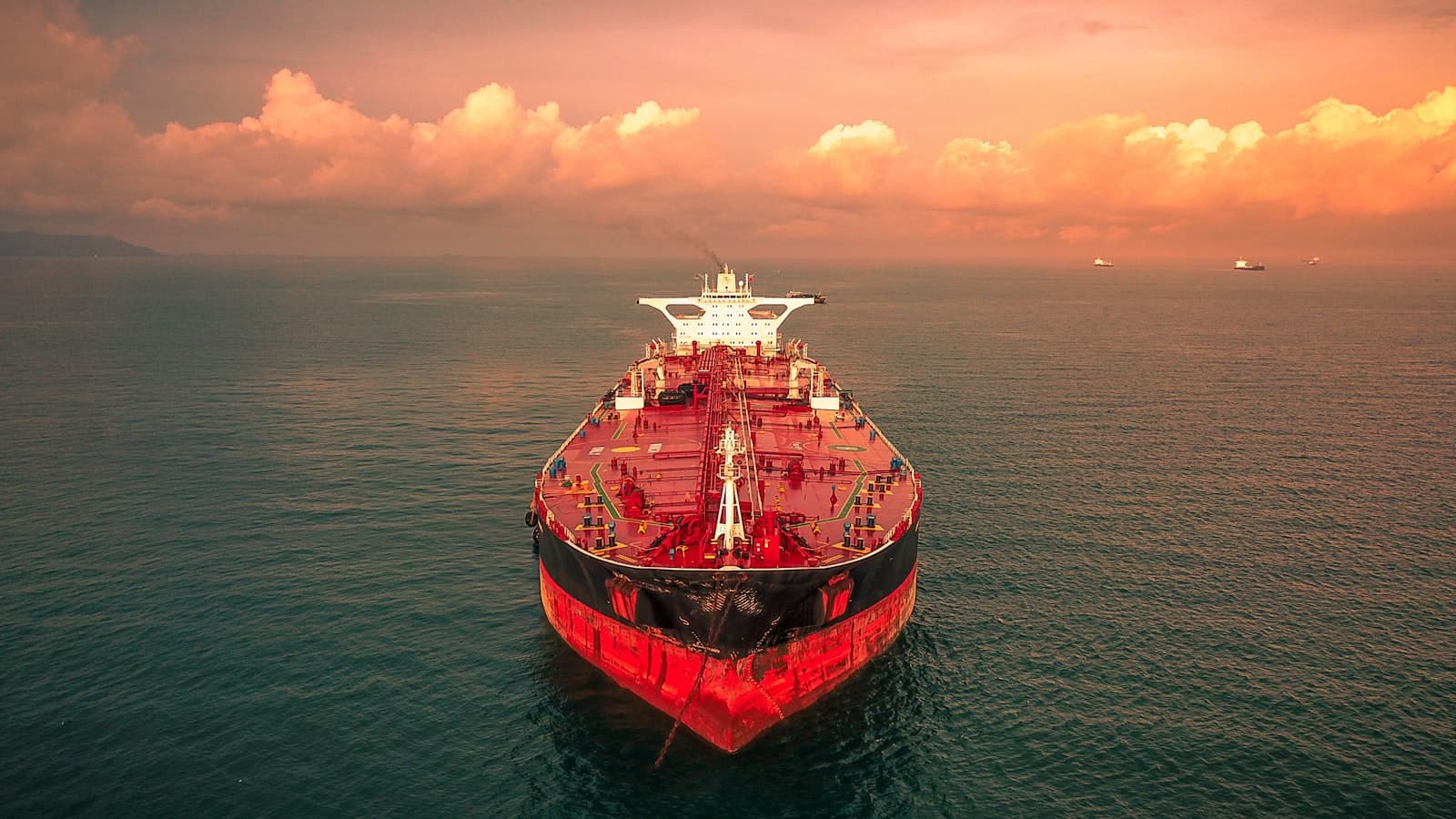
Trump launched a US naval operation to reopen the Strait of Hormuz today. Markets are pricing the odds of success at 5.5 cents — and that's for the next 11 days combined.
The Strait of Hormuz has been largely blocked since late February 2026, when the US and Israel launched military operations against Iran. Roughly 20% of the world's crude oil normally transits the waterway, and the closure has created the largest disruption to global energy supplies in recorded history. On Sunday night, President Trump announced "Project Freedom" — a US-coordinated effort to guide the more than 850 ships stranded in the Persian Gulf back through the strait and on their way.
Trading activity on Polymarket's Hormuz markets tells a different story from the White House's framing. Traders have seen the headlines, heard the announcements, and watched Iran fire on ships — and they're pricing this as a slow, grinding negotiation, not a dramatic breakthrough.
What "Normal" Actually Means — and Why the Bar Is Harder Than It Sounds
The Polymarket Hormuz markets don't resolve on vibes or headlines. They resolve on a specific, measurable threshold: the International Monetary Fund's Portwatch platform must publish a seven-day moving average of "Arrivals of Ships" for the Strait of Hormuz at or above 60 — for any day within the resolution window.
Portwatch tracks transit calls for container ships, dry bulk carriers, roll-on/roll-off vessels, general cargo ships, and tankers. The seven-day averaging means a single good day doesn't move the needle — the throughput has to be sustained over a full week before the market resolves YES.
IMF Portwatch Strait of Hormuz transit data is publicly accessible and updates continuously. This is not a judgment call — it's a data feed with a binary threshold.
In the months before the war, Hormuz was handling well above 60 daily transits on average. The war brought that figure close to zero. Getting back to 60 doesn't mean full recovery — it means approaching the lower bound of prewar normalcy. The markets are saying even that modest standard won't be met by the end of June with better than even-money confidence.
Three Horizons, Three Very Different Prices
Polymarket has created three separate markets tracking the same question at different time horizons. The spread between them tells you more than any single price:
"Strait of Hormuz traffic returns to normal by May 15?" — Trading at approximately 5.5 cents, with more than $6.5 million in total volume. This is the shortest window — 11 days from today. Traders are pricing this as an almost-certain failure. The market has $1.6 million in 24-hour volume, meaning this price is heavily traded and represents genuine conviction, not thin noise. View market
"Strait of Hormuz traffic returns to normal by end of May?" — Trading at approximately 19.5 cents, with more than $6.3 million in total volume. That's a roughly 1-in-5 chance for the next 27 days. Even with "Project Freedom" now active and the US military providing naval support, traders are saying there's only a one-in-five shot of hitting the IMF Portwatch threshold before June. View market
"Strait of Hormuz traffic returns to normal by end of June?" — Trading at approximately 43 cents, with nearly $2 million in total volume. Below even money for 57 days of runway. The market is not confident that a peace deal, mine clearance operation, and sustained transit recovery can all happen in less than two months. View market
The term structure itself carries information: each additional month buys roughly 23-24 percentage points of probability. That's not a steep ramp — it reflects trader expectations of slow, uncertain progress rather than a sudden reopening.
What Actually Happened Today
Monday, May 4 was supposed to be the first day of "Project Freedom." What the wire services reported looked nothing like a clean reopening.
US Central Command announced that American guided-missile destroyers were operating inside the Gulf, along with more than 100 aircraft and 15,000 service members. The Joint Maritime Information Center established an "enhanced security area" south of the typical shipping routes and urged mariners to coordinate closely with Omani authorities. It also issued a stark warning: the standard routes through the strait "should be considered extremely hazardous due the presence of mines that have not been fully surveyed and mitigated."
Two US-flagged merchant vessels were reported to have crossed the strait safely. Iran's Revolutionary Guards disputed this, saying no commercial vessels had made a crossing in recent hours. Reuters reported it could not independently verify the full situation.
While the competing claims about crossings were still unresolved, a South Korean merchant ship — the HMM Namu — was hit by an explosion inside the strait. Iranian drones separately caused a fire at an oil installation in the UAE port of Fujairah, located beyond the strait on the Gulf of Oman side.
Hapag-Lloyd, one of the world's largest shipping companies, told Reuters it still considered transit through the strait to be impossible. Major General Pilot Ali Abdollahi of Iran's military warned on state media: "We warn that any foreign military force — especially the aggressive U.S. military — that intends to approach or enter the Strait of Hormuz will be targeted."
That is the factual backdrop against which Polymarket's 5.5-cent May 15 price is sitting.
Why Traders Are Skeptical
Several distinct obstacles stand between today's situation and a sustained return to 60 daily transits:
Mine clearance is ongoing and dangerous. The US military's own announcement explicitly warned of uncleared mines in the standard shipping routes. Mine clearance in contested waters is a weeks-long, methodical process — not something that can be completed before a May 15 or even a May 31 deadline without significant acceleration and Iranian cooperation.
Iran has structural incentives to keep the strait contested. The US has maintained a naval blockade on Iranian ports since April 13. Iran's toll regime on transiting ships — reportedly running as high as $2 million per vessel — generates revenue it cannot access through its blockaded ports. A fully open strait on US terms removes Iranian leverage in ongoing negotiations.
The peace deal isn't done. Trump acknowledged on Sunday that Iran's latest 14-point proposal was "probably insufficient." Iran wants sanctions lifted, the naval blockade ended, US forces withdrawn, and hostilities in Lebanon ended — as conditions for ending the war. The US sent a counter-proposal through Pakistani mediators, but "no negotiations between the U.S. and Iran" are formally underway, as the Associated Press reported.
The ceasefire is fragile. The current ceasefire has held for roughly three weeks, but there has been no formal agreement on the terms that caused the war. Any escalation — like US forces intercepting Iranian action against a transiting ship — could breach the ceasefire. That risk premium is baked into every date-specific Hormuz market.
850 ships are stranded. The ships currently attempting to leave are the most motivated — they're running low on supplies and their crews are under duress. That first batch of crossings, if they happen, won't immediately translate into "normal" throughput. Commercial shippers need sustained safety signals before they'll reroute their regular operations back through the strait.
What Would Change the Prices
The end-May market at 19.5 cents would move sharply if any of the following happened:
- A verified, sustained wave of commercial crossings with no Iranian interference — changing the mine risk calculus for global shippers
- A framework peace agreement, even partial, that formally addresses Hormuz access
- IMF Portwatch publishing data showing transit numbers climbing toward the 60-ship threshold
- Iran publicly withdrawing its threat to target US military forces in the strait
Conversely, the prices could collapse toward zero if:
- Iran intercepts or attacks a US-escorted vessel, breaking the ceasefire
- Mine detonations sink or heavily damage a commercial vessel during Project Freedom
- Negotiations between the US and Iran break down entirely
The end-June market at 43 cents reflects a market genuinely uncertain about which scenario prevails.
A Note on Market Access for US Readers
These Hormuz markets are listed on global Polymarket. US-based traders cannot access them through the Polymarket US app. Polymarket's US entity — QCX LLC d/b/a Polymarket US — is a CFTC-regulated designated contract market that offers sports markets only. Geopolitics and world events markets, including Hormuz, are available only on the global polymarket.com platform, which is geo-blocked for US users.
There are no comparable Hormuz term-structure markets currently offered on US-regulated platforms including Kalshi, Robinhood, or Coinbase.
The markets themselves, and the pricing signals they generate, are publicly visible regardless of trading access. The prices reported above reflect the collective judgment of a globally distributed trader base with $6.5 million in volume on the May markets alone.
FAQ
What does "Strait of Hormuz returns to normal" mean in these markets? The resolution threshold is a seven-day moving average of "Arrivals of Ships" at or above 60, as published by IMF Portwatch. This is not a judgment call — it resolves automatically based on publicly available data. Daily transits must average 60 or more across a full week during the resolution window.
Can US traders access these Polymarket Hormuz markets? No. Polymarket's US entity (QCX LLC d/b/a Polymarket US) offers sports markets only under its CFTC designation. Global Polymarket is geo-blocked for US users. There are no equivalent Hormuz markets on Kalshi or other US-regulated platforms.
Why is the May 15 market at 5.5 cents when Project Freedom just launched? 5.5 cents implies roughly a 5.5% probability. Traders have priced in the logistical reality: mines have not been cleared from standard routes, Iran disputed the first claimed crossings, a Korean vessel was hit today, and getting a seven-day moving average to 60 ships/day requires sustained throughput, not a single symbolic passage.
Why is the end-June market at 43 cents — still below 50/50? Even with nearly two months of runway, traders are pricing the reopening as uncertain because it ultimately requires either a peace agreement or a successful unilateral mine-clearance and security operation that Iran cannot disrupt. Both outcomes involve variables outside the market's control.
What happened at the Fujairah port today? Iran launched a drone attack on an oil installation in the UAE port of Fujairah — which is located beyond the strait, on the Gulf of Oman. This demonstrated Iran's ability to extend its reach even to routes that bypass Hormuz, complicating the global shipping calculus.
Conclusion
The Polymarket Hormuz term structure is one of the cleanest data reads in current geopolitics: the further out you go, the more probability you can buy — but even two months out, you can't buy even money. Project Freedom launched today into mines, contradictory claims, an active Iranian military threat, and a South Korean ship already on fire.
The market is not saying Project Freedom can't work. It's saying working takes longer than a headline.
Sources & Verification
- Polymarket Strait of Hormuz by May 15 market, resolution rules: Polymarket — verified May 4, 2026
- Polymarket Strait of Hormuz by end of May market: Polymarket — verified May 4, 2026
- Polymarket Strait of Hormuz by end of June market: Polymarket — verified May 4, 2026
- IMF Portwatch Hormuz transit data (resolution source): IMF Portwatch — verified May 4, 2026
- Korean ship hit in strait, Iran drones hit UAE port, US claims crossings, Iran disputes: Reuters, May 4, 2026
- Project Freedom announcement, 20% of world crude oil: CNBC, May 3–4, 2026
- ~850 vessels stranded, mine risks, ceasefire fragility: New York Times, May 3–4, 2026
- US Navy "in the vicinity," mine lane information, US not escorting ships: Axios, May 3, 2026
- JMIC enhanced security area, mine hazard warning, Iran general threat: AP/Indian Express, May 4, 2026