
FOMC September 2026 Preview: What Prediction Markets Say About Wednesday's Rate Decision
Prediction markets price an 80–86% chance of a Fed rate hike Sept 16. Over $192M traded on Kalshi and Polymarket ahead of the September 2026 FOMC decision.
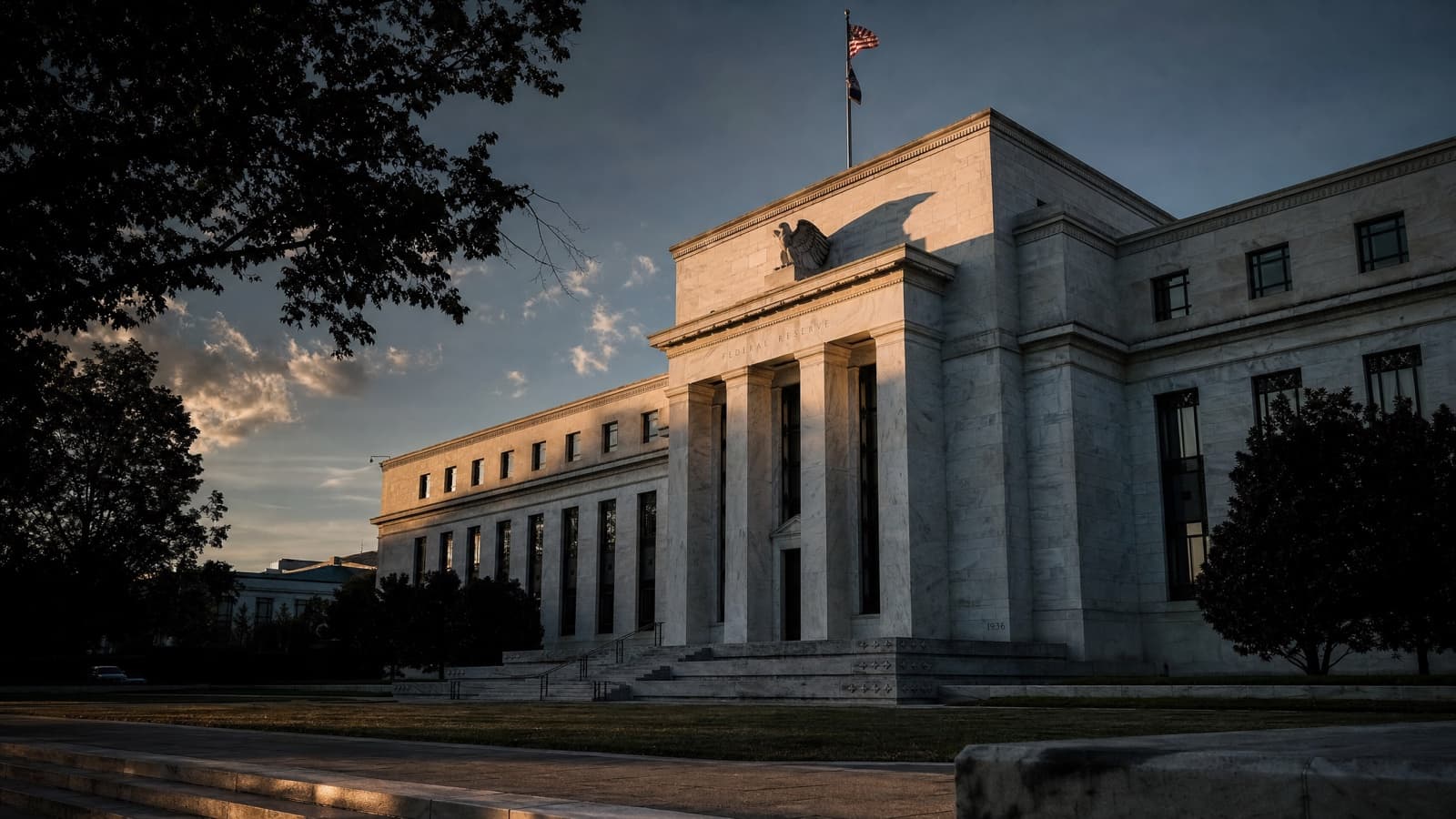
With less than 48 hours until the Federal Reserve announces its September 2026 rate decision, prediction markets are pricing the highest probability of a rate hike since 2023. More than $192 million in combined volume has already traded across Kalshi and Polymarket on this single meeting—making it one of the most actively traded macroeconomic events of the year.
The Federal Open Market Committee meets September 15–16, with Chair Kevin Warsh's press conference and policy statement scheduled for the afternoon of Wednesday, September 16. Here is what the markets are saying—and why.
The Market Consensus: 80–86% Odds of a 25-Basis-Point Hike
Prediction market traders are decisively leaning toward a rate increase. As of September 14, the leading outcome on Polymarket's "Fed Decision in September?" market is a 25-basis-point increase, priced at approximately 80 cents on the dollar—implying an 80% probability. The hold scenario ("No change") trades at about 21 cents.
CME Group's FedWatch Tool, which extracts implied probabilities from 30-Day Fed Funds futures, indicated an 85.5% probability of a 25-basis-point hike as of September 12—a broader measure that encompasses institutional futures traders alongside retail participants.
On Polymarket's companion contract, "Fed rate hike in 2026?"—which resolves Yes if the Fed raises rates by any amount at any remaining 2026 meeting—the current price is 90 cents, reflecting near-certainty that tightening resumes before December.
Live market view — track these prices yourself:
Visit PredictionMarkets.US to monitor Kalshi and Polymarket FOMC odds in real time.
These are not thin markets. The Polymarket "Fed Decision in September?" contract alone has accumulated more than $156 million in total volume, placing it among the highest-volume macro markets of the year. That depth means the probabilities reflect genuine financial conviction, not speculative noise.
What Drove the Consensus: Jackson Hole, Hot CPI, and Oil
The shift toward a September hike did not happen overnight. Three catalysts, arriving in sequence over the past three weeks, transformed what had been an even-money call into a strong directional bet.
Jackson Hole (late August). Fed Chair Kevin Warsh delivered a speech at the Jackson Hole Economic Symposium that markets immediately read as hawkish. Warsh emphasized the Fed's commitment to its 2% inflation target and signaled that the committee would not hesitate to move rates higher if incoming data warranted it. Before the speech, the implied probability of a September hike sat near 36% on Fed Funds futures; within 24 hours it surpassed 50%. Kalshi traders moved from roughly even odds to a 48% hike probability; Polymarket traders priced 49%.
August CPI (September 11). The Bureau of Labor Statistics reported August consumer prices rising 0.4% month-over-month, pushing the year-over-year rate to 3.4%—well above the Fed's 2% target. Core CPI held at 2.4% year-over-year. The report landed as the final major inflation reading before the meeting. Prediction market hike probabilities spiked to approximately 81% in the 24 hours following the release, according to cross-venue data compiled by financial news outlets tracking both Kalshi and Polymarket simultaneously.
Persistent oil prices. Brent crude has remained elevated near $107–109 per barrel throughout the fall, sustained by supply disruptions tied to Middle East geopolitical tensions. Energy costs feed directly into headline CPI, and the Fed historically cannot ignore sustained commodity-driven inflation even when core readings are more contained.
Together, these three inputs created what markets treat as a near-decisive case: inflation too hot, labor market resilient, and the new chair signaling resolve.
The August Jobs Report: Resilience With a Wrinkle
The August employment report added 162,000 nonfarm payroll jobs with the unemployment rate holding steady at 4.1%, per the Bureau of Labor Statistics. That number was strong enough to eliminate concerns that the labor market was deteriorating at a pace that would push the Fed toward caution—but private payrolls told a slightly softer story, adding only 38,000 jobs according to a widely followed private estimate, the slowest monthly pace since January.
The Fed watches both. A strong headline number removes the easy argument for a hold; a softer private-sector number keeps some doubt alive. The split is visible in the market structure: a 20% hold probability is not trivial. It reflects a real minority view among traders that the Fed will weigh labor fragility more heavily than its public statements suggest.
The Case for a Hold: What the 21-Cent "No Change" Market Prices
The 21% probability attached to a hold is not a rounding error. Some institutional economists, including analysts at T. Rowe Price, Goldman Sachs, and others, have maintained that the Fed may pause rather than tighten at this meeting. Their arguments center on three points.
First, the federal funds rate already sits at 3.50–3.75%—its highest level since 2007. The Fed held at that level through the July 29 meeting, and some committee members view an additional hike as a policy overshoot risk given lagged effects on credit conditions.
Second, core CPI at 2.4% year-over-year is still above target but trending in the right direction on some measures. A patient Fed might argue the trajectory justifies holding rather than adding to what is already restrictive policy.
Third, financial conditions have tightened significantly on their own: the 10-year Treasury yield has touched 5% for the first time in roughly 35 months. Long rates doing the Fed's work for it is a classic argument for pausing.
Markets are not persuaded by this case at current odds—but the 21% hold probability means traders are not ignoring it either. A hold would be a genuine surprise that reshuffles rate expectations for October and December.
Platform-by-Platform: How Kalshi and Polymarket Price This Decision
The two main regulated US prediction market platforms show slightly different snapshots of the September decision, reflecting their different user bases and liquidity profiles.
Kalshi operates as a CFTC-designated contract market and clearing organization, offering US users direct access to Fed funds rate contracts. Kalshi's FOMC market has attracted significant volume from traders who use it as an institutional-grade macro hedge or speculative position.
Polymarket, operating globally through QCX LLC for US users in the sports category and via its global platform for macro contracts, has the deeper FOMC book by volume. The "Fed Decision in September?" event—more than $156 million total volume and $36.7 million in open interest as of the September 14 snapshot—represents one of the most liquid single-event macro markets available to retail traders worldwide.
The small divergence between Kalshi and Polymarket prices (roughly 80% vs. 85% depending on snapshot timing) reflects normal microstructure differences: different user demographics, different liquidity depth, and slightly different contract specifications. Traders watching both venues in real time sometimes find arbitrage windows between them in the hours before major data releases.
What Happens Wednesday: The Four Scenarios
Prediction markets implicitly price four outcomes at the September meeting, though only two carry meaningful probability.
Scenario 1 — 25-basis-point hike (80% probability). The Fed raises the federal funds target range from 3.50–3.75% to 3.75–4.00%. This would be the first increase since July 2023. The press conference would likely emphasize the Fed's data-dependent stance while leaving the door open to further tightening or a subsequent pause depending on October and November data.
Scenario 2 — No change (21% probability). The Fed holds at 3.50–3.75% and signals a wait-and-see posture. This outcome would be a material surprise relative to current pricing. Treasury yields would likely fall and equity markets would likely rally on a hold, while prediction market odds for an October hike would immediately shift higher—probably to the 60–70% range.
Scenario 3 — 50-basis-point hike (under 1% probability). The market assigns essentially no probability to a larger move. A 50-basis-point hike would require an inflation reading significantly more alarming than what August CPI showed.
Scenario 4 — Rate cut (under 1% probability). Cutting in this environment is considered essentially impossible by the market. The "Will the Fed decrease interest rates by 25 bps?" contract trades at approximately 15 cents—and even that reflects the market pricing future cut cycles, not an immediate reversal at this meeting.
The Updated Dot Plot: Wednesday's Other Big Release
Beyond the rate decision itself, the September meeting includes an updated Summary of Economic Projections—the Fed's "dot plot"—which maps individual committee members' rate forecasts through 2027. The June 2026 dots already signaled a hawkish lean; the September update will either reinforce that signal or, if enough dots shift lower, could soften the market's forward-rate expectations even if the Fed hikes on Wednesday.
Prediction market traders will be watching the dot plot in real time. If the median dot for year-end 2026 moves up—implying an additional hike before December—the "Fed rate hike by October Meeting" market, currently priced at 86 cents on Polymarket, could tighten further.
Why This FOMC Meeting Is Different for Prediction Markets
For context: the combined prediction market volume on this single Fed meeting—more than $192 million across Kalshi and Polymarket—would have been unimaginable two years ago. The rapid institutionalization of regulated event contracts has turned Federal Reserve decisions into some of the most liquid macro-event markets available to US retail traders.
This means prediction market prices on FOMC decisions are increasingly watched by financial journalists, economists, and policy analysts as a real-time complement to CME FedWatch data. When Kalshi shows 85% and CME FedWatch shows 85.5%, the convergence reinforces the signal. When they diverge—as they did briefly in early September before Jackson Hole—it signals genuine uncertainty and often precedes significant price movement as the two markets equilibrate.
Frequently Asked Questions
What is the current prediction market probability of a September rate hike? As of September 14, Polymarket's "Fed Decision in September?" contract prices a 25-basis-point hike at approximately 80%. CME FedWatch, which tracks federal funds futures, indicated 85.5% as of September 12. Both figures reflect a strong market consensus toward tightening at the September 15–16 meeting.
What is the current federal funds rate? The Fed held the target range at 3.50–3.75% at its July 29, 2026 meeting. A 25-basis-point hike at the September meeting would raise the range to 3.75–4.00%.
When will the decision be announced? The Federal Reserve will release its policy statement and updated economic projections on the afternoon of Wednesday, September 16, 2026, followed by Chair Warsh's press conference.
Can I trade the FOMC decision on US prediction markets? Yes. Kalshi offers US users regulated access to federal funds rate event contracts. Polymarket's global platform also offers FOMC decision markets, though US access to non-sports markets on the global platform depends on jurisdiction. Visit PredictionMarkets.US to see current prices across venues.
What if the Fed surprises with a hold? A hold at 21% odds would be a meaningful surprise. Markets would likely price a higher probability of an October hike almost immediately after the announcement. Treasury yields and equities would both react sharply; the "Fed rate hike in 2026?" contract at 90 cents would not move much—but the timing markets would shift significantly.
What Happens After Wednesday
Regardless of the September outcome, the Fed's next scheduled meeting is October 28–29. If the Fed hikes in September, the October market will immediately become the next focal point—currently priced at 86 cents on the "Fed rate hike by October Meeting" Polymarket contract, a reading that includes the September meeting as a possible resolution date.
If the Fed holds in September, the October odds would spike toward the 60–70% range as traders immediately price the deferred hike into the next window.
The December meeting—the last of 2026—rounds out the calendar. If neither September nor October produces a hike, the "Fed rate hike in 2026?" contract at 90 cents implies traders believe December remains a live possibility even after two consecutive pauses. That is a high bar for the market's patience with inflation running above target.
Conclusion
Prediction markets are sending a clear signal ahead of the September 16 Federal Reserve decision: this is an 80–86% hike, not a coin flip. The August CPI print, Kevin Warsh's Jackson Hole remarks, and a resilient-enough labor market have aligned into what traders see as a near-decisive case for a quarter-point increase. Over $192 million in volume has been staked on this meeting across the two largest US prediction market platforms—capital that reflects informed financial conviction, not casual speculation.
Whether the Fed delivers the hike the market expects, or surprises with a hold, Wednesday afternoon's announcement will reprice every subsequent rate decision market in the 2026–2027 calendar. Follow the live odds at PredictionMarkets.US as the decision approaches.
Sources
- Federal Reserve FOMC Meeting Calendar 2026
- Federal Reserve Press Release — July 29, 2026 (rate hold at 3.50–3.75%)
- Bureau of Labor Statistics — Consumer Price Index August 2026
- Bureau of Labor Statistics — Employment Situation August 2026
- Polymarket — Fed Decision in September? (live market)
- Polymarket — Fed rate hike in 2026? (live market)
- CME Group FedWatch Tool
- Yahoo Finance — FOMC September 2026 Odds of Rate Hike Surge Over 60%