
October 28 FOMC: What Prediction Markets Say About the Fed's Next Move
Prediction markets price an 87% hold for the October 28 Fed meeting. Here's what traders see in the data—and how the September CPI report briefly moved the odds.
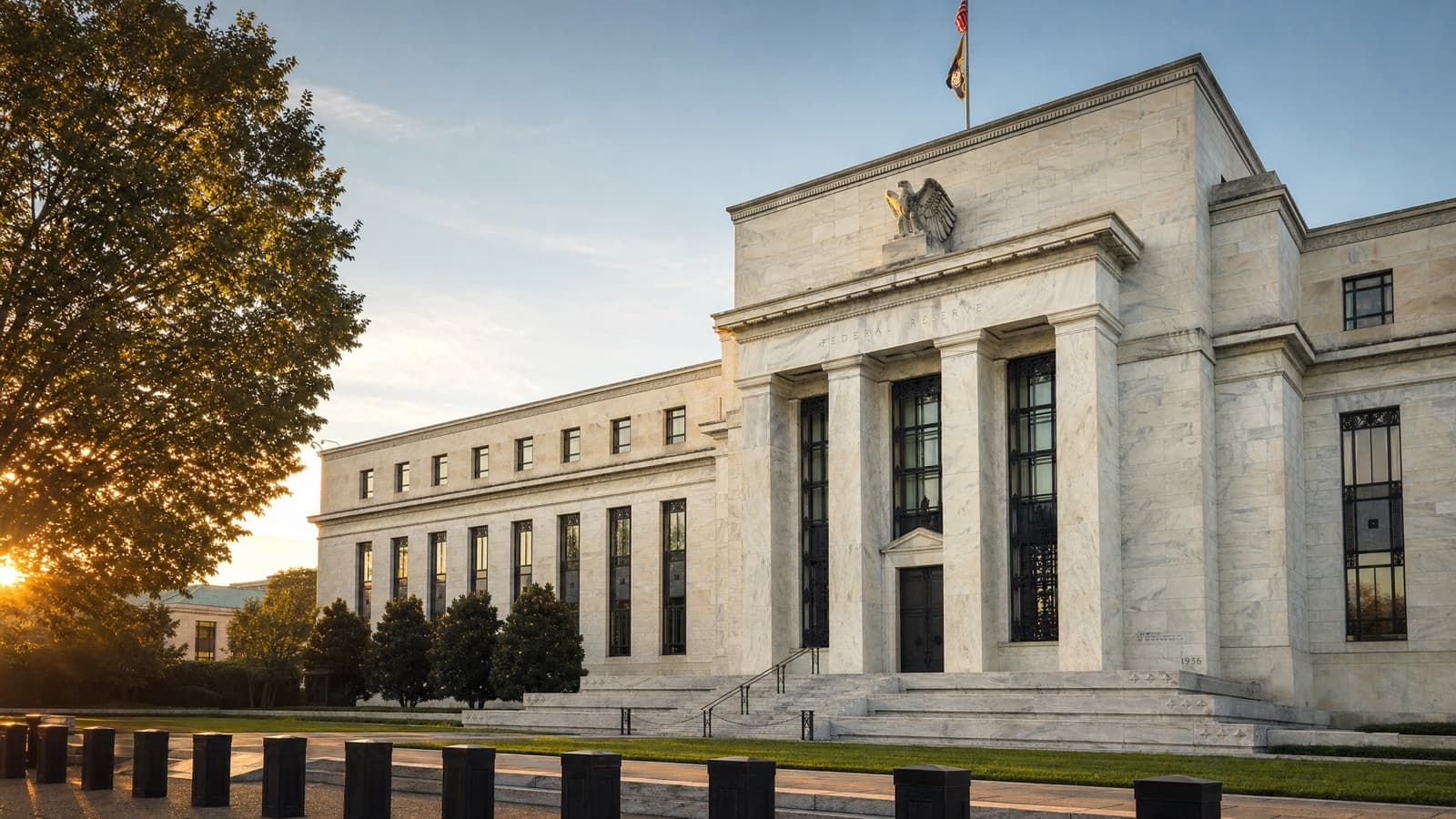
The Federal Reserve's policymaking committee meets October 27–28 in what has become the most-watched Fed decision since last spring. Prediction markets on Kalshi and Polymarket are pricing a hold at 86–87% — but those odds weren't always this high. Ten days out from the decision, here's what traders are telling you about where rates are headed, why they briefly thought a hike was possible, and what the market consensus means for December.
The October Meeting — What's at Stake
The Federal Open Market Committee convenes eight times a year. October's session runs October 27–28, 2026, with the rate decision and Chair Jerome Powell's press conference scheduled for the afternoon of the 28th. The full meeting calendar is published annually at federalreserve.gov.
At issue is whether to hold the federal funds target rate in its current range or adjust it in response to the latest economic data. After a sequence of cuts through 2025 and into early 2026, the Fed paused its easing cycle and has since held rates stable while monitoring inflation trends.
The September CPI Report — And the Market Panic That Followed
The September inflation report, released on October 14, surprised to the upside. The Bureau of Labor Statistics reported that headline CPI rose 3.7% over the prior year — an acceleration from August — with a 0.6% monthly gain that exceeded economist expectations.
Energy was the primary driver. Gasoline prices surged 9.1% in September, accounting for roughly half the month-over-month increase in the overall index, according to the BLS report. Core CPI, which excludes food and energy, rose 2.6% year over year and 0.3% for the month — still above the Fed's 2% target, but trending in the right direction.
The reaction in prediction markets was immediate. On Kalshi, the probability of a hold at the October meeting dropped sharply in the 48 hours following the CPI release, as traders briefly repriced the likelihood of a surprise hike. Within two days, however, hold odds recovered toward the mid-80s range as analysts argued the energy-driven spike was unlikely to change the Fed's calculus — inflation driven by oil prices is typically viewed by the committee as transitory, not a signal to tighten.
Where the Markets Stand Today
As of October 17, 2026, Kalshi has the October hold probability at 87%, with a hike priced at approximately 13.5%. Polymarket's October Fed contract is similarly positioned at around 86.5% hold.
Live market view — track these prices yourself:
Prediction Market Odds — Fed Decision October 28, 2026
| Platform | Hold | Hike | Cut |
|---|---|---|---|
| Kalshi (KXFEDDECISION) | 87% | ~13.5% | <1% |
| Polymarket | ~86.5% | ~13% | <1% |
The cross-platform convergence is meaningful. When Kalshi and Polymarket align within one percentage point on a Fed outcome, it signals a settled market consensus rather than divergent crowd opinion. Two platforms with different user bases and different liquidity pools are telling the same story: most sophisticated traders expect Jerome Powell to hold on October 28.
Why 13.5% Hike Odds Still Matter
A 13.5% probability isn't noise — it represents real money on both sides of the hike contract. The inflation picture gives hawkish FOMC members real grounds to push for a rate adjustment. September CPI at 3.7% year over year is still well above the Fed's 2% target, and the gas-price surge is already flowing into transportation costs and services prices.
The counterargument — and the one that currently commands 87 cents on the dollar — is that Chair Powell has repeatedly signaled the committee will look through single-month energy-driven prints when the underlying trend shows shelter and services inflation continuing to ease. Core CPI at 2.6% is elevated, but it's lower than a year ago.
The market is essentially saying: a hike is plausible but not the base case. Traders who believe the Fed might surprise to the hawkish side can buy the hike contract at roughly 13.5 cents — and collect a dollar if they're right.
How the Market Moved — A Calibration Case Study
The September CPI report triggered a textbook prediction-market overreaction. The rapid drop in hold probability — from the high-80s to the high-60s in under 48 hours — reflected traders pricing in a scenario the market ultimately rejected: that the Fed would respond to a single energy-driven CPI spike with a rate hike.
The recovery was equally swift. As economists and analysts highlighted the energy-specific nature of the September miss, hold odds normalized back toward their pre-report level. Traders who bought hold contracts during the dip captured a quick gain as the market corrected.
This kind of pattern is common in Fed markets. Sudden macro data releases create short-term dislocations that resolve as the broader market digests the implications. For prediction-market traders, understanding why the market moves — not just that it moved — is the edge.
Tracking the October 28 Decision Across Platforms
The October FOMC markets are live on both Kalshi and Polymarket. Kalshi's KXFEDDECISION ladder breaks the October 28 decision into separate markets for each outcome increment: the hold probability, a 25 basis-point hike, and a 50-plus basis-point hike. Polymarket's contract structure is similar. Watch for Fed speaking appearances in the days before the decision. Scheduled remarks from FOMC members — especially any scheduled for the week of October 20–24 — frequently move these contracts. A single comment from Powell or a voting member can shift hold odds by several percentage points before markets settle again.
What December's Markets Are Already Pricing
Prediction markets aren't just pricing October 28. Kalshi's KXFEDDECISION ladder extends to the December 8–9 meeting, and the picture there shows more uncertainty: the outcome depends partly on what happens at the October meeting, the November CPI release, and the jobs report arriving in early November.
The current December market consensus: a hike has become somewhat more likely relative to pre-September expectations, given the CPI print — but a hold remains the base case for December as well. If the Fed holds in October and energy prices retreat in October data (reported in November), December may look very similar to October by the time that meeting arrives.
Why Prediction Markets Track the Fed Well
The Federal Reserve's decision-making process is more transparent than most institutional choices — FOMC members give speeches, the committee publishes detailed minutes, and economists build sophisticated models from public data. That transparency means prediction markets have access to roughly the same signal set as Wall Street and academic economists.
The result is that Fed decision markets tend to be well-calibrated. Hold odds above 80% on Kalshi have historically been reliable indicators that the Fed will hold. The October setup — 87% hold with a short-lived CPI scare — is consistent with that track record.
Frequently Asked Questions
What is the FOMC?
The Federal Open Market Committee is the body within the Federal Reserve System that sets monetary policy. It comprises seven Fed governors and five of the twelve Federal Reserve Bank presidents on a rotating basis. The committee meets eight times per year and sets the target range for the federal funds rate.
When does the Fed meet in October 2026?
The FOMC meeting runs October 27–28, 2026. The rate decision and press conference are scheduled for October 28. The full annual schedule is published at federalreserve.gov.
What are prediction markets saying about October 28?
As of October 17, 2026, Kalshi prices a hold at 87% and a hike at approximately 13.5%. Polymarket shows similar numbers at approximately 86.5% hold. A cut is priced near negligible. These odds moved sharply lower on October 14 — the day the September CPI report was released — before recovering to current levels.
Why did hold odds drop sharply on October 14?
The September CPI report showed 3.7% year-over-year headline inflation, above expectations, driven primarily by a 9.1% monthly surge in gasoline prices. Traders briefly moved hike odds higher before concluding the energy-driven nature of the print was unlikely to change the Fed's overall policy stance. Hold odds recovered within 48 hours.
Where can I track the Fed decision markets live?
You can follow cross-platform prices, probability curves, and volume data for the October 28 FOMC decision at PredictionMarkets.US, which aggregates real-time data from Kalshi and Polymarket.
The Bottom Line
The October 28 FOMC decision is 10 days away, and prediction markets are delivering a clear signal: an 87% probability of a hold reflects strong collective confidence that Jerome Powell will stand pat. The September inflation shock created a brief window of doubt — and a genuine trading opportunity for those who bought the dip — before markets normalized.
Watch for FOMC member commentary this week. If any remarks signal greater concern about the September CPI print, hike odds could move toward 20%. If the messaging stays dovish, the 87% hold consensus is likely to hold through decision day.
Follow the October 28 Fed markets and track real-time price changes across all platforms at PredictionMarkets.US.
Sources & Verification
- Federal Reserve 2026 FOMC Meeting Calendar — October 27-28 meeting dates confirmed — verified October 18, 2026
- Bureau of Labor Statistics, September 2026 CPI Report — 3.7% annual CPI, 0.6% monthly, gasoline +9.1% — verified October 18, 2026
- CNBC, "Consumer prices rose 3.7% annually in September as gas prices skyrocket," October 14, 2026 — CPI report analysis — verified October 18, 2026
- The New York Times, "Soaring Energy Prices Push Inflation Higher," October 14, 2026 — gas prices up 34% year over year — verified October 18, 2026
- Kalshi, KXFEDDECISION-26OCT October Fed Decision Market — hold 87%, hike 13.5% as of October 17 — verified October 18, 2026
- Fox Business, "Consumer inflation rose faster than expected in September," October 14, 2026 — core CPI 2.6% confirmed — verified October 18, 2026