
Fed December Rate Hike Odds: What Prediction Markets Price Before the October Jobs Report
The Fed held at 3.75%-4% in a 10-2 vote, but Kalshi still prices a December hike near 69%. Here's what to watch in the November 6 jobs report.
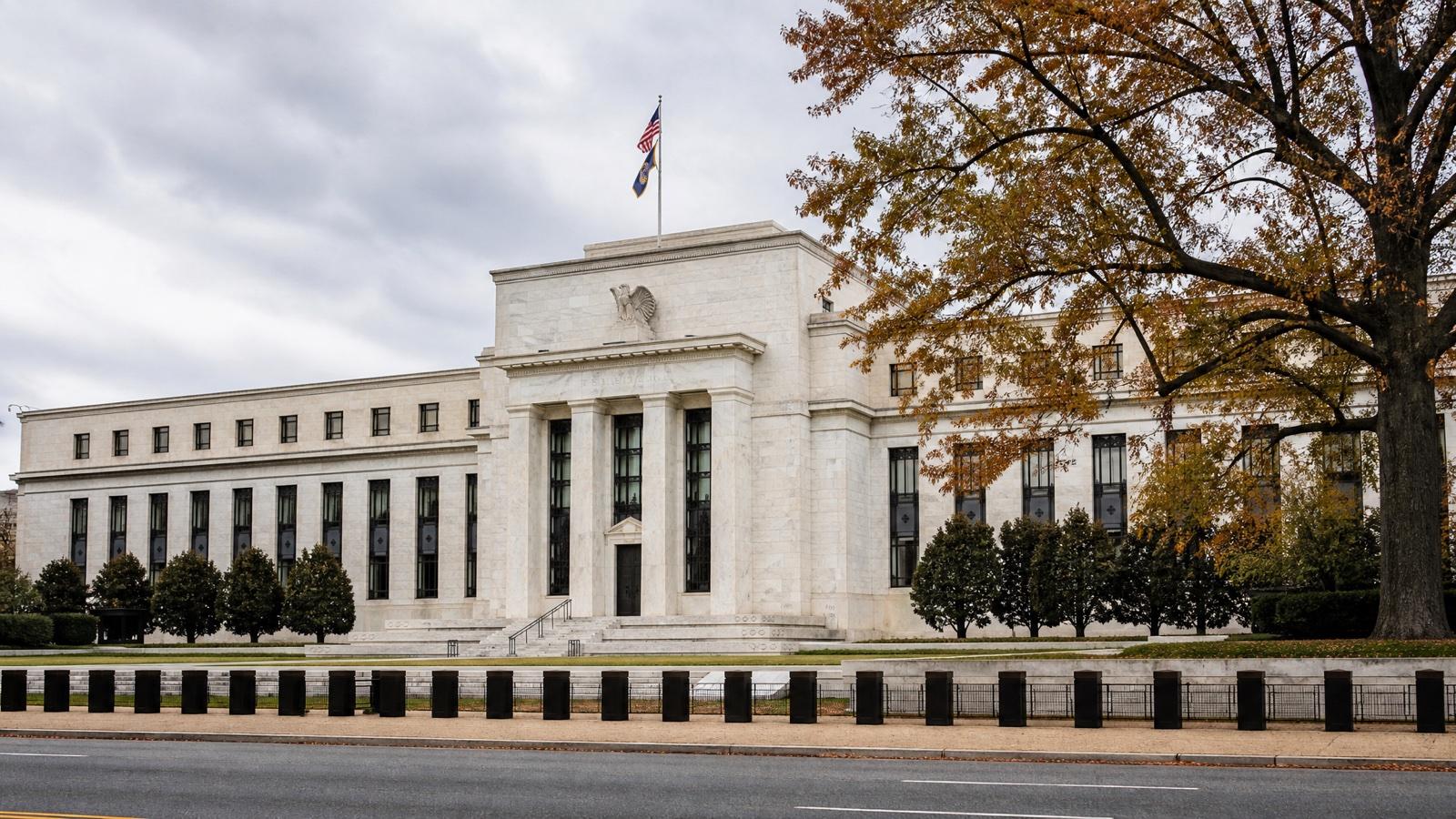
The Federal Reserve held interest rates steady on October 28, then spent the next few days watching traders ignore the pause. Prediction markets are still pricing a rate hike at the December meeting as the more likely outcome, and the next major data point arrives on Friday, November 6, when the government releases the October jobs report.
This guide walks through what the Fed actually decided, what prediction markets are saying about December, and why the November 6 employment report is the next real test of that pricing.
What the Fed Decided on October 28
The Federal Open Market Committee voted 10-2 to keep the federal funds target range at 3-3/4 to 4 percent, according to the Federal Reserve's October 28 statement. The statement said economic activity is "expanding at a strong pace" and that "inflation remains elevated."
The two dissenters, Governor Lisa Cook and Cleveland Fed President Beth Hammack, both preferred to raise the target range by a quarter percentage point at this meeting. CNBC reported that the range had been in place since the committee approved a quarter-point increase in September, and that this was Cook's first dissent since joining the Fed in 2022.
Two details matter for anyone reading the odds:
- The hold was not unanimous. Two voters wanted to hike now. A committee with two members already on record for higher rates is a different animal from one that is split between holding and cutting.
- Some officials who had previously dissented fell back in line. CNBC noted that Dallas Fed President Lorie Logan and Minneapolis Fed President Neel Kashkari, who joined Hammack in voting against the July hold, did not dissent this time.
The statement itself did not pre-commit to anything. It said further information "will help the Committee determine the policy stance appropriate" to return inflation to 2 percent. That is deliberately open-ended language, which is exactly why traders lean on data releases to guess what comes next.
What Prediction Markets Are Pricing for December
The Fed's next scheduled meeting is December 8-9, per the Federal Reserve's 2026 FOMC calendar. Kalshi lists a market on the size of that decision. At the time of writing (Monday, November 2, 2026), the prices looked like this:
| Kalshi outcome for the December 2026 decision | Last price |
|---|---|
| Hike by more than 25 basis points | about 2¢ |
| Hike by 25 basis points | about 69¢ |
| No change | about 28¢ |
| Cut by 25 basis points | about 2¢ |
| Cut by more than 25 basis points | about 1¢ |
A contract priced at 69¢ pays $1 if the outcome occurs, so the market is implying roughly a 69% chance of a quarter-point hike and roughly a 28% chance the Fed simply holds again. These are market prices, not forecasts from the Fed, and they move throughout the day. The prices above are a snapshot from Kalshi's public market data.
Kalshi's threshold markets on the upper bound of the funds rate tell a consistent story. The contract on whether the upper bound ends the December meeting above 4.00% was trading in the low 70s, while the contract on it ending above 4.25% was trading around 3¢. In plain terms: the market sees a single hike as the central case and a double hike as a tail risk.
Kalshi's January 2027 decision market shows the same shape one meeting later, with "no change" priced around 71¢ and a 25-basis-point hike around 25¢. That pattern suggests traders see December as the likely decision point, with the Fed pausing again in January if it moves.
Why markets disagree with the pause
The hold on October 28 was widely expected, and it did not change the thesis traders were already working from: inflation is elevated, two voters want to hike, and officials have said more tightening may be needed. In a Kalshi news post from early October, the company noted that its "next Fed rate hike" market priced a 75% chance that the next hike would occur before 2027, while New York Fed President John Williams said "one further upward adjustment" may be needed this year even though "there is no need for urgency."
Prediction markets are not a crystal ball. They aggregate what traders believe at a moment in time, and those beliefs can swing quickly on a single data release. That is the setup heading into November 6.
The Data Point That Matters: the October Jobs Report
The Bureau of Labor Statistics lists the Employment Situation for October 2026 for Friday, November 6, at 8:30 AM Eastern.
The prior report set a low bar. According to the BLS release for September, nonfarm payroll employment rose by 29,000 and the unemployment rate was 4.2 percent. The BLS said the unemployment rate has stayed in a narrow range of 4.1 to 4.3 percent since March.
That weak September print had a visible effect on the October decision market. Per Kalshi's own post, the market for an October hold jumped to 80% after the report and sat at 77% afterward. The hold did happen, though the committee's two dissents showed that the weak number did not remove the hawkish wing.
For November 6, the question is whether a second soft report is enough to move the December hike from likely to toss-up, or whether stronger hiring reinforces it. Some practical ways to think about it:
- A weak payroll number with a stable unemployment rate is the kind of mixed result that can leave December pricing largely intact, because the Fed's own statement described job gains as keeping pace with the workforce.
- A clear jump in unemployment is what could pull the hike probability down, since the Fed's concern is inflation but a deteriorating labor market complicates the case for tightening.
- Strong hiring plus elevated inflation would likely push the December hike price higher, closer to the contracts that currently look like the tail.
None of these are predictions. They are the scenarios that traders will be repricing against at 8:31 AM on November 6.
Other Things That Could Move December Odds
Beyond the jobs report, a few other items are on the calendar or in the news:
- The Lisa Cook matter. CNBC reported that the administration has restarted its effort to remove Cook, with a hearing scheduled for early November. Cook dissented in favor of a hike in October, so any change to the committee's composition is relevant to how the vote could break.
- The midterm elections on November 3. CNBC noted that some observers speculated officials would be reluctant to raise rates this close to the election. The election passes before the December meeting, which removes that particular timing argument for a hike.
- Fed communications. Between now and December 8-9, speeches by regional Fed presidents and governors tend to move these markets the same day they are delivered.
How to Read These Markets Without Fooling Yourself
A few habits make prediction market prices more useful and less misleading:
- Treat prices as probabilities, not promises. A 69¢ contract is a 69% market-implied chance, which means the "other" outcome still happens roughly three times in ten.
- Check which contract you are reading. "Hike by 25bps" and "upper bound above 4.00%" are different questions that happen to point the same direction. Make sure you are comparing like with like.
- Remember who is trading. Prices reflect the people who chose to trade. Thin markets move more on small orders.
- Look at the date. A price quoted on Monday morning can look very different by Friday at 9 AM, especially around a data release.
- Compare with official sources. The Fed statement and BLS release are the ground truth. Market prices are an interpretation of them.
Frequently Asked Questions
What did the Fed do at its October 2026 meeting?
The FOMC voted 10-2 to keep the federal funds target range at 3-3/4 to 4 percent. Governor Lisa Cook and Cleveland Fed President Beth Hammack dissented, preferring a quarter-point increase.
When is the next Fed meeting?
The next scheduled FOMC meeting is December 8-9, 2026, according to the Federal Reserve's calendar.
When is the October jobs report?
The BLS schedule lists the Employment Situation for October 2026 on Friday, November 6, 2026, at 8:30 AM Eastern.
What are prediction markets saying about a December rate hike?
As of Monday, November 2, Kalshi's December decision market priced a 25-basis-point hike at roughly 69¢ and no change at roughly 28¢. Prices change constantly, so check live markets before drawing conclusions.
Do prediction markets predict the Fed better than economists?
Neither is guaranteed to be right. Markets update continuously, while surveys of economists capture a point in time. Many readers use both as inputs, alongside the Fed's own statements.
Bottom Line
The Fed paused on October 28, but two dissenters and elevated inflation kept the December hike as the market's base case. The October jobs report on November 6 is the next major piece of evidence. You can follow live Fed decision markets and compare prices across platforms at PredictionMarkets.US.
This article is for informational purposes only and is not financial or investment advice. Prediction market prices change constantly.
Sources & Verification
- FOMC statement, vote, dissents, and target range: Federal Reserve press release, October 28, 2026 — verified November 2, 2026
- December 8-9 meeting date: Federal Reserve FOMC calendar — verified November 2, 2026
- Decision coverage, Cook first dissent, Logan and Kashkari, Cook hearing: CNBC, October 28, 2026 — verified November 2, 2026
- September payrolls (+29,000) and unemployment (4.2%): BLS Employment Situation, September 2026 — verified November 2, 2026
- October jobs report release date: BLS release schedule, November 2026 — verified November 2, 2026
- Kalshi October hold pricing after the jobs report, Williams comment, next-hike market: Kalshi News — verified November 2, 2026
- December 2026 and January 2027 decision market prices: Kalshi public market data, snapshot taken November 2, 2026