
Esports Prediction Markets: How to Trade on League of Legends, CS2, and More
How to trade esports prediction markets — which platforms have LoL, CS2, and Valorant markets, how much volume they generate, and how payouts work. Live data from LoL First Stand 2026.
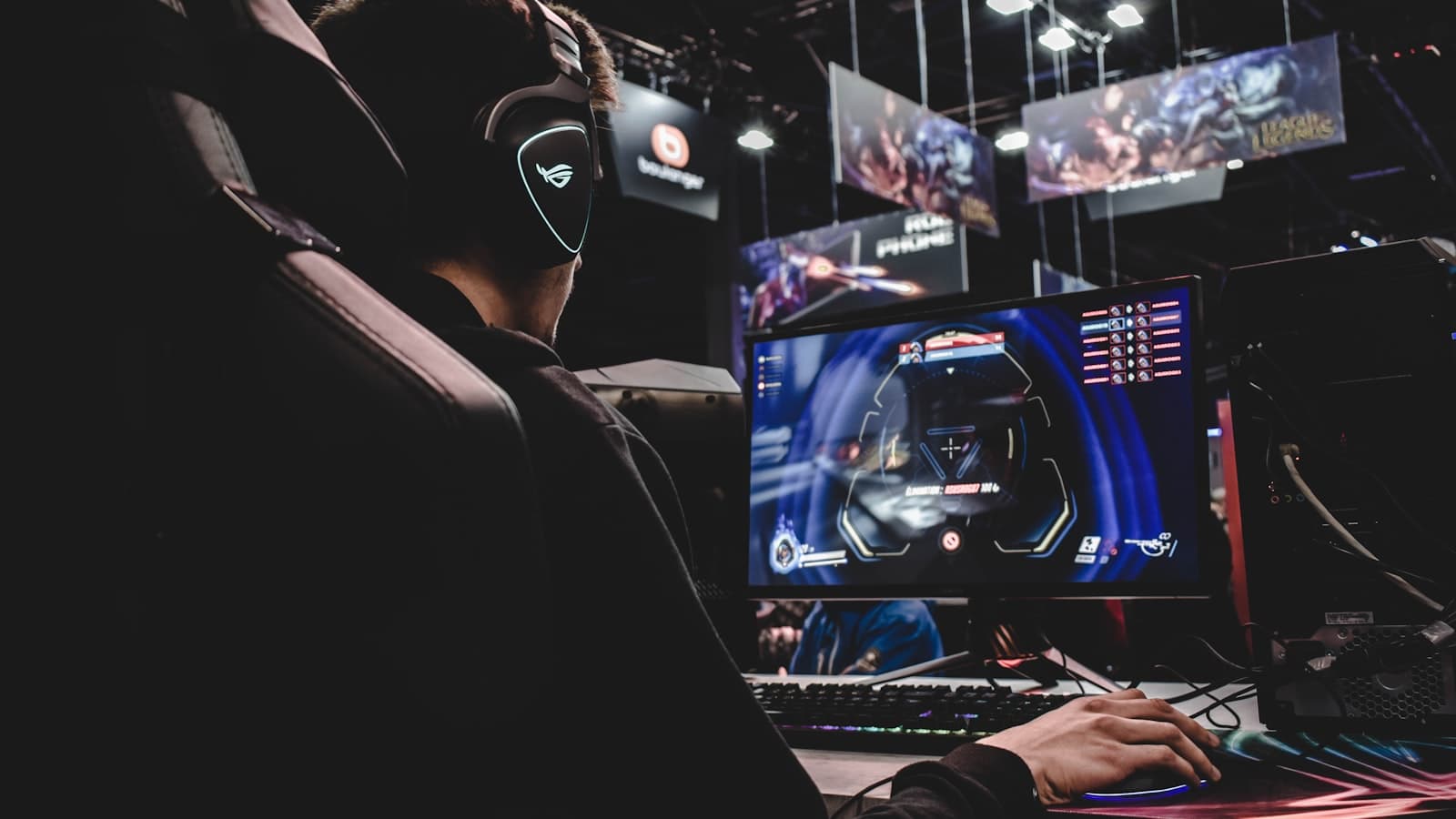
Today, Bilibili Gaming defeated G2 Esports 3-1 in the grand finals of the LoL First Stand 2026 tournament in São Paulo, Brazil. While thousands of fans watched on Riot Games' official streams, traders on prediction markets were putting real money on the outcome — and the markets generated over $11 million in trading volume on the match alone.
That number tells a story. Esports has quietly become one of the biggest categories on prediction markets, and most people interested in competitive gaming don't know these platforms exist.
This guide covers everything you need to know: how esports prediction markets work, where to trade, what tournaments attract the most volume, and how payouts work.
What Are Esports Prediction Markets?
Prediction markets let you trade on the outcome of real-world events — including competitive gaming tournaments — using contracts that pay $1 if you're right and $0 if you're wrong.
Here's the mechanics in plain terms. If a market shows G2 Esports at 25¢ to win a match, that means traders collectively estimate a 25% probability of G2 winning. You can buy shares at 25¢, and if G2 wins, each share pays out $1 — a profit of 75¢ per share. If G2 loses, your shares expire worthless.
The price moves in real time as traders buy and sell, aggregating information from thousands of participants who each have their own research and opinions. Unlike a fixed odds sportsbook, prices on prediction markets shift continuously until the event resolves.
As Bloomberg described in a February 2026 feature on prediction markets: "As hundreds or thousands or millions of those yes-or-no contracts are bought and sold, the price fluctuates somewhere between 1¢ and 99¢. That price is intended to serve as the implied probability of the event occurring."
Which Platform Has the Most Esports Markets?
Polymarket
Polymarket is the global leader for esports prediction markets. As of March 2026, the platform hosts over 141 active League of Legends markets alone, covering individual game outcomes (moneyline, spreads, totals, player props), season-level competitions, and regional championship futures.
The volume is real. The G2 Esports vs Gen.G semifinal at First Stand 2026 generated $9.6 million in total trading volume across all market types. The grand final between Bilibili Gaming and G2 Esports generated over $11 million in total trading volume — making it the single highest-volume event on Polymarket on March 22, 2026, surpassing major political and financial markets for that day.
Polymarket covers multiple esports titles including:
- League of Legends (the dominant category): match markets, LCK/LPL/LEC season winners, international events
- Individual match markets with spreads, totals, and player props
- Seasonal futures markets (who wins Worlds 2026, MSI 2026, etc.)
Polymarket currently operates globally with a separate US-regulated venue (QCX LLC) that carries CFTC oversight. On the global platform, most esports markets trade with zero fees on the prediction market itself — no taker fee on standard match markets. Fees apply only on select crypto and sports markets.
Kalshi
Kalshi is a CFTC-regulated Designated Contract Market and Derivatives Clearing Organization (DCM+DCO) based in New York. As of March 2026, Kalshi's sports market coverage focuses primarily on mainstream US sports (NFL, NBA, MLB, college basketball) and is the dominant platform for US-regulated sports market volume.
Kalshi's esports coverage is more limited than Polymarket's — the platform has not built out dedicated esports category markets comparable to Polymarket's LoL hub. For esports-specific markets, Polymarket is the better destination.
The First Stand 2026: A Live Esports Market Case Study
The LoL First Stand 2026 tournament — held March 16-22 in São Paulo, Brazil — was the first major international League of Legends event of the 2026 competitive season. The tournament brought together eight teams from six regions:
- Bilibili Gaming (BLG) — LPL (China)
- G2 Esports (G2) — LEC (EMEA)
- Gen.G (GEN) — LCK (South Korea)
- JD Gaming (JDG) — LPL (China)
- BNK FEARX (BFX) — LCK (South Korea)
- LYON — LCS (North America)
- LOUD — CBLOL (Brazil)
- Team Secret Whales (TSW) — LCP (Asia-Pacific)
All matches were best-of-five (BO5). The prize pool totaled $1 million, with $250,000 for the champion and $150,000 for runner-up, per official Riot Games results via Liquipedia.
What prediction market traders were watching:
In the semifinals (March 21), G2 swept Gen.G 3-0, while Bilibili Gaming swept JD Gaming 3-0. For the G2 vs Gen.G market, Polymarket's pricing had G2 as a moderate favorite heading into the series. The sweep moved the settlement rapidly.
For the grand final (March 22), Bilibili Gaming was set as favorite heading in after their dominant semifinal run. The market at open priced BLG ahead of G2, and BLG confirmed that pricing, winning 3-1. Total volume across the G2 vs BLG event complex exceeded $11 million according to Polymarket's live data.
What this tells us: Major international esports events now generate prediction market volume comparable to mid-tier traditional sports. The G2 vs BLG final exceeded the volume of many Premier League individual match markets on that same day.
How Esports Prediction Markets Resolve
Resolution is the most important thing to understand before you trade. When you buy shares, you're trusting that the market will resolve correctly based on the official result.
On Polymarket, esports markets resolve based on official sources. For League of Legends specifically, markets reference:
- Riot Games official LoL Esports site as the primary resolution source
- Liquipedia as a secondary credible reporting source
For a standard match moneyline market: the market resolves YES for the team that wins the series, and NO for the other. Overtime and tiebreakers are included. If a match is postponed or cancelled, market rules specify the resolution procedure — always check the "Rules" tab on any individual Polymarket market page before trading.
Player prop markets resolve on official box score statistics. Spread and totals markets resolve on final game scores. This structure mirrors traditional sports betting logic, adapted for esports.
Types of Esports Markets Available
Prediction markets for esports go well beyond simple "who wins this match" contracts. Here's what's available on Polymarket:
Match Markets
- Moneyline: Which team wins the series (BO3 or BO5)
- Spreads: Does the winner cover the game spread (e.g., win by 2+ in a BO5)
- Totals: Over/under on total games played in the series
Season/Tournament Futures
- Season winner: Who wins the LCK, LPL, LEC, or LCS spring/summer split
- Regional champion: Who wins MSI or Worlds (end-of-year)
- Winning region: Which region (LCK, LPL, LEC, etc.) wins the international title
For example, Polymarket currently has an active market on LoL: MSI 2026 Winning Region (scheduled June 28–July 12, 2026). As of March 22, 2026, the market on Polymarket has LCK (South Korea) priced at 72¢ and LPL (China) at 21¢, reflecting the competitive dominance of South Korean and Chinese teams at international events.
Similarly, the LoL: Worlds 2026 Winning Region market (ending December 31, 2026) prices LCK at 69¢ and LPL at 31¢, per Polymarket's live data.
Fees: What It Costs to Trade Esports Markets
Understanding the fee structure matters before you put money in.
Polymarket (global)
Most prediction markets — including the majority of esports markets — are completely fee-free. You buy shares, they resolve to $1 or $0, and Polymarket collects no fee on the transaction. This applies to most LoL match markets, seasonal futures, and tournament markets.
For US users trading via the CFTC-regulated QCX LLC venue, a flat 0.30% taker fee applies at trade time on the Total Contract Premium, with a 0.20% maker rebate for makers providing liquidity. This fee structure is specific to the US-regulated venue; the global platform's fee rules differ by market type. (Source: Polymarket US Fee Schedule)
Kalshi
Kalshi uses a formula-based fee: 0.07 × P × (1 − P), with a maximum of 1.75¢ per contract. The fee is charged on entry only — selling or exiting a position is free. Politics and policy markets are fee-free. For sports markets, the formula means a 50¢ (50/50) contract costs 1.75¢ per share to enter, while heavily-favored or heavy-underdog contracts cost less. (Source: Kalshi's fee page)
Which Esports Titles Have the Most Market Activity?
Based on available market data from Polymarket as of March 2026:
1. League of Legends — The dominant title by volume and market count. Polymarket hosts 141+ active LoL markets and the game drives the highest individual event volumes in esports. The combination of a massive international viewership, clear official resolution sources via Riot Games and Liquipedia, and high-information traders (LoL has a dedicated global analytical community) makes it ideal for prediction markets.
2. Valorant — Riot Games' tactical shooter has growing esports coverage, though volume is lower than LoL.
3. CS2 (Counter-Strike 2) — The successor to CS:GO has active coverage on Polymarket through the ESL and BLAST circuits.
Other titles like Dota 2, Apex Legends, and Rocket League have sporadic coverage based on major tournament schedules.
Upcoming Major Esports Events to Watch
For traders thinking ahead, these are the next major international LoL events with prediction market coverage:
| Event | Dates | Platform |
|---|---|---|
| LoL Mid-Season Invitational 2026 | June 28 – July 12, 2026 | Polymarket |
| LoL Worlds 2026 | Late 2026 | Polymarket |
Current Polymarket pricing from live market data:
- MSI 2026 Winning Region: LCK 72%, LPL 21%, LEC 4% (polymarket.com)
- Worlds 2026 Winning Region: LCK 69%, LPL 31% (polymarket.com)
The LCK's consistent dominance in international markets is reflected in the pricing — South Korean teams have won Worlds more times than any other region, and traders are pricing that historical edge forward.
How to Get Started
On Polymarket:
- Sign up at polymarket.com
- Fund with crypto (USDC on Polygon), credit/debit card, or bank transfer
- Browse esports markets under "Sports → Esports" or search for your game
- Review the Rules section before trading any market
On Polymarket US (if you're a US user): The US-regulated venue via QCX LLC focuses on sports markets. Esports availability depends on what's listed — check the platform directly for current coverage.
FAQ
Are esports prediction markets legal in the US?
Prediction markets like Polymarket (US) and Kalshi operate under CFTC oversight and are legal at the federal level for US users. However, state-level litigation is ongoing in several states. Kalshi is currently in litigation in 13+ states over sports event contracts. Polymarket US operates through QCX LLC, a CFTC-regulated venue. Check your state's current status — legal and regulatory details are subject to change. See our state legality guide for current information.
Can I make money trading esports prediction markets?
Like any trading activity, this depends on whether your probability estimates are more accurate than what the market is pricing. Esports prediction markets can be exploited by traders with genuine domain knowledge — if you know the competitive metagame, team form, roster changes, and regional styles, you may have an edge over the broader market. This is the same information advantage dynamic that exists in any prediction market category.
That said: markets with high volumes and many active traders tend to be efficient. Major match finals with $10M+ in volume will be well-priced. Less-covered matches and futures may offer more inefficiency for informed traders.
How quickly do esports markets resolve?
Match markets typically resolve within a few hours of the game ending, once the official score is confirmed. Season or tournament futures resolve when the championship concludes. Always check the "Rules" tab on the specific market for the resolution timeline and sources.
Do prediction markets cover all esports tournaments?
No. Coverage depends on the platform and market liquidity. Polymarket covers major international LoL events consistently, and several other titles. Smaller regional tournaments or lesser-known games have limited or no coverage. Volume tends to concentrate around the biggest matches and finals.
What's the difference between esports prediction markets and esports sportsbooks?
Traditional esports sportsbooks (mostly offshore, or through regulated offshore equivalents) use fixed odds set by a bookmaker. Prediction markets use continuously traded contracts where prices are set by supply and demand among traders. Prediction markets are generally more transparent about implied probabilities, tend to correct faster to new information, and (in the US) operate under CFTC oversight rather than state gambling licenses.
Conclusion
Esports prediction markets are no longer a niche curiosity. A single LoL grand final today generated over $11 million in trading volume on Polymarket — more than many traditional sports events. If you follow competitive gaming, understanding how to read and trade these markets gives you a new lens on esports you can't get from commentary or win rates alone.
Explore live esports markets and track odds across platforms at PredictionMarkets.us.
Sources & Verification
- LoL First Stand 2026 tournament results: Liquipedia — official esports data source used by Polymarket for resolution — verified March 22, 2026
- G2 vs BLG grand final volume ($11M+): Polymarket — live market data — verified March 22, 2026 (snapshot captured 14:59 ET)
- G2 vs Gen.G semifinal volume ($9.6M): Polymarket LoL page — verified March 22, 2026
- 141+ active LoL markets on Polymarket: Polymarket LoL predictions — verified March 22, 2026
- MSI 2026 Winning Region market prices: Polymarket event — verified March 22, 2026
- Worlds 2026 Winning Region market prices: Polymarket event — verified March 22, 2026
- Prize pool and tournament format: Liquipedia First Stand 2026 — verified March 22, 2026
- Bloomberg feature on prediction markets: Bloomberg, Feb 23, 2026
- MSI 2026 dates (June 28–July 12): Esports Charts/Riot Games official announcement — verified March 22, 2026