
DCM, DCO, FCM Explained: What Sporttrade and Polymarket Just Got Approved For
Sporttrade won CFTC DCM and DCO registration and Polymarket's PM Derivatives got NFA FCM approval. Here is what each license does and what is still pending.
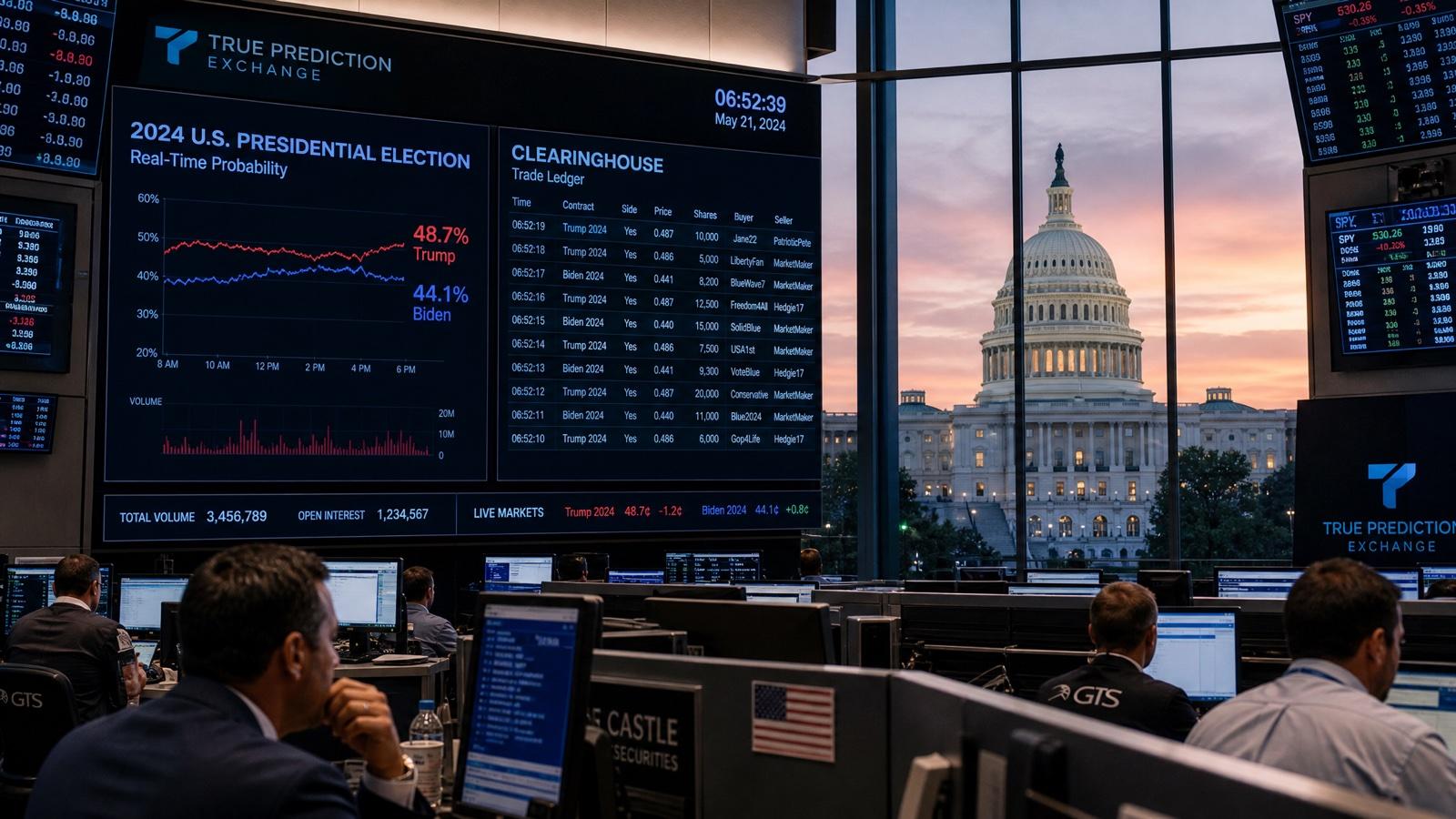
If you have watched prediction markets for any length of time, you have seen the alphabet soup: DCM, DCO, FCM, IB. This week two companies added letters to their names. On November 3, Sporttrade announced that the CFTC registered it as both a Designated Contract Market (DCM) and a Derivatives Clearing Organization (DCO). The same day, Polymarket announced that the National Futures Association (NFA) approved its PM Derivatives unit to operate as a Futures Commission Merchant (FCM).
Those are different licenses doing different jobs. This guide explains what each one actually does, what Sporttrade and Polymarket received, what they have not received yet, and why the structure matters to anyone trading event contracts.
The Three Jobs in a Regulated Prediction Market
Think of a regulated event-contract trade as passing through three layers.
- The exchange (DCM). A Designated Contract Market is the venue where contracts are listed and orders are matched. Kalshi, Polymarket US (operated by QCX LLC), and now Sporttrade's exchange entity fall into this bucket.
- The clearinghouse (DCO). A Derivatives Clearing Organization stands behind the trade after it is matched, clearing and settling it. Sporttrade says that as a registered DCO it directly clears and settles transactions for self-clearing members and intermediaries.
- The broker (FCM). A Futures Commission Merchant sits between a customer and the exchange. Per Polymarket's announcement, FCM status lets PM Derivatives "accept and carry customer orders and funds as a broker."
A venue can hold one, two, or all three roles through affiliated entities. That is why the combination, not any single license, tells you how a platform is built.
What Sporttrade Received
According to its November 3 announcement, Sporttrade has been granted CFTC registration as both a DCM and a DCO. A few details from the company's own release are worth separating from the headline:
- Broker-first design. The release says the registrations let Sporttrade support intermediated activity through FCMs, plus direct-access participants, Introducing Brokers (IBs), and independent software vendors.
- Clearing for others. Sporttrade says it can clear for other DCMs through its DCO and has begun clearing discussions with several exchanges. Those are discussions, not announced deals.
- Sports focus. The company describes its focus as sports event contracts.
- Phased rollout. Sporttrade says it will roll out in phases, starting with select flow and liquidity providers. It names Fliff as a broker being onboarded, with order routing to the exchange "pending regulatory approval."
What the release does not give you: a launch date, a list of first contracts, or fee details. If you are looking for a Sporttrade market to trade today, there is nothing to confirm yet.
For background on how the company got here, see our earlier coverage of Sporttrade's CFTC application.
What Polymarket Received
Polymarket's announcement says the NFA approved PM Derivatives, LLC to operate as an FCM on a fully collateralized basis. The company frames it as completing the three components of its U.S. derivatives stack across affiliated entities:
- an exchange, QCX LLC (d/b/a Polymarket US)
- a clearinghouse, QC Clearing LLC
- and now a broker, PM Derivatives
Key points from the company's statement:
- Fully collateralized only. PM Derivatives says every position is funded in full at the time of trade, and that any future margin offering would require additional regulatory approval.
- A second pathway. The FCM adds an intermediated layer alongside Polymarket's direct exchange model, which the company says helps it work with distribution partners and expand into jurisdictions where a regulated broker is required.
- Existing partners stay. Polymarket says it will keep working with its existing FCM and brokerage partners, who continue offering access to Polymarket US markets to their own customers.
- Obligations come with the license. PM Derivatives CEO Nikhil Joshi noted that FCM status entails ongoing obligations for capital adequacy, customer fund protection, risk management, and compliance.
Reuters reported that Polymarket will still need approval from the CFTC to run the FCM broker, and noted that the CFTC is currently investigating the firm. Polymarket's own release describes the NFA approval; the Reuters account is the source for the remaining CFTC step, so treat PM Derivatives as approved by the NFA but not necessarily operating yet.
Why the Broker Layer Matters: Customer Funds
The FCM role is the one that touches your money most directly. Under CFTC rules, customer funds for trading on designated contract markets must be kept apart ("segregated") from the FCM's own funds. Segregated accounts must be titled for the benefit of the FCM's customers, and customer funds in segregation have a bankruptcy preference if the FCM becomes insolvent.
The CFTC page also spells out the limit of that protection: if customer funds are not sufficient to pay claims, the remainder participates pro rata with unsecured creditors. Segregation is a safeguard, not a guarantee.
This is the same structural idea behind brokerage access to prediction markets generally. For another example of an exchange-affiliated FCM, see our explainer on Kalshi's margin trading and Kinetic Markets.
Side-by-Side: Who Holds Which Role
| Role | What it does | Sporttrade | Polymarket |
|---|---|---|---|
| DCM (exchange) | Lists contracts, matches orders | Registered (per company) | QCX LLC, d/b/a Polymarket US |
| DCO (clearinghouse) | Clears and settles trades | Registered (per company) | QC Clearing LLC |
| FCM (broker) | Carries customer orders and funds | Supports FCMs as intermediaries | PM Derivatives, NFA-approved (per company) |
| Status caveat | Phased rollout; no launch date given | CFTC step still pending per Reuters |
Why This Is Happening Now
Two regulatory currents are pushing platforms to build out the full stack.
First, the federal framework is being formalized. On October 9, the CFTC published a Notice of Proposed Rulemaking proposing to expressly define "swap" to include event contracts, including those based on sports, politics, cultural, and weather-related events. Chairman Michael Selig called these products "commodity derivatives squarely within the CFTC's regulatory remit." Comments were due within 30 days of Federal Register publication.
Second, the state fight continues. Reuters' same-day report notes that prediction markets are facing scrutiny and legal headwinds even as the industry has surged. A fully federally registered exchange, clearinghouse, and broker chain is the structure platforms point to when arguing that their products sit under federal oversight.
What This Means for Traders
- Nothing changes for your account today. Neither announcement is a product launch. Sporttrade has no stated launch date; PM Derivatives has an NFA approval with a CFTC step still pending, per Reuters.
- Ask which entity holds your funds. On any platform, check whether you are trading directly on an exchange or through a broker, and read the broker's customer-fund disclosures.
- Fully collateralized means no borrowing. Both companies emphasize full collateralization. That limits leverage risk but does not remove the risk of the contract itself.
- More access points, more competition. More registered venues and brokers typically means more routes to the same event contracts. Track the live markets on PredictionMarkets.US to compare pricing across venues as they come online.
FAQ
What is the difference between a DCM and a DCO? A DCM is the exchange where trades are matched. A DCO is the clearinghouse that clears and settles them. Sporttrade says it now holds both.
Is Polymarket's new FCM approval the same as Polymarket US? No. Polymarket US is the exchange operated by QCX LLC. PM Derivatives is a separate affiliated entity approved by the NFA to act as a broker, per Polymarket's announcement.
Can I trade on Sporttrade's new exchange yet? Not based on anything announced. The company describes a phased rollout starting with select flow and liquidity providers and has not given a launch date.
Does FCM approval mean margin trading on Polymarket? No. PM Derivatives says it will operate exclusively on a fully collateralized basis and that any future margin offering would need additional regulatory approval.
Are my funds safe at an FCM? CFTC rules require customer funds to be segregated from the FCM's own funds, and segregated funds have a bankruptcy preference. If funds fall short, customers share the remainder pro rata with unsecured creditors.
The Bottom Line
The license stack is the story. Sporttrade is positioning as an exchange and clearinghouse built for brokers; Polymarket is adding a broker to the exchange and clearinghouse it already operates. Both announcements are about infrastructure and regulatory status, not live trading, and each still has a step to complete before ordinary traders feel the difference. Prediction-market trading involves risk of loss and nothing here is financial advice.
Sources & Verification
- Sporttrade CFTC DCM and DCO registration, broker support, phased rollout, Fliff onboarding: Sporttrade press release, PR Newswire, November 3, 2026 — verified November 5, 2026
- PM Derivatives NFA FCM approval, QCX LLC and QC Clearing LLC structure, full collateralization: Polymarket press release, PR Newswire — verified November 5, 2026
- Remaining CFTC approval step and CFTC investigation: Reuters, November 3, 2026 — verified November 5, 2026
- Segregation of customer funds and bankruptcy treatment: CFTC, Segregation of Customer Funds — verified November 5, 2026
- Event-contract swap definition proposal: CFTC press release 9310-26, October 9, 2026 — verified November 5, 2026